
- History of breeding and regions of cultivation of Pineberry strawberries
- Pros and cons
- Varietal characteristics
- Bush size and appearance of the leaf blade
- Flowering and pollination
- Ripening time and yield
- Taste qualities of the fruit and its further sale
- Winter hardiness and drought resistance
- Immunity to diseases and parasites
- Planting pineapple-flavored strawberries
- Site selection and preparation
- Selecting seedlings
- Timing and technology of planting seedlings
- Care
- Watering mode
- Fertilizing by month
- Weeding and loosening the soil
- Mulching
- Trimming
- Shelter for the winter
- Preventive treatments against diseases and pests
- Breeding methods
- Seeds
- By dividing the bush
- Sockets
- Gardeners' reviews of the variety
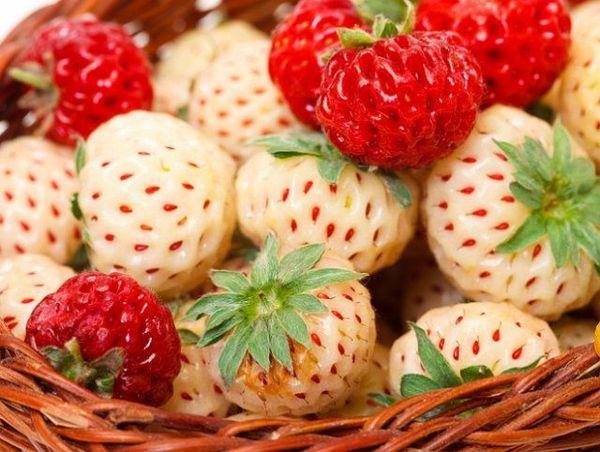
The Pineberry strawberry is popular among gardeners worldwide for its flavor and color. The berry was bred by crossing two varieties: Virginia and Chile. It has a pineapple flavor and is white in color. The main advantage of this variety is its exceptional resistance to pests. Birds rarely pick this berry because of its color.
History of breeding and regions of cultivation of Pineberry strawberries
The Pineberry variety was developed by Dutch breeder Hans de Jong several years ago and immediately gained popularity among gardeners worldwide. Pineberry is not actually a strawberry, but a cross between two varieties—Virginia and Chilean. The name is also no coincidence, as it has a subtle pineapple flavor and a lingering aroma mingling with the scent of wild strawberries.
This plant also has other names in other regions of the planet: white pineapple or white dream. The plant isn't particularly resistant to frost and wind, so it's best grown in southern regions with moderate or hot climates. This variety also doesn't like drought and can become diseased in such conditions. Pineberry requires regular soil moisture.
Pros and cons
Among the positive aspects of the variety, gardeners highlight:
- resistance to most diseases that affect remontant varieties of strawberries and wild strawberries;
- a peculiarity of the berry color that prevents birds from pecking them;
- staying in the same soil for a long time (this is rare for remontant varieties);
- hypoallergenic berry (due to the absence of the substance Fra a1 in the fruit, it can be eaten even by allergy sufferers);
- remontancy;
- absence of excess pollination, even when planted next to other strawberry varieties.
The main disadvantages of the Pineberry strawberry variety:
- difficulty in transportation (the pulp is too tender and easily crushed under the weight of other berries);
- low yield if the variety does not meet the conditions required;
- increased reaction of the plant to excessive amounts of moisture (because of this, the strawberry root system and berries begin to rot).
Varietal characteristics
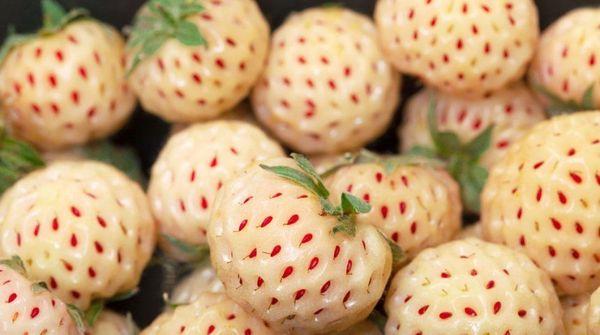
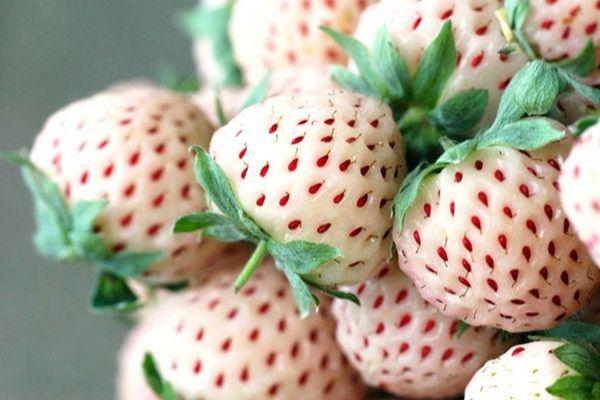
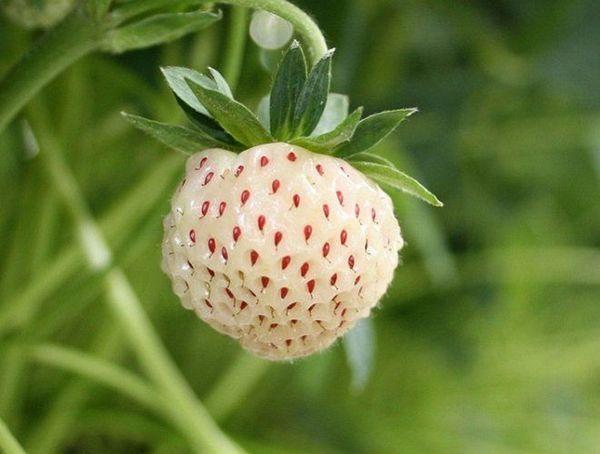
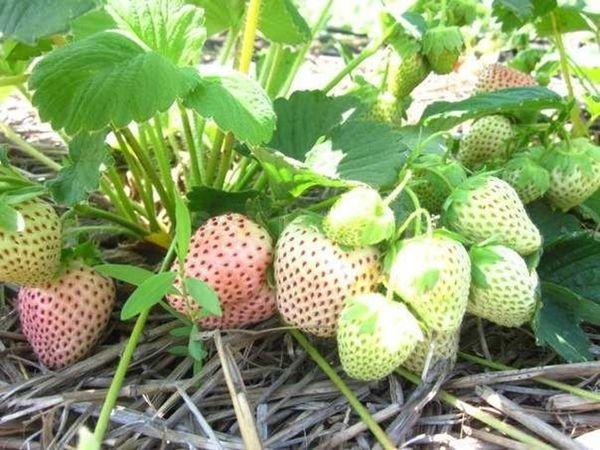
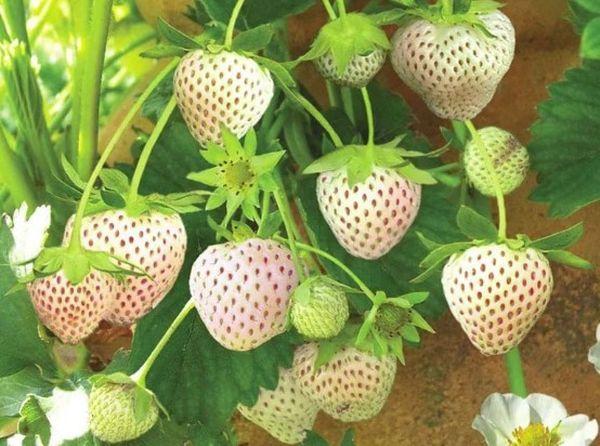
The Pineberry strawberry variety has many unique characteristics. Its white color is due to the absence of the Fra a1 protein. This also allows even allergy sufferers to eat the raw fruit. Besides its color, Pineberries have a subtle and unique flavor, reminiscent of pineapple, and a strawberry aroma. Birds are not attracted to the berries, and they do not peck them during the ripening stages.
One of the main features of this variety is its remontant nature, which allows the bush to bear fruit all year round, but only if the conditions for its growth are met.
However, it should be taken into account that the more strawberries bear fruit, the smaller the fruits become over time.
Despite the fact that the variety is remontant, it consumes nutrients from the soil for a long time and makes it completely unusable only 4-5 years after planting.
Bush size and appearance of the leaf blade
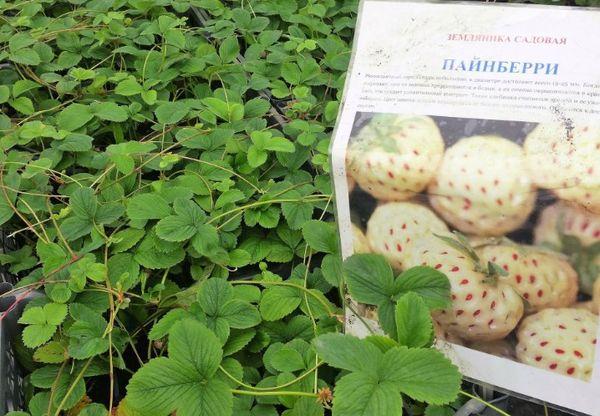
The strawberry plant is small, with ovoid leaves with distinctive serrations along the edges. The leaf structure is dense, dark green, and deeply folded. The root system is extensive and well-developed.
Flowering and pollination
To pollinate the Pineberry variety, another garden strawberry must be present in the bed, since the plant is not self-fertile and requires additional pollination.
With sufficient warmth, fruit formation and flowering begin in the early months of spring and can be repeated depending on weather conditions and proper care of the bush.
Ripening time and yield
Pineberries ripen between May and July. Under favorable growing conditions, the bush can yield 800-900 grams in a single season.
Taste qualities of the fruit and its further sale
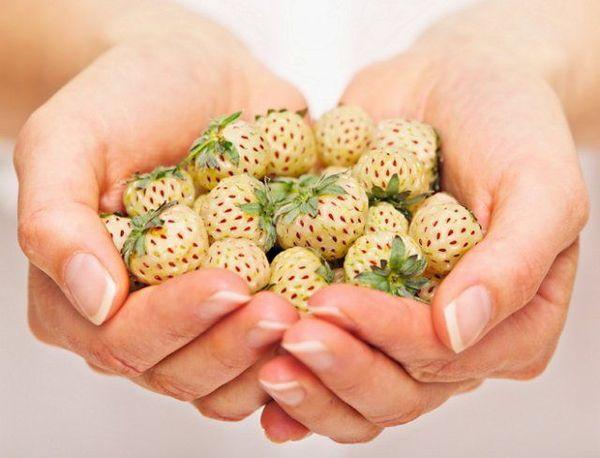
The Pineberry strawberry receives a rating of 4.6 out of 5 due to its unique flavor and lingering aroma. The berries also have tender and juicy flesh, but this makes transporting them nearly impossible. Berries of this variety are used to make natural juices, confectionery desserts, and other culinary dishes, as well as for sale and raw consumption.
Winter hardiness and drought resistance
This variety can withstand temperatures as low as -25°C, but it's highly likely to become diseased the following season, so it's best to insulate the plant during periods of frost. Strawberries don't tolerate dry climates well and can die without adequate soil moisture.
Immunity to diseases and parasites
Pineberries are immune to most diseases that affect everbearing strawberry varieties. Furthermore, pests rarely damage the crop due to the berries' unusual color.
Planting pineapple-flavored strawberries
The Pineberry variety is quite demanding in terms of growing conditions, and for rapid growth and development, the plant should be planted correctly.
Site selection and preparation
For planting, choose a site with moderate daily sunlight; partial shade is ideal. This location should be protected from strong winds and drafts.
The ideal temperature for this strawberry plant ranges from 15-25°C. To ensure sufficient moisture, the plant should be placed in an area with groundwater at a depth of 40-60°C.
Before planting, you need to prepare the soil:
- clear the soil of weeds and other crops;
- dig up the ground;
- treat the soil with a solution against pests;
- apply additional fertilizer.
Selecting seedlings
The correct choice of seedlings is very important; they should not have:
- darkening on leaves or stems;
- visible damage;
- white or gray coating on the leaves;
- drooping branches.
If one of these signs is detected, it is better to choose another seedling.
Timing and technology of planting seedlings
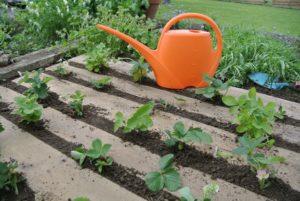
Seeds should be planted in late autumn and kept warm. Seedlings should be planted in early spring. Before planting, dig a hole 15-20 centimeters deep, spaced 30-40 centimeters apart. Then, place the seedling in the hole, spread out the root system, and cover with soil, compacting it thoroughly. Water the area generously.
Care
To ensure rapid growth of strawberries and a large harvest, proper care must be provided.
Watering mode
Watering should be timely, as determined by the soil condition (dry or marshy). In dry climates, the plant should be watered 1-2 times a week. During flowering, water the bush only at the soil level to avoid damaging the flowers.
Fertilizing by month
For fertilizing this strawberry variety, it's best to use organic or mineral fertilizers. A solution based on bird droppings is popular among gardeners. Fertilization should be done three times:
- in the early months of spring;
- before flowering;
- during the ovary.
Another fertilization is carried out before insulating for the winter, after the plant has completely finished flowering.
Weeding and loosening the soil
Loosen the soil immediately after watering the plant. This is necessary to ensure the liquid reaches the root system more quickly. Weeding is necessary if weeds or other crops have grown near the bush.
Mulching
Mulching should be done before periods of frost or winter months using:
- hay;
- fallen leaves;
- wood sawdust.
Trimming
Periodic pruning of branches is necessary if they become excessively dense, which can cause subsequent damage to the delicate strawberries.
Shelter for the winter
Covering should be done in late autumn before serious frosts set in. For this purpose, you can use:
- film;
- insulation;
- inorganic materials.
Preventive treatments against diseases and pests
To treat plants against various diseases the following is used:
- Zircon. 250 milliliters of the product will cost 130 rubles;
- Heteroauxin. The cost of 5 grams of the drug is 15 rubles;
- Immunotocyte. 1 liter of the substance costs 110 rubles.
Pineberries are treated against cockchafer infestations with pesticides. Spraying is carried out between May and June.
Breeding methods
There are 3 ways to grow strawberry bushes:
- seeds;
- dividing the plant;
- mustache.
Seeds
The most time-consuming method for growing strawberries is from seeds, as the first fruits will only appear one year after planting. The number of berries will be limited initially, but will increase with each fruiting season.
By dividing the bush
This is a quick but unsafe method, as the transplanted portion can easily fail to take root and die. This method also transfers any diseases to the separated portion during division.
Sockets
Propagation by rosettes is the most common method due to its ease of operation and rapid growth. Because the Pineberry variety produces numerous runners during flowering, up to six plants can be grown from a single bush.
Gardeners' reviews of the variety
Alexey, 32 years old.
"An excellent strawberry variety, it produces a sufficient quantity of fruit, but it requires close care and is easily susceptible to rot."
Alla, 41 years old.
"We grow this variety for our family and are very pleased with its taste and appearance. It's suitable for juice, baking, and eating raw."
Related posts:
 Description and characteristics of the Korona strawberry variety, planting and care scheme
 Description of the Florence strawberry variety, planting and care features
 Timing of strawberry planting in the middle zone in autumn, description of 25 best varieties
 How to grow strawberries at home
 Description and characteristics of the Elsanta strawberry variety, care and cultivation
 Description of the everbearing strawberry variety Selva and cultivation technology
 Description of the Bogota strawberry variety, planting and care features
 Description and characteristics of the Vima Zanta strawberry variety, planting and care scheme