
- Rules for watering strawberries in open ground
- Requirements for water temperature and composition
- Irrigation technology for garden strawberries
- Manual
- Drip
- Sprinkling
- Combine with strawberry fertilizing
- Regularity and rates of watering depending on the season
- After landing
- During flowering
- How often should you water during fruiting?
- Irrigation during berry ripening
- Watering after harvest
- Do I need to water the bushes for winter?
- Watering tips for strawberries growing under black film
- Tips and recommendations
One of the key factors for achieving a bountiful harvest of any garden crop is proper watering. This rule applies to strawberries as well. Since the root system of these herbaceous plants is located close to the soil surface, they begin to experience moisture stress immediately after the snow melts. The question of how often to water strawberry plants is a concern for many beginning gardeners.
Rules for watering strawberries in open ground
Irrigation of berry crops is necessary throughout the growing season. Plants are unable to draw moisture from the lower soil layers, and the green mass constantly requires a lot of water.
Gardeners must regularly replenish lost water, taking into account weather conditions and soil composition. Light soil will require more water than when growing strawberries in heavy soil. These two factors determine watering requirements.
Requirements for water temperature and composition
It's important to properly organize the soil moisture process. First and foremost, it's important to maintain the correct temperature for the water used. It should be heated to 18°C. Watering the plants with cold well water will cause fungal infections and root rot. First, pour the water into large containers and wait at least a day for it to warm up. Only after all these steps are completed should you irrigate.
Tap water is also unsuitable for watering. It contains chlorine and various impurities that can negatively affect plants. Tap water is purified through a carbon filter, after which it becomes suitable.

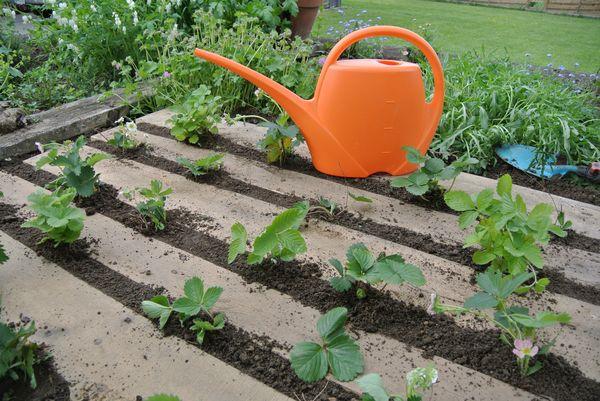
Irrigation technology for garden strawberries
The technology for watering strawberries is simple:
- It's best to perform the procedure in the morning, before the sun reaches its zenith. Time it so that 30-40 minutes pass between watering and the onset of hot weather. This ensures that any water droplets that fall on the leaf blades roll off to the soil, preventing damage from direct sunlight.
- Regularity depends on climate conditions. The more frequent the precipitation, the less frequently irrigation is needed.
- First, check the soil's moisture content. To do this, stick your index finger into the soil and feel the soil's condition.
There are several ways to organize proper watering, which depend on:
- methods of growing berry crops;
- the amount of area used for strawberry plantings;
- the financial situation of the gardener.
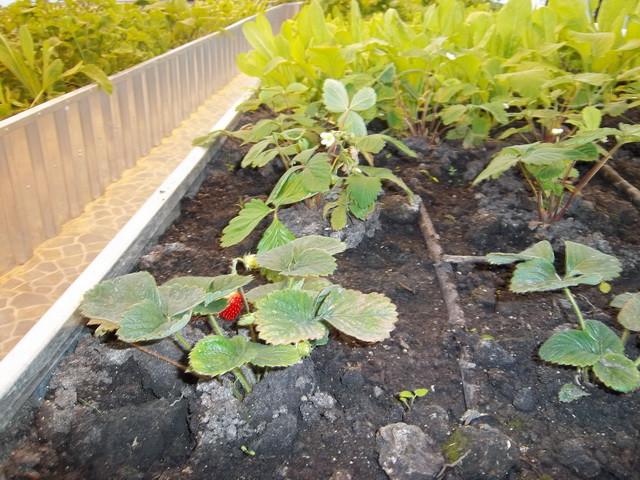
Each gardener chooses a method, not forgetting the positive and negative aspects.
Manual
The most cost-effective and accessible option is to water the beds manually. This allows you to control the amount of water applied. However, this requires a lot of physical effort, especially if the planting is large.
Using hoses made of various materials makes the process less labor-intensive. However, water consumption increases significantly, and the soil is saturated unevenly. It's important to remember that cold water causes various strawberry diseases.
Drip
Manual watering is an outdated method. Therefore, many advanced gardeners prefer to use drip systems, which are considered the most effective during the summer. These devices deliver water to the roots of the strawberry plants, while the rest of the plant remains dry, preventing rot and disease.
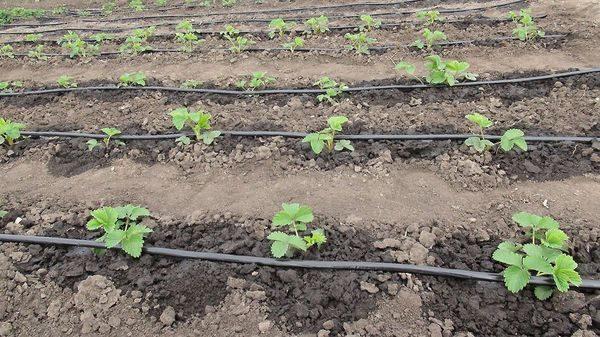
Drip irrigation systems are considered economical because they significantly reduce liquid consumption. However, the soil around perennial herbaceous plants is always moist, preventing moisture from penetrating between the rows. The disadvantages of this method include the high cost of the installation itself and the labor required to set it up, as well as the inability to use it on uneven terrain.
Sprinkling
Sprinkler irrigation is the practice of spraying liquid using special devices. The advantage of this technology is that the devices can be moved around the site and automatically dispense the liquid using a timer or sensor. The disadvantage is the excessive amount of water used.
Combine with strawberry fertilizing
Proper care for agricultural crops isn't limited to irrigation alone. Experienced gardeners combine spring and summer watering with fertilizing. This improves the health of the plants, resulting in a high and consistent yield.
- If sprinkling is being done for the first time, nitrogen-containing fertilizers are added to the water to accelerate the growth of green mass.
- When flowering is profuse, apply potassium sulfate and nitroammophoska. After two weeks, add wood ash to the beds and water generously.
- When fruiting begins, irrigation is carried out together with purchased complex fertilizers for berry crops.
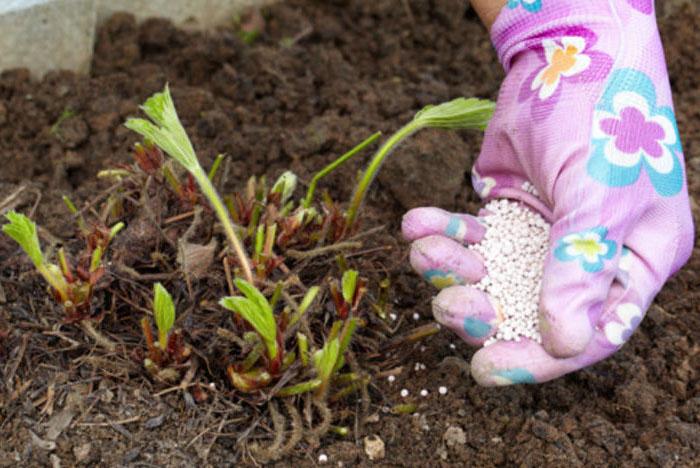
Strawberries also respond well to unconventional fertilizers, such as adding iodine (a teaspoon per bucket), potassium permanganate, or boric acid (a knife tip per 10 liters of liquid) to the water.
Regularity and rates of watering depending on the season
As is known, at different stages of plant growth and development it requires different amounts of moisture.
After landing
After planting in their permanent location, the young plants are carefully watered once every two days. Care is taken to prevent the soil from eroding around the root system. After 10-14 days, reduce the frequency to once every seven days.
During flowering
Once buds appear, increase watering frequency to three times a week. The recommended water consumption is at least 18 liters per square meter.

How often should you water during fruiting?
During the fruiting season, in hot, dry weather, the beds are irrigated 2-3 times a week. The water flow per plant is increased. Experienced gardeners recommend pouring water into the furrows between the rows of plants. This method prevents the berries from getting dirty.

Irrigation during berry ripening
In August, the heat typically subsides and nights become cool. Therefore, irrigation is carried out as the soil dries out.
Watering after harvest
After all the berries have been picked, watering should continue until regular rains begin. Otherwise, the bushes will begin to dry out. Proper moisture ensures abundant fruiting next year.
Do I need to water the bushes for winter?
As soon as forecasters predict cold weather, irrigation should be stopped. Otherwise, the roots will become excessively cold in the wet soil, leading to plant death.
Watering tips for strawberries growing under black film
If a gardener uses covering material, it's best to use drip irrigation. This ensures that moisture reaches every plant.
Tips and recommendations
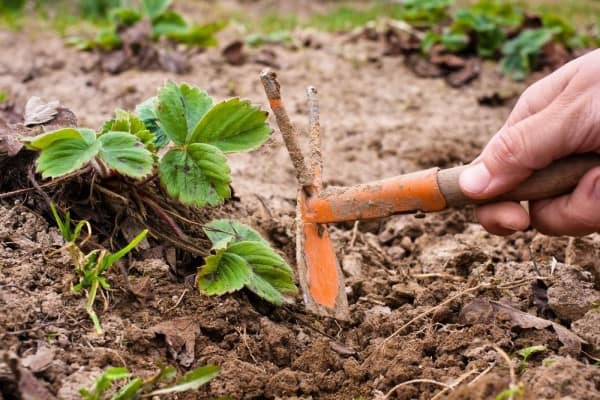
In addition to moisture, strawberries require a constant supply of oxygen to the roots. Therefore, after watering, the soil is loosened. To ensure the soil remains moist for a long time, the beds are mulched with pine needles, straw, and rotted sawdust. The layer should be at least 4 centimeters thick.
An excellent strawberry harvest can only be obtained by following all cultivation rules.
Related posts:
 How to grow strawberries at home
 Description of the Florence strawberry variety, planting and care features
 Signs of disease and pest attacks on strawberries, treatment methods
 Description and how to plant the Garland strawberry variety
 Description and characteristics of the Vima Zanta strawberry variety, planting and care scheme
 Description of the everbearing strawberry variety Selva and cultivation technology
 The best varieties and cultivation of everbearing strawberries, fertilizing and propagation
 Timing and rules for fertilizing strawberries, and the best fertilizer for a good harvest