
- Features of the Polka variety
- History of the creation of the species
- Bush and berries
- Productivity and scope of application of fruits
- All the pros and cons: is it worth planting?
- Landing
- Required climatic conditions
- Soil and site preparation
- Planting scheme and technology
- What kind of care does the variety need?
- Watering and fertilizing
- Mulching and loosening
- Trimming
- Protection from insects and diseases
- Transfer
- Preparing for winter
- Methods of reproduction
- Reviews of Polka strawberries
The Polka strawberry variety produces a bountiful harvest, is easy to care for, and is widely grown in the CIS countries. Even an inexperienced gardener can plant it, provided all the rules are followed. This variety is grown for personal consumption or for sale. It's important to familiarize yourself with all its characteristics beforehand.
Features of the Polka variety
The Polka strawberry is zoned for cultivation in the Baltic countries, Belarus, Ukraine, and temperate regions of Russia. It can also grow in colder regions, but only if protected during the winter.
The main nuance is the caramel flavor.
History of the creation of the species
The Polka strawberry variety was developed by Dutch breeders in 1977 through a symbiosis of the Unduka x Sivetta varieties. The berry is over 40 years old, but continues to gain popularity.
Bush and berries
The strawberry bushes are compact, not spreading, with emerald leaves with serrated edges. The plant produces numerous flower stalks, which bear whitish inflorescences. Barren flowers are almost never produced; all ovaries develop into fruit.
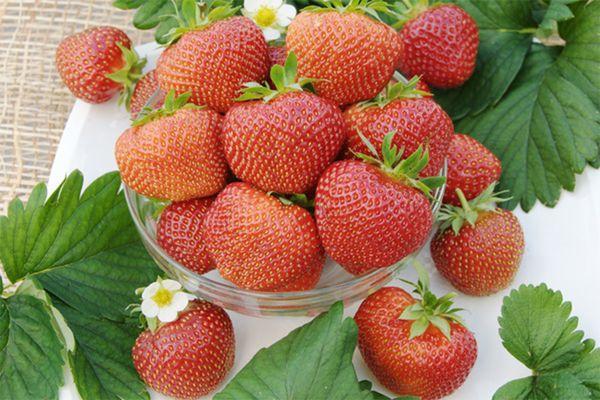
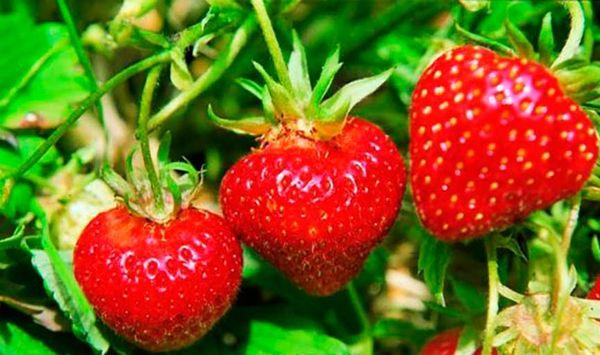
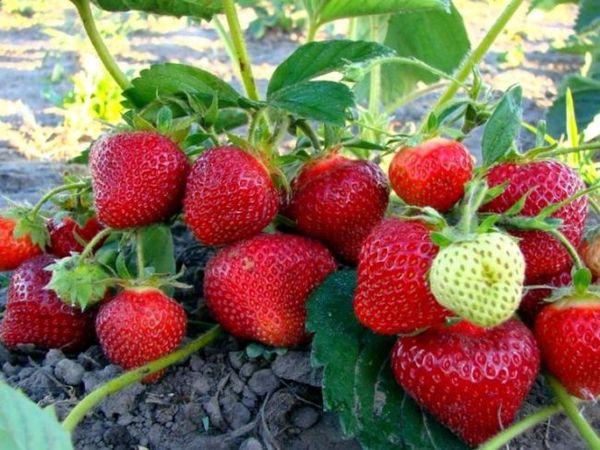
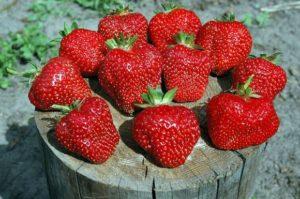
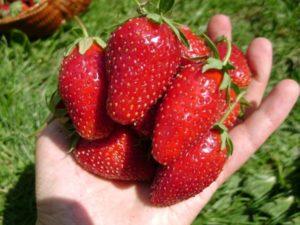
The berries are scarlet, turning burgundy when ripe. They are shaped like a blunt, shortened cone. Their skin is thin but firm; it doesn't stain when handled. The flesh is smooth, coral-red, and lighter in the center. Each berry weighs about 50 grams. Numerous tendrils form, but it's best to trim them off.
This variety is mid-season, with the first harvest arriving in mid-June. Intensive fruiting lasts up to 5 weeks.
Productivity and scope of application of fruits
With proper care and favorable weather, a bush can yield about 1.5 kg of berries. They retain their shape and color when processed. They can be used to make compotes, frozen, or eaten fresh. Jams and compotes turn a burgundy, aromatic color. Polka strawberries can also be used to make jellies, candied fruits, and preserves. Some gardeners even dry the berries, which retain their flavor and enhance it.
Take a look Also

All the pros and cons: is it worth planting?
The Polka strawberry is famous for its many advantages, but some gardeners have found a number of disadvantages.
| Pros | Cons |
| High resistance to frost and drought | Reduction of berries towards the end of the season |
| Easy to care for | The bushes “live” in one place for up to 2 years |
| Versatility of fruit use | |
| Resistance to diseases and bugs | |
| Caramel flavor of fruits |
Landing
Strawberries should not be grown in acidic, waterlogged, or saline soils. In the North, when planted in a garden, the yield is small or nonexistent. It's important to choose the right location, consider crop rotation, and fertilize the holes before planting.
Required climatic conditions
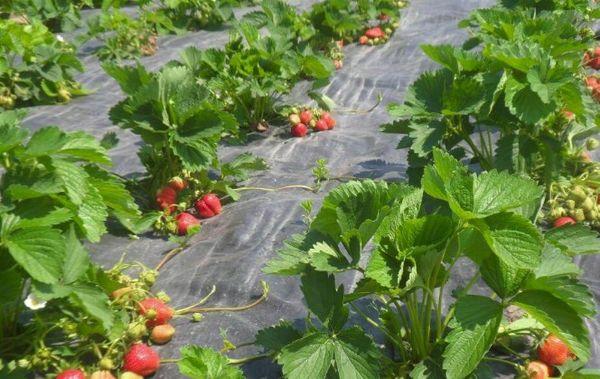
Place the beds in sunny spots, as the berries won't ripen in the shade. Since the delicate fruits don't tolerate soil contact, planting on a mulch is preferable. Lay it out along the row, cutting holes in it for the berries to grow.
Soil and site preparation
The Polka variety prefers moist, light, humus-rich soil. For better aeration, it's advisable to add a little sand or peat to heavy soils. Pre-treat the soil with insecticides such as Actellic to combat mole crickets.
The soil is tilled to a depth of a shovel two weeks before planting, and weeds are removed. A second preparation is carried out immediately before planting, loosening the soil with a hoe to improve aeration.
You can plant garlic between the beds; it repels harmful beetles.
Planting scheme and technology
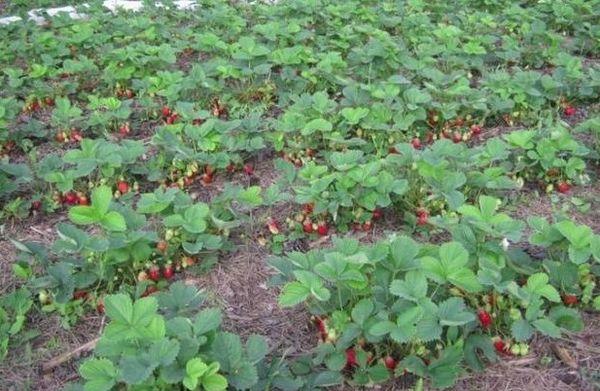
Plant seedlings in two rows, keeping a distance of 30 cm between them and 60 cm between rows. Plants should be spaced 25 cm apart. It's best to plant seedlings in adjacent rows, staggering the pattern. The beds should face north to south to ensure optimal light exposure.
The holes should be 25 cm deep. Carefully place the seedlings with their rhizomes straightened out and cover them with a 1:1 mixture of fertile soil and humus. The roots should be 10 cm long; any excess is trimmed with pruning shears.
Create a mound in the center of the hole, place the plants on it, and cover with a nutrient solution. The central bud should protrude above the bed. After planting, water the plants with 0.5 buckets of settled water.
What kind of care does the variety need?
Polka strawberries are easy to care for. They require regular watering, fertilizing, pruning, and loosening of the beds. The plants are also treated against bugs and diseases. They are covered for the winter.
Watering and fertilizing
Polka strawberries should be watered three times every two weeks starting in early April, and then reduced to twice a week starting in August. Drip irrigation is optimal. Insufficient watering can cause the berries to become smaller. It's best to water the strawberries in the morning or after 5:00 PM.
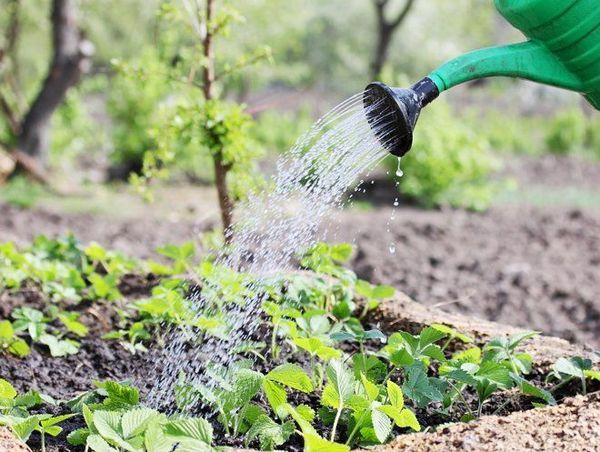
The bushes are fed with nitrogen from March.
- For the first feeding, use nitroammophoska - 1 tbsp. per bucket of water.
- At the stage of bud formation and fruit ripening, potassium nitrate, wood ash, and chicken manure infusion are taken at a ratio of 1:12.
Regular fertilization increases yield and improves strawberry immunity.
Mulching and loosening
If the beds aren't mulched, weed them after each watering. Mulching helps prevent weed growth without the need for tilling. Mulch materials such as grass clippings, sawdust, and straw are good choices.
Trimming
With the arrival of spring, inspect the strawberries for damage by bugs and diseases. Remove any dried or deformed tendrils. Trim the leaves to the heart shape with disinfected pruning shears.
Protection from insects and diseases
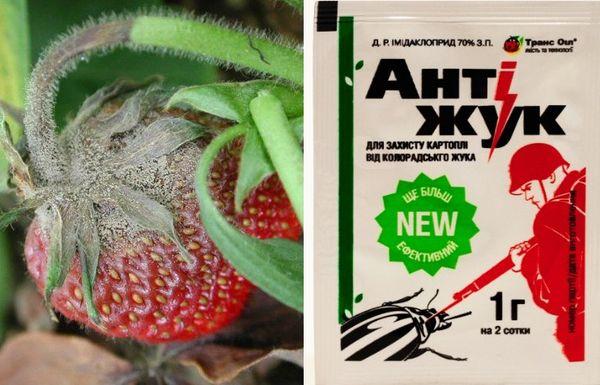
Polka strawberries are rarely attacked by pests and diseases, such as powdery mildew and gray mold. The variety has poor resistance to root diseases and verticillium wilt.
Ticks almost never attack bushes, but it is advisable to carry out preventative treatments once a month with insecticides Anti-Zhuk, Aktofit, Vermitek.
Transfer
Polka strawberries are replanted every two years. Cultivation work should be carried out in March.
Preparing for winter
After harvesting the last berries, prune the above-ground portion of the strawberry bushes. Avoid damaging the central bud. Before wintering, the plants should develop a crown of new foliage; they will begin growing vigorously in the spring. Cover the bushes with peat, spruce branches, straw, and agronomic fiber.
Methods of reproduction
Polka strawberries are propagated by runners and seeds. Both methods are effective, but gardeners most often use the former. They take the healthiest bush, cut off healthy runners, and plant them in the ground in the standard manner. Seeds are purchased when runners or seedlings are unavailable.
Reviews of Polka strawberries
Reviews of Polka strawberries are mostly positive. They'll help you make the right choice.
Victoria Kovalenko, 51 years old, Melitopol
Hello everyone! Polka strawberries are my favorite variety; I grow them at my dacha for personal consumption. Their incredible caramel flavor leaves no one indifferent. I make jam from them and add them to baked goods.
Rostislav Ivanenko, 67 years old, 56 years old, Kharkov
Hello! I've been growing Polka strawberries in my garden for about five years. The bushes were attacked by aphids, but I got rid of them with Actellic. The yield is stable, and the berries are incredibly tasty.
Lyubov Khristenko, 70 years old, Zaporizhzhia
Hello everyone! I learned about Polka strawberries from a neighbor, bought some seedlings at the market, and planted them in 2017. I get a large harvest, about 1.5 kg per bush. I mostly eat them fresh and make pies with them.
Related posts:
 Description and characteristics of the Vima Zanta strawberry variety, planting and care scheme
 Description of the Regiment Commander tomato and gardener reviews
 Step-by-step instructions for planting strawberries on black covering material and growing rules
 Description of the everbearing strawberry variety Mara de Bois and growing rules
 Description of the Kama strawberry variety, planting and care features
 Description and characteristics of the Honey strawberry variety, planting and care specifics
 Description of the Maryshka strawberry variety, how to plant and care for it
 Description and characteristics of the Zephyr strawberry variety, planting rules and care