
- Selection and growing conditions
- Description and characteristics of the variety
- The Kama strawberry bush and shoots
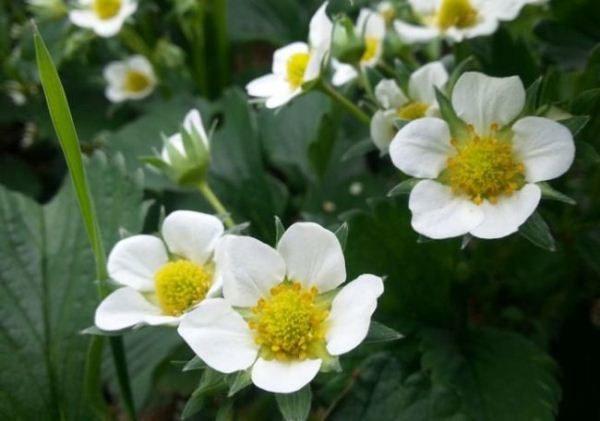
- Flowering and fruiting
- Taste and scope of application of berries
- Pros and cons of the Kama variety
- Disease resistance of the Kama variety
- Winter hardiness and drought resistance
- Planting strawberries Kama
- The best predecessors and neighbors
- Preparing Kama seedlings and beds for planting
- Timing and rules for planting operations
- Further care of the Kama variety
- Watering
- Pest and disease control
- Top dressing
- Mulching
- Loosening and removing weeds
- Plant wintering
- Methods of reproduction
- Mistakes of novice gardeners
- Reviews of the variety
The Kama strawberry variety is renowned for its many qualities and sweet fruits. It is widely grown in the southern and middle latitudes of the CIS countries. The plant requires little care and easily adapts to new locations. It's worth familiarizing yourself with the variety's characteristics beforehand.
Selection and growing conditions
The Kama strawberry was developed by Polish breeders by crossing two varieties: Kawaler and Zenga Zengana. This symbiosis resulted in a berry with a vibrant aroma and versatile uses.
Description and characteristics of the variety
The Kama strawberry tolerates long transportation well and is versatile. The cone-shaped fruits have a prominent neck, are slightly ribbed, and glossy. Each berry weighs approximately 20-30 grams and is crimson in color. The flesh is firm, and the fruits do not "run" or deform after picking. The seeds are shallow and yellow in color.
The Kama strawberry bush and shoots
Strawberry bushes are compact, reaching about 45 cm in height. They have a robust rhizome and dark green leaves, slightly pubescent underneath. The flower stalk points downward, below the foliage. A small number of large tendrils are produced.

Flowering and fruiting
The bushes are renowned for their early flowering, and the fruiting period lasts about 4-5 weeks, beginning in late May or early June. Each plant yields approximately 1 kg of fruit. After the initial harvest, the berries become smaller.
If you grow Kama strawberries in a greenhouse, they ripen by mid-April.
Taste and scope of application of berries
Technically ripe Kama berries acquire the characteristic coloring of the variety, but the flesh remains firm and the flavor is slightly tart. More mature fruits develop a sweet, dessert-like flavor. They are eaten fresh, frozen for the winter, added to baked goods, and used to make preserves, jellies, and marshmallows.

Pros and cons of the Kama variety
The Kama strawberry variety has many advantages, but there are also some negative aspects.
| Pros | Cons |
| High yield | Low fruit set |
| Early ripening period | Winter shelter required |
| Duration of fruiting | |
| Rich, sweet taste | |
| Safe transportability | |
| Resistance to drought, diseases, and beetles | |
| Possibility of cultivation in greenhouse conditions |
Disease resistance of the Kama variety
Kama strawberries are highly resistant to diseases, but without proper care, their protective properties become weaker. Gardeners recommend preventative spraying.

Winter hardiness and drought resistance
Kama strawberries tolerate frosts well, but not sudden spring freezes. The bushes overwinter in temperatures down to -25°C (-25°F) without any problems. In cooler areas, it's preferable to cover them for the winter. The plant doesn't like drought, but short-term droughts aren't a problem.
Take a look Also

Planting strawberries Kama
Strawberries should be planted in a sunny location; shade is undesirable. Avoid placing seedlings in low-lying areas, as moisture often accumulates there, which can lead to rhizome rot. Ideally, plant the bushes in level areas away from northerly winds.
The best predecessors and neighbors
Strawberries' happy neighbors include members of the Cruciferae family, legumes, or greens.
 It's not advisable to plant berries in areas previously occupied by tomatoes, cucumbers, potatoes, Jerusalem artichokes, or sunflowers. They severely deplete the soil, draining it of nutrients.
Preparing Kama seedlings and beds for planting
The seedlings should be inspected for signs of disease and beetle attacks. Damaged roots and shoots should be removed. Dip the seedlings in a 1% potassium permanganate solution for disinfection and in the root growth stimulator Epin for 2 hours.
Two weeks before planting, the soil is plowed to the depth of a shovel, weeds are removed, and humus and ash are added.
It should be light, nutritious, loose, well-aerated, and slightly acidic. Just before planting, loosen the soil again, add wood ash and peat, and mix it into the soil.
Timing and rules for planting operations
It is recommended to plant in late March, early April, or September. The latter method is suitable for southern latitudes. Kama strawberries should be established before the onset of cold weather.
The seedlings are planted according to the diagram below:
- the distance between bushes is 40-50 cm;
- planting hole depth – 30 cm;
- the distance between the beds is 60-80 cm.
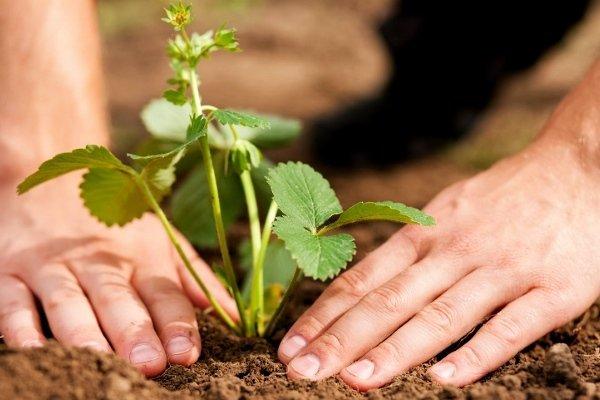
The plantings should not be too dense, as the bushes grow very large and require a large area for full development.
Further care of the Kama variety
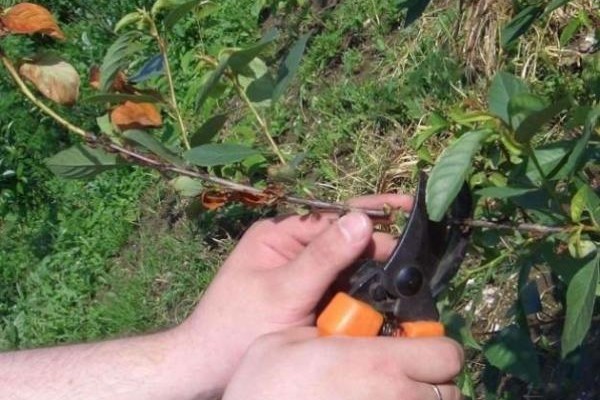
Standard strawberry care involves regularly weeding the beds, watering, and fertilizing. The bushes are treated for pests and beetles, and the runners are trimmed.
Watering
Young Kama strawberry bushes should be watered daily, preferably by sprinkling. Once the seedlings have established themselves, reduce the frequency of watering. The plant is quite drought-resistant, but the yield may suffer. Regular watering and mulching will prevent the plant from fading, even in hot weather. Without mulch, the strawberry plant should be watered more frequently, and the soil should be loosened after each application. Use settled, room-temperature water. Each plant requires approximately 0.5 buckets of liquid.
Pest and disease control
If proper care is not provided, damaged seedlings are planted, or there are unfavorable weather conditions, strawberry bushes may be attacked by insects.
- Kama strawberries are sometimes affected by nematodes. The insect's symptoms include distorted and misshapen leaves. If treatment isn't started promptly, the disease can spread to the fruit. The disease can be cured by completely eliminating the damage to the seedlings. All affected bushes must be removed.
- Strawberry mites can also attack strawberry bushes, but they are difficult to eradicate. During warm, rainy summers, the parasite sucks the sap from the leaves, preventing the plant from properly distributing nutrients. To combat the mite, preventative measures are necessary. Repot the bushes every three years. Plant seedlings separately to prevent the mite from attacking all the plants at once. Treat the strawberries with Actellic before flowering.
- Weevil. This parasite prefers to feast on strawberry buds, choosing the largest specimens. To eradicate it, plants are treated in three stages. First, the bushes are sprayed with Iskra. Then, with Fitoverm, and finally, with a Karbofos emulsion.

Among the diseases, Kama strawberries are susceptible to the following pathologies.
- Rot. All above-ground parts of the plant are affected by this beetle. Infection occurs when, during flowering, fungal spores in the soil penetrate the pollen-laden stalk. To save the plantings, spray them with copper-containing agents at the beginning of the season, followed by fungicide treatments during the active growth phase. Then, once every 10 days, spray the above-ground parts with an iodine solution – 10 ml per bucket of water.
- Ramularia. This disease is characterized by the appearance of round or angular reddish-brown spots on leaves. As the disease progresses, these spots become whitish with a purple border. Sometimes, the center of the spot on older leaves falls out, forming a hole. Brown spots, either sunken or elongated, appear on leaf petioles, peduncles, and fruit stalks. Over time, these spots turn white in the center. To prevent the development of white spot, avoid overcrowding in the beds. In March, clear the planting of old foliage and plant debris. After harvesting, mow down the leaves and water the strawberries generously. In case of severe infestation, before the beginning of the growing season, spray with Nitrafen (200 g per 10 liters of water) or a 4% Bordeaux mixture to control the infection. You can dilute 300-400 g of copper sulfate in 10 liters of water.
- Brown spot. This disease causes bushes to wilt. The leaves of the Kama strawberry plant become covered in blurred or restricted veins, brownish spots. When the infection is severe, the centers drop out. On other parts of the strawberry plant, the spots are oblong. Later, the centers become whitish. In wet weather, brown spot appears from July to September. The disease develops in densely packed beds and poor agricultural practices. It should be controlled in the same way as ramularia.
 If you carry out preventative treatments of bushes, the risk of the above problems occurring is practically zero.
Top dressing
If Kama strawberries were planted in the spring, after two weeks, the bushes are fertilized with an organic infusion, 30 grams of superphosphate and a handful of wood ash dissolved in 10 liters of water. The plant requires further feeding when flower stalks appear and the first ovaries set. Use mullein, diluted 1:6, or poultry manure, diluted 1:20.
Fertilization can be done not only through roots but also through foliar feeding. Fermented nettle infusion is used. At the end of summer, the bushes are fed with superphosphate and wood ash.
It's important that mineral fertilizers don't contain chlorine, which negatively impacts strawberry development. Before applying fertilizer, water the soil to prevent rhizome burns.
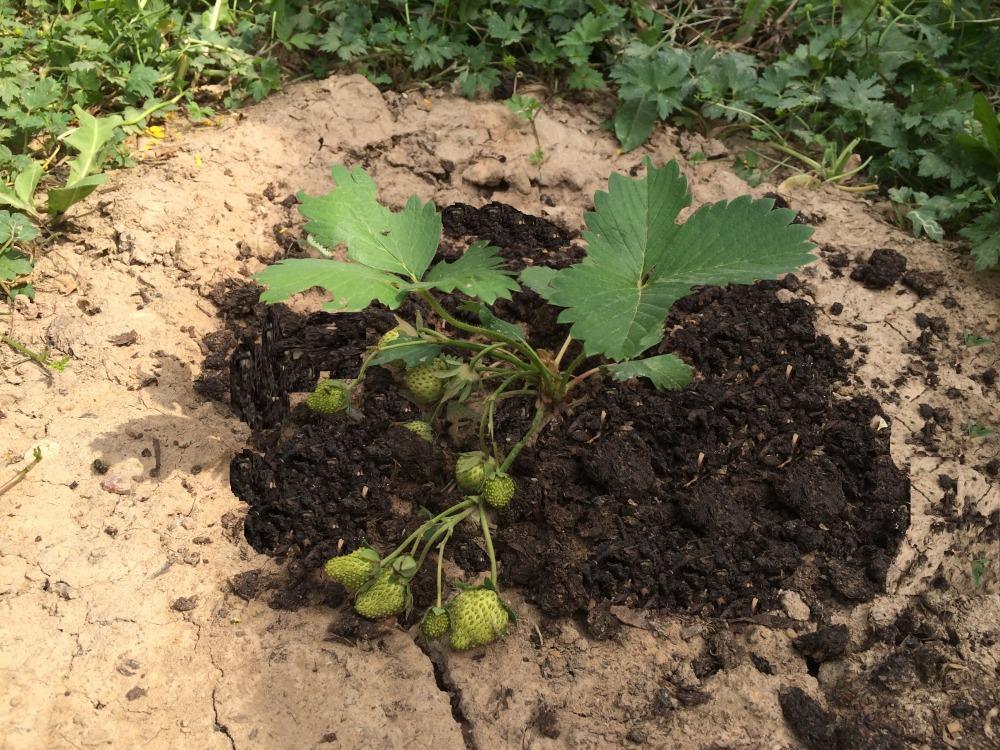
Mulching
When Kama strawberries are planted in the spring, by the end of May, the bushes are mulched with straw. This maintains optimal soil temperature and moisture levels, prevents fruit contamination, and provides the roots with organic matter from the decomposing straw layer. Mulch protects the soil from overheating in the summer and freezing in the winter. In addition to straw, sawdust, burlap, and peat can be used.
Take a look Also
Loosening and removing weeds
The soil around Kama strawberry bushes is loosened with a hoe after each watering or heavy rainfall. This is important to improve soil aeration and stimulate plant growth. Weeds should also be removed, as they block sunlight from reaching the strawberries and rob them of nutrients.
Plant wintering
After the leaves fall, Kama strawberries are covered with hay, fallen leaves, and spruce branches. In regions with cold winters, the plantings are covered with agronomic fiber. In the spring, after the threat of frost has passed, the winter cover is removed.

Methods of reproduction
The optimal method for propagating Kama strawberries is by planting runners. The mother plants should be one to two years old, and the runners should be large. They quickly establish and root. They are planted in late March, when the temperature warms up to 10 degrees Celsius and the risk of frost has passed.
Mistakes of novice gardeners
Inexperienced gardeners sometimes make common mistakes that hinder the proper development of strawberries. Common mistakes include the following.
- Lack of preliminary disinfection of seedling material.
- The wrong place for planting is highly acidic soil or too salty.
- Lack of additional plant cover during cold periods.
- Failure to adhere to the watering schedule. It's especially important to water the Kama strawberry plant on hot days.
If you avoid such mistakes, the crop will reward you for proper care with a bountiful, tasty harvest.

Reviews of the variety
Below are some gardeners' comments about the Kama strawberry, which will help you learn more about it.
Valentina Tolmacheva, 39 years old, Dnipro
Hello everyone! I've been growing Kama strawberries in my garden for about two years now, and I get a good harvest, about 1 kg per bush. The fruits are juicy and sweet, and I usually eat them fresh.
Evgeniya Mikhailenko, 60 years old, Bila Tserkva
Hello! I've been growing Kama strawberries at my dacha since 2015 for personal use. The berries are large and delicious. The bushes haven't had any diseases yet, and I mulch them regularly with straw.
Valentin Gornostay, 49 years old, Nikopol
Hi everyone! I planted Kama strawberry bushes on a neighbor's recommendation and am looking forward to the harvest. Last year, the berries were juicy and deep red; I even got around to making some pies with them.
Related posts:
 Description and characteristics of the Vima Zanta strawberry variety, planting and care scheme
 Description of the Florence strawberry variety, planting and care features
 Description of the everbearing strawberry variety Mara de Bois and growing rules
 Step-by-step instructions for planting strawberries on black covering material and growing rules
 Description of the everbearing strawberry variety Selva and cultivation technology
 Description and characteristics of the Korona strawberry variety, planting and care scheme
 Description of the Bogota strawberry variety, planting and care features
 Description of the Holiday strawberry variety, cultivation and propagation methods