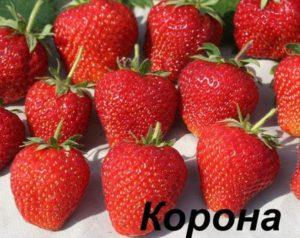
The runnerless strawberry variety offers a wide variety of cultivars and a number of advantages. Many gardeners prefer this particular variety. It makes the work and care of the crop easier, helping them manage their precious time wisely. It also delivers a bountiful harvest.
Advantages and specifics of growing runner-less strawberries
These strawberry and wild strawberry varieties have their own advantages and disadvantages. Each gardener makes their own choice, taking all factors into account. The advantages include:
- Absence or small amount of whiskers;
- Long fruiting period;
- Long-term drought does not affect the quality and quantity of the harvest;
- Early to mid-season ripening;
- A large number of berries per bush.
Among the disadvantages, some note weak frost resistance. After weighing all the advantages and disadvantages, you can decide whether this type of strawberry is worth growing.
Rules for planting and propagation
The best propagation method is division. This is the only way to propagate these varieties. After harvesting, dig up the bushes. Separate the rosettes from each other, carefully cut the roots, and divide them. Then transplant the individual bushes to their permanent locations.
Planting is carried out according to a specific pattern. A distance of 25 cm is maintained between bushes, and 60 cm between rows. After transplanting into the open air, the bushes are watered generously.
Important! Planting should be done in cloudy weather, as this will help the seedlings take root better.
Proper care
To obtain a healthy harvest, you need to carry out regular care procedures:
- Water the strawberries generously as the soil dries out.
- Loosening is done after each watering to prevent the formation of a soil crust.
- Weeding is carried out thoroughly so as not to deplete the soil;
- The crop is fed mainly with organic fertilizers or special mineral complexes;
- For the winter, plants are covered with insulation, organic materials, and covered with snow on top to a height of 10 cm;
- The harvest is collected in a timely manner to prevent the berries from becoming overripe;
- Propagation takes place after harvesting.
The best varieties of everbearing strawberries
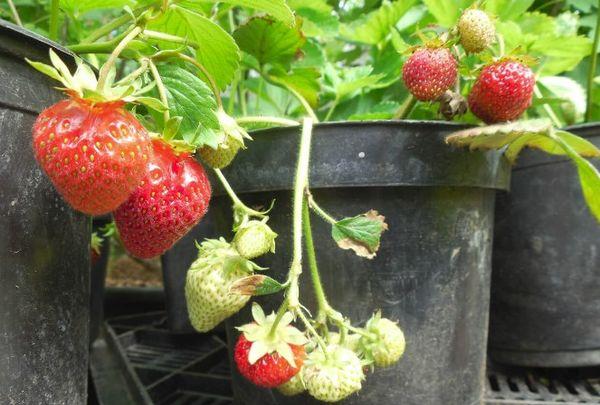
Strawberry varieties are divided into early-ripening, mid-season, and late-ripening varieties. Specific varieties are recommended for each region.
Alexandria
A small-fruited strawberry. The bush produces numerous ovaries, with berries reaching a maximum weight of 8 g. This variety has been cultivated since 1964, pioneered by Americans. A single bush yields approximately 350 g. It tolerates temperature fluctuations without affecting yield.
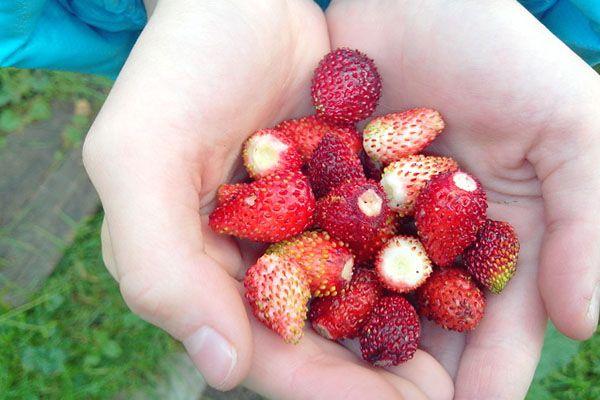
Baron Solemacher
A large-fruited strawberry variety. Berries reach 10 g, yielding a high amount – over 600 g per bush. Fruiting remains consistent for six years. The rosettes are low, and the bushes are compact.
Bolero
It features compact bushes and tolerates adverse weather conditions and fluctuations. It demonstrates drought tolerance and strong immunity to fungal diseases and some pests. Fruiting remains consistent for five years.
Garland
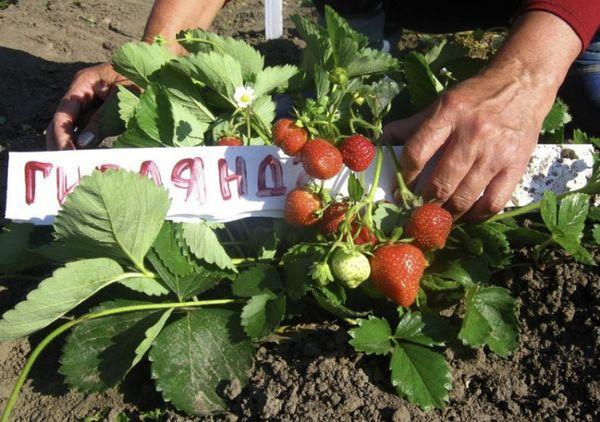
Large-fruited strawberries have distinctive tall stems. These produce berries, which are easy to pick due to their elevated position. The bushes are large, the rosette spreads, and the foliage is green. The berries transport and store well.
Yellow miracle
The variety's distinctive feature is its yellow berries. They have a pleasant fruity flavor, reminiscent of pineapple with hints of kiwi. The bushes thrive and tolerate drought well.
Important! This variety makes a great addition to any garden and is often used in landscape design.
Kimberly
An early-ripening strawberry variety characterized by smooth, elongated fruit. It has a high sugar content and a predominantly pleasant caramel flavor. The bushes are medium-sized, with green foliage and a spreading rosette. The berries are small, weighing approximately 10 g.
Lyubasha
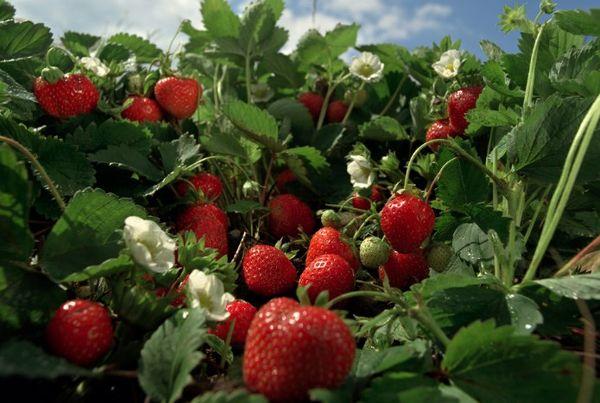
Strawberries are suitable for growing in pots, open ground, and greenhouses. They are resistant to most fungal diseases and drought. The bushes are medium-sized, producing numerous flower stalks that produce berries up to 10 g in size.
Merlan F1
This hybrid variety delights with its large, sweet berries. It bears fruit two years in a row. It has moderate frost resistance. Suitable for cultivation in temperate and southern climates.
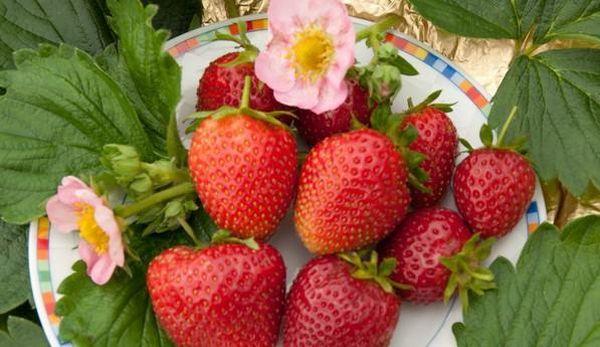 Important! The Merlan variety is an excellent alternative for beginning gardeners.
Pandora
A late-ripening strawberry. Compared to other runnerless strawberry varieties, it produces large berries. The bushes are medium-sized, the shoots are large, and the rosettes are spreading. The fruits have a sweet flavor.
Roxana
A late-ripening strawberry. Suitable for greenhouse cultivation in temperate climates. Severe frosts kill it, making it unsuitable for northern climates. In the south, it ripens by the end of September. The bush produces numerous ovaries, and fruiting occurs in stages.
Troubadour
A product of British scientific selection. A single bush produces approximately 100 berries. Fruiting occurs throughout the season, and is continuous. The berries are pink, with numerous seeds. They are small in size, weighing up to 10 g.
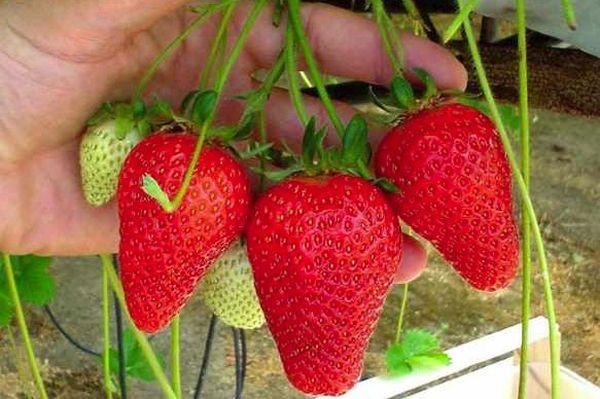
Honey
Late-ripening berries, large bushes, and spreading green leaves. The fruits are pleasant to the taste and easy to transport. Ripening begins mid-season. It is recommended to cover strawberries for the winter and grow them in temperate or southern climates.
Elsanta
This variety is suitable for growing in all regions of Russia. It thrives in the central and northern climates. The bushes are strong, vigorous, and massive. The berries are medium-sized. The plants are frost-resistant, partially drought-resistant, and resistant to fungal diseases.
Related posts:
 How to grow strawberries at home
 Description of the Florence strawberry variety, planting and care features
 Description of 36 of the best sweet and large varieties of gooseberries
 How to grow strawberries in Siberia outdoors: the best varieties and care
 Description of the Holiday strawberry variety, cultivation and propagation methods
 The best varieties and cultivation of everbearing strawberries, fertilizing and propagation
 Description and characteristics of the Vima Zanta strawberry variety, planting and care scheme
 Description of the everbearing strawberry variety Selva and cultivation technology