
- History of selection and characteristics of the variety
- Botanical description of the Chamora Turusi strawberry
- Flowering and fruiting
- Harvesting and selling berries
- Advantages and disadvantages
- Planting technology
- Preparing the site and seedlings
- The best predecessors and neighbors for strawberries
- Timing and rules for planting bushes
- Specifics of care
- Watering
- Top dressing
- Trimming
- Prevention
- Diseases
- Pests
- Reproduction methods
- By dividing the bush
- Seeds
- With antennae
- Reviews from summer residents
Thanks to the work of scientific breeders, many unusual strawberry varieties with unique characteristics and flavors have emerged. These qualities are found in the Chamorra Turusi strawberry variety, whose ripe berries are in no way inferior in size to a regular apple.
History of selection and characteristics of the variety
The origin of the Chamora Turusi strawberry variety remains controversial to this day. But in fact, no one has yet been able to pinpoint the true origins of this unique garden berry.
Some believe this berry crop came to our latitudes from distant and mysterious Japan, and consider it a Japanese selection. Other experts insist that the Chamora Turushi strawberry was selectively bred from known fruit varieties.
But whoever created the new strawberry variety certainly wasn't mistaken in their experiments and calculations. The variety was certainly a hit with everyone who tried it.
Botanical description of the Chamora Turusi strawberry
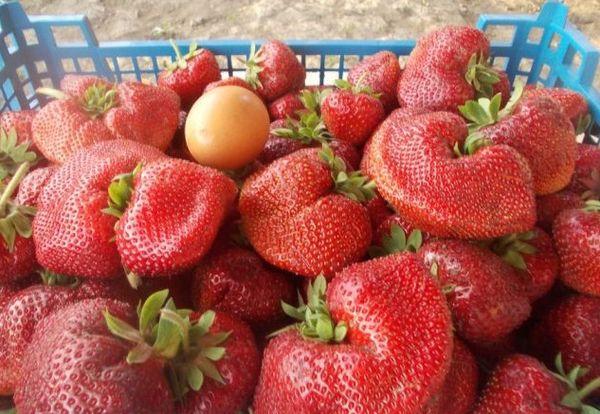
This fruit crop is characterized by vigorous growth and strong, tall, sturdy bushes with large leaf blades and multiple shoots. During the active growing season, long flower stalks emerge, bearing large, white flowers.
This hybrid variety of garden strawberry tolerates frost well and has natural immunity to some fungal and viral diseases.
Note! Without additional insulation, plants can withstand temperatures down to -35 degrees Celsius, making Chamora Turusi strawberries suitable for growing in any climate zone.
Flowering and fruiting
To ensure a consistent, high-quality berry harvest, the fruit tree needs to establish itself and gain strength during the first year of growth. Therefore, flowers are removed, and fruiting is delayed for a year.
In the second year, the garden crop will delight you with an abundant harvest of large, sweet berries.
Important! Chamora Turusi strawberries can bear fruit for up to 12 years, but only with careful care and timely replanting every 4-5 years. Otherwise, yields decrease and the fruits become smaller.
Harvesting and selling berries
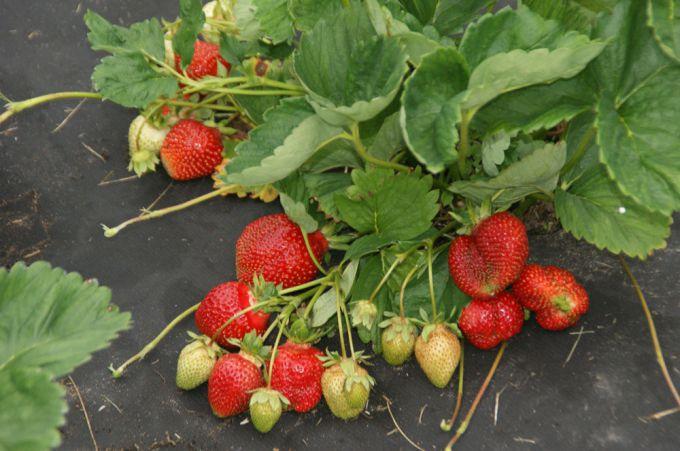
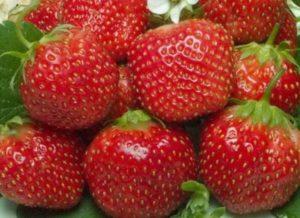
The harvest ripens at the end of July. This is when the berries reach their maximum size and acquire a burgundy hue. The ripened fruits develop a distinct strawberry aroma.
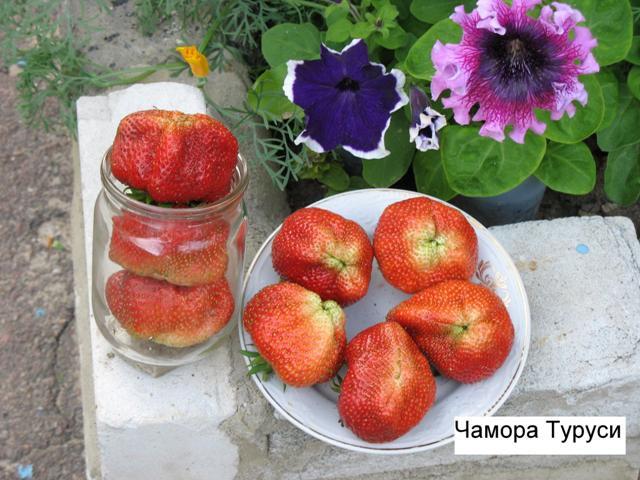
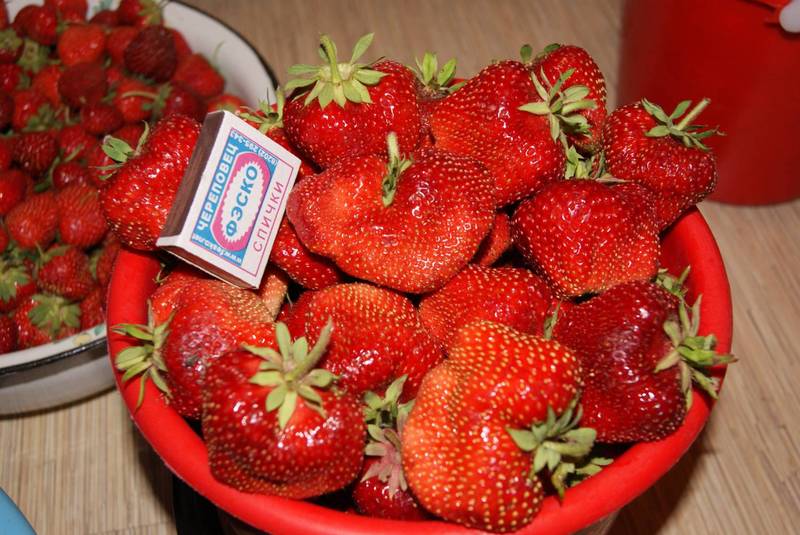
One bush produces up to 2.5 kg of large berries, weighing from 60 to 80 g. Some fruit specimens reach 100-110 g.
The Chamorra Turusi strawberry is considered to be easy to care for and is often grown on an industrial scale.
The fruits, with their dense, juicy, and sweet flesh, store well and are transported over long distances. The primary recommendation for eating ripe berries is fresh. They are also used for jam, preserves, freezing, and drying.
Advantages and disadvantages
Growing this variety of garden strawberry requires little effort. However, to ensure a high-quality harvest, it's important to understand all the advantages and disadvantages of cultivating this hybrid crop.
Advantages of the variety:
- High yield.
- Easy to care for.
- The variety is distinguished by its frost resistance.
- The berries are very large, with excellent taste characteristics and the possibility of long-distance transportation.
- When ripe, the fruits develop a distinct strawberry aroma.
- Universal use of the harvest.
The Chamorra Turusi variety does not tolerate drought, so it is demanding regarding watering schedules.
Flaws:
- If there is prolonged drought, the plant dies.
- Large bushes require a large area for cultivating fruit crops.
- The berry bush is often attacked by pests, so additional preventative treatments are required.
Interesting! Its long-term storage capabilities, long-distance transport, and unique appearance have made the Chamora Turusi strawberry one of the most expensive fruit varieties available in our market.
Planting technology
For planting berry bushes, select level, well-lit, and draft-free plots of land. Strawberries should not be planted on steep slopes or in low-lying areas.
Preparing the site and seedlings
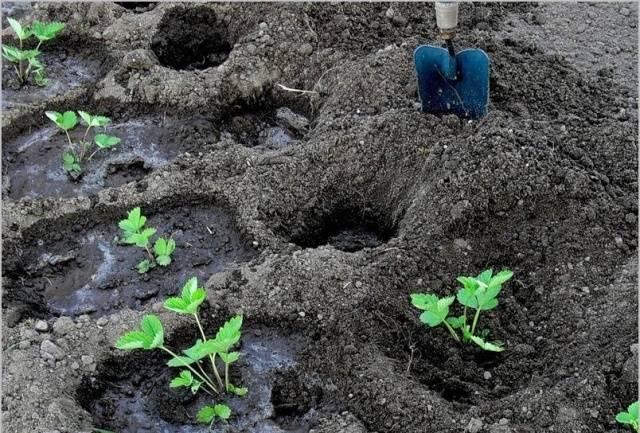
For garden strawberries, choose loose, fertile soil. Add peat and compost to sandy soil, and mix clay soil with sand. Add lime or ash to acidic soil.
- The land plot is carefully dug up.
- Organic and mineral fertilizers are added to the soil.
- Two to three weeks before planting, dig holes no more than 15-20 cm deep. The distance between holes is 30 cm, and between rows, 40-50 cm.
- Before planting in open ground, the roots of the seedlings are treated with a growth stimulant and antibacterial preparations.
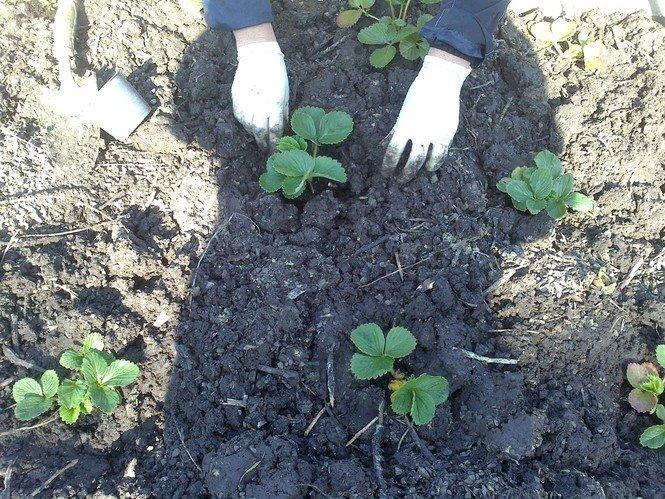 Important! If the plot is located in a region with high humidity, increase the distance between the holes to 50-60 cm.
The best predecessors and neighbors for strawberries
To grow a healthy, fruitful garden crop, it is necessary to follow crop rotation rules.
Recommended predecessors and neighbors.
- Garlic. This vegetable cleanses the soil of fungal spores and pests, so strawberries grown with garlic will grow healthy and fruitful.
- Beets and carrots have deep root systems, while strawberries have shallow root systems. The plants don't compete for moisture and nutrients.
- Plants from the legume family enrich the soil with nutrients that fruit crops need.
Also, any greens and lettuce are excellent predecessors for garden strawberries.
It's not recommended to plant garden berries after tomatoes, sunflowers, and plants from the nightshade family. These crops share similar diseases and pests, so strawberries planted in such beds often become diseased and die.
Timing and rules for planting bushes
The timing for planting garden crops depends on the region's climate. In southern and temperate latitudes, berry bushes are planted outdoors in late summer or early fall. The seedlings have time to establish roots before the first frost and will easily survive winter frosts.
In regions with cold climates, strawberry bushes are planted in the spring, as soon as the daytime temperature rises to +15 degrees.
- Fertile soil is poured into pre-prepared holes.
- A seedling is placed in the middle of the hole.
- The roots of the bush are evenly distributed throughout the hole and sprinkled with soil.
- The soil under the bush is lightly compacted and watered generously.
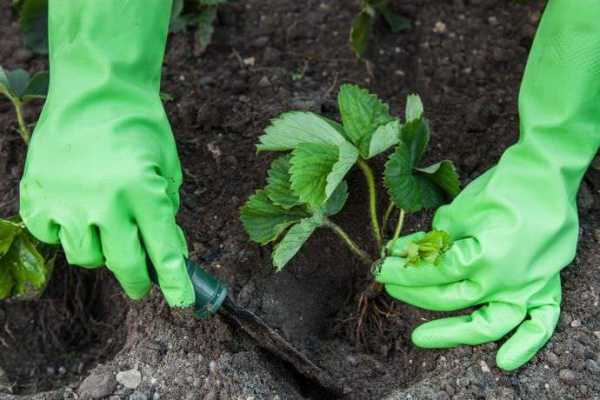 Important! The core of the bush must be at ground level. If planted too low, the strawberries will rot; if planted too high, they will dry out.
Specifics of care
The Chamora Turusa strawberry is unpretentious in care, but watering and fertilizing are necessary for garden berries.
Watering
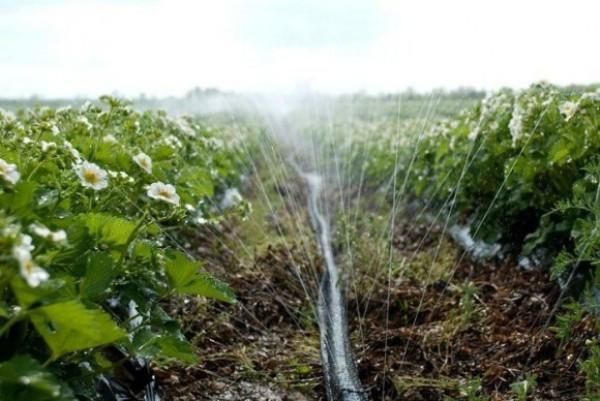
Excessive soil moisture promotes the spread of fungal diseases. Insufficient moisture, however, causes the berries to become smaller and the pulp to develop voids. Therefore, proper and timely watering is essential for this strawberry variety.
Berry bushes are watered once every 6-8 days; during extreme heat and drought, irrigation is performed more frequently. Weeding and loosening the soil are easier after watering.
Tip! Before flowering, water not only the soil beneath the plant but also the foliage. Once the plant enters the flowering phase, water the rhizomes.
Top dressing
To ensure high-quality fruit production, strawberries require additional fertilizers and supplements. The first time, berry bushes are fertilized with organic matter is before flowering. During fruit set, the fruit crop is fed with a mineral complex.
In the fall, before winter dormancy, cow dung and humus are added to the soil.
Nitrogen fertilizers should be used with caution. This type of fertilizer stimulates the plant's rapid growth, which negatively impacts crop quality.
Trimming
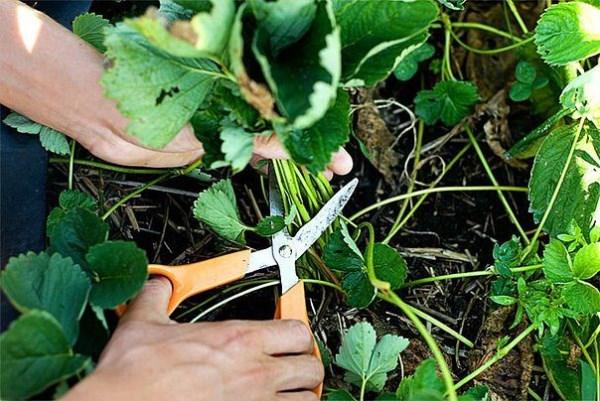
Before winter dormancy, strawberry bushes are trimmed of excess, damaged, and dry leaves. Multiple shoots and tendrils are also trimmed. The beds are thoroughly loosened, and the soil is mulched with sawdust or dry leaves. Sanitary pruning of unwanted leaves and shoots is also carried out in early spring.
Prevention
To protect plants from fungal and viral infections, as well as pests, preventative spraying of berry bushes and soil is carried out in spring and autumn.
Diseases
If agricultural practices aren't followed, garden strawberries are susceptible to fungal infections. To prevent serious diseases, spray the bushes with copper-based fungicides in early spring.
Pests
To prevent and control pests, in the spring, garden crops are treated with professional products containing insecticides.
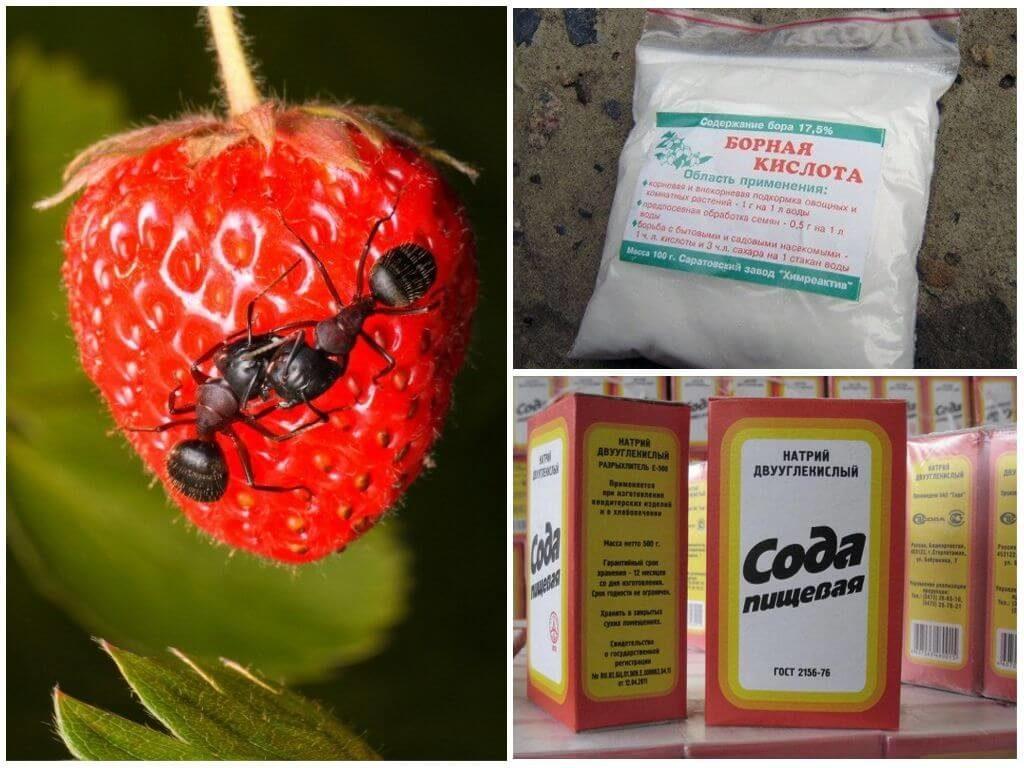
Also, solutions with garlic and iodine are used for preventive purposes.
Reproduction methods
Garden strawberries of the Chamori Turusa variety are propagated by seed and vegetative methods.
By dividing the bush
For the bush division method, 3-4 year old plants are selected.
- The mother bush is carefully dug up and removed from the ground.
- The roots of the plant are cleaned of soil and washed.
- Roots that are too long are cut to 5-6 cm.
- The bush is divided into several parts, each of which should have 3 to 5 leaves and full rhizomes.
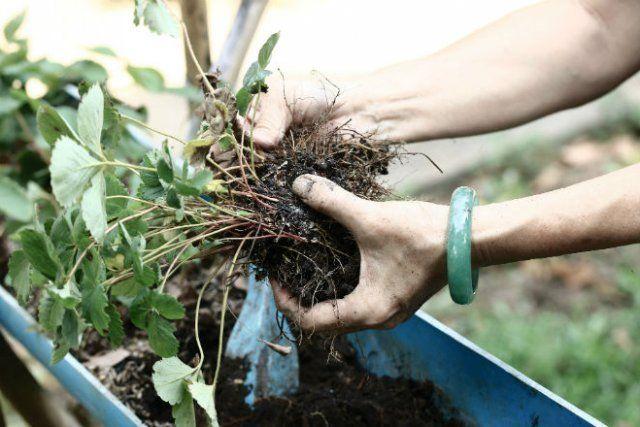
After division, the plants are planted in separate beds.
Seeds
Before planting, the seeds are placed in fertile, moist soil and sent to the vegetable drawer of the refrigerator for 2 weeks.
After 14 days, the seeds are removed from the cold storage and moved to a room with room temperature. As soon as the first true leaves appear, the seedlings are transplanted into different containers. With the arrival of spring, the plants are planted outdoors.
With antennae
For garden strawberries, propagation by runners is considered the simplest and most natural way to rejuvenate and increase the number of fruit crops in a garden plot.
- For propagation by runners, mother bushes that are at least 2-3 years old are suitable.
- The strongest and most durable tendril is selected from the strawberry bush, and the rest are cut off.
- The shoot is covered with soil and left for 4-5 weeks.
- After the time has elapsed, the tendril is carefully dug up and cut off along with the formed roots.
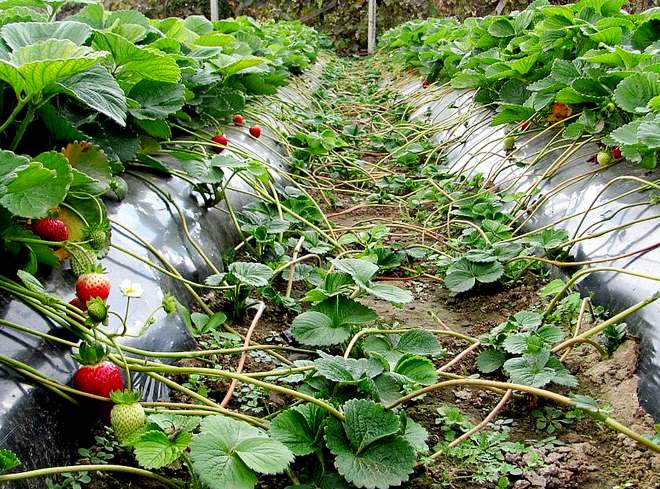
The finished berry bush is planted as an independent plant in a separate bed.
Reviews from summer residents
Egor Nikolaevich 51 years old. Samara.
I've been growing the Chamora Turusi strawberry variety for many years. Its only weakness is its demanding watering. If you don't water enough, the crop shrinks; if you overwater, it starts to rot. But I found a happy medium, and it's now my favorite strawberry variety. I haven't encountered any diseases yet, but I do treat the bushes with fungicides every spring.
Sergey Viktorovich 43 years old. Krasnodar.
My wife and I decided to try growing strawberries for sale. We settled on the Chamora Turusi variety, and we weren't disappointed. It's completely low-maintenance, and the harvest exceeded all our expectations. The berries are large and sweet, a real treat to behold.
Oksana Viktorovna 60 years old. Sevastopol.
I've been planting Chamora Turusi strawberries for four years now. It's not the only variety I grow in my garden, but among the large-fruited ones, it's the most productive and early-ripening. I can harvest up to 1.5 kg of berries from a single bush, which is plenty for both children and for sale. The key is to avoid planting too densely, as this will cause the berries to become smaller and less sweet.
Related posts:
 The best grape varieties for growing in the Urals, planting and care rules in summer
 How to propagate and grow peas, cultivation technology, and care in open ground
 Description of the best potato varieties of domestic and foreign selection
 Description of varieties of sowing peas and cultivation, to which family they belong
 The best eggplant varieties for growing in a polycarbonate greenhouse: planting and care
 Description of the Velika grape variety, cultivation and care tips
 Description of the 23 best pear varieties for the middle zone, planting and care rules
 80 Best Eggplant Varieties for Different Regions with Descriptions and Characteristics