
- History of creation
- Description and characteristics of the Bereginya garden strawberry
- Berries and bush
- Winter hardiness and disease resistance
- Ripening period and yield
- Transportability and application
- The main pros and cons of the variety
- Specifics of growing strawberries
- Soil preparation
- Landing time
- The landing process
- Gardeners' tips for care
- Top dressing
- Watering
- Shelter for the winter
- Protecting crops from diseases and pests
- Reproduction
- Harvesting and storing the Bereginya strawberry crop
Bereginya is a young strawberry variety. It is popular among gardeners and farmers due to its resistance to weather fluctuations and pests. This variety is suitable for both gardening and large-scale commercial cultivation. Its dense, aromatic berries are easy to transport and preserve at home. Planting, caring for, and propagating Bereginya strawberries are no different from traditional farming techniques.
History of creation
Bereginya is a Bryansk-bred variety. It was developed in 1998 by crossing American Concord and Gonzaga. Scientists from the All-Russian Institute of Horticulture and Selection and Technology were involved in creating the hybrid.
Description and characteristics of the Bereginya garden strawberry
This non-remontant and late variety is distinguished by its brightly colored fruits and fluffy flower stalks.
Berries and bush
Bereginya's appearance:
- medium-sized semi-spreading bush;
- 7-8 light green leaves with serrated edges and a slightly ribbed surface;
- inflorescences are small, peduncles are fluffy;
- mustache with a red tint;
- flowers are white;
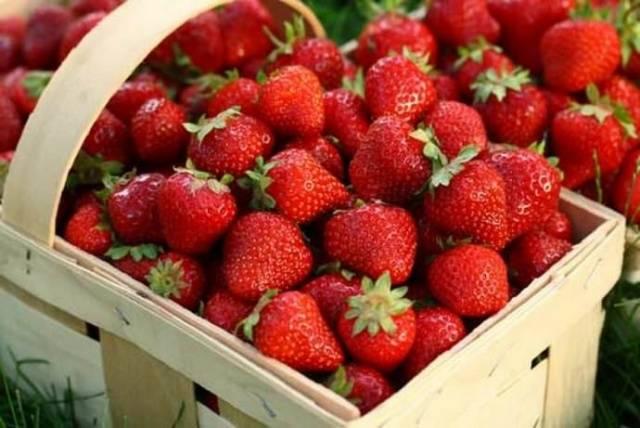
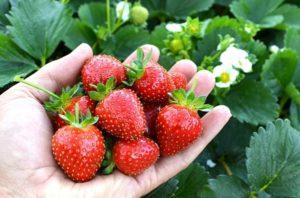
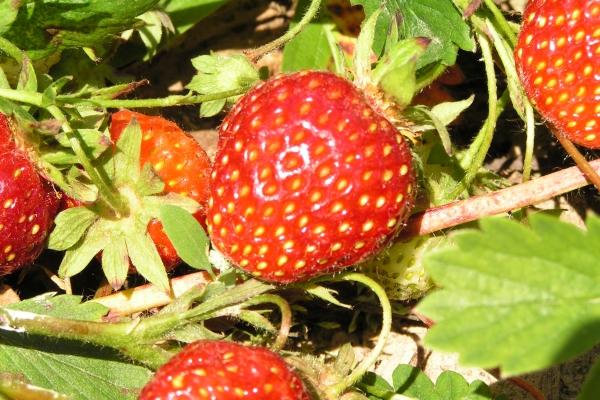
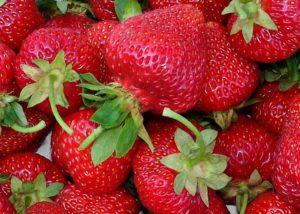
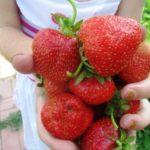
- the berries are red-orange, rounded at the bottom;
- the flesh is red and juicy.
A sign of ripeness is a persistent aroma emanating from the beds. The fruits have a sweet and sour taste.
Winter hardiness and disease resistance
The Bereginya strawberry variety tolerates frost, drought, thaws, and freezing temperatures. Its buds open slowly, so they can withstand temperature fluctuations.
Bereginya is resistant to strawberry mites and verticillium wilt. In northern regions, high humidity can cause gray mold. A technical method used to combat the disease is to increase the distance between plants when planting.
Ripening period and yield
The Bereginya variety ripens in the third ten days of June. The yield increases each year. One Bereginya strawberry bush produces 400-600 grams of berries. A hectare yields 15-30 tons of fruit.
Transportability and application
The dense berries are not crushed during transportation. The harvest can be shipped long distances without damage. The variety is suitable for home and farm cultivation.
The main pros and cons of the variety
100 grams of Bereginya strawberries contain 6-7% sugars and up to 80 milligrams of vitamin C. This makes them a healthy choice for preserving for the winter.
Positive qualities for growing:
- self-pollinating variety with bisexual flowers;
- high yield;
- the berries do not become smaller and remain large in size throughout ripening;
- the bushes produce many runners, the variety is easy to propagate;
- unpretentiousness to weather conditions;
- resistance to diseases.
The disadvantage of Bereginya is the occurrence of gray mold at high humidity.
Specifics of growing strawberries
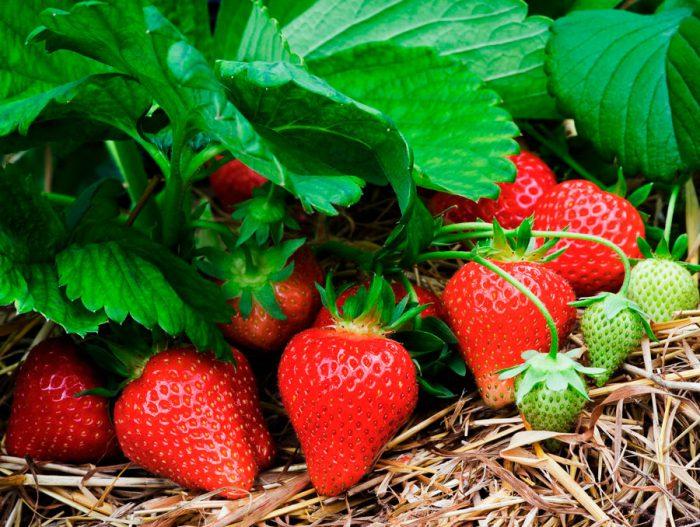
For strawberry beds, choose a sunny spot in the garden. A raised site with loose soil is ideal. The groundwater depth should be 70-100 centimeters.
Soil preparation
Bereginya thrives in any neutral or slightly acidic soil. The exception is moist, rich sandy or clayey soil. Sandy loam soil is best. Humus content should be 2-3%.
The soil is prepared a month before planting or in the fall. The area is dug over with fertilizer.
Apply 10 kilograms of organic fertilizer, 100 grams of superphosphate, and 200 grams of potassium sulfate per square meter. The superphosphate will be better absorbed if you add 25 grams of ammonium sulfate. After 3-4 years, the strawberries are transplanted to another site to maintain high yields. The site is pre-seeded with green manure.
Landing time
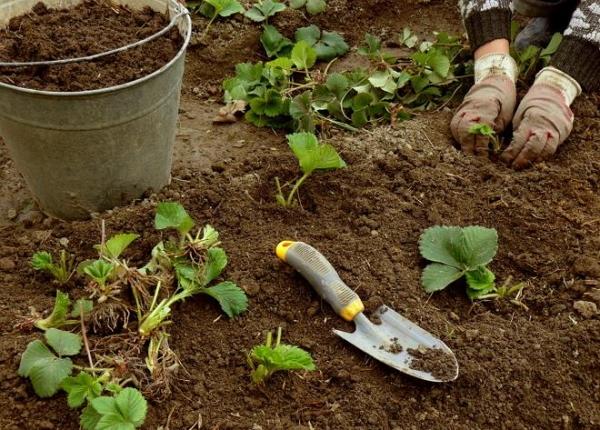
Bereginya strawberries are planted from mid-April to early May. This variety is frost-hardy, but the first planting is best done after the last late frost. Young shoots adapt more easily in the spring.
The landing process
Fifteen minutes before planting, seedlings are dipped in hot water to stimulate their resistance to diseases and pests. They are spaced 20 centimeters apart, with 40 centimeters between rows. The beds are oriented north to south to ensure even sun exposure.
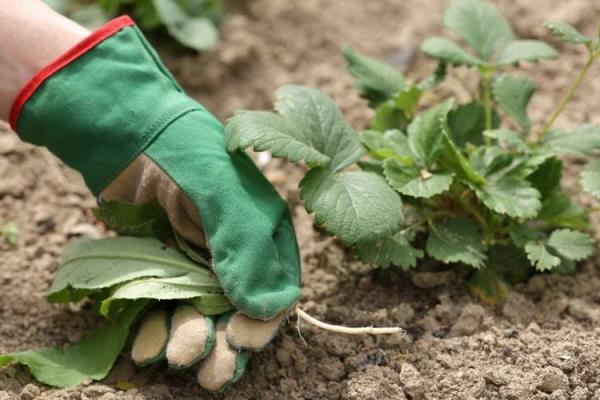
Sequence of actions:
- dig a hole in the ground along the length of the roots, about 15 centimeters deep;
- straighten the roots so that they are located vertically in the ground;
- lower the seedling into the hole so that the central bud is slightly above ground level;
- bury the bush, compact the soil.
Don't add fertilizer to the hole before planting. The soil, dug with fertilizer, is already rich in nutrients. Adding additional fertilizer will burn the roots. Buried seedlings need to be watered.
Gardeners' tips for care
Particular attention should be paid to watering. Strawberries should not be overwatered to prevent rot. Removing weeds and decaying leaves will prevent wilting and the spread of fungus. After harvesting, thin the beds.
To maintain the yield, a new bed is planted every year and harvested after 4-5 years.
Top dressing
Starting at two years of age, strawberries are fertilized three times a year. Nitrogen fertilizers are applied in the spring. During flowering, they are fed with potassium and phosphorus. In the fall, they are fertilized with a solution of chicken manure and cow manure.
Watering
The soil is moistened in the morning or evening. Use 12 liters of water per square meter of the bed. Tips:
- water under the bush so that the leaves remain dry;
- If the soil remains moist after the previous watering, use less moisture or leave it until the next time;
- After watering and rain, the soil at the roots and between the rows should be loosened to allow oxygen access;
- There's no point in overwatering. The water will stagnate and the plants will rot.
Strawberries only need a lot of water when the fruit is ripening.
Shelter for the winter
To protect strawberry roots use:
- peat mulch;
- sawdust;
- agrofibre.
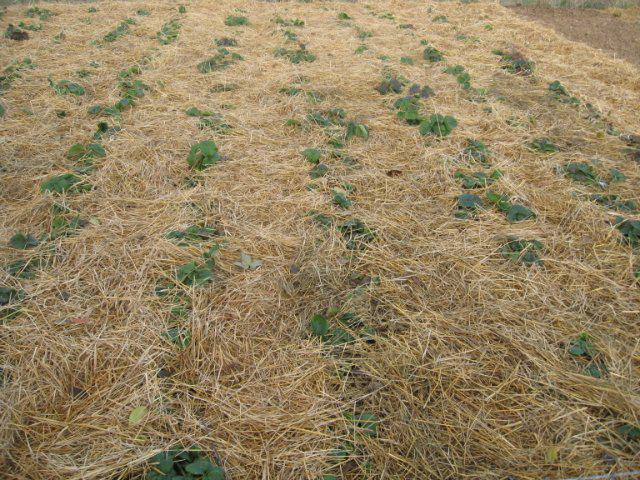
A combined method is to lay out the pine needles and cover them with straw and dry leaves.
Protecting crops from diseases and pests
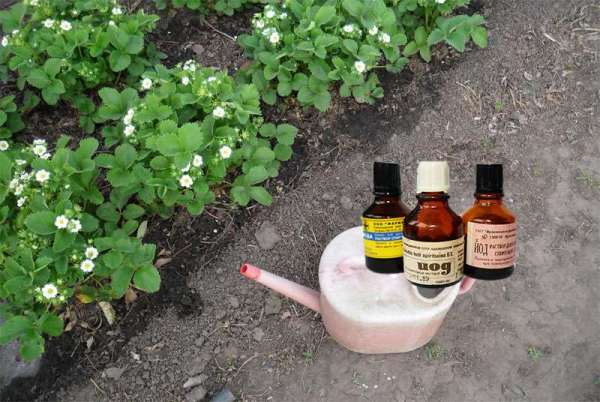
For prevention, spring pest control is carried out with Bordeaux mixture and urea. The following rules for neighboring garden crops will help protect strawberries from pests:
- dill, garlic, carrots repel insects;
- parsley repels slugs;
- For strawberries, the proximity of calendula and marigolds, irises and delphiniums is beneficial.
Take a look Also

Plaque and spots on berries and leaves indicate a fungal infection.
Strawberries are treated with gentle fungicidal agents, urea.
Garlic planted between strawberry plants will help combat diseases and pests. Frequently rotating the bed will also prevent infestation.
Reproduction
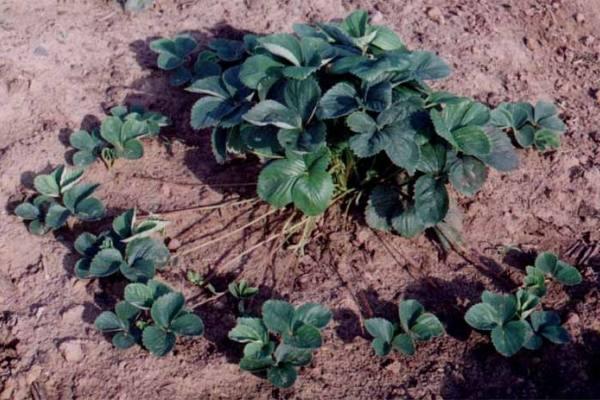
To obtain seedling material, trim the flower stalks from the bushes in the spring. This will allow the plant to focus its energy on forming runners. For propagation, select fruitful bushes with large leaves. In mid-July, young rosettes can be rooted and replanted the following spring.
Harvesting and storing the Bereginya strawberry crop
A sign of ripeness is the uniform, bright red color of the berries. The fruits ripen simultaneously, so the entire harvest can be harvested in a single trip.
For storage, the fruits are trimmed off along with the stems. The harvest is placed in wooden or plastic trays, the bottoms of which are lined with paper. The strawberries are laid out evenly in a single layer.
Store berries at a temperature between 0 and 2 degrees Celsius. The harvest is placed in a cellar or stored in the refrigerator. The fruit will stay fresh for 3 days. At room temperature, strawberries can be stored for up to 8 hours. Freezing them can last up to 12 months.
Related posts:
 Description and characteristics of the Vima Zanta strawberry variety, planting and care scheme
 Description of the everbearing strawberry variety Mara de Bois and growing rules
 Description of the Florence strawberry variety, planting and care features
 Description of the everbearing strawberry variety Selva and cultivation technology
 How to grow strawberries at home
 Description of the Holiday strawberry variety, cultivation and propagation methods
 Description and characteristics of the Korona strawberry variety, planting and care scheme
 Description and how to plant the Garland strawberry variety