
- Selection of Murano strawberries
- Necessary climatic conditions and regions of cultivation
- Pros and cons of the variety
- Botanical description and characteristics of garden strawberries
- Size and appearance of the bush
- Flowering and fruiting
- Taste qualities and scope of application of berries
- Susceptibility to diseases and pests
- Frost and drought resistance
- Landing rules
- Deadlines
- Selecting a site and preparing beds for strawberries
- Preparing seedlings
- Stages of the planting process
- Further care
- Watering mode
- What fertilizer does the variety prefer?
- Weeding and loosening
- Mulching strawberries
- Treatment against diseases and pests
- Shelter during the winter period
- Methods of propagation of culture
- With a mustache
- By dividing the bush
- Growing from seeds
- Reviews from gardeners and summer residents
The Murano strawberry is a young variety, only 14 years old. Developed by Italians, it quickly gained popularity. Murano can bear fruit for a long time. The plant requires little care and produces a bountiful harvest even when grown in temperate climates. This frost-hardy variety is resistant to diseases and pests. Furthermore, the fruits have a pleasant flavor and retain their shape during transportation.
Selection of Murano strawberries
The Murano strawberry was developed in 2005 in Italy. It is a hybrid of unpatented varieties: A030-12 and R6R1-26. For 10 years, Murano was experimentally grown in Europe until it was patented in 2012.
Necessary climatic conditions and regions of cultivation
During trials, it was proven that the variety thrives in low-light conditions in continental climates. Therefore, Murano is well-suited for Russian regions.
In regions with cold winters, strawberries are insulated for the winter and thrive again in the spring. This variety is grown in the field over large areas.
Pros and cons of the variety
Advantages of the variety:
- early ripening of berries;
- high yield;
- long fruiting;
- fruiting over a long period of time;
- frost resistance;
- ease of care;
- disease resistance;
- pleasant taste qualities.
Flaws:
- a small number of antennae, which makes reproduction difficult;
- expensive planting material.
Botanical description and characteristics of garden strawberries
The Murano strawberry is not much different in appearance from other varieties, but it has characteristics that are unique to it.
Size and appearance of the bush
This variety grows upright, reaching a height of 30 centimeters. Each bush is 40 centimeters in diameter. The leaves are sparse but large, a rich green color. Few shoots appear per season.
Flowering and fruiting
The flower stalks have numerous buds that rise above the rosette. Each flower has five large, snow-white petals, reaching 4 centimeters in diameter. Murano begins blooming in late May or early June, depending on the growing region. It takes a month from the appearance of the first flowers to fruiting.
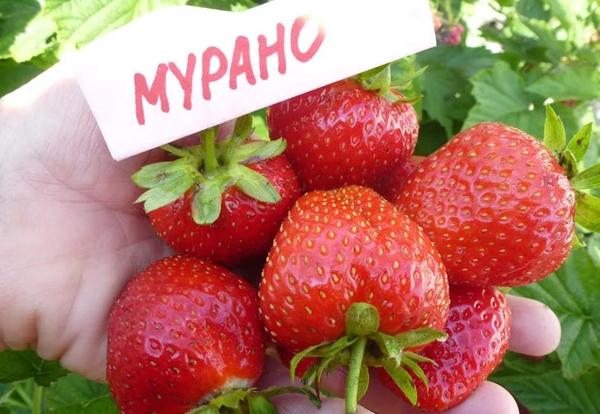
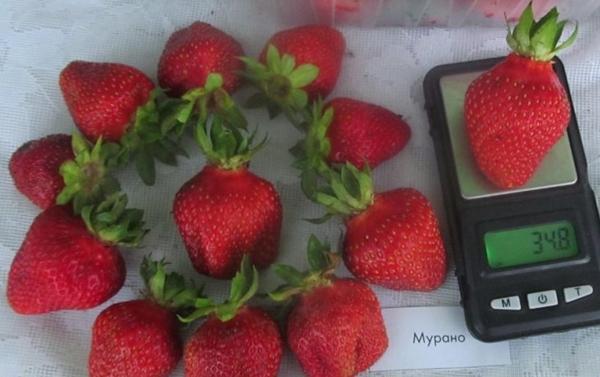
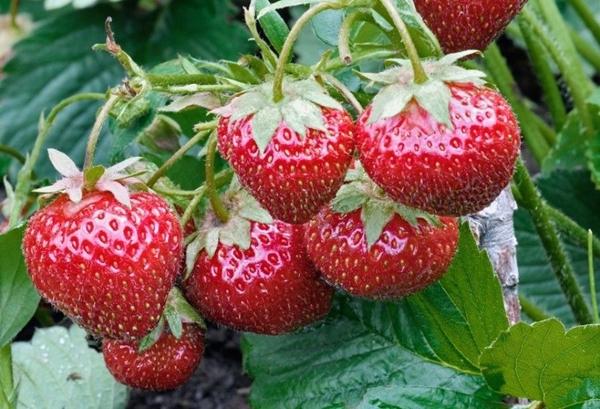
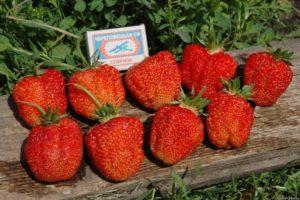
The fruits of this variety are elongated, cone-shaped, a rich ruby color with shiny skin. Each berry weighs approximately 25 grams.
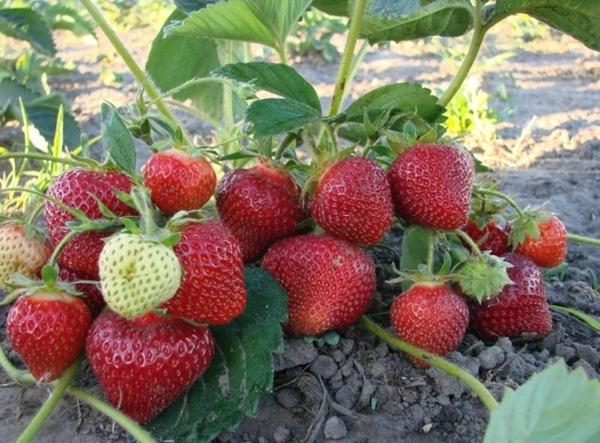
One strawberry bush can produce over 1 kilogram of ripe berries.
Taste qualities and scope of application of berries
The fruits have a pleasant, rich flavor. Their sugar content is comparable to other strawberry varieties, making them suitable for making preserves, jellies, and compotes. Their dense texture makes them suitable for freezing fresh. Murano strawberries are grown by farmers in their fields for subsequent sale, making them a common variety on supermarket shelves.
Susceptibility to diseases and pests
If not properly cared for, strawberries can be susceptible to powdery mildew or gray mold. Spider mites are a common pest on Murano. Their presence can be detected by the fine webbing that forms on the leaves.
Frost and drought resistance
Murano is frost- and drought-resistant. However, it is recommended to insulate the plants for the winter.
Landing rules
Choosing the right location, applying fertilizer, following the planting pattern, and selecting healthy planting material will help you achieve a high yield in a short time.
Deadlines
The optimal time for planting strawberries outdoors is early spring or fall. The exception is if the plant is propagated by runners, in which case the rooted plants are transplanted in late July or August.
Selecting a site and preparing beds for strawberries
The soil in the growing area should be moderately acidic and loose. It's best to choose a site on a hill, otherwise moisture will stagnate.
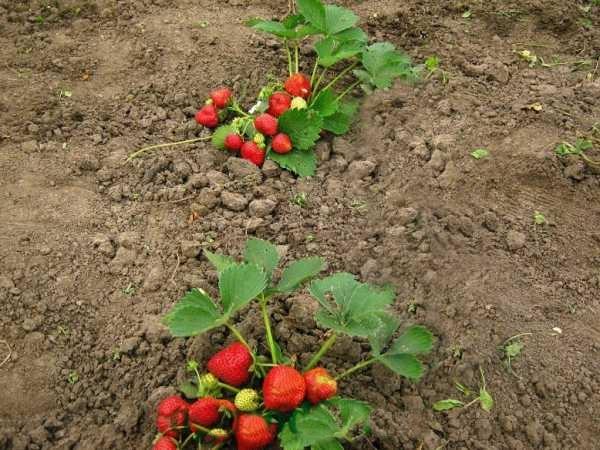
Before planting, draw a planting pattern for each seedling on the beds. Murano is a compact variety, so leave 30 centimeters between each seedling.
The depth of each hole should be 20 centimeters.
Preparing seedlings
Before planting, inspect the seedlings; they should be healthy and free of disease. The root system should be undamaged, and the top of the plant should have at least three leaves.
Before planting, it is recommended to treat the roots of the seedlings with a growth stimulator.
Stages of the planting process
A thin layer of humus mixed with soil is spread into the holes, then the seedling is placed there. The hole around it is filled with soil and lightly compacted. Each seedling should be watered generously with soft, slightly cool rainwater.
Further care
Murano strawberries are very easy to care for; the main thing is to follow simple rules.
Watering mode
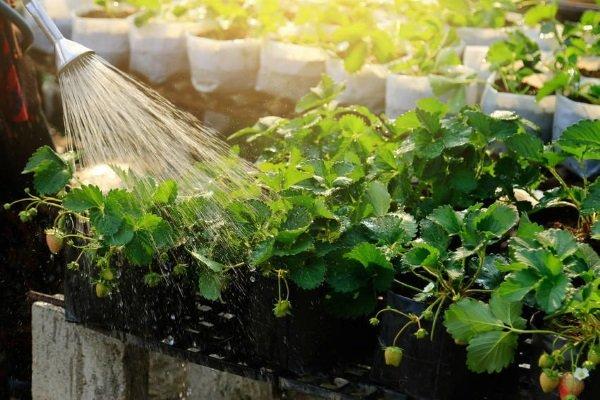
Strawberries don't like waterlogged soil and tolerate drought well. Therefore, they only need to be watered when the top layer of soil dries out.
After watering, it's essential to loosen the soil to allow oxygen to reach the roots. Watering frequency increases only when fruiting begins.
What fertilizer does the variety prefer?
Murano requires nitrogen fertilizers only in early spring. During flowering, nitrogen-containing fertilizers are discontinued and complex mineral fertilizers containing potassium, magnesium, iron, and phosphorus are applied.
Weeding and loosening
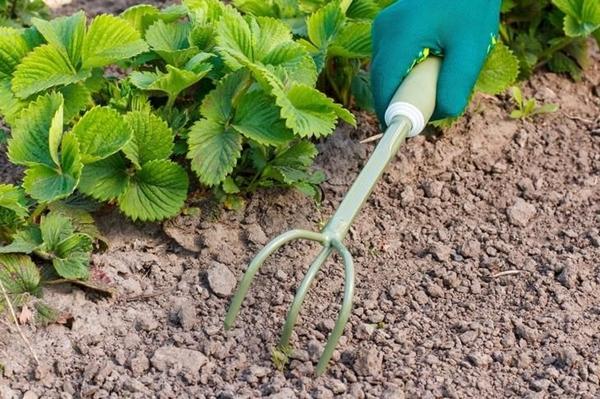
If you don't mulch, regular weeding is necessary to prevent weeds from robbing the soil of all its nutrients. Weeding should be done carefully to avoid damaging the bush, flowers, and fruit, and most importantly, the root system. I typically weed about seven times per season.
Soil loosening is a necessary procedure when growing strawberries. It helps remove stagnant moisture and prevent root rot. The soil is worked to a depth of 5 centimeters and 10 centimeters from the plants. Loosening is stopped during flowering.
Mulching strawberries
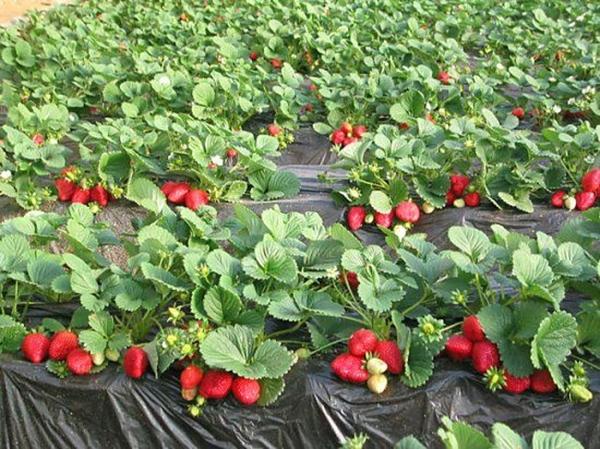
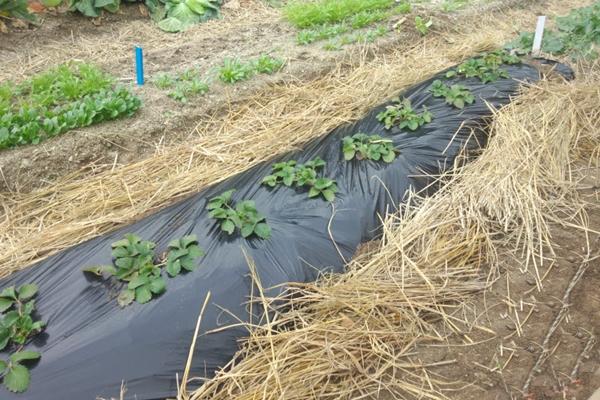
Mulching makes strawberry care much easier. It helps reduce the need for watering and soil loosening, and eliminates weeding due to the lack of weeds.
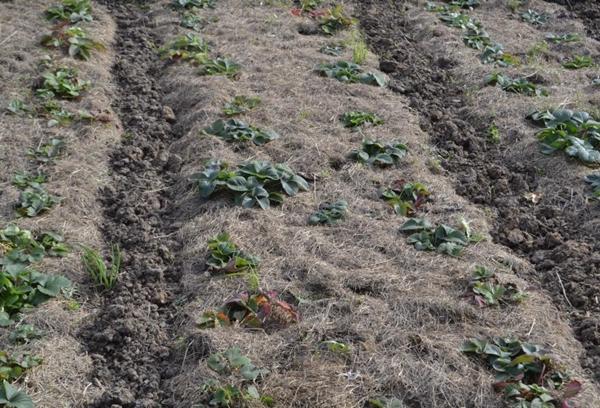
Sawdust, dry leaves, peat, or straw are used for mulching. This procedure is carried out after the soil has warmed and the first flowers have appeared.
Treatment against diseases and pests
To combat diseases and pests, it's necessary to use specialized chemicals. Chlorosis is caused by iron deficiency due to impaired photosynthesis, so it's necessary to treat the crop with a solution of ferrous sulfate. Colloidal sulfur is effective against powdery mildew. Copper sulfate combats fungal diseases.
Shelter during the winter period
Before frost sets in, remove dried leaves and shoots from the plants. Fertilize and mulch to retain heat. Cover the strawberries with agrofibre, then sprinkle soil around the edges.
Methods of propagation of culture
Murano reproduces by tendrils, division and seeds.
With a mustache
Murano has few runners, so this method of propagation is rarely used. First, the runners are allowed to root, then cut from the mother plant. Only then can the seedlings be transplanted to another location.
By dividing the bush
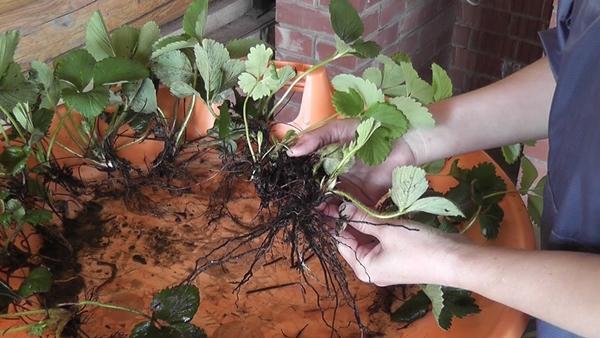
The largest bushes are selected and dug up. They are then carefully divided by hand. It is very important not to damage the roots when dividing. Now each separated seedling is planted in its own hole.
Growing from seeds
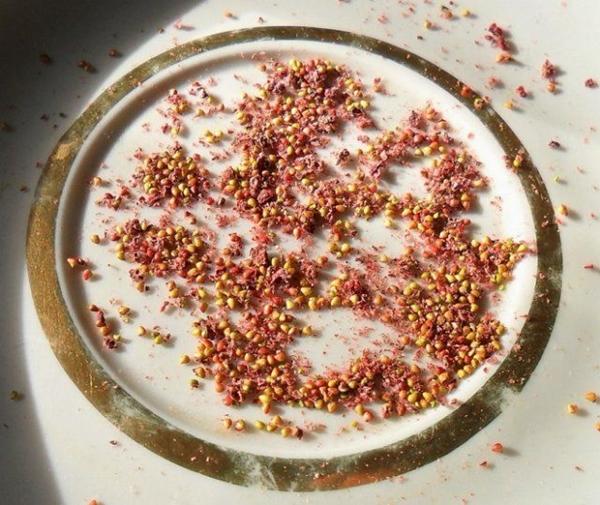
This is the most labor-intensive method of propagation. Seedlings are grown first, and the seeds are sown in winter. It's important to provide plenty of light for the seedlings to germinate, otherwise they will die. In the spring, after the soil warms up, the seedlings are planted outdoors.
Reviews from gardeners and summer residents
Alevtina, 35: "I've been growing the Murano variety for four years now. I had other varieties before, but they were a real hassle, so I stuck with this one. We harvest several times a season, and the berries are beautiful and delicious."
Varvara, 47: "I adore this variety. I grow it in large quantities because I sell berries. My customers are happy. It's very easy to care for, and the harvest is bountiful."
Related posts:
 Description of the Florence strawberry variety, planting and care features
 Description and characteristics of the Vima Zanta strawberry variety, planting and care scheme
 How to grow strawberries at home
 Description of the everbearing strawberry variety Selva and cultivation technology
 Description of the Malling Pandora strawberry variety, planting and care
 Description of the Holiday strawberry variety, cultivation and propagation methods
 Description and characteristics of the Korona strawberry variety, planting and care scheme
 Description of the everbearing strawberry variety Mara de Bois and growing rules