
- Selection and cultivation regions of the Pandora strawberry
- Necessary climatic conditions for growing crops
- Pros and cons of the variety
- Distinctive features and characteristics
- Size and appearance of the bush
- Flowering and pollinators
- Ripening time and yield per bush
- Composition and taste of fruits
- Scope of application of berries
- Susceptibility to diseases and pests
- Frost and drought resistance
- Landing rules
- Deadlines
- Selecting a site and preparing beds for strawberries
- Preparing seedlings
- Stages of the planting process
- Further care
- Watering mode
- What fertilizer does the variety prefer?
- Weeding and loosening
- Mulching strawberries
- Treatment for diseases and parasites
- Shelter during the winter period
- Methods of propagation of culture
- Difficulties in growing and recommendations from gardeners
- Reviews of the variety
Strawberry varieties harvested in one season don't last long, so lovers of this juicy, delicious berry appreciate varieties that ripen later than the usual early summer period. The ability to enjoy large fruits after other varieties have finished harvesting, high yields, and disease resistance—all these factors make Pandora strawberries increasingly attractive to gardeners.
Selection and cultivation regions of the Pandora strawberry
The Pandora strawberry variety, or more correctly, Malling Pandora, was developed at the East Malling Laboratory in the UK about 30 years ago. This high-yielding hybrid plant was created by crossing the local varieties Merton Dawn x (Von Humboldt x Redstar). It is one of the latest non-everbearing varieties.
In addition to large fruits and high yields, the hybrid's genetic "parents" also imparted high frost resistance. Combined with the late ripening of the fruit, this allows for large harvests of Pandora strawberries not only in the Moscow region but also in the Urals and Volga regions.
Necessary climatic conditions for growing crops
The late-ripening strawberry variety Pandora seems to be created for a moderately humid climate and reveals its wonderful qualities to the fullest extent in it.
It is one of the few that produces stable yields in the central European part of Russia:
- with snowy and frosty winters, when the average temperature of the coldest months is about -12 °C;
- with moderately warm and humid summers (17-21 °C);
- with regular spring and autumn precipitation and periodic frosts.
Pandora strawberries are also successfully grown in the Siberian region, provided that high-quality shelter is provided for the winter months.
Pros and cons of the variety
The undoubted advantages of the Malling Pandora hybrid:
- Late start of fruiting prolongs the possibility of consuming fresh berries.
- High frost resistance means that the plant's bushes do not need to be covered in winter in most Russian regions.
- Resistant to root diseases and some fungal infections. The berries are also resistant to rot—even after several days of rain, they remain firm and healthy.
The advantages of the Pandora strawberry include its high yield combined with excellent taste, sweetness with a slight sourness.
Disadvantages of a hybrid:
- Due to Pandora's self-infertility and the late appearance of flower stalks, it is necessary to think about the possibility of pollination in advance;
- the need to cover the soil with mulch to prevent the development of rot - in damp weather, flower stalks weighed down by an abundant, large harvest bend low to the ground;
- Pandora strawberries have low drought resistance - when there is a lack of moisture, the bushes become smaller and produce few runners.
Distinctive features and characteristics
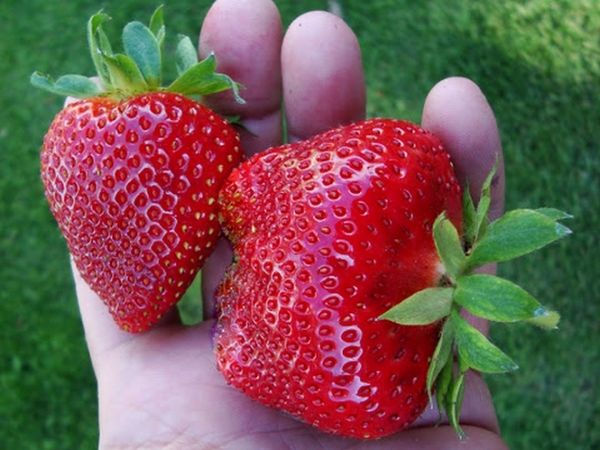
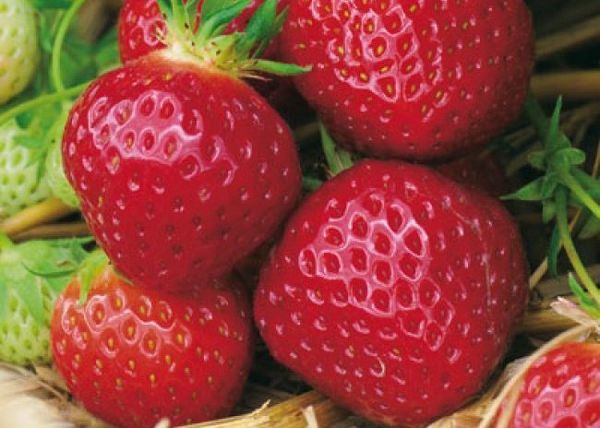
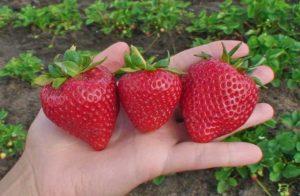
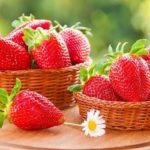
The Malling Pandora strawberry has a unique, slightly wrinkled surface. The foliage is light green, with a characteristic sheen. The berries weigh 40-60 g and are round, slightly conical. When fully ripe, the outer surface is a dark cherry color.
Size and appearance of the bush
Pandora strawberry bushes are spreading, up to 20 cm tall, densely foliated, and compact, accumulating a large amount of green mass. The leaf blades are located above the slender flower stalks. The light green foliage turns dark green and then brown as the cool autumn approaches.
The plant produces a medium number of tendrils.
Flowering and pollinators
The Pandora strawberry variety produces a large number of flower stalks, sometimes up to ten in the first year, but it is self-sterile.
It is not grown without a neighboring pollen donor. Strawberry plants with similar flowering periods are used as pollinators. The pollen donors are usually strawberry varieties Florence, Vikoda, Malvina, Maxim, remontant Murano, Mariget.
Ripening time and yield per bush
Fruiting of Malling Pandora begins approximately in the second ten days of July. In southern regions, the berries turn red two weeks earlier.
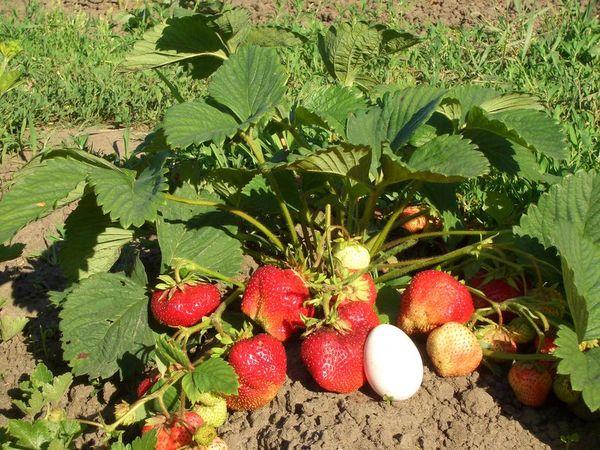
On average, 400 g of fruit is harvested from one bush, but if high-quality seedlings are used and all agricultural requirements are met, the yield from one plant will be 700-800 g. Subsequently, Pandora's yield increases each year, but the sweetness of the berries decreases.
Composition and taste of fruits
Sweet and tart, the dessert-like flavor of the fruit is reminiscent of wild strawberries. The berries are aromatic. Overripe fruits are most delicious, but their shelf life and transportability are reduced.
Pandora strawberries are rich in vitamin C, about 60 mg per 100 g. In addition, they contain vitamins A, E, a wide range of vitamin B, various minerals and microelements - potassium, calcium, magnesium, iron, sulfur, sodium.
Scope of application of berries
Thanks to the relatively high density of the fruit and its above-average shelf life, the Malling Pandora strawberry variety has universal application:
- fresh;
- for canning;
- for decorating baked goods and confectionery.
Susceptibility to diseases and pests
The Pandora variety is highly resistant to powdery mildew and moderately resistant to fusarium wilt. However, it has limited resistance to other diseases that commonly affect strawberry plantations.
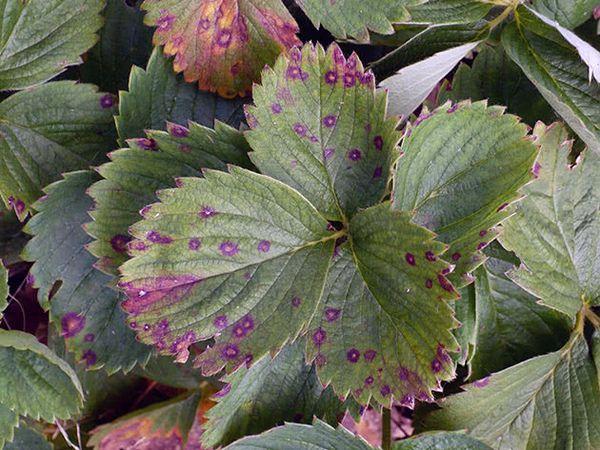
Prolonged damp weather combined with care errors can provoke:
- gray rot - manifested by the formation of a fluffy gray coating in spots on the fruit;
- leaf spot, noticeable by characteristic brown or white spots on the leaf blades.
The most common pests that infest Pandora bushes are aphids. Spider mites rarely attack the plant during prolonged periods of hot weather and dry air and soil.
Frost and drought resistance
A plant fully prepared for winter can tolerate short-term frosts down to -20-22°C without damage. However, if weather conditions delay bud formation and the dormancy process extends until frost, many gardeners cover the bushes as a precaution.
In dry weather, Pandora plants become smaller in size and the fruits wither.
Landing rules
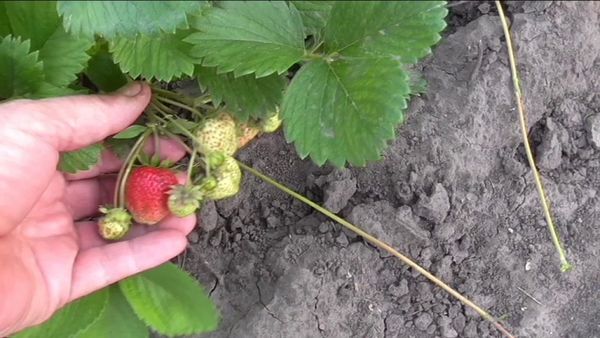
The technology for planting the Pandora variety, as well as the process of preparing the beds, are similar to those used with other strawberry varieties.
Deadlines
Pandora is sensitive to planting timing: to ensure successful fruiting in its first year, it's best to plant it in August or early September. However, seedlings can be planted in both spring and fall, depending on the gardener's workload:
- In spring, this is done after the snow melts—the soil should be warm, but still filled with moisture.
- In autumn – in the third ten days of August or early September. This way, the seedlings will have time to take root before the frost.

Young shoots - whiskers - are transplanted at the end of July and August.
Selecting a site and preparing beds for strawberries
When choosing a site for planting Malling Pandora strawberries, consider the following factors:
- plants will be comfortable in a well-lit, draft-free space;
- It is advisable to arrange it on a hill so that groundwater does not come closer than a meter to the roots of the bushes.
The soil is dug over in advance, in the fall, and amended with organic matter. The optimal soil for growing strawberries of any variety is light, with a small amount of clay and sand, and a neutral pH.
Preparing seedlings
Important factors influencing the growth of seedlings and the volume of future harvest:
- healthy root system;
- the trunk, lower part of the shoots and leaves are without visible damage, spots, or rot;
- by size - it is better to buy medium-sized plants, as the stems of seedlings that are several years old tend to be too thick.
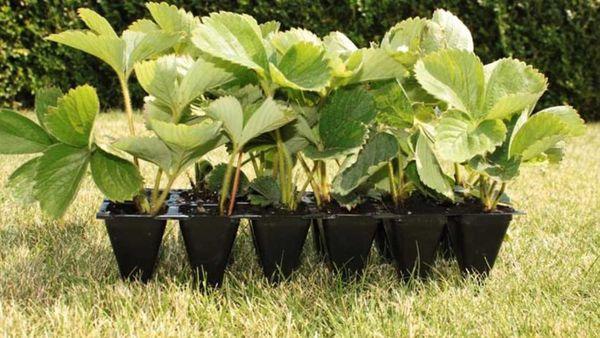
Immediately before planting, the roots of Pandora seedlings are kept for about half an hour in a weak pink solution of potassium permanganate to destroy harmful flora on them.
Stages of the planting process
Rows are marked out at 50 cm intervals, with holes dug every 30-40 cm, each with a small mound at the bottom. A Malling Pandora seedling is placed in the mound, spreading its roots, and covered with soil, keeping the growing point above ground rather than buried.
The soil is lightly pressed and moistened, but not at the root, so as not to wash away the soil above it.
Further care
It includes regular watering, fertilizing, weed removal and mulching, and, if necessary, covering the plants for the winter.
Watering mode
Pandora requires regular, generous, but fine-drip watering. Newly planted plants should be watered once every three days during hot weather. Once their roots are established, weekly watering is sufficient. In damp weather, watering is unnecessary.
What fertilizer does the variety prefer?
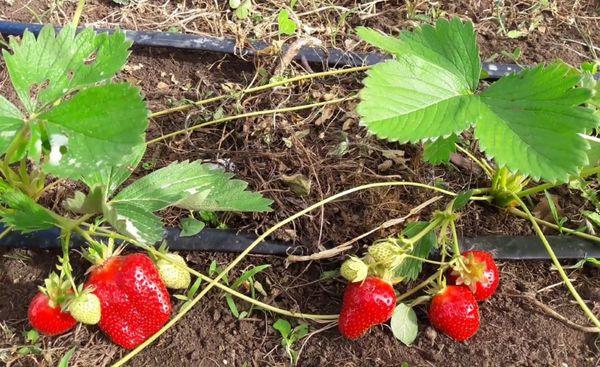
The Pandora strawberry variety responds gratefully to organic fertilizers, but is indifferent to nitrogen fertilizers. Organic mixtures are usually applied in early spring, but can be applied at any time of year before replanting. Complex mineral fertilizers containing potassium, nitrogen, and phosphorus are added to Pandora after harvest.
Weeding and loosening
To prevent strawberries of any variety from having to "share" beneficial nutrients from the soil with weeds, parasitic foliage must be removed promptly. To avoid damaging Pandora's roots, weeding and loosening the soil regularly after watering or rain throughout the growing season—from spring to fall.
Mulching strawberries
This procedure has the following objectives:
- reduce the rate of moisture evaporation from the soil;
- reduce weed growth;
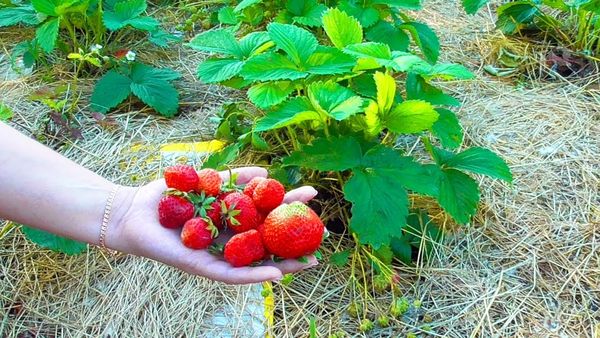
- help keep ripe berries clean in any weather.
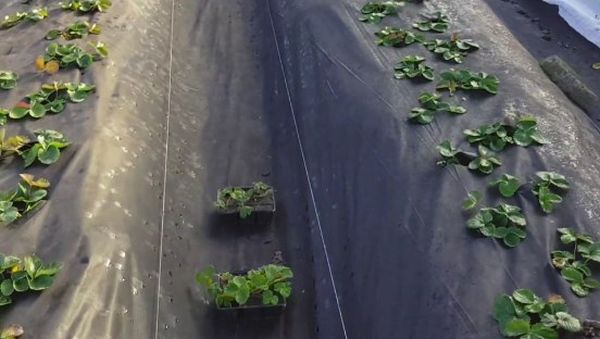
Traditional natural materials include straw and peat mixed with sand. Modern synthetic materials, such as spunbond and agrofibre, are more expensive but more convenient.
Treatment for diseases and parasites
If signs of fungal damage to strawberry plants are detected, all affected stems, leaves, or bushes on Pandora are completely removed, and the plantation is treated with fungicides.
Treatment of plants with any chemicals can only be carried out before the formation of flower stalks or after the end of the harvest.
Some gardeners carry out preventative spraying of Pandora with medicinal solutions in a stronger dilution - Actellic, Aktara, Inta-Vir, Bi-58.
Shelter during the winter period
In central Russia, and especially in its southern regions, the Malling Pandora variety does not require winter shelter. However, if planting was done late or weather conditions affected the young bushes, preventing them from developing sufficient strength after budding by the time frosts set in, it is advisable to cover them.
Of the modern materials, lutrasil (agrofibre) is optimal, but the use of hay, healthy dry leaves, sawdust, and spruce branches has also been proven effective.
Methods of propagation of culture
The Pandora strawberry variety is usually propagated in two ways:
- Using runners, or young shoots, is the simplest option. When side shoots appear, they are covered with moist soil, and after they take root, they are dug up, trimming off the runners that lead to the mother plant.
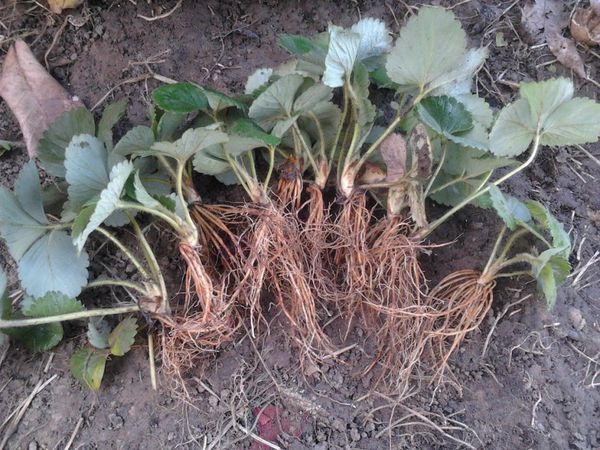
- Adult Malling Pandora specimens, which are well-foliated and have numerous shoots, are propagated by division. After fruiting, a suitable plant is dug up and divided into 2-3 parts, each with a long root and at least three leaves. The plants are replanted immediately.
Seed propagation of Pandora strawberries is extremely rare. Not only because it is extremely time-consuming and labor-intensive, but also because seed propagation of the Malling Pandora hybrid does not preserve the parental characteristics of the variety.
Difficulties in growing and recommendations from gardeners
The main problem for those who don't have any other late-season varieties besides Pandora is its sterility. Therefore, it's important to consider which varieties will act as donors in advance.
If strawberries become diseased due to violations of agricultural practices or prolonged adverse weather conditions, measures to save them must be taken immediately:
- in case of gray mold, destroy spoiled fruits, and as a preventative measure, spray the plants with a solution of copper sulfate after flowering begins;
- In case of leaf spotting on Pandora, use fungicides such as Bayleton, Topaz or similar ones.
Rarely, but sometimes, the flavor of Pandora strawberries is very weak. This is usually attributed to the soil conditions in the region and improper cultivation practices.
Reviews of the variety
Sergey Ivanovich, Perm:
"Pandora is one of the most delicious strawberries in my garden collection. It produces a lot of runners, so we've started a new planting for sale. When the regular varieties are dying out, the late Pandora is just the thing."
Maria, Oryol:
"I've been growing the Pandora strawberry variety for several years now. I have no problems with pollination, but if the soil dries out, the leaves on 2-3-year-old bushes become spotted. We don't cover them for the winter, but we rarely get frosts of -20°C. As a last resort, we rake the snow well onto the beds."
Related posts:
 Description of the Florence strawberry variety, planting and care features
 How to grow strawberries at home
 Description and characteristics of the Vima Zanta strawberry variety, planting and care scheme
 Description of the Holiday strawberry variety, cultivation and propagation methods
 Description of the everbearing strawberry variety Selva and cultivation technology
 Description and characteristics of the Zenga Zengana strawberry variety, planting and care
 Description and characteristics of the Korona strawberry variety, planting and care scheme
 The best varieties and cultivation of everbearing strawberries, fertilizing and propagation