
- The best varieties for central Russia
- Super early
- Marvelous
- Elsanta
- Honey
- Olbia
- Early ripening
- Kama
- Vibrant
- Moscow
- Mid-early
- Asia
- Darenka
- Kokinskaya
- Late strawberry varieties
- United Kingdom
- Malvina
- Shelf
- Large-fruited
- Belrubi
- Clery
- Marvelous
- The most fruitful
- Zencor
- Pandora
- San Andreas
- Roxana
- Remontant varieties
- Monterey
- Diamond
- Temptation
- The sweetest varieties
- Onega
- Junia Smaids
- Pineberry (Pineapple)
- Features of planting and caring for the crop
- Do I need to cover it for the winter?
Almost everyone loves ripe, delicious strawberries. But to ensure a good harvest, you need to know the exact timing for planting strawberries outdoors in the fall in temperate climates. It's best to choose varieties suitable for growing in temperate climates.
The best varieties for central Russia
Strawberry varieties for the middle zone must be frost-resistant, since winters in these latitudes can be frosty. In general, the climate of the middle zone is suitable for growing most strawberry hybrids.
Super early
Early strawberry varieties ripen around the end of May. In the temperate climate zone, the last month of spring is usually very warm, and strawberries produce a good harvest. Early hybrids are very popular among gardeners.
Marvelous
The Divnaya hybrid was developed by Russian breeders. One of the advantages of this variety is its rich aroma, reminiscent of wild strawberries. The ripe flesh is firm, yet sweet and juicy. The berries are large and elongated. The harvest ripens by early June. In a warm spring, the first ripe berries can be picked in late May.
Elsanta
This variety is a Dutch selection. It's highly productive, yielding up to 2 kg of berries per bush with proper care. The strawberries are juicy and firm, making them ideal for long-distance transport. The fruits are medium-sized and red in color. Among its advantages, it boasts resistance to powdery mildew and root rot.
Honey
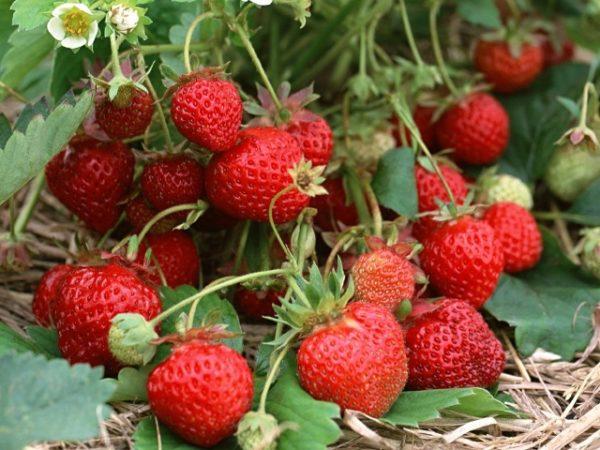
This variety's bushes are vigorous and spreading. The stems, peduncles, and ovaries are erect. The Honey hybrid produces sweet berries with a hint of tartness. Ripe berries average 15 to 20 grams, with a maximum weight of 35 grams. Fruiting is short-lived, lasting up to three weeks.
Olbia
This hybrid is considered a super-early variety, with the first berries beginning to ripen in mid-May. The mature bush is spreading, with upright stems. The leaves are large, with serrated edges. Ripe berries have a distinct strawberry aroma. The flesh is firm, juicy, and sweet. This hybrid is a dessert variety. The strawberries are large, with a ripe berry weighing between 35 and 45 g. In the first year after planting, the berries are still small. By the third year, they reach their maximum size.
Early ripening
Early-ripening garden strawberries ripen around the beginning of June. The growing season for these hybrids lasts until approximately the end of June.
Kama
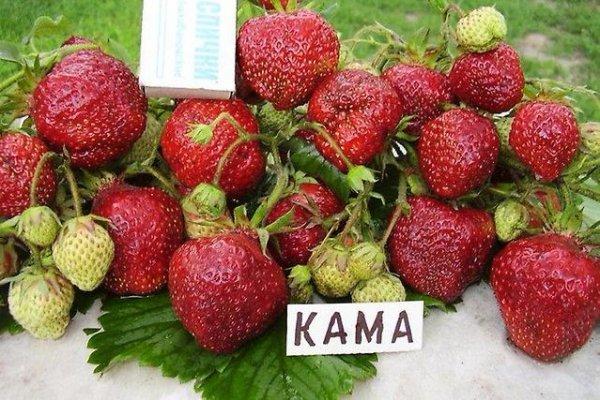
A Polish-bred hybrid, this variety is easy to grow and requires little maintenance, producing a good yield. A single bush can yield up to 1.3 kg. Flowering is long, and the flower stalks are located under the leaves, protecting the berries from birds and direct sunlight. The flesh is juicy and sweet, with a rich blood-red hue.

Vibrant
An English-bred hybrid. The bush is distinguished by long flower stalks that rise above the foliage rosette. The yield is good, with a large bush yielding up to 1.2 kg. If the weather was cool in the spring and summer, it may bloom again in the fall. The bushes are moderately spreading.
Moscow
The bushes of this garden strawberry variety are distinguished by a spreading rosette of leaves and strong, thick stems. The Moskovskaya strawberry has gained popularity thanks to its large, sweet berries. The average fruit weight at maturity is 85 g. The berries are elongated, flattened at the edges.
Mid-early
Mid-early varieties are suitable for temperate climates, where spring and early summer aren't always warm. These hybrids ripen by mid-June.
Asia
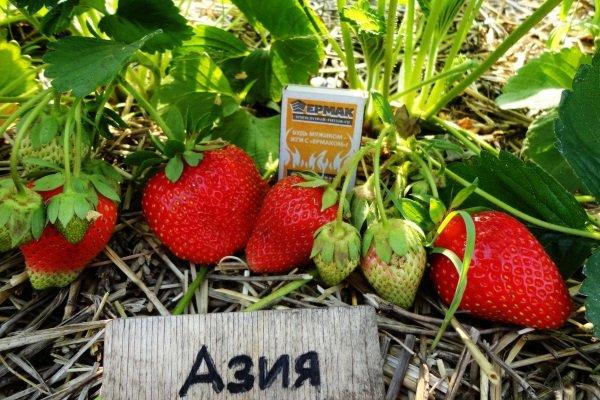
The bushes have an extended fruiting period, and the variety is partially everbearing. Gardeners note the good yield of the Asia variety. The berries are large, with the largest ones during the first fruiting stage, weighing up to 75 g. In subsequent stages, the berries ripen to 50 g. The maximum weight is up to 100 g. The shape is elongated and conical.
Darenka
The inflorescences are located on long stems, with the flowers visible above the leaves. Among the advantages of the Darenka strawberry are its resistance to powdery mildew and gray mold. The color is a rich wine color. Darenka is suitable for commercial cultivation. The berries withstand long transportation well.
Kokinskaya
Mature bushes of this hybrid are upright, with long, thick stems. The fruit has an unusual, obtuse-conical shape. The skin is smooth and dark red. This variety bears fruit once per season.
Late strawberry varieties
Late-season garden strawberry varieties ripen by the end of June. These varieties are also ideal for planting in temperate climates.
United Kingdom
The UK variety is distinguished by its very large berries, weighing up to 100 g. The yield is good, with up to 1.4 kg per bush. It is one of the few varieties that can produce a rich harvest for up to five years of cultivation. Among the advantages, one can note the presence of immunity to powdery mildew.
Malvina
The hybrid was developed in Germany. Malvina is a large-fruited garden strawberry variety, weighing up to 85 g. The fruits have a high sugar content, making them very sweet and ideal for desserts.
Shelf
An easy-to-grow, high-yielding hybrid. The fruit is intended for dessert. The pulp is high in sugar. The bushes are productive for the first three years after planting, then production declines.
Large-fruited
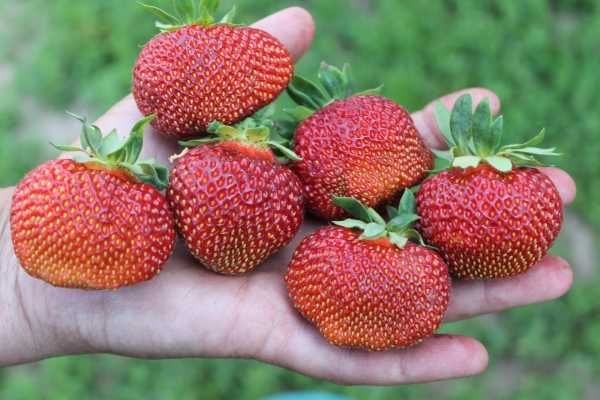
You don't have to choose high-yielding varieties of garden strawberries. You can simply plant large-fruited strawberries.
Belrubi
This variety's harvest ripens simultaneously. The fruits are medium-sized, weighing approximately 30-40 g. They are conical in shape and have a distinct neck. The strawberries are light scarlet in color when ripe.
Clery
This hybrid is an Italian selection. It is most often used for commercial cultivation. Clery is considered a remontant variety, making it suitable for greenhouse cultivation.
Marvelous
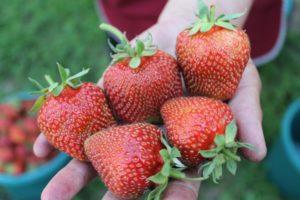
The Divnaya garden strawberry is distinguished by its unusual fruit shape—fingered and irregular. This hybrid produces a moderate yield of up to 1 kg, but this is offset by the excellent flavor of the ripe berries. The skin is bright red and glossy. Overripe strawberries take on a burgundy hue.
The most fruitful
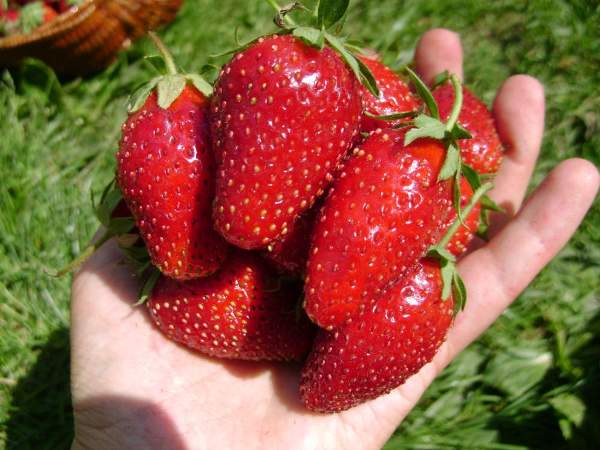
One of the main characteristics of garden strawberries, by which many gardeners choose a variety, is yield.
Zencor
A large-fruited, late-ripening variety, the strawberries weigh up to 40 g at full maturity. The bushes are tall, the stems are strong, and the foliage is spreading. The flesh is firm, making the harvest suitable for long-distance transport and for sale. The flavor is sweet with a pleasant tartness. Among the advantages of this hybrid is its resistance to winter frosts.
Pandora
A unique feature of this hybrid is that the inflorescences require pollinators, making it suitable only for outdoor planting. The fruits are large at technical maturity, weighing up to 40 g. The flesh is bright red and juicy. It retains its shape during storage and transportation. Another unique feature is that the seeds are located inside the skin, not on the surface.
San Andreas
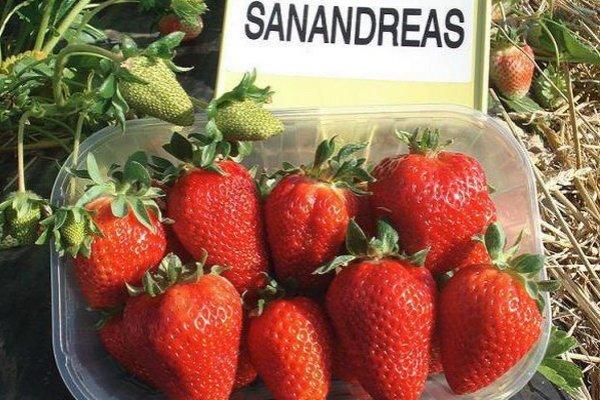
Even when fully ripe, the flesh remains firm and crunchy when bitten. Yet, it's still sweet. The skin is thick, scarlet in color, slightly darker than the flesh. This variety is one of the few hybrids that is resistant to most strawberry diseases.
Roxana
In open ground, up to 3 kg of fruit can be harvested from a bush. The flesh is dark red. Overripe fruits take on a wine-colored hue. The first harvest of the season is large, weighing up to 100 g. Subsequent harvests range from 20 to 40 g.
Remontant varieties
The advantage of everbearing varieties is that they can be planted in a greenhouse. These varieties produce crops two or three times a year.
Monterey
It blooms throughout the season, from May to October. The yield is average, with up to 550 g of fruit per bush. Bushes can bear fruit up to four times per season. When ripe, the berries are dark red, with a rich strawberry aroma.
Diamond
The berries are medium-weight—20 to 35 grams. This hybrid was bred in California, but thrives in the central Russian climate. The ripe flesh is light scarlet, while the skin is several shades darker and glossy.
Temptation
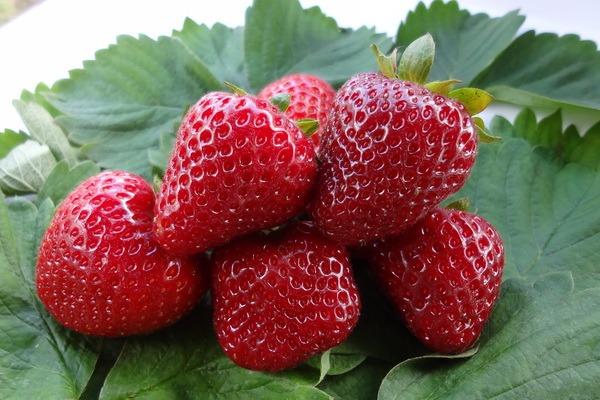
This variety is early-ripening, with the first harvest ripening by the first ten days of June. The advantage of this hybrid is its productivity. Without proper care, a bush can yield up to 600 g of berries. With careful care, a single bush can yield up to 1.3 kg of strawberries.
The sweetest varieties
For those gardeners who prefer to eat strawberries fresh, breeders have developed varieties with a high sugar content.
Onega
At the technical ripeness stage, the flesh is firm, yet sweet-tasting and juicy, with a scarlet hue. The tip may remain greenish even if the strawberry is fully ripe. The fruits are small, weighing from 13 to 26 g.
Junia Smaids
This variety has spreading, vigorous bushes with a well-developed rosette of leaves. The strawberries are conical in shape and bright red. The flesh is high in sugar and has a pleasant tart flavor.
Pineberry (Pineapple)
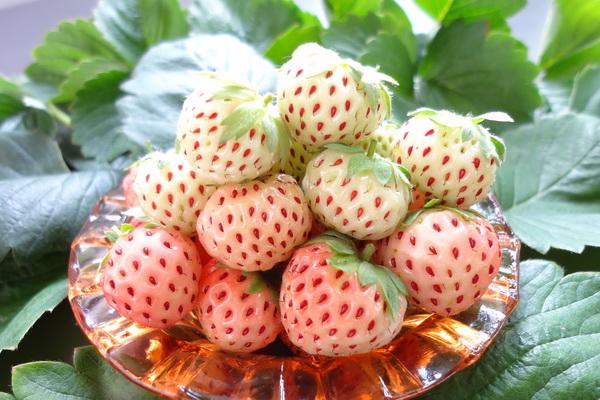
An unusual variety, unlike other hybrids, the Ananasnaya has a milky flesh, with red seeds clearly visible on the skin. The strawberry flavor is very sweet, with a hint of pineapple. The fruits are small, weighing up to 25 g.
Features of planting and caring for the crop
Strawberries are propagated by runners, seedlings or seeds. The seed method is the least popular; it is time-consuming and ineffective. Strawberry seedlings are planted in early spring or fall. Every 3-4 years, the bushes need to be replanted. If this isn't done, the strawberry plants will bear fruit less and less each year. Replanting can be done in spring or fall. It's best to replace very old bushes with young seedlings.
Strawberries prefer frequent watering, but avoid constantly soggy soil. This can cause mold on the berries.
Don't forget about fertilizing. In the first half of the season, when the bushes are just beginning to grow, add nitrogen to the soil. Nitrogen-containing fertilizers are applied before fruit set. Then, supplement with potassium and phosphorus. Fresh manure and chicken manure are not recommended for fertilizing strawberries.
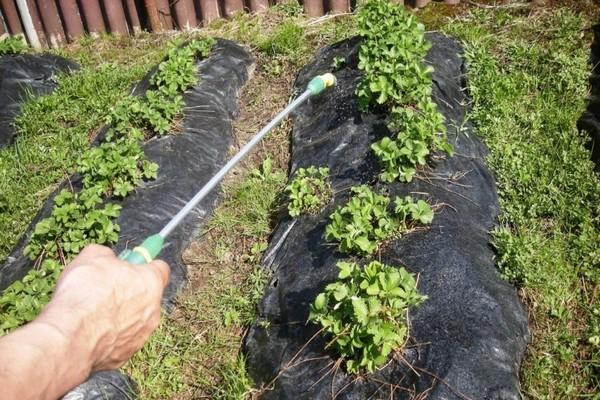
Strawberry diseases are most often caused by improper or no care. If diseases appear, treatment should be started immediately. As a preventative measure, spray the beds with Bordeaux mixture in early spring.
Common strawberry diseases:
- powdery mildew;
- gray mold;
- root rot;
- late blight;
- anthracnose;
- fusarium;
- black rot.
Disease control products for strawberries include Hom, Skor, Bordeaux mixture, Ridomil, Fitoverm, Karbofos, and Kuproskat. Some diseases (caused by viruses) are completely untreatable, and in these cases, the strawberry bushes will have to be dug up and destroyed.
Do I need to cover it for the winter?
Strawberries need not be covered for the winter only when grown in southern regions where severe frosts are rare. In other regions, covering the bushes is advisable. Although most garden strawberry varieties are frost-hardy, winter cover is a good idea.
Towards mid-autumn, when the bushes' leaves begin to turn red, they are cut down to the roots. The leaves are raked and burned. The beds are then covered with agrofibre or spruce branches.
Related posts:
 The best varieties and cultivation of everbearing strawberries, fertilizing and propagation
 Description and characteristics of the Vima Zanta strawberry variety, planting and care scheme
 Description of the Florence strawberry variety, planting and care features
 How to grow strawberries at home
 Description of the Cardinal strawberry variety, planting and cultivation
 Description of the everbearing strawberry variety Selva and cultivation technology
 Description and how to plant the Garland strawberry variety
 Description of the Fireworks strawberry variety, planting and care