
- History of breeding and regions of cultivation of the Slonenok strawberry
- Advantages and disadvantages of berry crops
- Features and characteristics of the variety
- Bush size and appearance of the leaf blade
- Flowering and pollination
- Ripening time and yield
- Taste qualities of the fruit and its further sale
- Resistance to subzero temperatures and drought
- Immunity and susceptibility to diseases and parasites
- Planting garden strawberries
- Site selection and preparation
- Selecting seedlings
- Timing and technology of planting seedlings
- What kind of care does the Slonenok variety require?
- Watering mode
- Top dressing
- Weeding and loosening the soil
- Mulching
- Shelter for the winter
- Preventive seasonal treatments
- Methods of reproduction
- Seeds
- By dividing the bush
- Sockets
- Gardeners' reviews of the variety
The Slonenok strawberry variety is suitable for several regions of Siberia, where pronounced climate fluctuations prevail: sudden cold snaps, drought, and low winter temperatures. Despite the belief that growing strawberries at home is quite difficult, achieving a good harvest is possible, as this depends directly on proper cultivation.
History of breeding and regions of cultivation of the Slonenok strawberry
The development of the Slonenok variety began in the late 1980s, and it was only in 2006 that Slonenok was included in the State Register of the Russian Federation as a variety permitted for cultivation in the East Siberian and West Siberian regions.
Advantages and disadvantages of berry crops
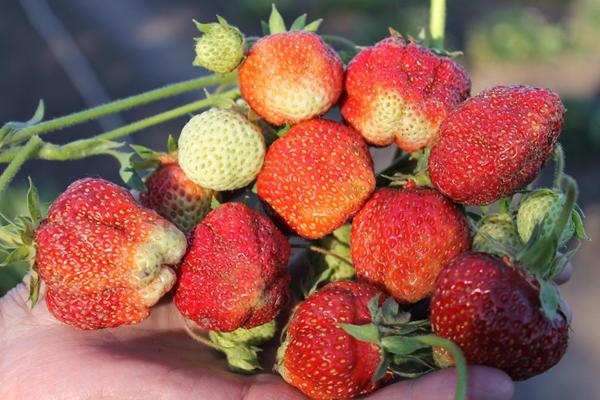
Advantages of the Slonenok variety:
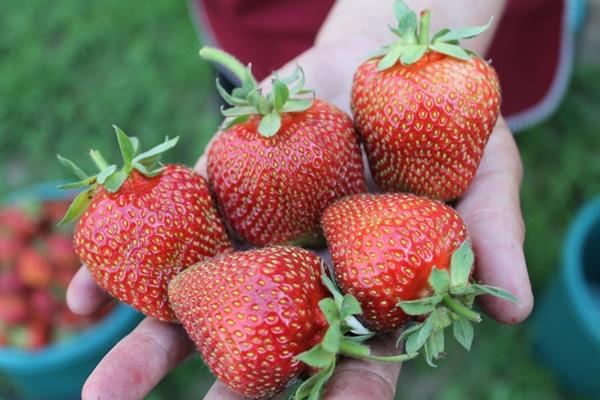
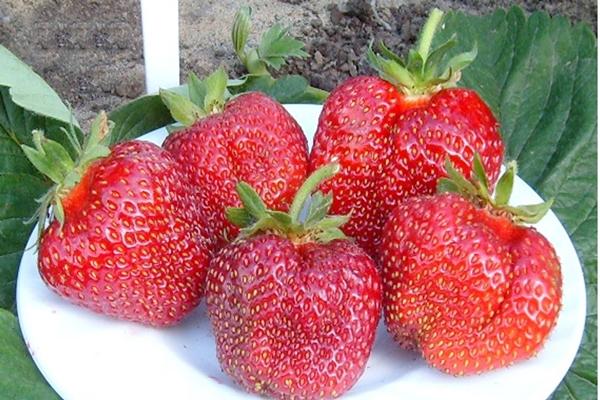
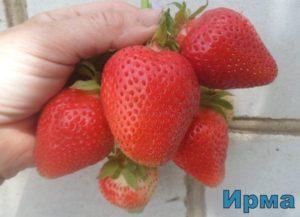
- large, glossy berries;
- pronounced aroma;
- sweet, rich taste;
- resistance to temperature changes;
- the ability to grow in areas where cold, dry weather prevails;
- high yield.
Among the disadvantages are:
- high probability of bushes being affected by rot;
- frequent watering and fertilizing of the soil;
- dense pulp, without juiciness.
Features and characteristics of the variety
If not properly cared for or affected by diseases, the variety loses its yield in terms of quantity and quality of fruits.
Bush size and appearance of the leaf blade
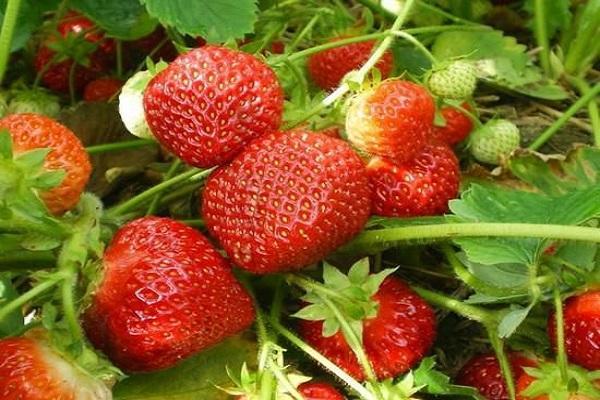
The berry bushes have a robust build and always stand upright. A characteristic feature of this variety is the concave shape of the leaves with a glaucous bloom and the intensive growth of new leaves. The leaf blades are bright green, each with small, rounded teeth.
Flowering and pollination
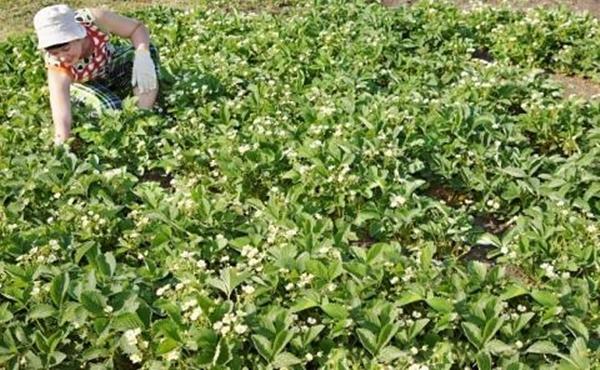
The flowers are medium-sized. A single bush produces a large number of flower stalks, yielding 15 to 20 berries.
As for pollination, when growing strawberries in a greenhouse, it is done artificially - pollen is transferred from one flower to another using a brush.
On farms, a hive of bumblebees or honeybees is installed in greenhouses with strawberries, which pollinate the flowers naturally.
Ripening time and yield
The berries begin to ripen in the second half of June. The Slonenok strawberry will bear fruit once per season. Each bush can produce 15-20 berries. Each berry weighs 10-30 grams.
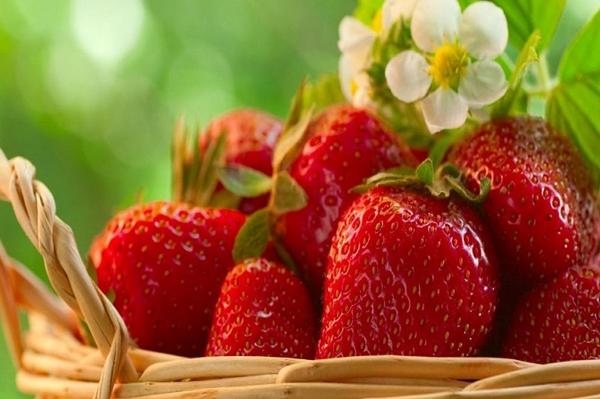
Taste qualities of the fruit and its further sale
The berries have a rich aroma and pleasant flavor. They can be stored in the refrigerator for 5-7 days without losing their flavor or appearance. They are also well-suited for transportation, making them suitable for commercial cultivation.
Resistance to subzero temperatures and drought
The variety is highly winter-hardy, tolerating not only constant temperature drops but also recurring frosts during the flowering period. The plant quickly adapts to a variety of adverse conditions.
Immunity and susceptibility to diseases and parasites
The Slonenok variety is more susceptible to gray mold than other varieties, which is virtually untreatable. Infection occurs due to overwatering or rainfall during the ripening period.
Planting garden strawberries
Garden strawberries are planted in the fall or spring. Fall is considered the most suitable time, as this is when favorable weather conditions prevail for planting strawberry seedlings in the ground.
Site selection and preparation
If you're planting strawberries outdoors, choose a sunny location away from strong winds. Avoid planting strawberries in low-lying areas, as this will result in the bushes becoming infected with garden rot due to excess moisture accumulation.
Planting strawberries after beans, parsley, or cucumbers has a positive effect on their quality. Soil acidity also influences strawberry growth and development. The Slonenok variety thrives best with a pH of no more than 6.
Selecting seedlings
For planting, select bushes with at least 3-4 healthy leaves. The root length should be 10 centimeters (anything longer is cut off, and anything shorter is discarded). The rhizome is dipped in a solution for several minutes to stimulate plant growth.
Timing and technology of planting seedlings
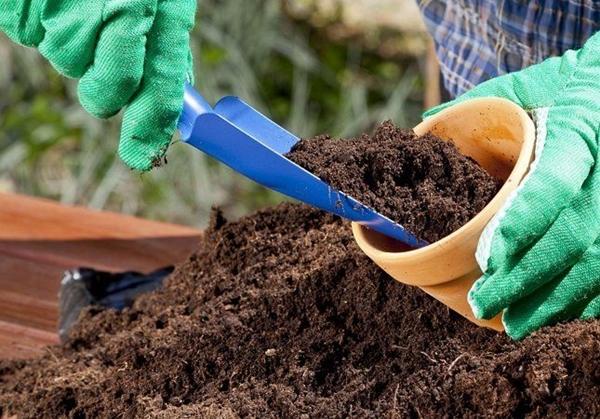
At least a few weeks before planting, prepare the soil by adding compost, wood ash, and ammonium nitrate. To reduce soil acidity, add half a bucket of quicklime.
Ten days before planting, the soil is dug over and enriched with superphosphate and potassium chloride. Seedling holes are dug 25-30 centimeters apart. The width between beds should be at least 90 centimeters.
The final step is to water the holes generously with cold water, after which the strawberry seedlings are planted. The soil around the rhizomes is compacted.
Strawberries are planted in autumn or spring, depending on the climate of the region.
What kind of care does the Slonenok variety require?
The elephant plant requires constant and careful care. This is primarily necessary to maintain the bushes' health and to ensure a high-quality harvest.
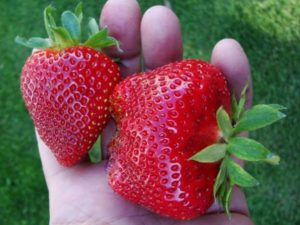
Due to the abundant formation of runners, the beds quickly grow, which leads to severely small fruits or their complete disappearance, so the runners need to be trimmed regularly.
Watering mode
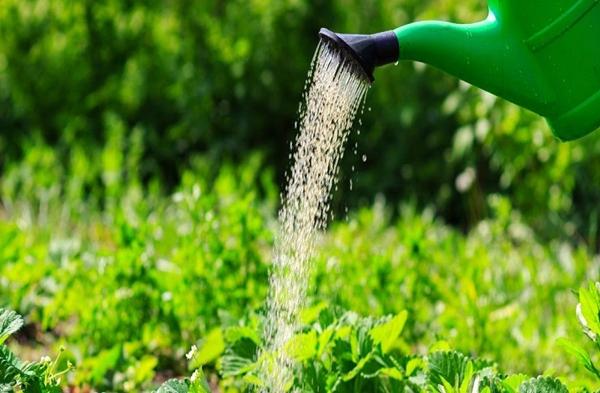
This variety requires regular and abundant watering. This should be done using warm water through a drip system.
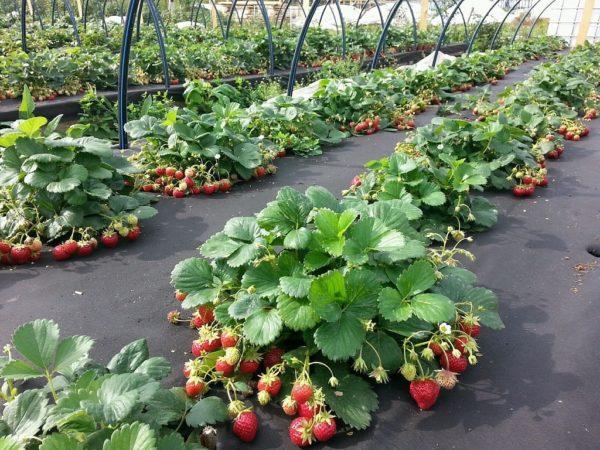
To avoid overwatering the soil, use mulch: peat, straw, or humus. This will not only retain the required amount of moisture in the soil but also prevent the growth of weeds and pests.
Top dressing
Strawberry bushes require fertilizer, especially large-fruited varieties. If not fed promptly, the harvest will be small. Fertilize several times a season: with organic fertilizer in the fall and with mineral fertilizers in the summer.
Weeding and loosening the soil
Strawberry bushes require constant loosening. The best time to do this is after a light rain or watering. During the growing season, the soil should be loosened at least 8-10 times. The first loosening is done in the spring when the soil is fertilized.
Mulching
During the winter, it is necessary to mulch the bushes with pine needles, which will prevent the roots from freezing, but at the same time allow the strawberries to breathe during the thaw.
Shelter for the winter
It's important to cover strawberries for the winter. This will prevent the root system from becoming too cold and the plants from dying.
In addition to snow, other materials used include sawdust, dried reeds, spruce branches mixed with fallen leaves, and hay. Non-woven covering material is available at specialty stores.
Preventive seasonal treatments
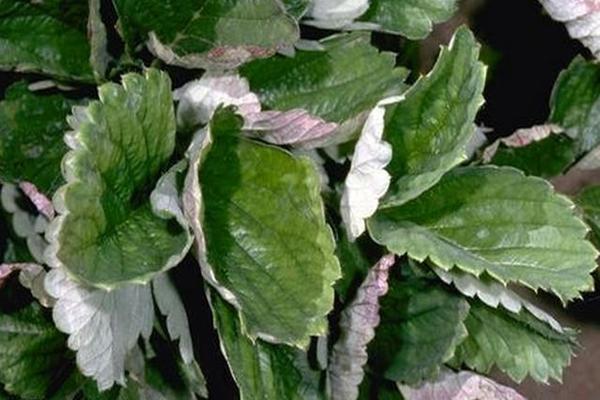
The Slonenok strawberry can be susceptible to various diseases and pests:
- White spot or brown spot are fungal diseases. Their occurrence can only be prevented by preventative treatment with any fungicide. Treatment is carried out in the spring.
- Black and gray mold affect fruits. To prevent gray mold, avoid overwatering and apply a preventative treatment with 2-4% Bordeaux mixture in the spring. Infected bushes should be removed from the common garden bed.
- Powdery mildew affects leaves and berries. As a preventative measure, treat the plant with colloidal sulfur in the spring.
- Spider mites – the leaves become covered in webbing, causing the foliage to dry out. Treat with Malathion. The solution temperature should not fall below 30 degrees Celsius.
Methods of reproduction
Strawberries are propagated in three ways: by seeds, by dividing the bush, and by rosettes.
Seeds
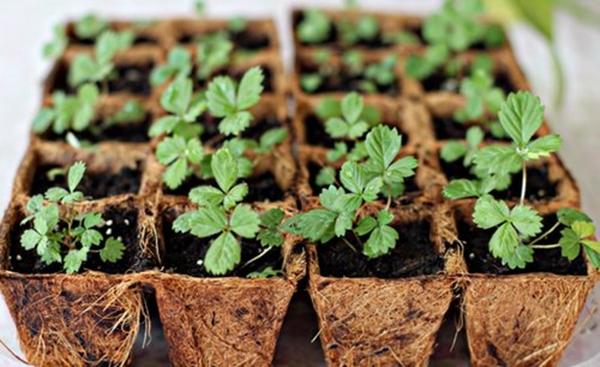
When growing from seed, preparation begins in the summer, when the berries are ripe. A few of the best fruits are selected from the harvest, and the tops and outer layer containing the seeds are cut off. This layer is placed on a canvas and dried. Once dry, the seeds are easily removed.
Sow in a universal soil mixture—spread the seeds on the surface at a distance of 1.5-2.5 centimeters from each other. Water with a spray bottle.
Seedlings can be planted in open ground only after the bushes reach 10-15 centimeters in size.
By dividing the bush
For seedlings, select strong, healthy plants with rosette-like tops. The entire bush is dug up, after which the rosettes are separated from each other.
After dividing, the bushes are planted in holes. If everything was done correctly, a good harvest can be expected within a year.
Sockets
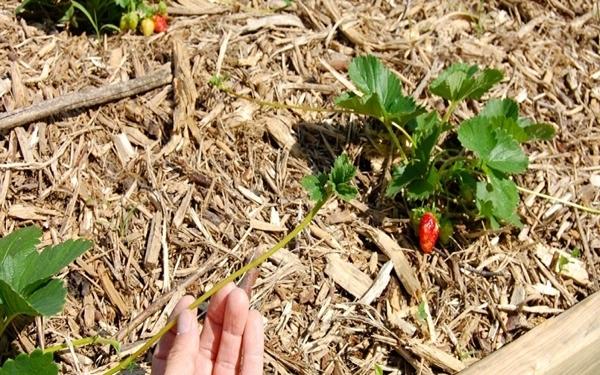
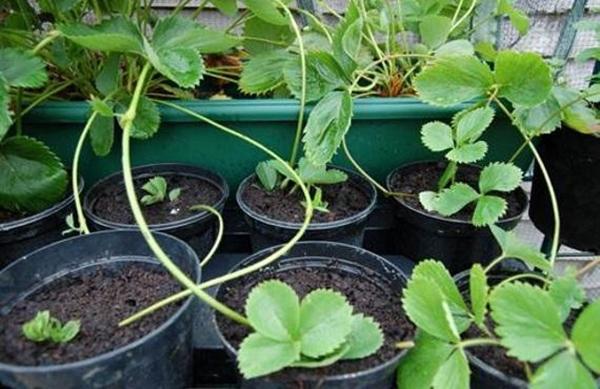
Active development and growth occur after fruiting. The runners have nodes that, upon contact with the soil, begin to root and form a new, independent bush.
Gardeners' reviews of the variety
Margarita Ivanovna, Omsk
"I've long dreamed of growing strawberries at my dacha, but I thought it was impossible with our weather. Last year, my grandchildren gave me almost thirty 'Slonenok' bushes, and this year we've already had a good harvest. They're truly frost-hardy; you just need to water them frequently to keep them juicy. I highly recommend them."
Nikolay, 54 years old, Biysk
"I read in a magazine about a strawberry variety that's winter-hardy, so I decided to give it a try. We bought fifteen plants to try. We planted ten last spring and five closer to fall. This year, we've already eaten strawberries from our plot, and the ones planted in the spring yielded a larger harvest. The berries are tasty, juicy, and large. The only drawback is that you have to be mindful of watering, keeping the soil moist, and not overwatering."
Related posts:
 Description of the Florence strawberry variety, planting and care features
 Description of the everbearing strawberry variety Selva and cultivation technology
 How to grow strawberries at home
 Description and characteristics of the Vima Zanta strawberry variety, planting and care scheme
 Description of the Holiday strawberry variety, cultivation and propagation methods
 Description of the everbearing strawberry variety Mara de Bois and growing rules
 Description and characteristics of the Korona strawberry variety, planting and care scheme
 The best varieties and cultivation of everbearing strawberries, fertilizing and propagation