
- Selection and growing conditions
- Description and characteristics of strawberries
- Bushes and shoots
- Flowering and fruiting
- Characteristics of the berry and its use in cooking
- Resistance of the crop to diseases and frost
- Advantages and disadvantages
- Planting and propagation of Irma
- With a mustache
- By division
- Seed method
- Specifics of growing in open ground
- The best predecessors and neighbors
- Preparing the site and planting material
- Timing and planting scheme for bushes
- Watering
- Top dressing
- Loosening
- Diseases and pests: protection and prevention
- Mulching
- Do I need to cover it for the winter?
- Reviews and recommendations from gardeners
The Irma strawberry variety is suitable for growing in temperate climates. It produces the highest possible yields in these regions. It does not thrive in the south, where prolonged high temperatures can reduce the quality and quantity of the harvest.
Selection and growing conditions
The strawberry variety was developed in 1995 in Verona. Italian scientists were developing a variety suitable for growing in the high mountain regions of northern Italy.
Irma received a patent only in 2003. The berries are distinguished by their excellent taste and high yield.
Description and characteristics of strawberries
The Irma strawberry has its own characteristics: it has different flowering, fruiting, and resistance to diseases and frost.
Bushes and shoots
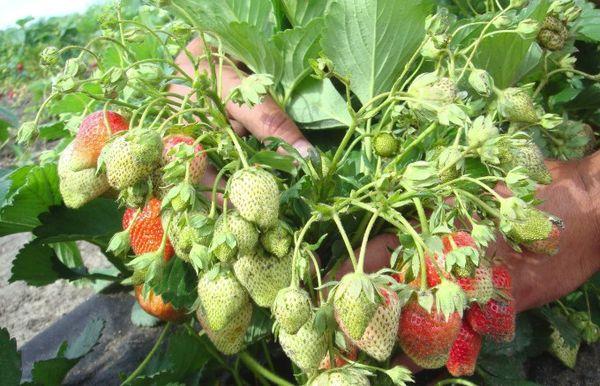
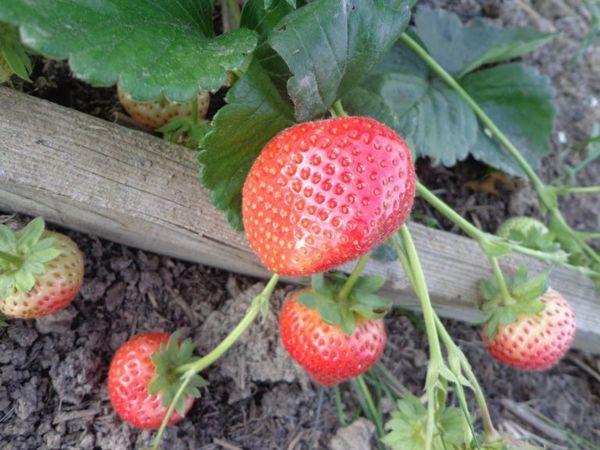
The bushes are strong, compact, and erect. They have a branched rosette. They form strong stems, the flowers do not fall, and the berries do not touch the ground. The leaves are large, green, and compactly arranged. The strawberry plant produces numerous runners, which can be used for propagation.
Flowering and fruiting
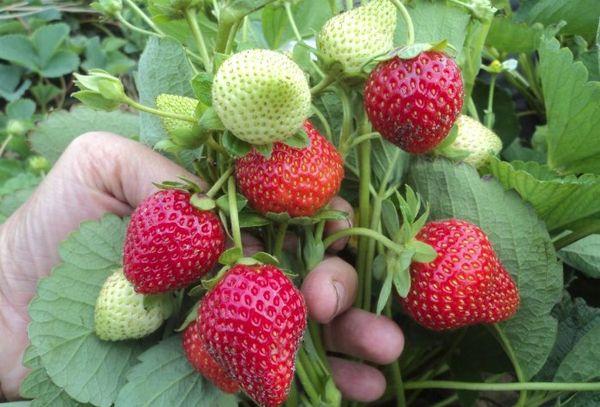
Fruiting occurs twice per season. The first berries are tastier than the later ones. The largest harvest occurs in late August or September. Flowering begins in early June and lasts up to 10 days. Then, ovaries form on each flower stalk, usually by mid-June.
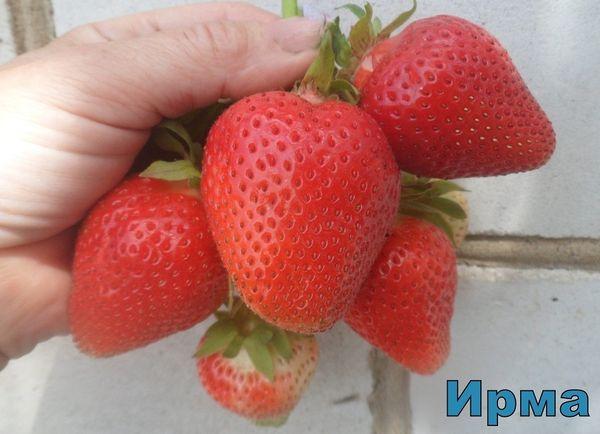
Important! Peak fruiting occurs in the second year after transplanting to open ground.
Characteristics of the berry and its use in cooking
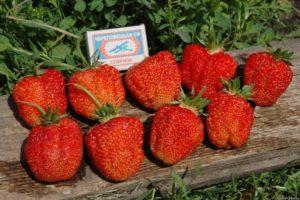
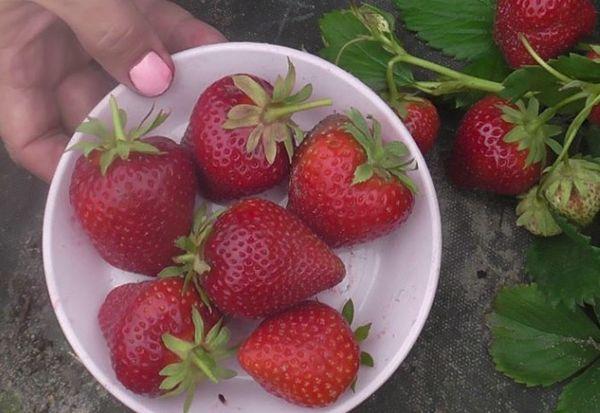
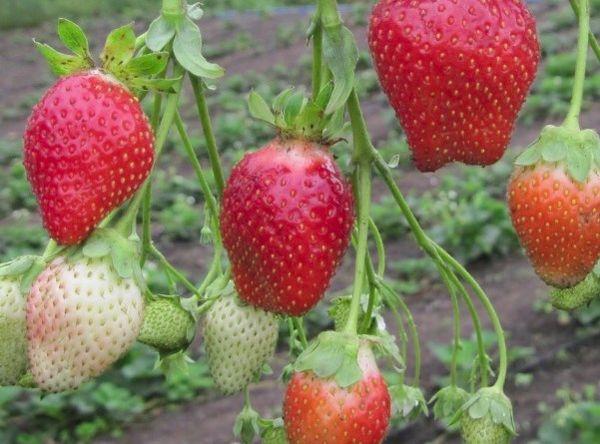
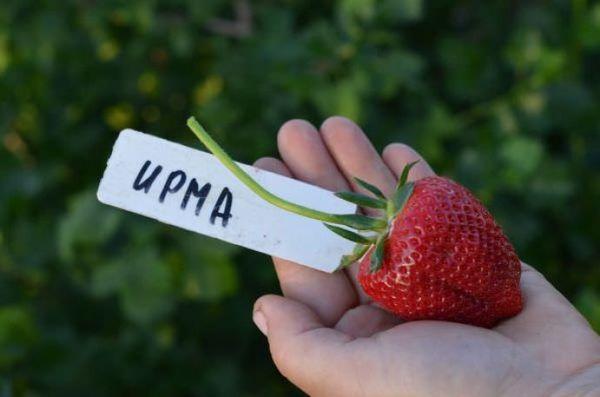
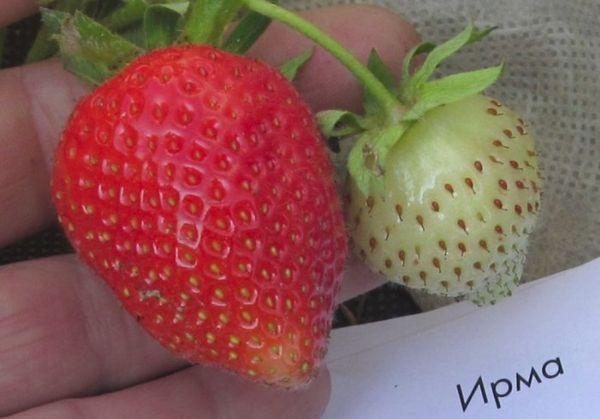
The berries are medium-sized, weighing 25–30 g. They are high in sugar and have a pleasant flavor. They have a conical shape. They are eaten fresh, processed into preserves, compotes, jams, and used in baked goods.
Resistance of the crop to diseases and frost
The variety has good resistance to fungal diseases such as fruit rot, brown spot, and Alternaria leaf spot. Irma also has moderate frost resistance and grows well in regions with inconsistent sunlight.
Advantages and disadvantages
The Irma strawberry variety has its advantages and disadvantages. Among its advantages are:
- high taste qualities of berries;
- excellent drought resistance;
- transportability;
- the fruits are stored well;
- The variety has a high return on investment.
Among the disadvantages, a deterioration in fruiting has been noted if hot weather persists outside for a long period.
Planting and propagation of Irma
Planting and propagation are carried out using three methods. Each gardener chooses the most suitable one.
With a mustache
The most commonly used method is to leave 2-3 strawberry plants for propagation at the beginning of the season. All fruiting is removed throughout the season. Primary runners are left until roots begin to grow on them. The mother and daughter plants are separated.
Important! When propagating, new bushes must be watered generously.
By division
This method guarantees 100% survival of new plants. It's simple to perform:
- After harvesting, the bushes are dug up.
- The roots are carefully cleared of soil.
- Divide the strawberry rosette.
- The roots are cut in the most convenient place.
- They are planted in a new place.
Seed method
This variety can be propagated by seed. Seeds are collected from ripe strawberries in your own garden or purchased from agricultural supply stores. The crop is grown using seedlings:
- prepare the soil in advance, buy it ready-made in stores or prepare it yourself;
- prepare a container, preferably with a lid for a greenhouse effect;
- the soil is watered generously;
- place the seeds on top and distribute them with a toothpick;
- cover the container with a transparent lid or cellophane;
- transferred to a warm place.
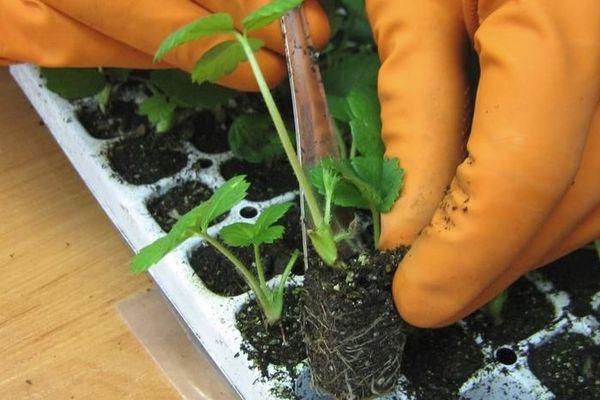
The seeds will germinate in 2-3 days. Ventilate the seedlings periodically and water them as needed. Once the seedlings reach 5 cm and have three natural leaves, transplant them into individual containers.
Important! Seedlings are transferred outdoors after 5 natural leaves appear.
Specifics of growing in open ground
To achieve a high yield, optimal growing conditions must be created. This involves crop rotation, site preparation, watering, fertilizing, and mulching.
The best predecessors and neighbors
When growing strawberries, follow crop rotation rules. Do not plant the crop after:
- potatoes;
- tomatoes;
- strawberries;
- cabbage.
After other crops, strawberries develop well and quickly gain growth.
Preparing the site and planting material
Before planting seedlings or replanting plants, prepare the planting site and seedlings in advance. For a new bed, certain steps are taken:
- Dig the area to a depth of 20 cm;
- Add humus, overripe manure, and peat;
- Sealed to a depth of 15 cm;
- Water generously.
Planting material preparation begins in March. Seedlings are grown using one of several methods. Before planting, the seedlings are left in a cool place for two days. This helps the bushes adapt to adverse weather conditions.
Timing and planting scheme for bushes
In southern and temperate regions, planting occurs in late April. Leave a 25 cm gap between plants and 60 cm between rows.
Watering
Strawberries appreciate generous watering. Water as needed. As soon as the soil dries out, water the plants at the roots, avoiding the crowns. Use at least 40 liters of water per watering.
Top dressing
The procedure is performed several times during the season:
- After planting in open ground;
- During the flowering period;
- During fruiting;
- Before winter.
Add humus, manure, wood ash, chicken manure or inorganic complexes that are sold in stores.
Loosening
Loosen the soil after each watering and each weeding to prevent a soil crust from forming. This prevents moisture from getting under the strawberry roots.
Diseases and pests: protection and prevention
Irma is resistant to most fungal diseases. However, if agricultural practices are not followed, the strawberry's immunity is weakened. It can be affected by:
- Fruit rot;
- Spotting;
- Fusarium;
- Alternaria;
- Blackleg.
Important! If signs of disease appear, treat strawberries with fungicides.
The crop is also affected by insects:
- Aphids;
- Weevils;
- Pipilshchiki;
- Caterpillars.
Insecticides are used to control it. Chemical use is stopped 20 days before harvest.
Mulching
Mulching makes strawberry care much easier. Mulch retains moisture at the roots and prevents weed growth. For this purpose, use:
- wood sawdust;
- straw;
- chopped grass;
- moss;
- pine needles.
Do I need to cover it for the winter?
Irma doesn't overwinter very well and requires additional protection. To preserve the plants until next season, follow these steps:
- Mulch the bushes;
- Install beams above the strawberries;
- Cover with agrofibre;
- Lay a layer of mulch;
- In winter they cover it with 10 cm of snow.
Reviews and recommendations from gardeners
Artem, 56 years old, Smolensk
The Irma variety really impressed me this year with its abundant harvest and delicious berries. We planted seedlings this year. We bought them from a nursery, and we'll be propagating and continuing to grow them.
Angelina, 34 years old, Chekhov
I was delighted with the taste of the Irma strawberry. I've been growing it for three years in a row. We process the entire harvest into jam and compotes. My family loves it.
Boris, 46 years old, Kaliningrad
I didn't really like the Irma variety. One season, we had a dry summer, and the quality of the harvest deteriorated.
Related posts:
 Description of the Florence strawberry variety, planting and care features
 How to grow strawberries at home
 Description and characteristics of the Vima Zanta strawberry variety, planting and care scheme
 Characteristics of the Irma tomato and description of the variety
 Description of the Holiday strawberry variety, cultivation and propagation methods
 Description and characteristics of the Korona strawberry variety, planting and care scheme
 Description of the everbearing strawberry variety Selva and cultivation technology
 Description of the Bogota strawberry variety, planting and care features