
- The specifics of growing berry crops in pots
- Advantages and disadvantages of the method
- The best varieties
- Landing
- Preparing the pot
- Suitable soil
- Selection and preparation of planting material
- The landing process
- Where to place containers with plantings
- Optimal temperature conditions
- Humidity and daylight hours
- How to care for strawberries
- Watering mode
- How and how much to apply fertilizer
- Protecting plants from diseases and parasites
- When to expect the harvest?
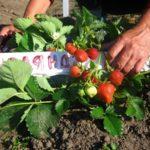
Many people today are interested in growing strawberries in pots. This is a rather complex process that requires strict adherence to basic guidelines. First and foremost, it's important to choose the right container and soil for the strawberries. Following planting guidelines is also crucial. Proper care is recommended to ensure healthy development and a bountiful harvest.
The specifics of growing berry crops in pots
Strawberries are characterized by shallow root systems. This allows the plant to be potted. However, choosing the right container, suitable soil, and a well-lit windowsill is crucial.
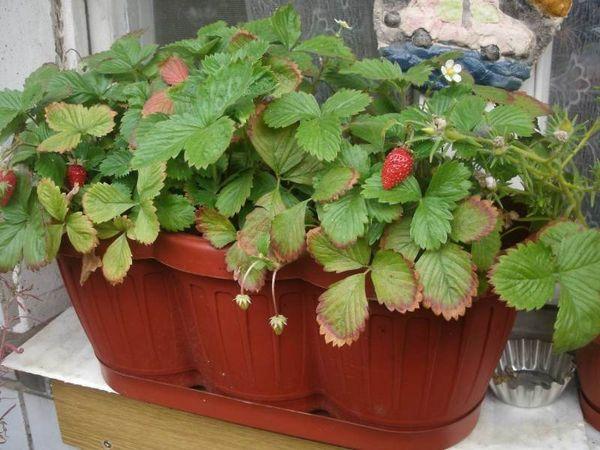
To ensure that strawberries not only produce a bountiful harvest but also have decorative properties, it's best to choose everbearing, trailing strawberries. These varieties are distinguished by their long flowering period and excellent ornamental qualities. They also produce an excellent harvest.
Day-neutral varieties are ideal for pot cultivation. These crops produce sweet fruit all year round.
Advantages and disadvantages of the method
This method of growing strawberries is becoming increasingly popular. It offers many advantages:
- decorative functions;
- space saving;
- ease of rearrangement;
- ease of harvesting;
- the possibility of creating optimal conditions.
However, this method also has certain disadvantages. It is associated with certain material costs. The technique requires the use of special containers and other equipment.
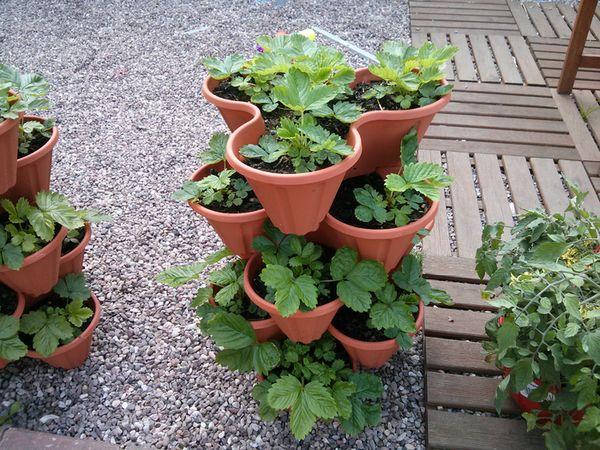
Additionally, it's worth paying attention to the variety you choose. Not all strawberry varieties are suitable for growing in pots. Another drawback is the significant labor required. Planting and frequent watering require considerable time.
The best varieties
The following varieties are suitable for growing at home:
- Queen Elizabeth II. This is a remontant variety that produces a constant harvest. It is characterized by abundant fruiting and large berries. However, it's worth noting that their flavor has a noticeable tartness. A disadvantage of this variety is its large roots. Therefore, it requires a large pot.
- Supreme. This is one of the best varieties for growing indoors. Its main advantage is self-pollination. Furthermore, it produces abundant fruit throughout the year.
- A homemade delicacy. The main advantage of this variety is its compact roots, which makes it suitable for growing in small pots. The plant produces small berries, although quite numerous.
- Kama. This variety can also be grown in pots. The berries are dark in color and firm in texture, making them excellent for storing. They are often used to make jam.
- Kleri. This early variety is characterized by low bushes, reaching a maximum height of 25 centimeters. Kleri features dark green leaves and large, firm-fleshed fruits. The berries tolerate storage and long-distance transportation well. This strawberry variety has an excellent flavor—sweet with a slight tartness.
- Darselect. This variety is characterized by a mid-season ripening period and produces large, brick-shaped berries. It is considered a high-yielding variety with a strong immune system.
- Florence. This late-ripening variety is virtually disease-free. These strawberries store well without losing their flavor.

Landing
To obtain a bountiful harvest, it is worth following some recommendations for planting and growing the crop.
Preparing the pot
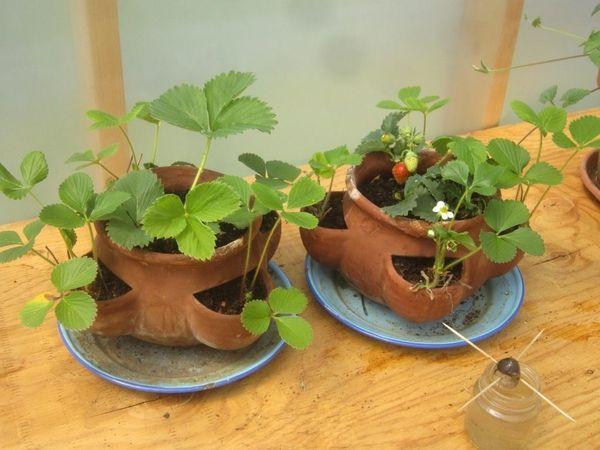
Regular flowerpots or long containers are suitable for strawberries. When choosing the container size, consider the number of plants you plan to plant. The placement of the containers is also important. For trailing strawberries, a cachepot is suitable.
In any case, it's a good idea to make drainage holes in the bottom of the container to prevent water from stagnating in the soil. Broken brick or expanded clay can be used as drainage.
Suitable soil
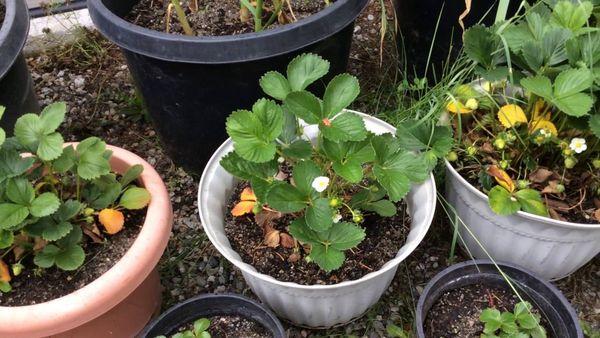
Since soil is limited when growing crops, it's recommended to use nutrient-rich soil. In this case, it's best to mix equal parts turf and compost.
For every 5 liters of composition, it is recommended to use 2 tablespoons of Nitroammophoska.
To disinfect the soil and prevent rot, 2 days before planting, the soil should be watered with a solution of potassium permanganate.
Selection and preparation of planting material
Planting material can be purchased or dug up from your own garden in the fall. Either way, strawberries require preparation.
Each bush should be carefully inspected for diseases and damaged areas. It is recommended to select only strong, full-fledged plants.
Place the planting material in a container with soil and move it to a cool place, such as a basement, for two weeks. This procedure begins the dormant period, allowing the plant to rest.
The landing process
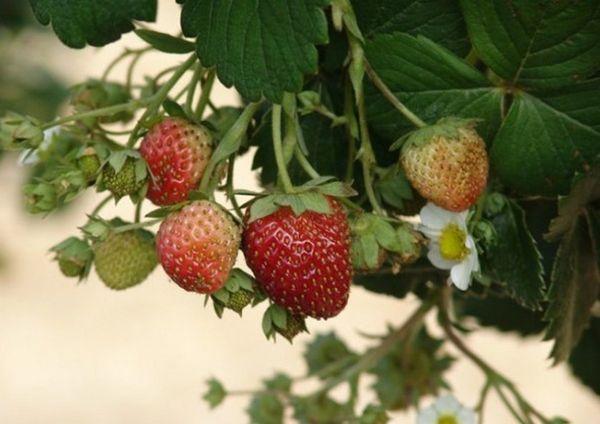
It's recommended to plant the bushes in the spring. To do this, follow these steps:
- Place a layer of small pebbles or expanded clay on the bottom of the pot.
- Examine the condition of the plant's roots. If they are too long, trim them back to ensure a neat arrangement in the pot.
- Place the bush into the formed hole, carefully distribute the root system and sprinkle with soil.
- Lightly compact the soil and water the planting. While watering, it's a good idea to use a growth stimulant.

Where to place containers with plantings
If you plan to grow strawberries indoors, choose a south- or east-facing windowsill. A north- or west-facing window is also acceptable, but ensure it receives sufficient light. During warmer months, the plant can be grown outdoors.
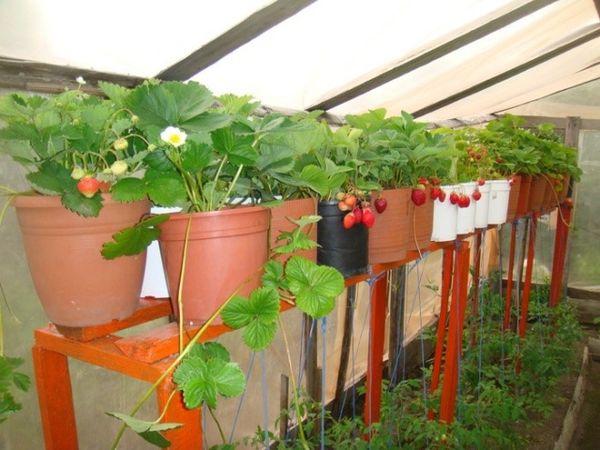
Optimal temperature conditions
The plant requires a temperature of 18-20 degrees Celsius. If the temperature drops below this level, the plant will become ill. In spring, the use of heaters is recommended.
Humidity and daylight hours
Strawberries require humidity levels of 70-75%. Indoor air is often too dry in winter. In this situation, frequent misting with settled water is necessary. However, it's important to remember to exercise moderation.
High humidity creates an environment for disease development.
How to care for strawberries
To ensure that strawberries develop normally, they need to be provided with comprehensive and high-quality care.
Watering mode
For watering, use only settled liquid. It's recommended to water the plants twice a week, preferably in the afternoon. Afterward, loosen the soil.
It's important to remember not to overwater the soil, as this will cause root rot.
How and how much to apply fertilizer
During flowering and fruit ripening, strawberry bushes require fertilizing. This procedure is recommended once every two weeks. Organic and mineral fertilizers are used for this purpose.
A natural solution worth using is a manure solution. Mix it with water at a ratio of 1:20. Ash slurry is also acceptable.
Complex fertilizers available in stores are highly effective. Kemira Lux is an excellent option. During flowering, apply foliar feeding using a boric acid solution.
Protecting plants from diseases and parasites
During berry development, there's a risk of spider mite infestation or gray mold. To combat these problems, use a garlic infusion.

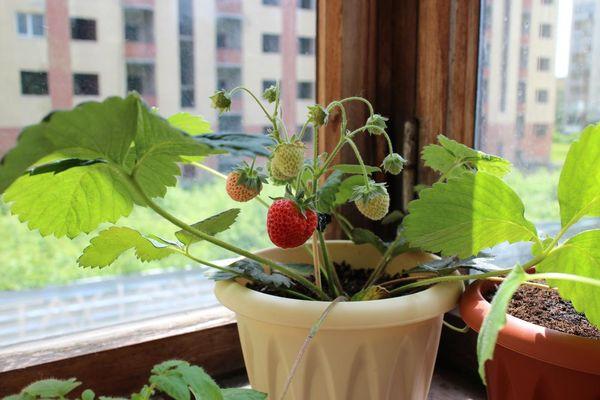 To prepare the remedy, take 2 cloves of garlic, crush them with a garlic press, and add 100 milliliters of liquid. Let it sit for 2 hours, strain, and pour into a spray bottle.
When to expect the harvest?
When growing everbearing strawberry varieties, flowering should be expected 30-35 days after planting. The berries will be harvested 60-65 days after planting.
Growing strawberries in pots is a complex and exciting process.
To achieve success in this matter, it is recommended to carry out planting work correctly and strictly follow the recommendations of specialists on bush care.
Related posts:
 The best varieties and cultivation of everbearing strawberries, fertilizing and propagation
 Signs of disease and pest attacks on strawberries, treatment methods
 Description of the Florence strawberry variety, planting and care features
 Methods for planting and propagating cherries at home
 How to grow strawberries at home
 The best grape varieties for growing in the Urals, planting and care rules in summer
 Description and how to plant the Garland strawberry variety
 Description and characteristics of the Vima Zanta strawberry variety, planting and care scheme