
- Selection of the Darselect variety
- Growing area
- Botanical description
- Bush and shoots
- Flowering and fruiting
- Unique properties of the berry and its uses
- Immunity to diseases
- Frost and drought resistance
- Landing specifics
- The best predecessors and neighbors
- Preparing the site and seedlings
- Timing and rules for planting bushes
- We organize care for garden strawberries
- Watering and fertilizing
- Mulching and loosening
- Trimming
- Protection and prevention from diseases and pests
- Preparing for winter
- Methods of reproduction
- Reviews of Darselect strawberries
The Darselect strawberry variety is an early-ripening variety. You can enjoy its harvest as early as mid-June. It has moderate frost resistance but tolerates drought well. It has excellent flavor. The berries are easy to transport, making them popular for commercial cultivation.
Selection of the Darselect variety
One of the best varieties of French selection. It was obtained by crossing Elsanta strawberries and Parker. Strawberries have gained recognition worldwide. They are grown commercially and for personal consumption. Darselect is characterized by its early ripening period and is suitable for cultivation in all climate zones.
Growing area
Darselect strawberries are grown not only in Russia but also worldwide. The bushes have moderate frost and drought resistance. They quickly adapt to various climates and are easy to care for. They are suitable for beginning gardeners. They are suitable for northern, southern, and temperate climates.
Botanical description
A botanical description can help you determine the appearance of a bush and learn its characteristics, making it easier to choose a variety.
Bush and shoots
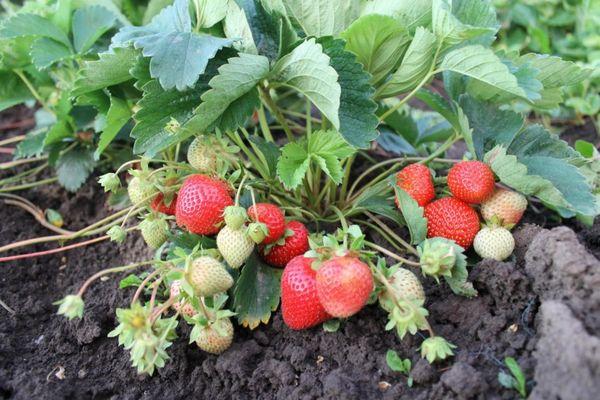
The bushes are low, reaching up to 30 cm in height. The rosette is branched. The leaves are green and consist of three leaflets, each with a distinctive wavy pattern. The stems are dense, ensuring stability for the rosette. The plant produces a medium number of runners. The root system is robust, allowing for maximum moisture absorption.
 Important! If there is no need to propagate the strawberry plant, runners should be removed to avoid wasting the plant's energy on their formation.
Flowering and fruiting
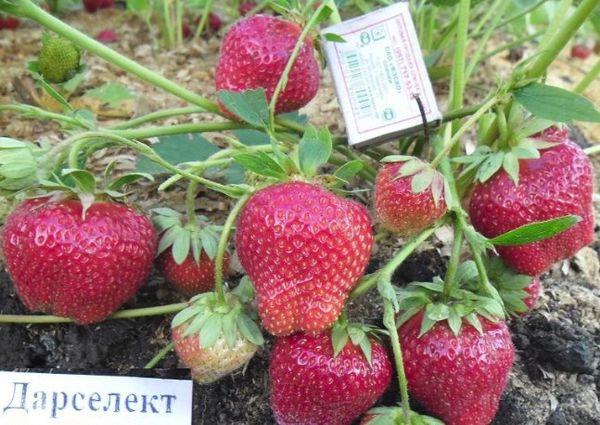
Flowering begins in mid-May. White flowers with a bright yellow center appear. Each flower contains five petals. Ovaries form within two weeks. Fruiting occurs in stages. The first harvest is in mid-June, the second two weeks later. This continues until the end of the season. A single bush yields up to 800 g of berries. Under optimal conditions, the yield can be doubled.
Unique properties of the berry and its uses
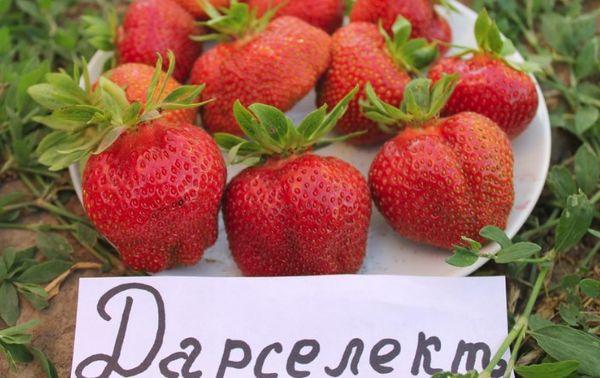
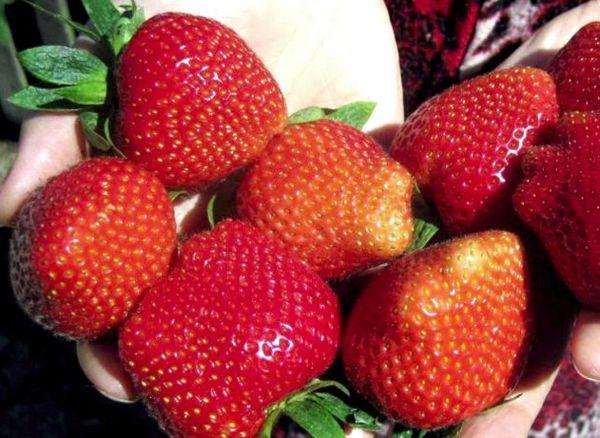
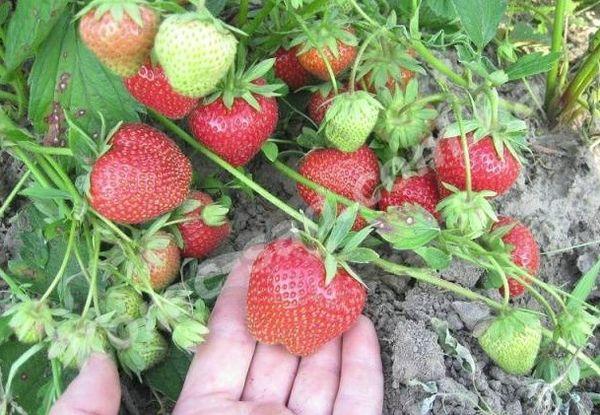
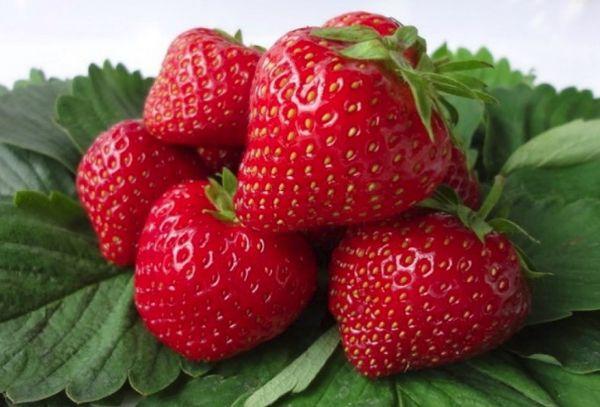
The berries are small, averaging 25–30 g. They are bright red in color, and the seeds are the same color as the shell, blending together and being almost invisible. The flavor is pleasant. The fruits offer a perfect balance of sweet and tart flavors. Strawberries are well-suited for transportation, making them popular for commercial production.
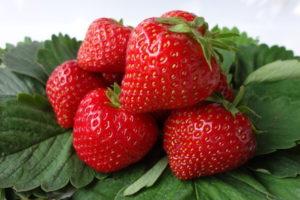
These berries are used to make jams, preserves, composts, and syrups. They are also used in baking, cake decorating, frozen, and processed into fillings and flavorings.
Immunity to diseases
Under optimal growing conditions, strawberries exhibit high resistance to most fungal diseases. However, it's important to regularly inspect your crops for signs of damage. Darselect is susceptible to infection and attack by:
- powdery mildew;
- purple spot;
- fruit rot;
- spider mite;
Important! Infection occurs when the crop is overwatered; it is very sensitive to any changes in the soil.
Frost and drought resistance
The maximum frost resistance of Darslect is -28°C. This resistance is considered average. It is recommended to cover the plantings with insulating materials for the winter.
Plants tolerate drought better. Strawberries can withstand temperatures as high as 40°C (104°F). However, there's no need to test the plant's hardiness. It's very moisture-loving and, with proper cultivation practices, can double its yield.
Landing specifics
Strawberry planting follows a specific algorithm. It's essential to maintain crop rotation, prepare the plot and seedlings in advance, and adhere to planting timings.
The best predecessors and neighbors
Strawberries prefer full sun, so they should be planted in an open area. Ideal companion plants include:
- carrot;
- beet;
- radish;
- radish;
- garlic;
- onion;
- anise;
- thyme;
- parsley;
- dill.
Important! Avoid planting strawberries after or after nightshades. These are the most unfavorable predecessors and neighbors for the crop.
Preparing the site and seedlings
Prepare the planting site in advance. Two weeks before transplanting the seedlings into the open ground, dig the soil to a depth of 20 cm. Then add organic fertilizer:
- manure;
- chicken manure;
- wood ash;
- compost;
- humus;
- herbal infusions.
Ready-made mineral complexes containing potassium, phosphorus, and nitrogen are also used. Choose fertilizers labeled "For strawberries." Apply the fertilizer to a depth of 15 cm. Leave the area undisturbed until work begins. Before transplanting, leave the seedlings in a cool place for two days to develop resistance to adverse weather conditions.
Timing and rules for planting bushes
Planting begins when the soil warms up to a depth of 10 cm, reaching 10°C. By this time, the outside temperature should be constant, and there should be no frost at night. This period typically falls between late April and early May, depending on the growing region.
Planting is carried out as follows:
- Dig holes 10 cm deep for each plant;
- Water with a small amount of water;
- Carefully remove the roots of the plant and transfer them to the hole;
- Cover the roots with soil, but not very deeply;
- Water generously;
- Mulch with straw, wood shavings, and pine needles.
Planting is carried out according to a pattern. A distance of 20–25 cm is maintained between bushes, and at least 90 cm between rows.
Important! For growing strawberries, use dark film with slits for the bushes. This makes caring for the crop easier.
We organize care for garden strawberries
To get a decent strawberry harvest, you need to provide proper care. This will double the yield and ensure the plant's health.
Watering and fertilizing
Water strawberries as the soil around the roots dries out. Water the bushes at least once every three days. Reduce the amount during frequent rainfall, and increase it during drought. Use settled, warm water for this procedure. Water the bushes sparingly to avoid washing away the roots.
Mulching and loosening
Many gardeners prefer to mulch their strawberries. This helps retain moisture at the plant's roots and prevents weed growth. Mulch options include:
- straw;
- wood sawdust;
- pine needles;
- chopped grass.
Soil loosening should be done regularly. The more frequently, the more oxygenated the root system becomes. This increases the yield and size of the fruit. If a soil crust forms on the surface, it prevents water and minerals from reaching the roots.
Trimming
Trimming the runners is necessary on a regular basis unless the plant is being propagated. Darselect strawberries don't produce many offshoots. A moderate number of offshoots doesn't interfere with normal development. In the first year after planting, it's recommended to remove all ovaries and runners from the plant to ensure proper rooting.
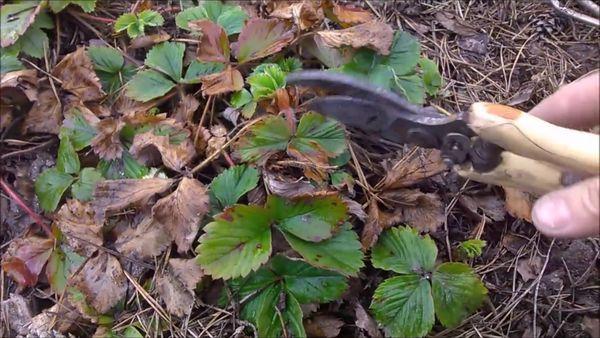 Important! The lifespan of one bush is 4 years, after which the plants need to be renewed.
Protection and prevention from diseases and pests
To protect crops from attacks by harmful insects and diseases, several rules are followed:
- water regularly, but do not overwater the crop;
- fertilize several times per season, especially during flowering and fruiting;
- use mulching;
- carry out preventive spraying with insecticides and fungicides before the fruit begins to set;
- Check foliage regularly for damage;
- loosen the soil at least once a week;
- observe crop rotation.

Preparing for winter
Darselect strawberries must be covered for the winter. Snow is ideal, but it's a good idea to lay down insulation underneath.
It may consist of organic material:
- straw;
- sawdust;
- needles;
- chopped grass.
A layer of compost is added on top. After snowfall, a 10-cm layer is maintained. Instead of organic matter, agrofibre is used. It can be purchased at any gardening store.
Methods of reproduction
Propagation of Darselect strawberries is possible using three methods:
- Dividing the bush. After digging, the bush is divided into two equal parts and planted separately.
- Whiskers. Leave the shoots closest to the bush and root them.
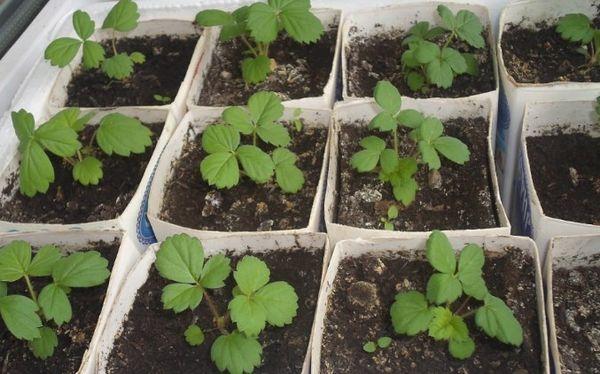
- By seeds. Collected from berries. Planting begins in January.
Reviews of Darselect strawberries
Alexey, 56 years old, Astrakhan
I've been growing the Darselect strawberry variety for several years now. I strive to create the best possible growing conditions. A single bush yields between 800 and 1000 grams of berries. They have a very pleasant taste. When I first planted them, the plants were affected by powdery mildew. This didn't harm the harvest.
Valentina, 45 years old, Vladimir
I bought Darselect strawberries this year as seedlings from a nursery. The plants took root quickly and had no problems caring for them. They started producing berries back in June, and I'm very happy with the planting. Next year I'll propagate them, and I hope seed will be a suitable method.
Elena, 32 years old, Kaliningrad
I liked the Darselect strawberry for its compact size. It blooms profusely, producing numerous berries. The fruits are small but very tasty. I've never seen any diseases. However, spider mites are a frequent infestation, so I treat them with insecticides. Otherwise, the plant is easy to care for.
Related posts:
 Description of the Florence strawberry variety, planting and care features
 Description and characteristics of the Vima Zanta strawberry variety, planting and care scheme
 How to grow strawberries at home
 Description of the everbearing strawberry variety Selva and cultivation technology
 Description of the Bogota strawberry variety, planting and care features
 Description and characteristics of the Korona strawberry variety, planting and care scheme
 The best varieties and cultivation of everbearing strawberries, fertilizing and propagation
 Description and how to plant the Garland strawberry variety