
- Selection and cultivation regions of Kent strawberries
- Advantages and disadvantages
- Distinctive features and characteristics of the variety
- Size and appearance of the bush
- Flowering and fruiting
- Taste qualities and scope of application of berries
- Susceptibility to diseases and pests
- Frost and drought resistance
- Landing rules
- Deadlines
- Selecting a site and preparing beds for strawberries
- Preparing seedlings
- Stages of the planting process
- What to plant next to it
- Further care
- Watering mode
- What fertilizer does the variety prefer?
- Weeding and loosening
- Mulching strawberries
- Treatment against diseases and pests
- Shelter during the winter period
- Methods of reproduction
- Reviews from gardeners and summer residents
Those who want a regular strawberry harvest are recommended to plant the Kent strawberry. This variety was cultivated in Canada and is adapted to Russian climate conditions. It's a versatile plant, offering not only excellent flavor and attractive presentation, but also minimal maintenance. It can grow and bear fruit even in colder regions.
Selection and cultivation regions of Kent strawberries
In 1970, the Kent variety was developed in Canada by crossing the Tioga, Rendgantlent, and Raritan strawberry varieties. Initially, the variety was designated K74-10. After ten years of analysis by breeders, the variety was approved for testing on several farms. Following successful testing, the Kent strawberry was officially registered and zoned in Canada.
In 1970, its cultivation began in Russia, where the strawberry quickly gained popularity. The variety can be grown throughout the Russian Federation, but is best grown in Siberia and the Urals, where temperatures are cooler.
Advantages and disadvantages
This variety has gained widespread popularity due to its positive qualities. Its advantages include:
- early maturity;
- large berries;
- excellent taste and commercial qualities;
- long fruiting;
- good transportability and shelf life;
- resistance to diseases, drought, low temperatures.
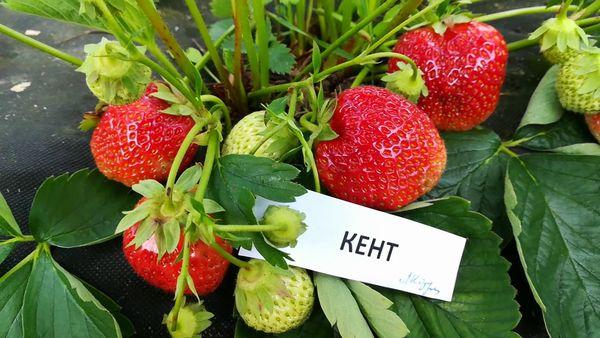
The variety also has its drawbacks, the most significant ones being:
- The flower stalks can't support the fruit. Under the weight of the unripe berries, the flower stalks bend, and the berries end up lying on the ground.
- Large berries are only obtained during the first harvest. The berries' size decreases with each harvest.
- The first harvest contains partially defective berries.
- Plants are not resistant to verticillium.
- Average yield.
Distinctive features and characteristics of the variety
The Kent strawberry is an early-season variety, with flower stalks forming in August-September. It bears fruit once a year.
Size and appearance of the bush
The plant is large, with an upright bush and large leaves. Its root system is robust, so it's recommended to maintain a distance of 0.5 m between plants when planting.
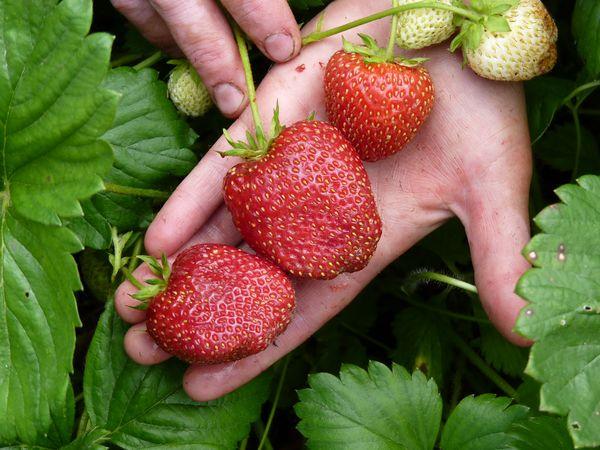
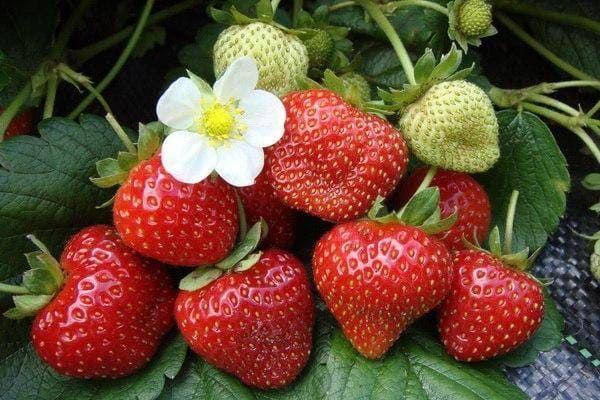
The berry's ability to form runners is average. However, by autumn, enough runners have formed for a new planting. Most berries are heart-shaped. The color ranges from red to dark red. The average berry size is 37 g.
If agricultural practices are followed, one bush can produce up to 0.7 kg of berries.
Flowering and fruiting
The bushes produce numerous flower stalks, reaching the level of the leaves. In the first year, the plant produces up to 7 flower stalks. The berries grow large; in the second year, the number of flower stalks increases to 10-15, but the berries become smaller. Each year, the berries become smaller.
The flower stalks are fragile, and even the weight of unripe berries bends them. To preserve the quality of the berries, it is recommended to use supports.
The first berries are harvested in early summer. The fruiting period itself is extended. This is convenient for home-grown berries, but not for farms that sell them.
Taste qualities and scope of application of berries
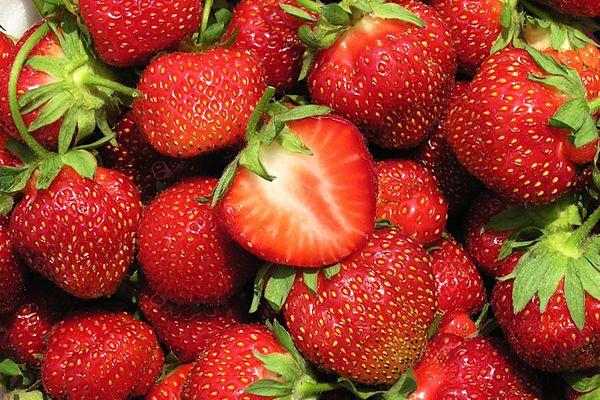
The berries are sweet and aromatic. They have a versatile use, being eaten fresh and also used for canning. They can also be frozen, and when frozen properly, they retain their marketable appearance well.
Susceptibility to diseases and pests
The variety's main advantage is its resistance to major diseases. The root system is less resistant and susceptible to disease when overwatered.
Diseases:
- Verticillium wilt;
- gray rot.
The plant may also suffer from an invasion of the Colorado potato beetle.
Frost and drought resistance
This variety was developed in Canada, where temperatures are cool, so the strawberries tolerate low temperatures. It's frost-hardy. Even if the winter is light on snow, the strawberry plants can be preserved.
When the ground freezes below -10 degrees Celsius, the plant needs to be covered to preserve it. Straw or spunbond are used for this purpose.
Kent strawberries also bear fruit well in all weather conditions; even in cloudy summers, the berries ripen on time. Rainfall doesn't affect the quality of the berries.
Landing rules
The plant isn't demanding in terms of growing conditions. However, to obtain the maximum yield, follow the planting guidelines.
Deadlines
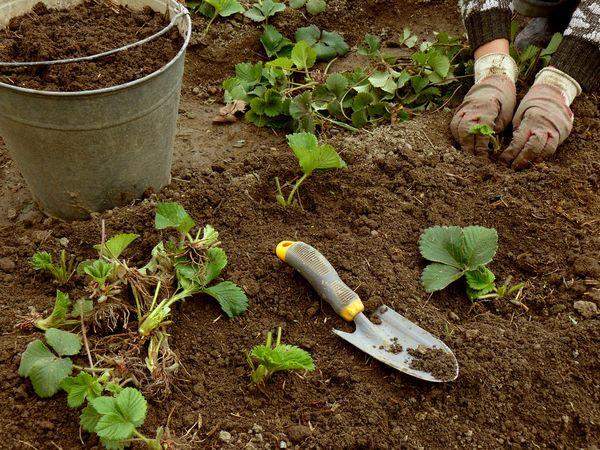
The optimal time for planting is spring, immediately after the snow melts. However, fall planting is also possible. In autumn, the plants are planted in September. In regions with cold climates, Kent strawberries are planted only in spring, as fall planting does not allow the plants to establish roots.
Selecting a site and preparing beds for strawberries
To ensure a good harvest, it's best to plant in a plot with black soil or gray forest soil. Clayey and waterlogged soils will cause the plant to grow slowly. Limestone-rich soils will also cause poor growth. Fertilize depleted soils before planting.
Soils with high groundwater levels are not suitable for planting. The best option is to plant on a flat area or a slightly elevated site.
First, the bed is dug over, removing weeds. This preparation will minimize weeding time later. Two weeks before planting, the area is fertilized with organic matter. Nitroammophoska (NAP) is added at the same time. The soil prepared in this way will be sufficiently fertile, allowing for a good harvest.
Preparing seedlings
Before planting, inspect the plants. If the roots exceed 10 cm in length, they are trimmed.
Stages of the planting process
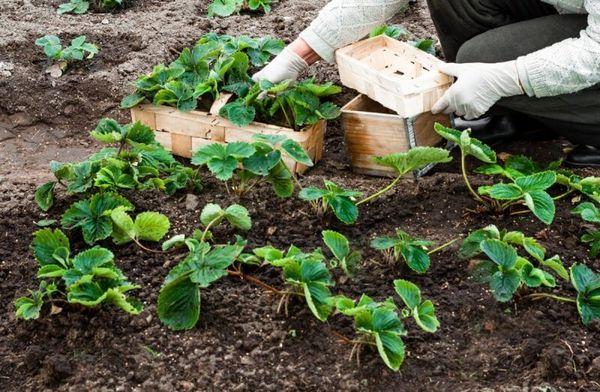
Plant seedlings in cloudy weather or in the evening to ensure survival. Planting is carried out in the following order:
- They dig a hole.
- They are watering.
- Planting strawberry seedlings.
- Check to see if the bush is planted too deep. The root collar should be above ground.
- The plants are watered.
What to plant next to it
Strawberries can coexist with many crops. Legumes are planted nearby. They enrich the soil with nitrogen and create optimal conditions for strawberry growth.
To protect against insects and diseases, onions and garlic are planted together with strawberries. Herbs like parsley and sage will keep slugs and snails away. Marigolds are good pest repellents, protecting berries from fusarium wilt.
Further care
Basic care consists of watering, weeding, loosening the soil, mulching, and pest control. Trimming the runners will also be necessary. Although relatively few are produced, this is essential. Trim the runners in the fall, leaving only the two strongest ones. Old foliage is also removed at this time.
Watering mode
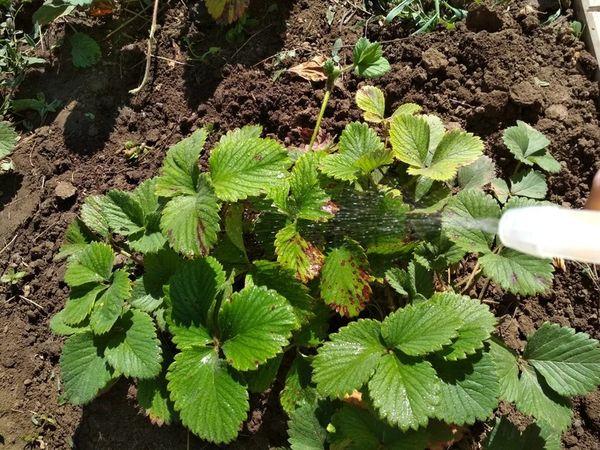
Water regularly, especially if the summer is hot. However, avoid overwatering the soil, as this can lead to fungal infections and reduced frost resistance.
In spring, water with a sprinkler, which promotes faster growth. In summer, water at the roots. The water temperature should be between 15 and 20 degrees Celsius.
Watering with cold water reduces yields and creates conditions for the development of diseases.
What fertilizer does the variety prefer?
Fertilizing is carried out according to the standard schedule. In the spring, ammonium nitrate or any other nitrogen fertilizer is used. Potassium-phosphorus fertilizers are used in the summer and fall.
Weeding and loosening
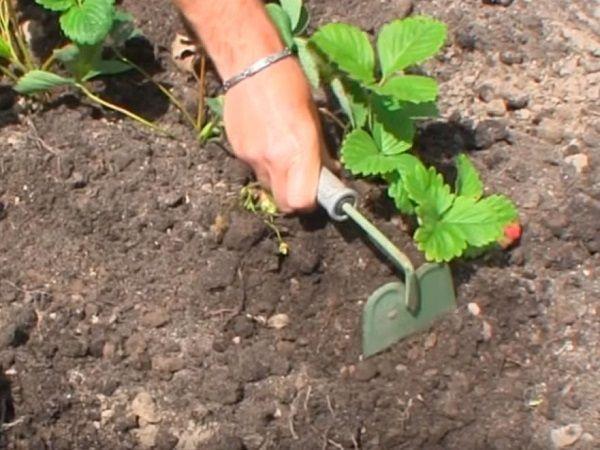
To remove weeds and oxygenate the soil, weed and loosen the soil. Loosen the soil after each watering or rain. Loosen the soil not only between plants but also between rows. Use a narrow hoe for this. The plant also responds well to organic fertilizers such as chicken manure, mullein infusion, or nettle infusion.
Mulching strawberries
Mulching is essential for proper strawberry growth. Straw, sawdust, dry grass, and inorganic materials are used for this purpose. This protects the plant from pests and diseases and creates a barrier against weeds. Mulch also retains moisture, which is essential during dry periods.
Mulching is carried out after the ovaries appear.
Treatment against diseases and pests
If diseased plants are discovered, they must be destroyed. Healthy ones must be treated with fungicides.
If a Colorado potato beetle is detected, non-chemical treatment is carried out with a solution of laundry soap.
Shelter during the winter period
To ensure a successful winter, preparatory work is necessary. Old leaves are removed after harvesting. Pest control treatments are then carried out. When frost sets in, it's best to cover the strawberries to prevent freezing. Mulch made from straw, sawdust, leaves, or hay can be used for this purpose. Remove the mulch in the spring. If strawberries are grown in warmer regions, winter cover is not necessary.
Methods of reproduction
The optimal method of propagation is by runners. This is best done in summer. First- and second-level rosettes are selected and transplanted into the ground or pots. When 5-6 true leaves appear, the young plant is transplanted to its permanent location.
Reviews from gardeners and summer residents
The variety received positive reviews from most gardeners, with many acclaiming it as the best.
Oleg, 48 years old, Moscow region:
"I've been growing the Kent variety of strawberry for three years. I start harvesting in early June. And for the next month, the bushes delight you with new berries. The berries are bright, beautiful, and fragrant. They're also firm, store well, and don't get damaged during transportation. They produce numerous runners, so I recommend replanting them annually, as the berries shrink with each harvest."
Anzhelika, 34 years old, Republic of Mari El:
"Our family sells strawberries. We plant three to five varieties at a time to find the right one. We also tried growing the Kent variety. The berries are delicious, no complaints there, and attractive. However, the yield is mediocre. It might be suitable for personal use, but for commercial use, we'd like a higher yield."
Sergey, 54 years old, Nizhny Novgorod region:
"I planted Kent strawberries in my garden completely by accident. And I haven't regretted it. Summer in our region is unpredictable; it was cold and rainy right from the start. I grow several varieties of strawberries in my garden. But all of them, except for the Kent, were infected with gray mold and spotting. Kent, however, delighted me with its harvest. The berries were large and flavorful. Later, the berries were no less flavorful, but smaller. I also liked the variety for its low maintenance and ease of care."
Related posts:
 Description of the Florence strawberry variety, planting and care features
 How to grow strawberries at home
 Description of the Holiday strawberry variety, cultivation and propagation methods
 Description and characteristics of the Vima Zanta strawberry variety, planting and care scheme
 The best grape varieties for growing in the Urals, planting and care rules in summer
 Descriptions of the 20 best cherry varieties for the Moscow region, their planting and care
 Description of 36 of the best sweet and large varieties of gooseberries
 The best varieties and cultivation of everbearing strawberries, fertilizing and propagation