
- What are strawberries afraid of in winter?
- When to prepare strawberries for winter
- We feed the bushes after fruiting
- We treat against pests and diseases
- Reduce watering
- Should I prune strawberries before winter?
- Soil care: loosening and weeding
- Mulching and hilling beds
- How and with what to cover a plant from frost
- Work on the site
- Specific training requirements depending on the region
- Southern regions
- Central Russia and the Moscow region
- Urals and Siberia
How to properly prepare strawberries for winter? This question is of interest to novice gardeners who have just started growing strawberries. To ensure their crops survive until next season, preparatory work is necessary. This includes fertilizing, watering, pruning, preparing covering material, and treating for diseases and pests.
What are strawberries afraid of in winter?
During winter, the plant is at risk of frostbite on its leaves and roots. To achieve this, optimal temperature conditions must be created. Bushes overwinter at temperatures of at least +2 to +6°C. Digging up the plants is not necessary; the bed can be well covered.
When to prepare strawberries for winter
From late August until early autumn, preparations for winter begin. By this time, the harvest should be fully harvested, and watering should be stopped two weeks beforehand. This will help the plants slow down and expend less energy.
We feed the bushes after fruiting
After fruiting, the bushes are fertilized. The best fertilizers for them are organic compounds:
- manure;
- chicken manure;
- compost;
- humus;
- wood ash.
If it is not possible to use organic matter, resort to mineral fertilizers:
- superphosphate;
- potassium salts;
- nitrogen fertilizers;
- potassium permanganate solution;
- urea;
- copper sulfate.
Over the winter, these elements decompose and enter the soil. When strawberries begin to bloom, they actively absorb these nutrients.
We treat against pests and diseases
Pest and disease treatments begin 3-4 days before covering. During this time, all harmful insects living in the soil and on strawberry foliage are killed. Broad-spectrum insecticides are used for this purpose.
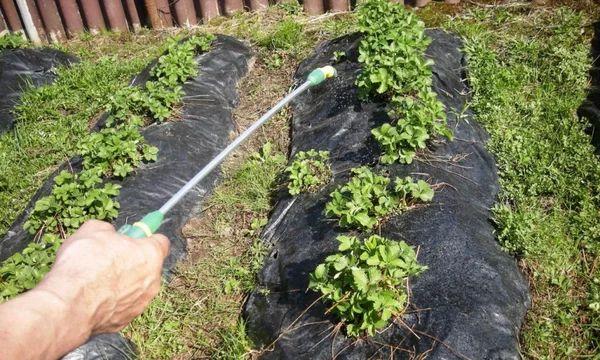
If the bushes are infected with fungi or viruses, remove all damaged areas. Then spray with fungicides or copper sulfate.
Important! If diseases are detected during the winter, isolate the plant from others.
Reduce watering
Watering is reduced two weeks before harvest. After harvesting, watering is stopped completely for two weeks. After this time, the strawberries are watered generously and prepared for winter shelter. This procedure helps the bushes adjust to winter and limit their nutrient consumption.
Should I prune strawberries before winter?
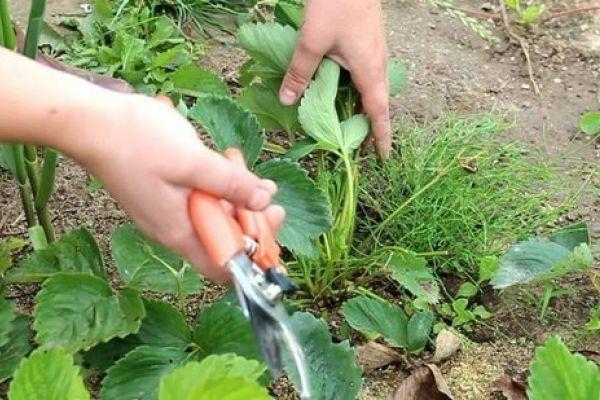
It's important to prune strawberries for the winter properly. Avoid trimming off all the leaves and runners. When pruning, keep the following points in mind:
- Old leaves are removed, as they are most often susceptible to disease.
- All runners are cut off except those located closest to the mother bush.
- Pruning is done with pruning shears or scissors.
Gardeners' opinions differ on pruning leaves and runners. Some believe this procedure helps strawberries preserve their strength and survive the winter. Others believe that pruning is detrimental to the plant's health. Removing leaves and runners stresses the strawberries.
Important! Every gardener makes their own decision about strawberry pruning. There is no scientific evidence to support any of these theories.
Soil care: loosening and weeding
Loosening and weeding the topsoil ensures the preservation of minerals at the strawberry roots. Throughout the season, weeds are removed as they emerge. At the same time, the topsoil is loosened. Avoid allowing a soil crust to form, as this prevents moisture from reaching the roots.
Mulching and hilling beds
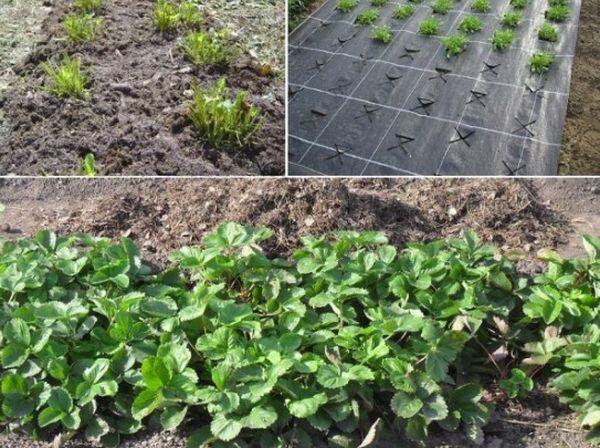
Adding mulch to a strawberry bed helps retain moisture and minerals and prevents weed growth, making it easier to care for the crop.
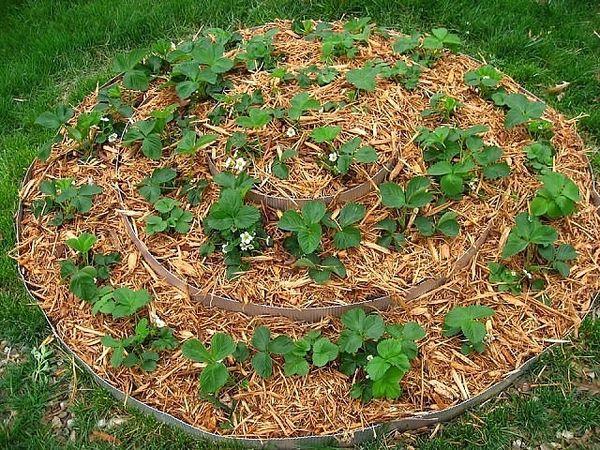
For mulching use:
- agrofibre;
- straw;
- wood sawdust;
- chopped grass.
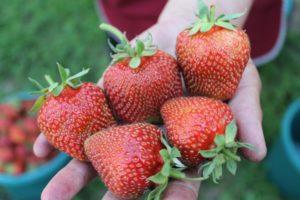
Before covering the bushes for the winter, they are mulched to retain heat at the strawberry roots.
How and with what to cover a plant from frost
There are several ways to protect a plant from frost. The best material is snow. However, in southern and temperate regions, winter can be snowless. What should you do in this case?
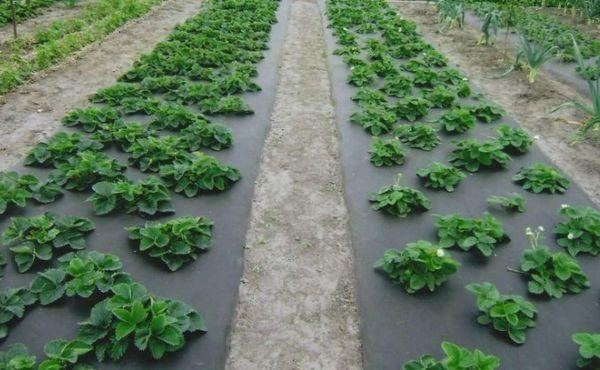
Strawberry covering materials vary. The best option is agrofibre. This special dark film retains heat well throughout the winter. It protects the bushes from frost and prevents rodents from entering and eating the roots and foliage.
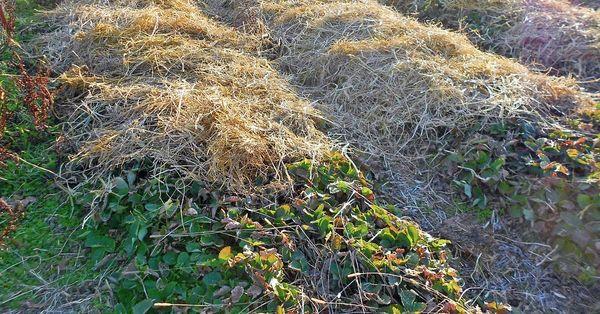
If it is not possible to purchase agrofibre, organic insulation materials are used:
- straw;
- wood sawdust;
- fallen leaves;
- moss;
- pine needles.
Important! Do not lay agrofibre on top of leaves. When using this material, sticks are installed so that the shelter hangs over the bushes.
Work on the site
Work on the site before covering for the winter includes:
- treatment of plants from pests and diseases;
- fertilizing for winter and spring nutrition of strawberries;
- mulching beds as insulation;
- winter watering to maintain life;
- trimming dry leaves and distant tendrils.
Specific training requirements depending on the region
Preparing strawberries for winter varies slightly depending on the region.
Southern regions
In the south, preparatory work begins later. The first frosts arrive in late September or early October. Strawberries overwinter more easily in this region, as severe frosts are not common. In the south, agrofibre is used.
Central Russia and the Moscow region
A temperate climate is characterized by varying winters. One season sees heavy snowfall and severe frosts, while another experiences the opposite. It's important to consider these factors when carrying out gardening. After covering the bushes with insulation, cover them with plastic sheeting, ensuring it doesn't touch the foliage, then apply another layer of organic mulch.
Urals and Siberia
For the north, large amounts of snow are beneficial. However, plants may not survive severe frosts. To increase the amount of warmth, snow-making is used:
- the strawberry bed is mulched with straw;
- install fiber mounts;
- cover the area with film;
- lay a layer of straw or compost;
- then cover with film;
- repeat the compost layer;
- pour 10 cm of snow onto the compost.
Related posts:
 How to grow strawberries at home
 Description of the Florence strawberry variety, planting and care features
 Description and how to plant the Garland strawberry variety
 Description and characteristics of the Vima Zanta strawberry variety, planting and care scheme
 Signs of disease and pest attacks on strawberries, treatment methods
 Description of the everbearing strawberry variety Selva and cultivation technology
 Description and characteristics of the Elsanta strawberry variety, care and cultivation
 Description of the Holiday strawberry variety, cultivation and propagation methods