
- History of selection and regions of cultivation of the Fleur strawberry
- Pros and cons of the variety
- Features and characteristics of strawberries
- Bush size and appearance of the leaf blade
- Flowering and pollination
- Ripening time and yield
- Tasting qualities of berries and their scope of application
- Winter hardiness and drought resistance
- Susceptibility to diseases and parasites
- Features of strawberry planting
- Selection and preparation of beds
- Selecting seedlings
- Timing and technology of planting bushes
- Further care
- Regularity of watering
- How to fertilize a plant
- Weeding and loosening the soil
- Mulching
- Protection from winter and spring frosts
- Preventive treatments
- Breeding methods
- How to grow Fleur strawberries from seeds
- By dividing the bush
- Sockets
- Gardeners' reviews of the variety
The early, fast-ripening Fleur strawberry variety appeared at the beginning of this century and immediately gained recognition among gardeners and farmers worldwide. Although the variety is not known for its high yields, its early maturity and highly rated flavor quickly brought popularity to the new hybrid strawberry. This fruit was particularly appreciated in Germany and Scandinavia.
History of selection and regions of cultivation of the Fleur strawberry
Dutch breeders have given the world numerous unique hybrid berry varieties, distinguished by their robust characteristics and excellent taste. The berry variety Fleur was developed in 2004. This new hybrid strawberry is resistant to humid climates and completely intolerant of heat and drought.
Temperate climates are best suited for growing berries. Fleur strawberries thrive and produce fruit both in open ground and in specially equipped greenhouses, hotbeds, or tunnels.
Pros and cons of the variety
Every berry crop has its advantages and disadvantages. The Fleur strawberry variety is no exception. Therefore, to avoid mistakes when growing and caring for berry bushes, it is necessary to understand all the pros and cons inherent in the hybrid variety.
Advantages:
- The ripening period for berries in the southern regions is mid- to late May.
- Large berries have excellent taste characteristics and retain their marketable appearance for a long time.
- The simultaneous ripening of strawberries allows for a short harvest, and thanks to their dense pulp, the fruits are easy to transport.
- The plant is moisture-resistant and easily tolerates prolonged rains.
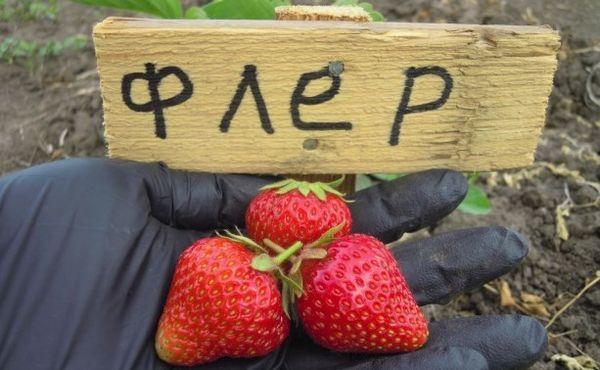 Interesting! For productive ovary formation and fruit development, the Fleur strawberry variety prefers moderate, cool weather.
Flaws:
- The berry crop categorically does not tolerate prolonged drought and heat.
- Due to the early fruiting period, the bushes bloom in April, when in temperate latitudes return frosts and sharp temperature changes are possible.
- Weather conditions and violations of care rules negatively affect the taste of berries.
Another drawback of this variety is its relative resistance to various diseases and pests. This hybrid strawberry requires careful care, but the yield of tasty, large berries outweighs any difficulties associated with growing the crop.
Features and characteristics of strawberries
Sudden changes in weather conditions and temperature fluctuations negatively impact the growth and fruiting of berry bushes. According to gardeners and farmers, the best yields for this variety are achieved when strawberries are grown indoors with controlled temperature and watering.
Bush size and appearance of the leaf blade
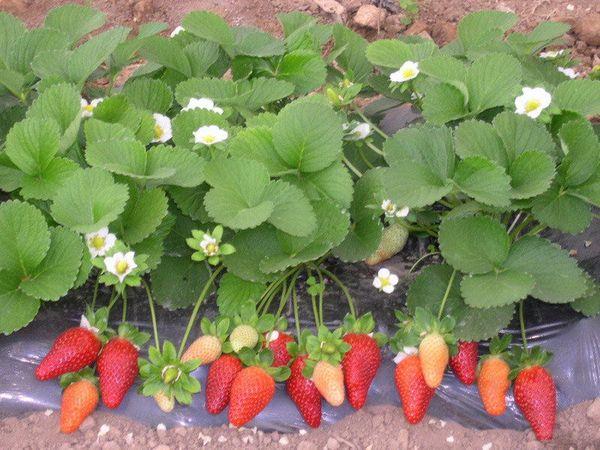
The berry bushes grow to a height of 25 centimeters, with a small number of medium-sized leaves. The leaf blades are attached to the bushes by long petioles and acquire a vibrant green hue during the growing season.
Flowering and pollination
With the onset of the flowering period, long flower stalks appear on the plants, up to 15-17 centimeters in size, with large, snow-white flowers.
Strawberry Fleur is a self-bearing variety of berry crop.
Fact! To increase yields, experienced gardeners partially pollinate strawberries by hand using a fine brush.
Ripening time and yield
The ripening of berries occurs simultaneously, but directly depends on the weather and climate conditions of the growing region.
While in the south, strawberries are harvested in mid-May, in the Moscow region, full ripening occurs in mid- to late June.
Berry yields also depend on weather and growing conditions. Commercially grown berries yield between 250 and 350 grams per bush. Experienced gardeners report yields of up to 500 grams of ripe berries per plant with proper care.
The largest industrial volumes of ripe berries can be obtained under the condition growing Fleur strawberries in greenhouses.
Tasting qualities of berries and their scope of application
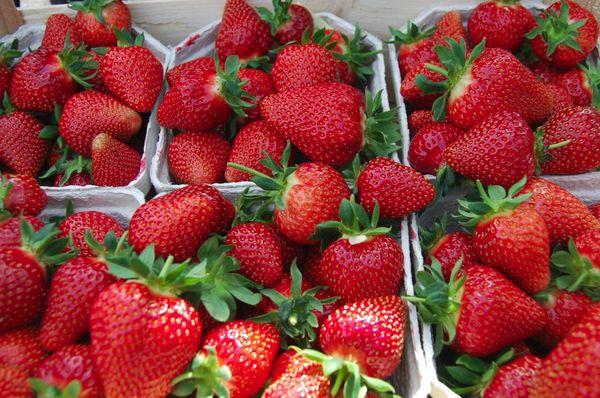
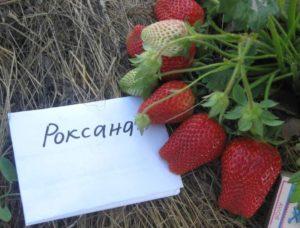
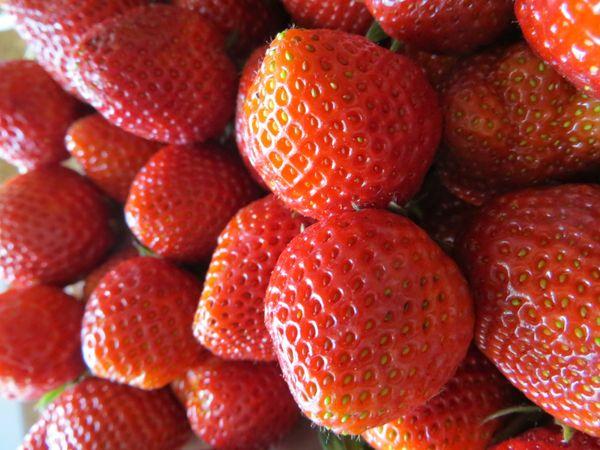
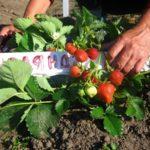
The fruits of this berry crop ripen large and uniform, elongated, conical in shape, with an average weight of 20 to 30 grams.
When ripe, the berries acquire a rich red color with small yellow seeds. Fully ripe strawberries turn dark red with a shiny surface.
Experts have rated the berries' taste as exceptional. The flesh is firm, rich in sugar and juice. After eating, the berries leave a pleasant fruity and strawberry aftertaste.
Fleur strawberries are considered a dessert variety and are recommended for all-purpose use. The berries are eaten fresh, canned, cooked, and frozen. They are also added to desserts, dairy products, and dried.
Experienced gardeners make delicious homemade liqueurs and infusions from ripe berries.
Important! Strawberries contain a large amount of antioxidants, which protect the body from negative environmental influences. They also improve heart and digestive function and boost the immune system.
Winter hardiness and drought resistance
In cold climates, fruit trees require winter protection. In temperate and southern climates, bushes easily survive the winter.
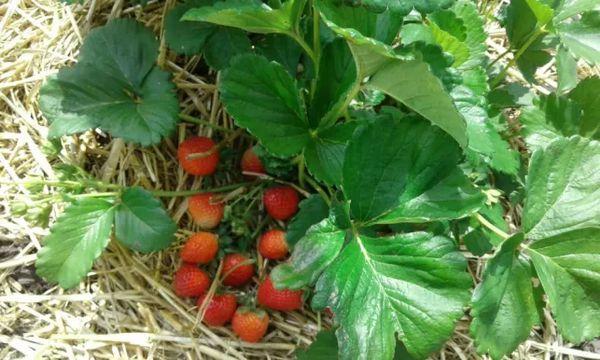
However, the plants have a hard time tolerating drought and heat. Constant exposure of the bushes to sunlight reduces fruiting, which negatively impacts the yield. Berries, under constant exposure to sunlight, become mushy, losing their flavor and appearance.
Susceptibility to diseases and parasites
Berry crops are susceptible to various diseases and pests. Therefore, with the arrival of spring, bushes are treated with professional chemical and biological pesticides as a preventative measure.
Features of strawberry planting
The Fleur strawberry variety is demanding in terms of growing conditions and soil composition. To avoid mistakes and ensure a bountiful harvest, it's important to consider some specific aspects of growing this berry crop.
Selection and preparation of beds
Planting work begins with choosing a location for the berry beds:
- Well-lit areas, not exposed to north winds and drafts, are suitable for planting bushes.
- The berry crop prefers fertile soil with neutral moisture and acidity.
- Groundwater is allowed at a level of at least 1.5-2 meters from the ground surface.
- Heavy, clayey soil is diluted with a mixture of sand and humus, and peat, compost and a little clay are added to sandy soil.
- The area is dug up, cleared of weeds and ridges are created.
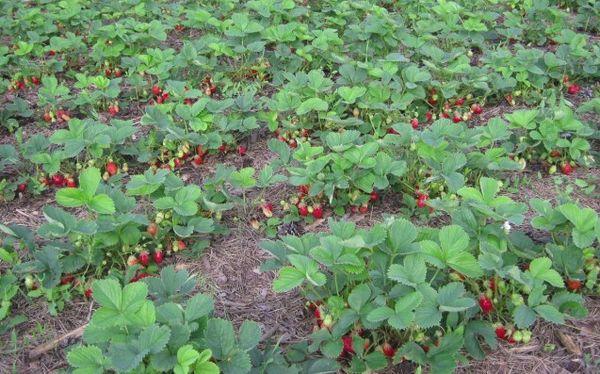
In the prepared beds, make a trench or dig small holes, leaving a distance of 25 to 30 centimeters between plantings.
Selecting seedlings
The health, fruiting and yield of fruit crops depend on the choice of planting material.
The seedlings are inspected for damage and disease. The root system of the bushes should be well developed, without signs of rot, nodules, or tubercles.
Before planting in the ground, strawberry rhizomes are treated with professional antibacterial preparations and a growth stimulant.
Timing and technology of planting bushes
The Fleur strawberry is a perennial berry variety. It is recommended to plant the bushes in the soil in the spring. In this case, the first berry harvest occurs the following year.
In regions with warm winters, strawberries can be transplanted into open ground in the fall, and the first berries will be available for tasting in the spring.
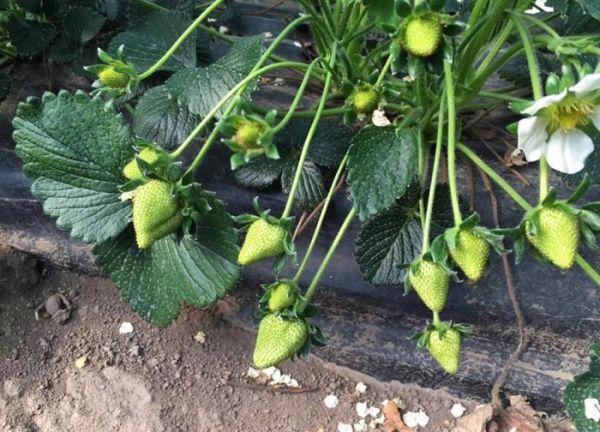
Once the time for planting seedlings has been determined, you can begin planting:
- Berry bushes are installed in pre-prepared holes or trenches.
- The roots are carefully distributed and covered with fertile soil mixture.
- The soil under the bushes is lightly compacted and watered with warm water.
- The beds are mulched with a layer of dry grass.
Important! During the first few days after planting, water the seedlings daily.
Further care
The hybrid form of strawberry is quite demanding in terms of watering and protection from the external environment.
Regularity of watering
Water strawberries as needed, once the top layer of soil has completely dried out. Use only settled, sun-warmed water. Spray the plant at the roots, being careful not to spill moisture onto the leaves, flowers, or fruit.
During periods of prolonged drought, the bushes require additional soil moisture, and during rainy season, watering is stopped altogether.
How to fertilize a plant
Strawberry fertilization is combined with irrigation. Fruiting bushes require mineral-based fertilizers. This berry crop responds best to mineral complexes containing potassium and phosphorus. In early spring, nitrogen-containing fertilizers are used to increase foliage.
Important! During the fruiting and ripening period, do not use nitrogen fertilizers or supplements.
Weeding and loosening the soil
Loosening the soil helps moisture penetrate the plant roots and enrich them with oxygen. However, weeds pose a real threat to small bushes, spreading dangerous fungi, viruses, and parasites. Weeding the beds is done several times during the growing season, completely removing weeds from the strawberry planting area.
Mulching
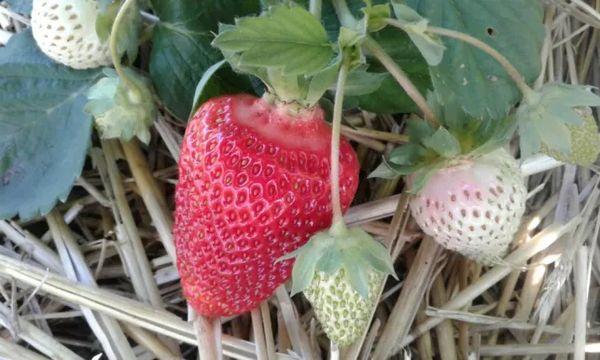
After weeding and loosening the beds, mulching is recommended to help retain moisture and nutrients in the soil. A layer of mulch also prevents further weed growth.
Protection from winter and spring frosts
To protect berry bushes from frost and recurrent frosts, use special covering materials sold in specialty stores or garden centers.
With the onset of spring, the plants are freed from cover.
Preventive treatments
Berry bushes are susceptible to attack by various parasites and are often affected by fungi, viruses and bacteria.
To avoid such troubles, preventative treatment of bushes with fungicides and insecticides is carried out in early spring.
Also, throughout the growing season, experienced gardeners spray bushes and soil with infusions prepared according to folk recipes.
Breeding methods
To obtain new strawberry seedlings, several methods are used to propagate the berry crop.
How to grow Fleur strawberries from seeds
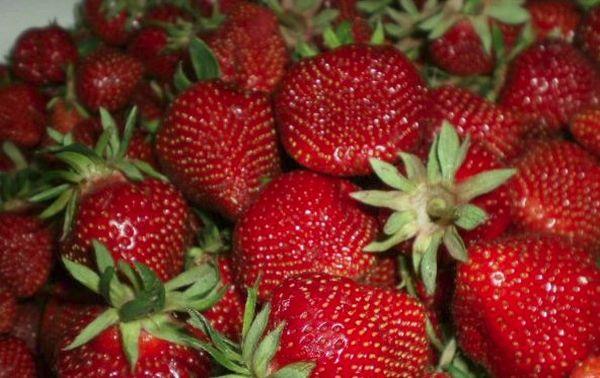
To grow a berry bush from seeds, select large, overripe berries, dry them, and separate the seeds from the pulp.
Small seeds are planted in a container with fertile soil and covered with plastic wrap. As soon as the first shoots appear, the plastic wrap is removed.
By dividing the bush
Strawberries grow quickly, so new plants can be created by dividing an adult plant. To do this, carefully dig the mother plant out of the ground and divide it into several seedlings, leaving the developed rhizomes on each. The resulting seedlings are then transplanted into the ground.
Sockets
A distinctive feature of strawberries is the numerous growth of runners, on which rosettes with leaves are formed during the growing season.
To obtain a new strawberry bush, the runners are dug in at the beginning of summer, and in the fall, they are separated from the mother bush, along with the roots that have formed.
Gardeners' reviews of the variety
- Viktor Petrovich. Krasnodar. "I've been farming for many years, growing different varieties of strawberries for sale. I always really needed an early-ripening variety until I came across Fleur strawberry seedlings at a nursery. Now my business has increased its profitability, as the first berries ripen as early as mid-May and are eagerly snapped up by customers after the winter doldrums."
- Elena Sergeevna. Moscow region. "I discovered the Fleur strawberry five years ago, and since then, I can't part with this beloved berry. Although it's demanding in terms of care, its superb flavor makes you forget all the difficulties of growing it. In addition to eating fresh, Fleur is excellent for cooking, compotes, freezing, and drying."
Related posts:
 Description of the Florence strawberry variety, planting and care features
 Description of the Holiday strawberry variety, cultivation and propagation methods
 How to grow strawberries at home
 Description and characteristics of the Vima Zanta strawberry variety, planting and care scheme
 Description and characteristics of the Zenga Zengana strawberry variety, planting and care
 Description of the Bogota strawberry variety, planting and care features
 Description and characteristics of the Festivalnaya strawberry variety, planting and care
 Description and how to plant the Garland strawberry variety