
- Benefits of Growing Strawberries in a Greenhouse
- Are there any downsides?
- Basic requirements for the premises
- To the material
- To the containers and their fastenings
- To heating, irrigation and lighting systems
- How to grow strawberry seedlings
- Preparing the greenhouse for the first planting
- Varietal diversity
- Preparing the soil and beds
- Picking seedlings
- Methods and scheme for planting seedlings
- Dutch technology
- Vertical garden bed in a pipe
- Strawberries in bags
- Classic cultivation in soil
- Rules for caring for the crop
- Daylight hours
- Temperature conditions
- Ventilation
- Humidity
- Watering
- Pollination
- Top dressing
- Strawberry diseases and preventive treatment
- Frost protection
- How to pick berries correctly
Strawberries are one of the first berries to ripen in the garden in summer. Their growing season is short, but you'll want to enjoy these delicious berries for as long as possible. Growing strawberry bushes in a greenhouse allows you to enjoy them year-round.
Benefits of Growing Strawberries in a Greenhouse
Growing strawberries in a greenhouse has many advantages. But the most important is the ability to eat the berries year-round, including in winter, without having to wait until summer.
The benefits of growing strawberries in a greenhouse all year round:
- Strawberries can be planted in regions with cold climates, such as Siberia.
- The harvest quantity will not decrease due to unfavorable weather conditions.
- In a greenhouse, it's easier to control humidity, lighting, and the amount of watering (when growing outside, it's impossible to influence the rain, and if it rains constantly, most of the crop will become moldy).
Growing strawberries year-round in a greenhouse will also save you money. Out of season, strawberries are very expensive in supermarkets; they arrive unripe, and most of their vitamins are destroyed. So, greenhouse-grown strawberries are even more nutritious.
Are there any downsides?
If you grow strawberries in a greenhouse during the cold season, their taste will not be as sweet and juicy as when the berries are grown in open ground.
The lighting regime will need to be maintained constantly, ensuring the bushes receive sufficient light. This means being near the greenhouse all the time, which is not very convenient for city dwellers. Only those gardeners who permanently reside in the countryside will be able to successfully grow strawberries.
Basic requirements for the premises
Successful strawberry cultivation depends on the quality of the greenhouse material. Furthermore, it's crucial to install high-quality lighting, which affects the yield and flavor of the berries.
To the material
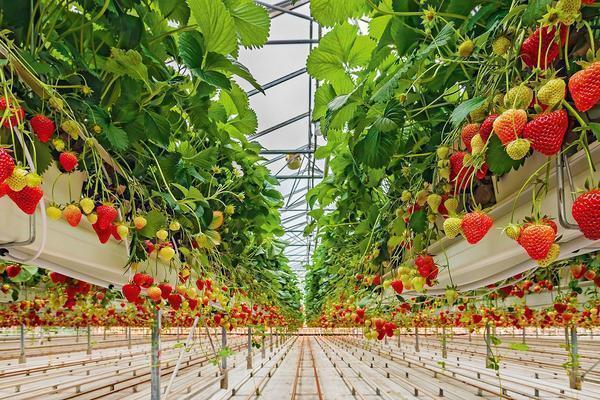
The greenhouse material must be durable and retain heat well. The most common type is polycarbonate. Glass or regular polyethylene are also suitable. However, polyethylene emits an unpleasant odor at high temperatures, unlike glass. Glass greenhouses do have their drawbacks, though. During extreme heat, the glass heats up, making the greenhouse very stuffy.

To the containers and their fastenings
Greenhouse supports must be strong, especially if glass is used for construction. Polyethylene greenhouses are the easiest to install. This material is very lightweight and doesn't require a strong support structure.
To heating, irrigation and lighting systems
Watering containers for the beds are also installed in the greenhouse. Strawberries are a crop that prefers drip irrigation, so an irrigation system should be installed. While conventional watering is possible, there's a high risk of fruit rot.
Water containers can be placed either inside or next to the greenhouse. Large barrels are best to ensure sufficient water for the entire strawberry planting. However, if the beds are small, large watering containers are not necessary.
Winter greenhouses require a good heating system. This could be a stove, hydronic heating, electric heating, or gas heating. However, each method has its drawbacks. A stove requires constant monitoring and maintaining the temperature manually. Hydronic heating is very expensive. Gas heating requires constant monitoring due to the risk of fire. Electric heating systems dry out the air.
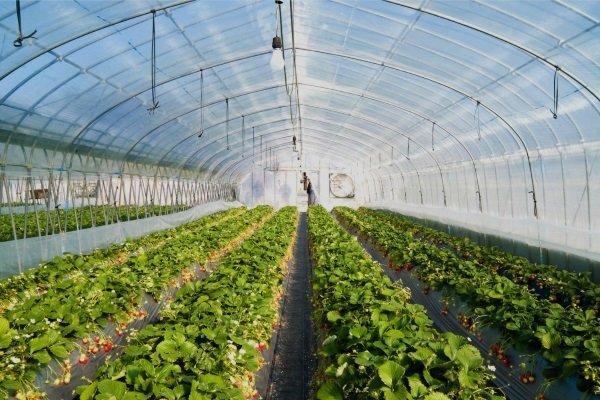
Strawberries are light-loving crops that require a sufficient amount of light, so the lighting system must be of high quality.
If light penetrates into the greenhouse, it is sufficient for artificial lighting to be cyclical.
How to grow strawberry seedlings
Growing strawberry seedlings in a greenhouse is no more difficult than in open ground. There are virtually no differences in planting techniques.
Preparing the greenhouse for the first planting
Before planting strawberry seedlings in a greenhouse, it should be cleaned, and all surfaces should be disinfected. Then, check the irrigation system and lighting. Once the greenhouse is fully prepared, you can begin planting the seedlings.
Varietal diversity
In greenhouse conditions It is best to plant everbearing strawberry varieties. These varieties are day-neutral, meaning day length has no significant impact on yield. Everbearing varieties can also produce fruit year-round. These varieties have high yields.
The best strawberry varieties:
- Kama;
- Elsanta;
- Pineapple;
- Brighton;
- Red Rich;
- Arapaho;
- Bolero;
- Temptation.
In addition to replacement bees, self-pollinating varieties are suitable for greenhouse planting. Setting up hives in greenhouses is expensive, and there are no other effective pollination methods.
Preparing the soil and beds
The soil for strawberry planting is prepared several weeks before planting. If the soil is old, the top layer needs to be replaced. The soil is mixed with rotted manure, then the beds are made.
Picking seedlings
Picking strawberry seedlings is done when the first pair of full-fledged leaves appear on the bushes.
Methods and scheme for planting seedlings
There are various ways to grow strawberries in a greenhouse. Because greenhouse space is often limited, gardeners try to plant as many plants as possible using every possible method.
Dutch technology
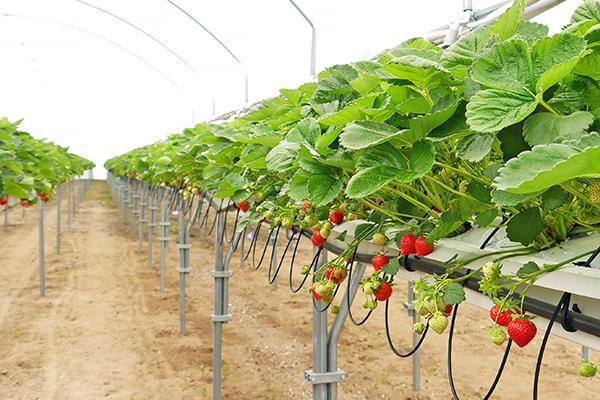
For growing strawberries using the Dutch method, flower pots or boxes can be arranged in tiers. The essence of the Dutch method is that containers with bushes are arranged in tiers. If pots are used, they can be suspended from a high beam. Otherwise, planting seedlings is no different from planting using other methods.
Vertical garden bed in a pipe
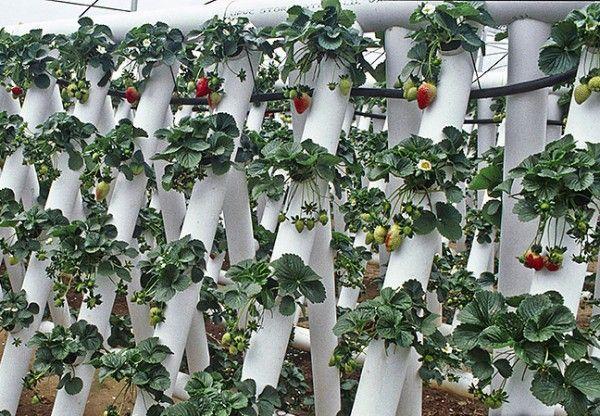
Another way to save space in the greenhouse is to plant strawberries in pipes. For planting, use sturdy, spacious pipes. Holes are cut in them, into which the seedlings are planted. The pipes themselves are pre-filled with soil. The pipes are installed vertically, and the seedlings are planted in the cut holes.
Strawberries in bags
You can save a significant amount of space by planting strawberries in bags. You can use regular sugar bags. Fill them completely with growing medium and cut holes. Carefully plant the seedlings in the bags. Place the bags vertically. The taller and narrower the bags, the more seedlings you can plant.
Classic cultivation in soil
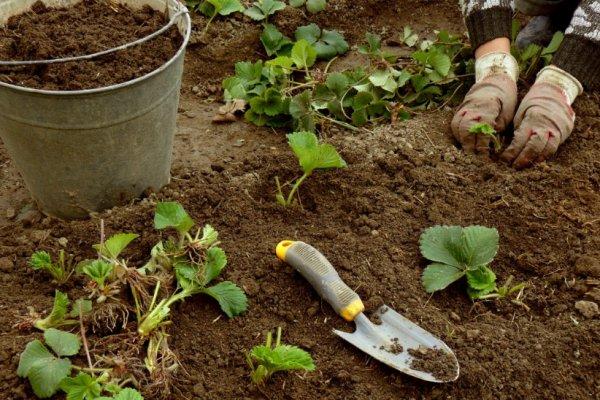
You can plant seedlings using the traditional method. To do this, create beds up to 1 meter wide. Dig holes 40 cm deep and space 20 cm apart. Place the seedlings in the holes, cover them with soil, and water them generously with warm water.
Rules for caring for the crop
Properly managed strawberry bed care can significantly increase yields. Greenhouse strawberry plants require more time than those grown outdoors.
Daylight hours
No crop can grow without light, and even when planting everbearing varieties, lighting is essential. Daylight hours in a greenhouse should be at least 14 hours. With increased daylight hours to 16 hours, inflorescences begin to bloom 10 days after emergence.
Temperature conditions
The second important factor is temperature. After planting, the temperature is set between 8 and 13 degrees Celsius. As the seedlings grow, it is increased to 20 degrees Celsius. During flowering, it can be raised to 25 degrees Celsius. It is undesirable to set the temperature too high, as this will cause the inflorescences to become sterile and prevent ovaries from forming.
Ventilation
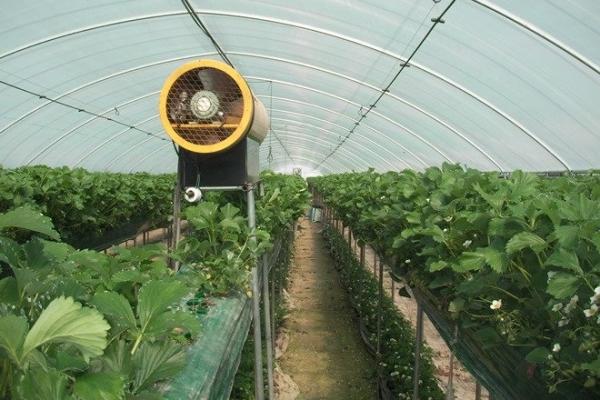
The greenhouse needs to be ventilated regularly. Avoid stale air. In spring and fall, windows can be opened for a few hours, provided there is no rain or strong wind outside. In winter, open the windows for 5-10 minutes at a time.
Humidity
Garden strawberries prefer high humidity, especially during planting. Humidity should be up to 85%. Once flowering begins, humidity can be reduced to 70%.
Watering
Strawberries appreciate generous watering. However, it's best to avoid water getting on the leaves and fruit during irrigation. Drip irrigation is preferred. Water the beds as the soil dries out. Overwatering the soil promotes mold growth on the berries.
Pollination
To pollinate the flowers in a greenhouse, you can use a beehive. However, it will need to be removed after a while, so this isn't the best pollination method. It's better to plant self-pollinating strawberry varieties.
Top dressing
Greenhouse plants require more fertilizer than open-air plants. The first application is made after planting. Well-rotted manure is added to the soil, or the beds are watered with chicken manure diluted in water. During flowering and fruit set, the beds are fertilized with potassium and phosphorus fertilizers. Sprinkling the bushes with wood ash or bone meal is also beneficial.
Strawberry diseases and preventive treatment
To prevent diseases, the top layer of soil is changed and weeds are pulled before planting. This should be done before each growing season. The bushes are then sprayed with copper-containing preparations. These treatments should be carried out before flowering.
The most common diseases found on tuber are the following:
- late blight;
- gray mold;
- Verticillium wilt;
- chlorosis;
- brown spot.
At the first sign of disease, the bushes are treated with Bordeaux mixture. After harvesting, the strawberries are sprayed with Switch or Topaz. Dry leaves are immediately raked up and discarded. The soil is dug to a depth of 15 cm. These measures will help prevent disease.
Frost protection
If the greenhouse is well insulated, there's no need to cover the strawberries against frost. If the insulation isn't as reliable, the beds can be covered with agrofibre or spruce branches after cutting the foliage.
How to pick berries correctly
Strawberry Harvesting Guidelines for Beginner Gardeners:
- Ripe berries need to be picked immediately, as strawberries quickly begin to rot.
- To keep berries fresh longer, they should be picked with the stems.
- During harvest, strawberries can be sorted immediately, with large berries placed separately from small ones.
- Place the fruits in 2-3 layers.
- The harvest should be done before watering; if the strawberries are stored wet, they will quickly spoil. If the berries are picked wet, they should first be spread out in a single layer and dried.
Harvesting garden strawberries is complicated by the fact that ripe berries are very soft and easily damaged. To avoid damaging the berries, they must be picked from the bushes as carefully as possible.
Related posts:
 Description of the Florence strawberry variety, planting and care features
 Description of the Solovushka strawberry variety, planting and care instructions
 How to grow strawberries at home
 Description and characteristics of the Vima Zanta strawberry variety, planting and care scheme
 Description of the everbearing strawberry variety Selva and cultivation technology
 Description and how to plant the Garland strawberry variety
 Description of the everbearing strawberry variety Mara de Bois and growing rules
 Step-by-step instructions for planting strawberries on black covering material and growing rules