
- History of selection and regions of cultivation of the Divnaya strawberry
- The pros and cons of berry crops
- Varietal features and characteristics
- Bush size and appearance of the leaf blade
- Flowering and pollination
- Ripening time and yield
- Taste qualities of the fruit and its further sale
- Winter hardiness and drought resistance
- Immunity and susceptibility to diseases and parasites
- Planting strawberries
- Site selection and preparation
- Selecting seedlings
- Planting plan and timing
- What crops can and cannot be planted next to strawberries?
- Further care
- Watering mode
- Top dressing
- Weeding and loosening the soil
- Mulching
- Shelter for the winter
- Seasonal treatments
- Methods of reproduction
- Seeds
- By dividing the bush
- Sockets
- Difficulties in growing
- Gardeners' reviews of the variety
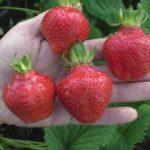
The Divnaya strawberry variety was developed in the second half of the 20th century by Russian breeders. The fruit has an elongated shape. It is popular for its flavor and lingering strawberry aroma. Divnaya is grown for raw consumption and for making various liqueurs and preserves for the winter. The berries do not always have a marketable appearance.
History of selection and regions of cultivation of the Divnaya strawberry
The Divnaya strawberry variety was developed during the second irrigation of the 20th century in 1987 by Russian breeder G. A. Alexandrova. The Festivalnaya strawberry and the Holiday variety were used for this development. It was only in 2008 that the crop was added to the Unified State Register of Strawberries of the Russian Federation and recommended for cultivation on private plots and small farms.
The Divnaya strawberry variety is highly resistant to cold temperatures and dry climates, allowing it to grow and bear fruit in virtually any region. Since the crop matures early in areas with cold springs, special protection should be provided to prevent flowering from being lost during the initial stages.
The pros and cons of berry crops
The Divnaya strawberry variety has the following advantages:
- the taste and aroma of berries is like that of strawberries;
- high crop yield;
- increased resistance to some diseases that affect strawberries;
- unpretentiousness to the habitat;
- increased resistance to frost and dry climate;
- large size of berries;
- possibility of long-term transportation and storage;
- simple propagation of a plant.
Among the disadvantages, gardeners note:
- sensitivity of berry taste qualities to high humidity;
- uneven shape of fruits, which spoils the marketable appearance;
- with each subsequent harvest in the year the berries begin to become smaller.
Varietal features and characteristics
The Divnaya strawberry variety differs from its peers in its early flowering and ripening. Fully ripe berries appear as early as the first half of June, and in hotter regions, as late as the second half of May. This characteristic of the crop is both an advantage and a disadvantage, as in areas with cold springs, plants must be covered to prevent the blooms from dying before they are fully formed.
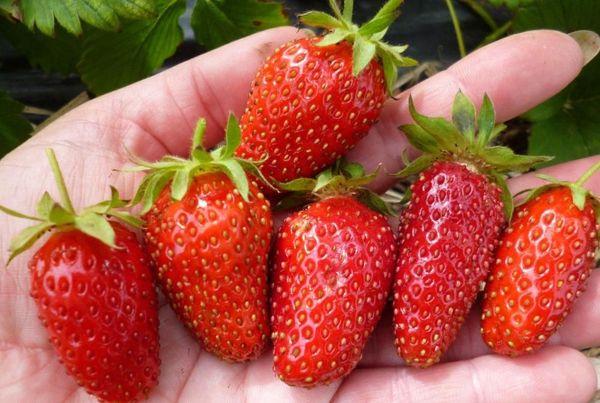
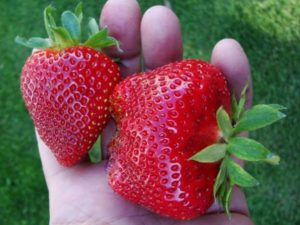
The bush differs from other strawberries in its robust stems, numerous leaves, and runners. Despite this, the plant is quite compact, but due to its excessive density, constant pruning of excess shoots is necessary. A distinctive feature of Divnaya is the berry's obtuse conical shape. The size and proportions of the fruit are constantly changing.
At the beginning of fruiting, most berries are elongated and heavy, but towards the end they become shorter and smaller.
Bush size and appearance of the leaf blade
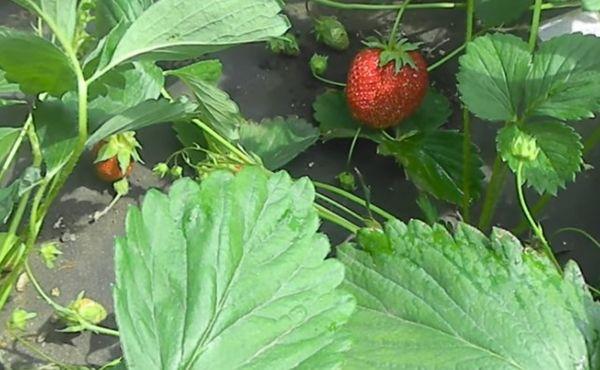
Divnaya strawberry bushes are tall (20-30 centimeters) with strong stems and abundant foliage. The leaves are large, dark green, and glossy, with characteristic shallow wrinkles and serrations along the edges.
Flowering and pollination
The onset of flowering depends directly on the weather conditions in the region where the crop is located. Given the right climate and care, strawberries begin to bloom in the first half of May.
The flowers of this variety are bisexual and therefore do not require additional pollination from other plants.
Ripening time and yield
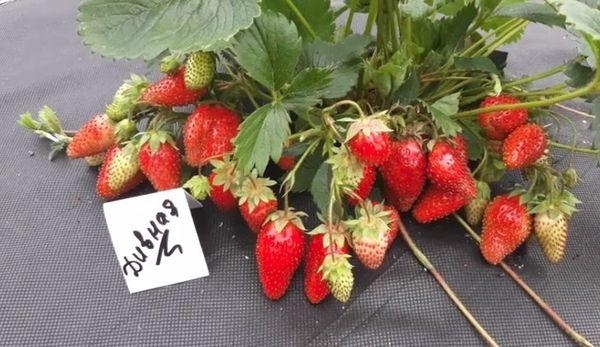
The ripening period also depends on climate conditions. With early flowering, the first fully ripened fruits will appear in the second half of May and early June. The variety is highly productive, and at home, one bush can yield approximately 1-1.5 kilograms of fruit. The average berry weight is 20-30 grams, but over time, the fruit begins to become smaller.
Taste qualities of the fruit and its further sale
Tasters rate the Divnaya strawberry variety 4.8 out of 5 stars for its pleasant, moderate sweetness, distinctive tartness, and strong strawberry aroma. Among its drawbacks, they note its not always attractive appearance, which is inconsistent and can change with each harvest season. However, the berry is considered a serious competitor in terms of flavor to its Western counterparts.
Winter hardiness and drought resistance
This crop has increased resistance to cold climates and can withstand temperatures from -20°C to -25°C without shelter. It's important to remember that strawberries are particularly susceptible to frost in the spring, when the flowers begin to form. The plant can also survive drought, but not for long, as it then begins to suffer from diseases, dry out, and may die.
Immunity and susceptibility to diseases and parasites
One of the variety's advantages is its immunity to certain diseases and pests that affect other crops. Among the ailments, Divnaya strawberries are resistant to:
- fungal spots;
- gray rot;
- Verticillium wilt.
The Divnaya strawberry variety is susceptible to certain parasites:
- spider mite;
- nematode;
- slug.
To prevent damage by these pests, preventative treatment should be carried out.
Planting strawberries
With proper planting, the plant will grow healthy and produce abundant fruit each season. Before planting, ensure you select healthy seedlings, choose a site, and follow the planting pattern.
Site selection and preparation
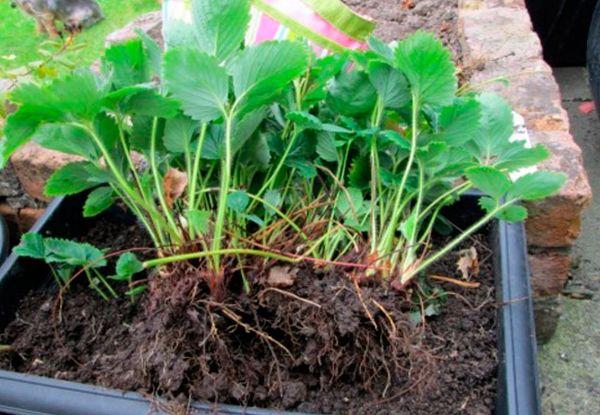
For this strawberry, you should choose a site with sufficient sunlight and periodic shade that can cover the plant for several hours during the day.
Before planting seedlings, clear the soil of any remaining crops and weeds. Afterward, dig over the soil and remove any pests that may be encountered.
Selecting seedlings
When selecting seedlings, it is necessary to carefully inspect them to ensure that there are no signs of:
- darkening on the stem and leaves;
- spots of different shapes, ranges and colors;
- visible damage;
- wilting of branches or foliage;
- yellowed and dried parts of the plant.
You shouldn't buy a plant with one of these signs, because it will start to get sick and may die.
Planting plan and timing
If you're planting seeds for seedlings, they should be done in the spring so that a harvest can be produced the following summer when transplanted outdoors. Seedlings should be planted in the fall. Afterward, cover the crop to prevent it from dying during winter adaptation.
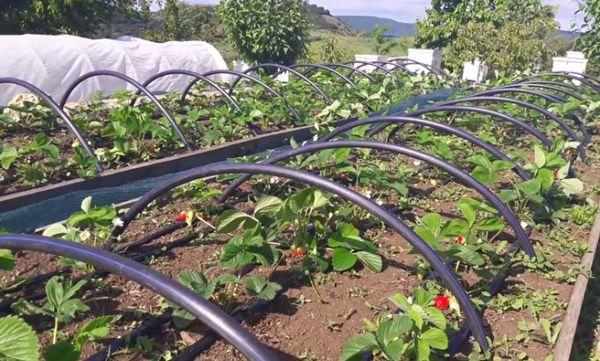
The correct sequence for planting strawberry seedlings should be followed:
- Carefully inspect the root system for damage or rot. If any is found, trim that portion off.
- Before planting, soak the root system in a stimulating solution. Kornevin, Emistim, or similar solutions are suitable for this.
- Dig a hole 20 to 30 centimeters deep with the plants spaced 40 to 50 centimeters apart.
- Water the hole with mineral fertilizers.
- Place the seedlings in the hole and spread out the root system in it.
- Cover the roots with soil and compact thoroughly.
- Water the plant with slightly warm water.
What crops can and cannot be planted next to strawberries?
It's best to plant garlic or onions next to strawberries. These plants require minimal nutrients from the soil and protect the strawberries from most pests.
Further care
Further care of the crop is important, since the health and general condition of the plant depend on it.
Watering mode
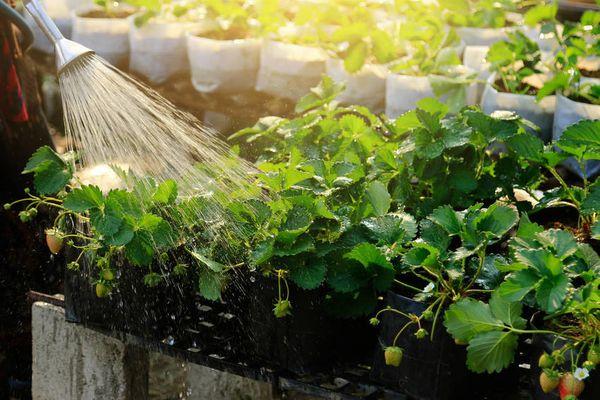
Strawberries should be watered only when needed. This can be determined by the soil condition. If it's dry, water immediately, and if the soil is marshy, stop watering for a few days. If the soil is overwatered, the Divnaya variety's fruits begin to fill with liquid and lose their flavor.
Top dressing
To prevent the fruits from becoming smaller each year and to prevent the soil from losing its nutrients, periodic fertilizing should be carried out.
For fertilization, you can use organic matter or mineral supplements purchased at a gardening store. Follow the following fertilizing procedure:
- before flowering;
- during the ovary period;
- after fruiting;
- in preparation for the winter period.
Weeding and loosening the soil
Weeding is only done if plants appear in the area that interfere with crop growth. Loosening should be done immediately after watering to allow moisture to be absorbed more quickly and oxygenate the soil.
Mulching
The following materials are used for mulching:
- wood sawdust;
- fallen leaves;
- straw.
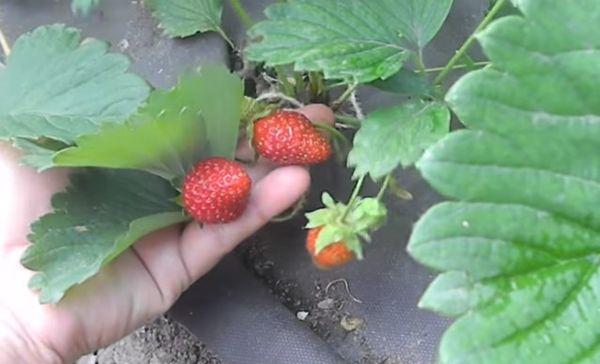
The plant must be surrounded within a radius of 20-30 centimeters around the trunk and only in the event of frost.
Shelter for the winter
Covering is done before the onset of winter to provide the plant with the necessary conditions during frosty periods. Strawberry covers can be made using:
- insulation materials;
- polyethylene film;
- other inorganic materials.
Seasonal treatments
Although the variety is resistant to some diseases and pests, periodic treatments are necessary to prevent damage. To ensure disease prevention, treat the crop with fungicides every fall and spring:
- Maxim;
- Fast;
- Fitosporin.
If treatment is required, copper oxychloride or a solution of Bordeaux mixture should be used.
If a plant is affected by parasites, you can use the following products:
- Karbofos;
- Aktara;
- Actellic.
They should also be used in spring and autumn by spraying the plant.
Methods of reproduction
The Divnaya strawberry variety is propagated by 3 methods:
- seed;
- dividing the bush;
- sockets.
Each method has its own subtleties and advantages.
Seeds
Planting from seeds is done when growing seedlings. In this case, planting can take place in late spring or early fall. After winter, the plant should be transplanted outdoors, but only if it has been prepared for its new environment beforehand.
By dividing the bush
To divide a plant, select developed shoots and, by pinching them off from the bush, grow them as seedlings. This method is problematic because the seedling may not adapt to the new environment and may die or inherit the diseases of the parent plant.
Sockets
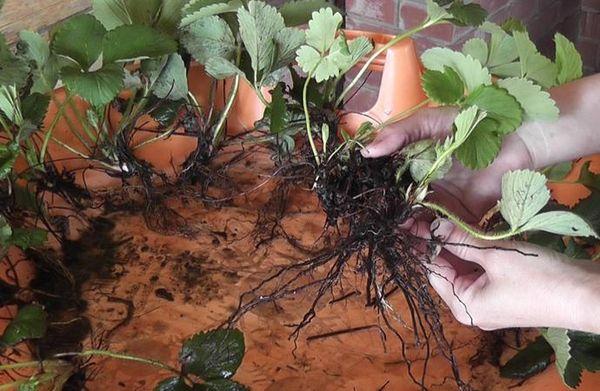
Rosette propagation involves placing the sprouted spots on the plant's runners in containers filled with soil. After they have adapted, they are separated from the plant and prepared for planting in open ground. Rosette propagation of the Divnoye strawberry is popular due to the large number of runners on the bushes.
Difficulties in growing
Sometimes difficulties may arise when growing the Divnoe strawberry variety:
- Lack of flowering – this can occur when the plant has absorbed all the nutrients from the soil. To avoid this, periodic fertilizing is necessary;
- there are few berries and they are small - this is a consequence of a large amount of moisture that fell on the plant's flowers or the crop was planted too densely;
- The bush is gradually withering – this sign indicates that the crop is not being watered enough.
Gardeners' reviews of the variety
Olga, 38 years old, Uralsk.
"My husband and I grow this variety. The plant is unpretentious and can withstand climate change. We get a plentiful harvest, and despite its appearance, the berries are delicious."
Vladimir, 41 years old, Siberia.
"The Divnoye strawberry was a pleasant surprise; it can withstand low temperatures and continues to produce fruit even with occasional lack of sunlight."
Related posts:
 Description of the Florence strawberry variety, planting and care features
 The best varieties and cultivation of everbearing strawberries, fertilizing and propagation
 How to grow strawberries at home
 Timing of strawberry planting in the middle zone in autumn, description of 25 best varieties
 Description of the everbearing strawberry variety Selva and cultivation technology
 Description and characteristics of the Vima Zanta strawberry variety, planting and care scheme
 Description and how to plant the Garland strawberry variety
 Description of the Holiday strawberry variety, cultivation and propagation methods