
- The history of the selection and regions of cultivation of the Elvira strawberry
- Advantages and disadvantages of culture
- Varietal characteristics of strawberries
- Bush size and appearance of the leaf blade
- Flowering and pollination
- Ripening time and yield
- Taste qualities of the fruit and its further sale
- Characteristics of the Elvira variety
- Winter hardiness and drought resistance
- Immunity and susceptibility to diseases and parasites
- Planting strawberries
- Site selection and preparation
- Selecting seedlings
- Timing and technology of planting seedlings
- Care
- Watering mode
- Top dressing
- Weeding and loosening the soil
- Mulching
- Shelter for the winter
- Preventive treatments against diseases and pests
- Methods of reproduction
- Seeds
- By dividing the bush
- Sockets
- Gardeners' reviews of the variety
The Elvira strawberry is a Dutch variety, primarily grown for commercial cultivation or for private consumption. This variety was previously popular in Europe, but has recently begun to be widely cultivated in other countries. It has increased resistance to fungal diseases and root rot.
The history of the selection and regions of cultivation of the Elvira strawberry
This variety is a hybrid of strawberry and wild strawberry. General information indicates that Elechka was developed in Holland, but the breeders responsible are unknown. Currently, the variety is not listed in any state register. It has average resistance to frost, cold temperatures, and periodic climate fluctuations among its peers.
It is better to grow Elvira in southern regions or in areas with not very low temperatures.
Advantages and disadvantages of culture
The Elvira berry has the advantages of a southern variety:
- large amount of harvest;
- average frost resistance;
- suitability for long-term transportation and storage;
- possibility of use in various areas of product production;
- increased resistance to most diseases and various pests;
- long fruiting period;
- early ripening of strawberries;
- resistance to excessive soil moisture and root rot.
Among the disadvantages we can highlight:
- fastidiousness in care;
- the possibility of drying out under prolonged exposure to sunlight.
Varietal characteristics of strawberries
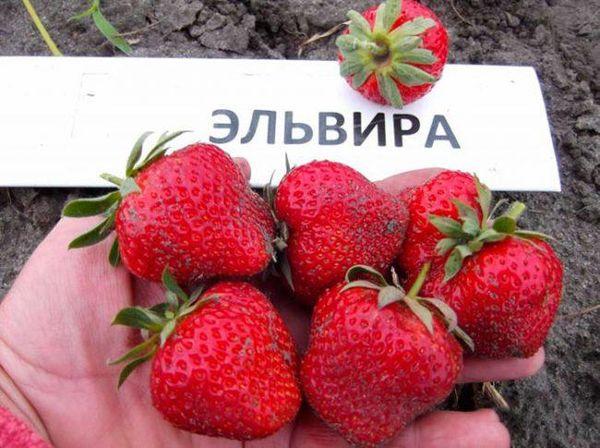
The Elvira strawberry is an early-ripening variety suitable for growing in temperate regions, as it does not tolerate extreme temperatures. The bushes grow quickly and extensively, yielding approximately 1 kilogram of berries per season.
Because this variety is resistant to most diseases and insects, but not tolerant of climate change, it is considered a moderately demanding plant. The strawberries are tasty and quite large. Due to the dense flesh, they are suitable for long-term transportation and storage.
Elvira pollinates itself and does not require planting additional strawberry varieties in the adjacent bed.
Bush size and appearance of the leaf blade
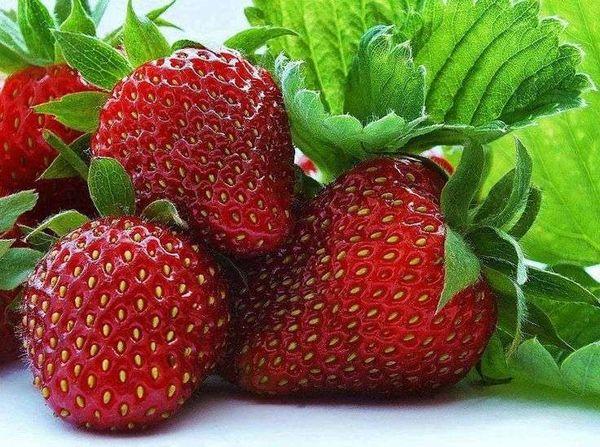
Strawberry bushes are large, with a spreading crown, reaching 30-50 centimeters in width and 20-30 centimeters in height. The plant's medium-sized leaves are emerald green, with deep, characteristic folds on the surface and serrated edges.
Flowering and pollination
A single plant produces 2 to 4 flower stalks, which later produce white flowers with yellow centers. Because this variety ripens early, flowering begins around early May. Elvira strawberry flowers are bisexual and self-pollinate without the need for additional plants in the garden.
Ripening time and yield
The fruits fully ripen 3-4 weeks after they form. Because this variety is early, it can bear fruit for a long time, right up until the first autumn frosts. This crop has a high yield. Under favorable growing conditions, a single bush can yield approximately 1 kilogram of fruit per season.
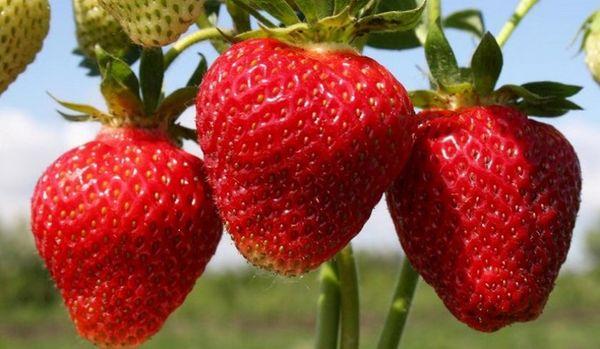
In areas with periodic frosts, this figure will vary from 400 to 800 grams per bush. The berries are generally large, reaching 40-60 grams. Dense planting does not affect fruit size.
Taste qualities of the fruit and its further sale
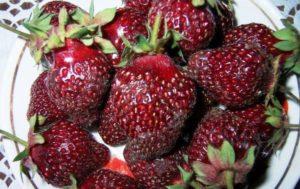
Experts rate this strawberry variety's flavor at 4.5 out of 5 due to its moderate sweetness, distinctive tartness, and firm flesh. The berry's aroma is lingering and strawberry-like. Its flavor drawbacks include a lack of distinctive characteristics that would distinguish this variety from others. One 40-gram fruit contains the following beneficial substances:
- 26 grams of ascorbic acid;
- 5 grams of dry matter;
- 2-3 grams of sugars;
- 6-7 grams of other substances.
Characteristics of the Elvira variety
The Elvira variety is versatile and suitable for temperate climates, as it tolerates extreme heat or cold. Its berries are grown in garden beds for consumption and on farms for various products.
The fruits are used in confectionery, baked goods, liqueurs, and natural juices. Elvira is gaining popularity year after year due to its resistance to diseases and various pests, which distinguishes this variety from others.
Winter hardiness and drought resistance
The Elvira strawberry has average winter hardiness and can withstand temperatures as low as -20°C without shelter. However, after such temperatures, the onset of warmer temperatures can cause disease due to stress. The variety also does not tolerate sudden changes in climate, strong winds, or drafts.
Elvira strawberries may also not survive drought. For normal growth and development, they require regular watering and, if necessary, foliar and stem moistening.
Due to the dry climate, the plant becomes more susceptible to various diseases and dries out.
Immunity and susceptibility to diseases and parasites
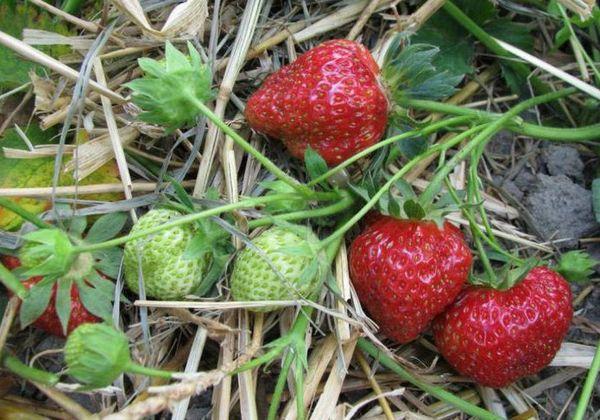
One of the main advantages of this variety is its resistance to most diseases and pests that affect other strawberries. This factor simplifies the growing and care process. Elvira is immune to the following diseases:
- fungal;
- affecting the root system of the plant;
- leaves and stems of the crop.
If the soil is over-watered, the root system will not rot, but you should still avoid making the soil boggy, as this can affect the number of fruits and the development of the plant.
The Elvira strawberry variety is practically not affected by the following types of parasites:
- thrips;
- leaf beetles;
- aphid;
- slugs;
- May beetles.
The appearance of parasites on a plant can be caused by their transfer from another crop that was infected.
Planting strawberries
To ensure your strawberry bush grows healthy and produces a large harvest, you should select the right seedlings and follow the planting guidelines.
Site selection and preparation
This variety isn't particularly fussy about site conditions, as most regions are suitable for its cultivation. A site with some sunlight should be chosen. Too much sun can cause the plant to burn and die. Therefore, locations with sufficient shade, which will periodically block the plant from sunlight, are best. A site with increased moisture or a high water table is also acceptable, as these won't harm the plant.
Selecting seedlings
When selecting seedlings for planting, the following should not be found on them:
- visible damage to leaves or base;
- spots of various colors;
- darkening;
- withering leaves;
- yellowed or dry areas.
When purchasing, also pay attention to the soil the seedlings are in. If it's dry, it's better to buy the plant from a different seller.
Timing and technology of planting seedlings
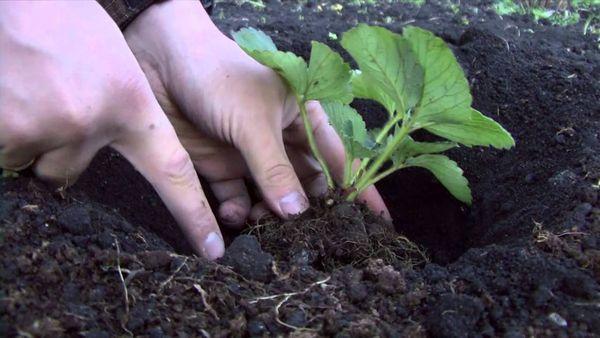
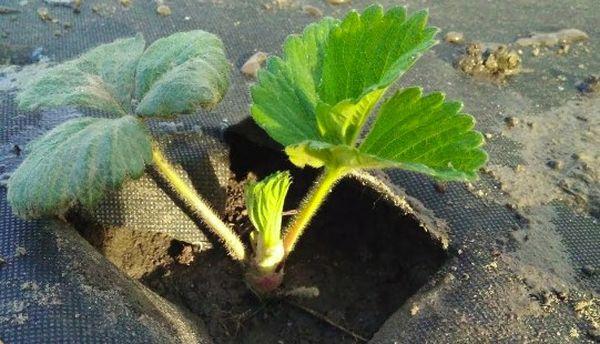
It's best to plant strawberries in spring or fall, but in the former case, you should use seedlings, while in the latter, you should use seeds. Before planting, you can soak the roots in special mineral solutions. Dig spacious holes in the area, about 20-30 centimeters deep. Then, place the seedlings in them, spreading out the roots first, then fill the hole with soil and compact it.
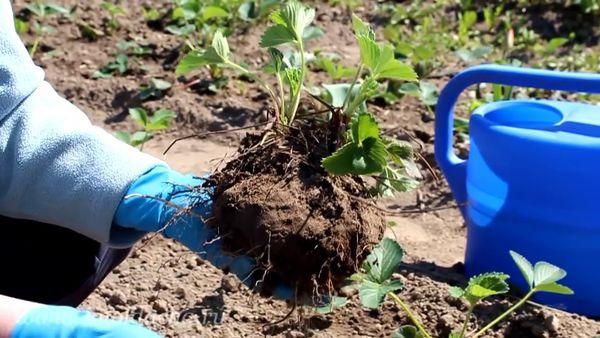
It's best to space the plants 30-40 centimeters apart to avoid interfering with each other's growth. After planting, the seedlings should be watered generously with lukewarm water.
Care
Proper and consistent care promotes healthy growth and development. With careful attention, a strawberry bush can produce up to 1 kilogram of fruit per season.
Watering mode
Like any strawberry variety, Elvira requires regular watering. Unlike its peers, Elechka can tolerate high levels of moisture. It's best to water only when the soil beneath the plant is dry. On rainy days, watering is unnecessary, but in dry weather, watering should be increased.
Top dressing
Strawberries require approximately four applications of fertilizer per year. For this, you can use specialized mineral fertilizers, which are available at any gardening store. You can also spray an organic solution of bird droppings.
The correct sequence for fertilizing a crop looks like this:
- before flowering;
- at the beginning of flowering;
- after the fruits begin to form;
- before preparing and covering for the winter.
Weeding and loosening the soil
Weeding is only necessary if weeds appear around the crop.
Loosening the soil should be done immediately after watering the plant; this will help moisture reach the root system of the bush more quickly and saturate the soil around it with oxygen.
Mulching
Mulching should only be carried out in the event of severe frosts that exceed -20 °C.
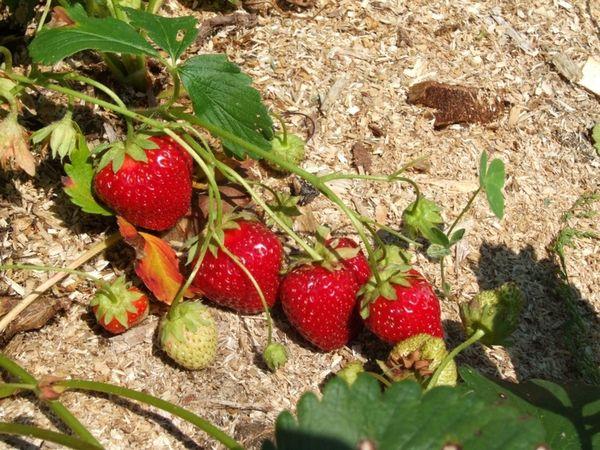
For this it is better to use:
- straw;
- wood sawdust;
- special inorganic materials.
Shelter for the winter
Covering is done for the winter to reduce stress on the plant during periods of severe frost. The following are used for this procedure:
- polyethylene film;
- insulation;
- other materials.
Preventive treatments against diseases and pests
The Elvira strawberry variety is resistant to most diseases and pests that can attack the crop. For this reason, no special treatment is necessary, but a preventative spray with Immunotocyte or Heteroauxin can be used beforehand.
Methods of reproduction
Strawberries can be propagated by seeds, division, and runners (rosettes). The method used depends on the timing and the characteristics of the variety.
Seeds
This method is used for planting in the spring or for seedlings in the fall. This is necessary to prevent the plant from dying in the early stages of development.
By dividing the bush
Dividing is done by pinching off shoots during bud formation. The separated parts are planted in the soil in the spring and given the necessary care. This method is problematic because the plant can easily die during the adaptation period.
Sockets
Elvira has a fair number of runners. For best propagation, experienced gardeners use only mother plants. To ensure healthy new plants, it's best to remove the flower stalks.
Gardeners' reviews of the variety
Oleg, 45 years old, Volgograd.
"I planted this strawberry variety for personal use and am quite pleased with it. The yield is large, the berries are large, and they have a pleasant flavor."
Ksenia, 34 years old, Vladivostok.
“Elvira is one of my favorite varieties because it rarely gets sick and almost never gets insects or other pests.”
Related posts:
 Description of the Florence strawberry variety, planting and care features
 How to grow strawberries at home
 The best varieties and cultivation of everbearing strawberries, fertilizing and propagation
 Description of the Holiday strawberry variety, cultivation and propagation methods
 Description and how to plant the Garland strawberry variety
 Description and characteristics of the Vima Zanta strawberry variety, planting and care scheme
 Description of the Solovushka strawberry variety, planting and care instructions
 Description and characteristics of the Korona strawberry variety, planting and care scheme