
- Selection and cultivation regions of the Ruby Pendant strawberry
- The advantages and disadvantages of garden strawberries
- Varietal characteristics
- Size and appearance of the bush
- Flowering, pollinators and fruiting
- Taste qualities and scope of application of berries
- Immunity to diseases and pests
- Frost and drought resistance
- Landing rules
- Deadlines
- Selecting a site and preparing beds for strawberries
- Preparing seedlings
- Stages of the planting process
- Further care of the variety
- Watering mode
- What fertilizer does the variety prefer?
- Weeding and loosening
- Mulching strawberries
- Treatment against diseases and pests
- Shelter during the winter period
- Methods of propagation of culture
- Reviews from gardeners and summer residents
The Ruby Pendant strawberry variety is also known by other names: Garnet Pendant or White Ruby. Ruby Pendant was bred only 30 years ago, but has gained immense popularity among gardeners and homesteaders. This disease-resistant and easy-to-care-for variety produces fruit twice a year with proper care. The berries have a firm texture and don't bruise easily like other strawberry varieties.
Selection and cultivation regions of the Ruby Pendant strawberry
The Rubinovy Kulon strawberry variety was developed at the All-Russian Research Institute of Genetics and Breeding of Fruit Plants in the early 1980s. The creator of the variety is the qualified Russian breeder A. A. Zubov.
The cultivar is a hybrid of the Fairfax and Zenga Zengan varieties. Ruby Pendant has been officially listed in the State Register of Breeding Achievements since 1988.
The strawberry variety is cultivated in the East Siberian, Central Black Earth, Volga-Vyatka, West Siberian and Central regions of Russia.
The advantages and disadvantages of garden strawberries
The main advantage of this variety is its ability to bear fruit twice in one season. It has good disease resistance and increased yield.
The variety has virtually no downsides. It's worth noting that the plant doesn't like high soil moisture, which can lead to powdery mildew and gray mold.
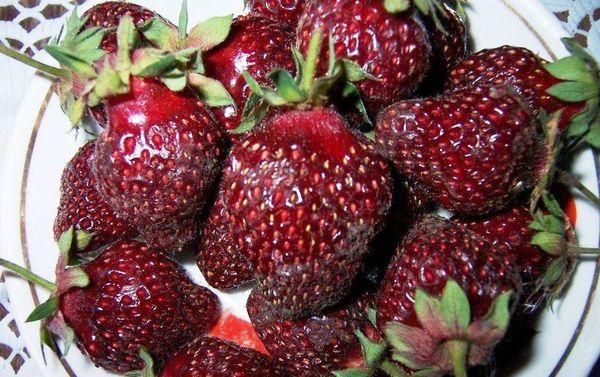
Varietal characteristics
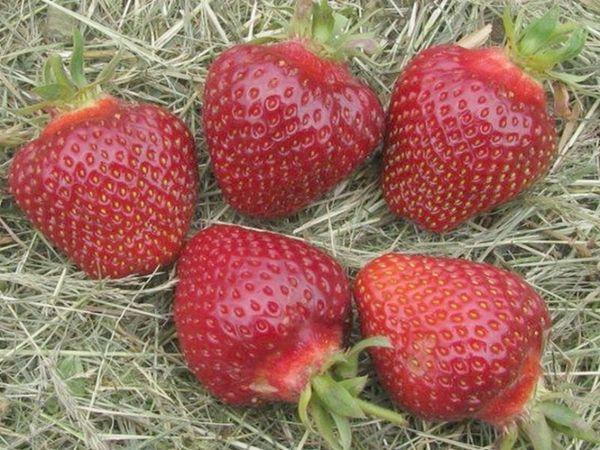
Ruby Pendant has some distinctive characteristics compared to other strawberry varieties. The berries of this variety have a firm texture, which is their main characteristic.
Size and appearance of the bush
The strawberry bush has a semi-spreading habit, reaching a height of about 40 centimeters. The medium-sized leaves are evenly spaced.
Ruby Pendant has a strong and resilient root system. Flower stalks are located below the leaf level. The tendrils are larger than those of other strawberry varieties and have an elongated shape.
Flowering, pollinators and fruiting
Ruby pendant blooms from late May to early June. The strawberry blooms a second time in early September. Pollination occurs via wind and insects, such as bumblebees and honeybees.
If the plot is large, then beehives with bees are placed along the plot to ensure timely pollination.
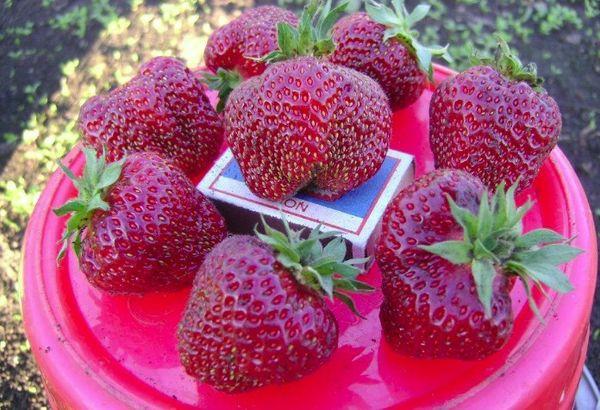
With proper care and pruning, this variety can bear fruit until late autumn. The berries ripen for the first time in midsummer, like other mid-season strawberry varieties. The second fruiting period begins in mid-autumn and lasts until the first frost. Fruiting is good, with a single bush yielding 0.5 to 1 kilogram of strawberries.
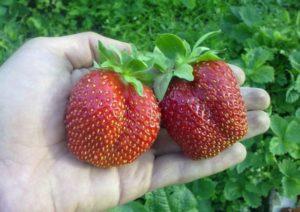
The fruits of the Ruby Pendant have dense flesh and do not lose their marketable appearance even during transportation.
Taste qualities and scope of application of berries
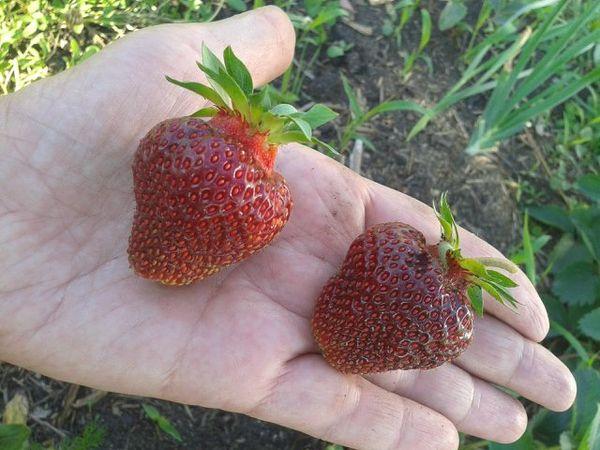
The fruits are very sweet, but not cloying. Therefore, they are used in homemade preserves: jams, compotes, and marmalades. During the fruiting period, the berries are eaten as food, used in baked goods, homemade yogurts, and milkshakes. They are often frozen fresh for the winter.
Immunity to diseases and pests
This variety is resistant to pests and diseases. Even with limited care, it can withstand adverse growing conditions. Its only drawbacks are excessive soil moisture and cold. Under these conditions, strawberries are susceptible to gray mold and powdery mildew. The root system begins to die off, and the leaves turn yellow and then dry out.
Frost and drought resistance
Ruby Pendant tolerates drought but dislikes cold. The plant can become diseased if exposed to cold, so it's recommended to cover the plants at night on cool days. Covering strawberries during the winter is essential.
Landing rules
Correctly taken measures during planting help to achieve increased yields. Strawberries must be planted within a strictly specified timeframe and in soil with a pH level no higher than 6.
Deadlines
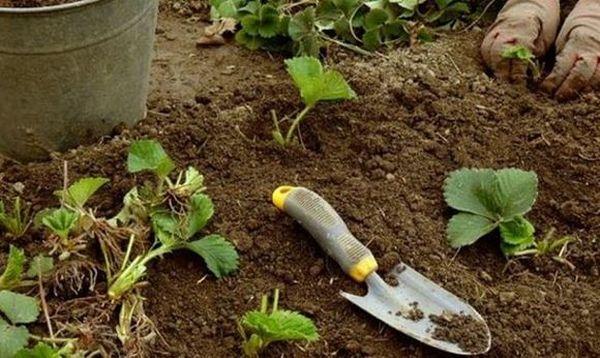
Ruby Pendant seedlings are planted outdoors in the spring, when the soil has warmed from the sun. They can also be planted in the fall before the cold weather sets in.
Additional information: It's best to plant in the evening.
Selecting a site and preparing beds for strawberries
This variety thrives in slightly acidic or neutral soil. Excessive lime content leads to loss of fruiting and yellowing and small leaf blades. Planting strawberries in shaded areas or low-lying areas is not recommended to prevent moisture from accumulating near the roots.
Preparing seedlings
Before planting outdoors, seedlings should be kept in a cool place for about 5 days. Only the two youngest inner leaves are left on each seedling; the rest are trimmed off. To help the strawberry plants strengthen their root system more quickly after planting, it is recommended to dip the roots of each seedling in a mixture of equal parts clay and peat.
Stages of the planting process
Dig holes 30-40 centimeters deep and wide. The distance between holes should be at least 35 centimeters. Place a layer of humus and peat soil at the bottom. Place the seedlings in the holes and cover them with soil. Afterwards, water each plant thoroughly.
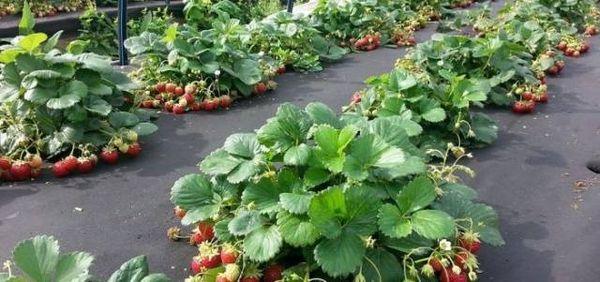 Important! When planting, compact the soil firmly to avoid any air pockets.
Further care of the variety
The Ruby Pendant is completely undemanding when it comes to growing conditions. However, proper and regular care can ensure a bountiful harvest twice a season.
Watering mode
When caring for strawberries, the most important thing is to monitor the watering schedule and amount. This variety dislikes overly wet soil, as it can cause root rot and disease. Therefore, water the plants only when the top layer of soil dries out. During rainy periods, watering should be suspended.
Water for irrigation shouldn't be cold or hard. It's best to water strawberries with settled, slightly cool water, or rainwater.
What fertilizer does the variety prefer?
To ensure good fruiting, this variety requires organic fertilizer. When first fertilizing, be sure to add fertilizers containing nitrogen, potassium, and phosphorus. Humus and compost are used for this purpose. Instead of watering, sometimes a solution of water and cow manure is used.
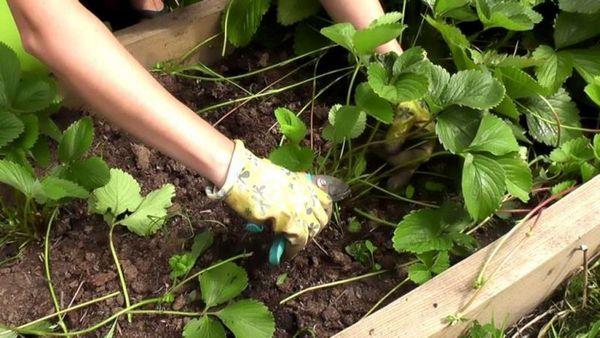
During subsequent fertilizations, avoid nitrogen-containing fertilizers, which negatively impact flowering and fruiting. During this period, fertilize the soil with wood ash.
The last autumn feeding should include manure, humus and ash.
Please note! It is not recommended to feed strawberries with mineral fertilizers. Otherwise, the plant will only produce foliage instead of fruiting.
Weeding and loosening
If the strawberries weren't mulched after planting, the area will require regular weeding. Small beds are best weeded carefully by hand to avoid damaging the flowers or fruit.
Loosening the soil after each watering is necessary to avoid waterlogging. Loosen the soil carefully to avoid damaging the root system.
Mulching strawberries
After planting the seedlings, it is recommended to mulch them with a special material for covering vegetation or dense agrofibre.
This method has many advantages:
- there is no need for weeding, as the growth of weeds is stopped;
- the number of waterings is reduced, the water in the soil does not evaporate quickly;
- There is no need to regularly loosen the soil after watering.
Treatment against diseases and pests
Excessive soil moisture leads to stagnation, which results in strawberry diseases. A fungal disease called gray mold appears on the roots.
To prevent disease, it's important to monitor the quality and quantity of watering and regularly loosen the soil. If the first signs of disease have already appeared, it's recommended to treat the bushes with Bordeaux mixture or a copper-containing product.
Strawberry pest and disease control should be carried out before and after flowering. Strong pesticides will damage the plant's buds, which will impact the yield.
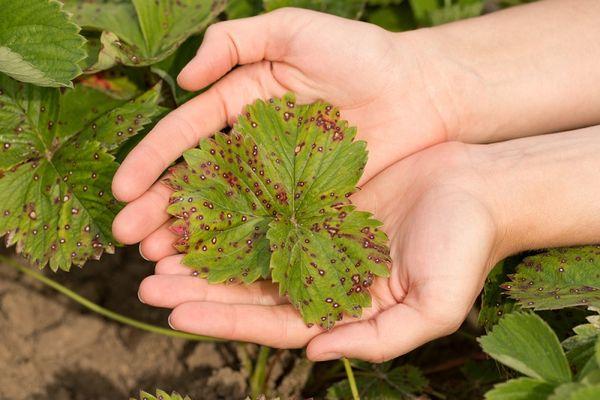
The plant sometimes suffers from verticillium wilt. This is caused by poor crop rotation and poorly chosen growing conditions. This variety should not be planted in areas previously occupied by cucumbers, melons, roses, pumpkins, blackberries, or nightshades.
Shelter during the winter period
For the winter, the bushes need to be covered and insulated. Two weeks before insulating, trim old leaves and tendrils, then fertilize the strawberries. Straw, spruce branches, hay, dry leaves, or sawdust can be used for covering. The insulating material should be tightly covering the bushes, but not too tightly, allowing for ventilation.
Important! Even in the spring and fall, strawberries must be kept warm during frosts. Cover them with plastic wrap or other protective material at night.
Methods of propagation of culture
Strawberries are propagated using runners and by dividing the bush.
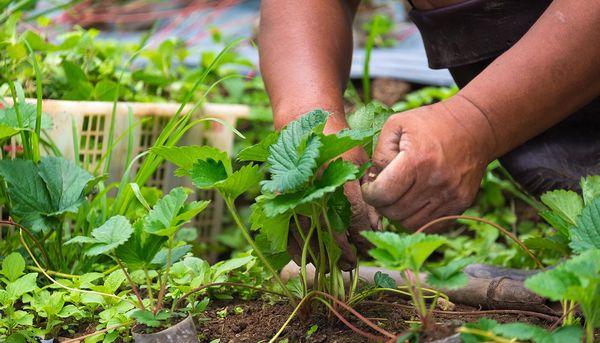 Can be propagated by tendrils or shoots after the first fruiting.
The required number of runners should be placed along the edges of the beds. Once the shoots have rooted, their ends are trimmed but not separated from the mother plant. Young bushes are regularly weeded, watered, and the soil loosened. At the end of July, the bushes are pruned from the mother plant and transplanted to their permanent location.
When propagating by division, select healthy, large strawberry plants and dig them up. Carefully separate them into several rosettes. This procedure must be carried out carefully to avoid damaging the root system. Then, each separated seedling is planted in its own hole.
Reviews from gardeners and summer residents
Irina, 33: "The Rubin Pendant strawberry is my favorite variety. It doesn't require much care, but it produces a good harvest. Last year, I harvested it twice in one season!"
Alena, 55: "The Rubin Pendant variety has a very firm texture. I consider this a big plus, as it prevents the berries from getting crushed during transportation and storage. The strawberries are very sweet and perfect for making jam."
Related posts:
 Description of the Florence strawberry variety, planting and care features
 How to grow strawberries in Siberia outdoors: the best varieties and care
 Description of the everbearing strawberry variety Selva and cultivation technology
 Description and characteristics of the Vima Zanta strawberry variety, planting and care scheme
 How to grow strawberries at home
 Description of the Holiday strawberry variety, cultivation and propagation methods
 Description of the everbearing strawberry variety Mara de Bois and growing rules
 The best varieties and cultivation of everbearing strawberries, fertilizing and propagation