
- The history of Marmalade strawberry breeding
- The main advantages and disadvantages of the variety
- Description and characteristics
- Bushes and shoots
- Flowering and fruiting
- Taste and scope of application of berries
- Immunity to diseases
- Frost and drought resistance
- Secrets of planting
- Climate conditions and growing area
- Predecessors and neighbors of berry crops
- Site selection and soil requirements
- Planting dates and patterns
- Specifics of care
- Fertilizing and watering
- Trimming
- Fighting diseases
- Pest prevention
- Nematode
- Ticks
- Weevil
- How to loosen and weed
- Transfer
- Shelter for the winter
- Reviews of the variety
Due to the diversity of strawberry varieties, farmers and gardeners are faced with the difficult choice every year. After all, thanks to the efforts of breeders around the world, numerous hybrid varieties of this garden berry have been created. The Marmelada strawberry, although not a domestically bred variety, has become a favorite among gardeners and farmers for its unique characteristics, long-term storage, and long-distance transportation.
The main requirements for garden crops are their productivity, ease of care, and excellent taste.
The history of Marmalade strawberry breeding
The Marmelada garden strawberry was developed by Italian breeders specifically for cultivation in private gardens at the end of the last century. The cross was made between the Gorella and Holiday varieties.
The fruit crop is recommended for cultivation in mild, warm climates.
The new variety is not included in the state registers of fruit crops, but has gained immense popularity among gardeners, vegetable growers, and farmers in Russia and the CIS countries.
The main advantages and disadvantages of the variety
To decide on growing strawberry varieties Marmalade, it is necessary to familiarize yourself with all the advantages and possible disadvantages of the fruit crop.
Advantages of the variety:
- Marmalade easily tolerates frost and sudden temperature changes, and the variety is also drought-resistant.
- The fruit crop has natural immunity to fungal infections and pests.
- Early ripening period.
- The taste of the berries was rated by experts with the highest score.
- The variety is universal, suitable for consumption both raw and processed.
- High yield. With proper care, this variety can produce two harvests in one season.
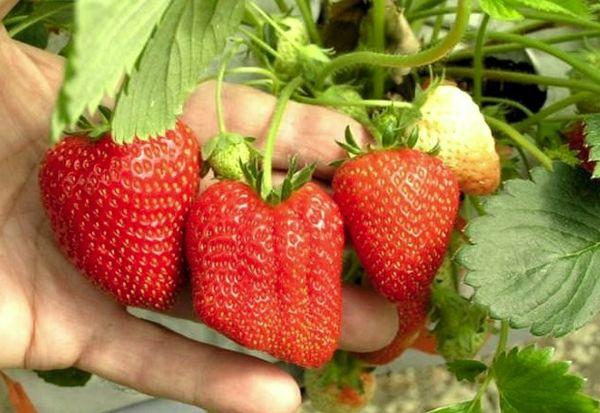 Important! Ripe berries store well, allowing for the delicious, healthy berries to be transported over long distances.
Flaws:
- The influence of weather conditions on the taste of ripe berries.
- Fruit crops are demanding regarding soil composition.
- When bushes are planted too densely, a decrease in the size of the berries is observed.
- Due to lack of moisture, berries darken and spoil.
- Every 2-3 years, strawberry plantings require renewal.
The Marmelada variety shows high yield only during the first 2-3 years of growth, and then fruiting decreases.
Description and characteristics
The benefits of garden strawberries have long been known to humanity. The berries contain a huge amount of vitamins and nutrients necessary for the proper functioning of the body.
Bushes and shoots
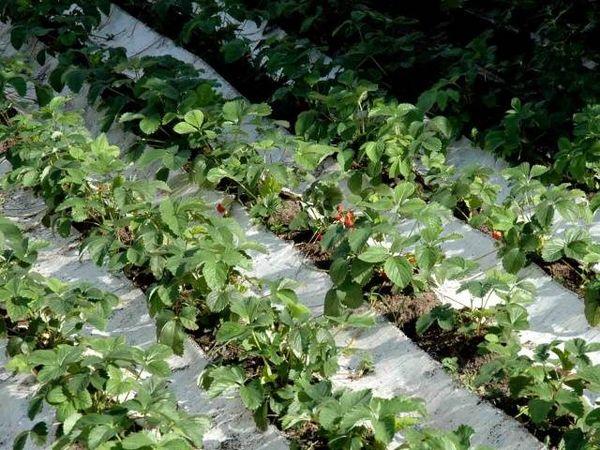
The berry bushes are low, compact, yet vigorous, with numerous shoots and large, dark-green leaf blades. The leaves are positioned high above the soil surface, allowing the plant to receive sufficient sunlight and simplifying the harvest of ripe berries.
Flowering and fruiting
In late spring, strawberry bushes begin to bloom, revealing large white flowers. The stems of the flower stalks are thick and strong, rising above the bushes, allowing the ripe berries to remain clear of the soil.
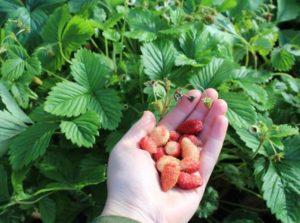
The variety begins to bear fruit in the first year of growth.
Although Marmelada is not a remontant variety, from the second year of fruiting the crop is capable of producing 2 harvests per season.
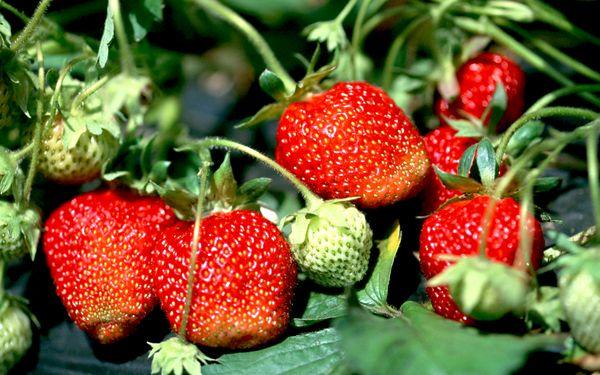
The main harvest of ripe berries occurs at the end of June. A single bush yields up to 900 g of ripe, aromatic berries weighing between 20 and 40 g.
The garden crop is propagated by multiple shoots called tendrils.
Taste and scope of application of berries
With its rich flavor and distinct aroma, Marmalade strawberries live up to their name.
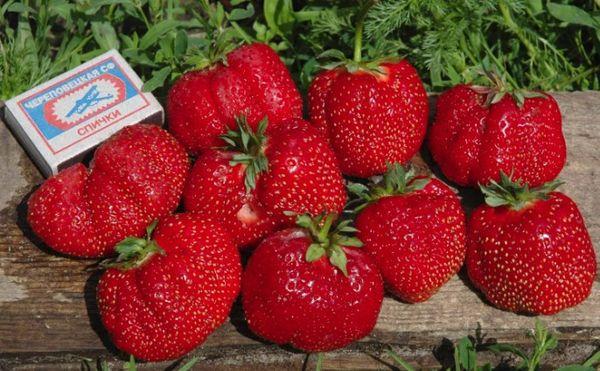
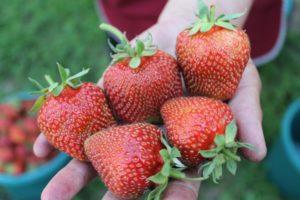
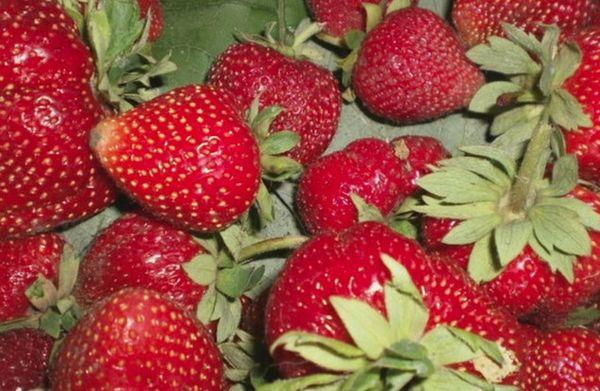
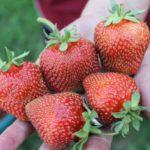
Ripe fruits are bright red in color with juicy, dense pulp with a sweet and sour taste and a distinct aroma.
Important! For transportation, the berries are picked at the technical ripeness stage, when the fruit is red but not quite sweet enough.
The Marmalade variety is versatile and eaten fresh. The berries are also used to make juices, nectars, compotes, preserves, and jellies. In cooking, the berries are added to baked goods, desserts, and dairy products, and are dried and frozen.
Immunity to diseases
This hybrid strawberry variety has strong immunity to root rot, powdery mildew, chlorosis, and verticillium wilt. With proper care, berry bushes are rarely attacked by pests.
Frost and drought resistance
This hybrid garden berry variety easily withstands winter frosts down to -15 degrees Celsius. Further cold requires additional insulation for the plants.
During dry periods, fruit trees require additional watering. While the bushes can withstand drought, a lack of moisture negatively impacts the berries' flavor and yield.
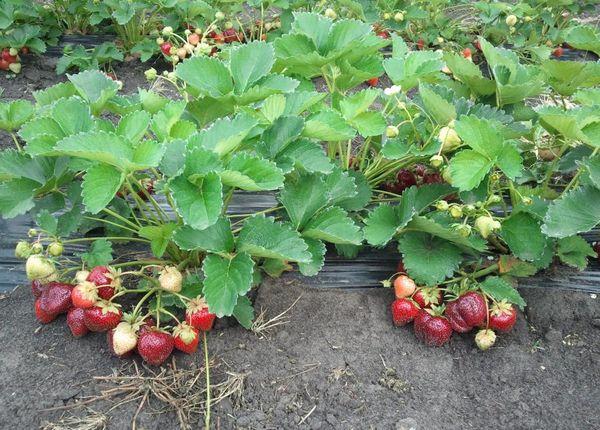 For your information! In snowy winters, under deep snowdrifts, the Marmelada strawberry can withstand temperatures as low as -30-35 degrees Celsius.
Secrets of planting
To grow Marmalade strawberries in your garden and reap a high-quality harvest of healthy berries, you need to familiarize yourself with the rules for planting and caring for this fruit crop.
Climate conditions and growing area
This hybrid garden berry variety is zoned for cultivation in the continental climate of northern Italy. It thrives and ripens well in the temperate climates and southern latitudes of Belarus, Ukraine, and Russia. According to gardeners, due to its high tolerance to low temperatures, Marmelada strawberries can also be grown in northern latitudes.
Predecessors and neighbors of berry crops
One of the most important conditions for growing strawberries is crop rotation. It is not recommended to plant this fruit crop in areas previously occupied by potatoes, eggplants, or tomatoes.
The best predecessors for garden berries are garlic, beets, lettuce and cucumbers.
Garlic is considered a natural soil antibiotic, killing most fungal spores and pests. It has been scientifically proven that strawberries planted after garlic are less susceptible to viral and fungal infections and produce better fruit.
Site selection and soil requirements
For planting garden berries, a plot of land is carefully selected.
- Open, level, well-lit areas in the southern or southwestern part of the garden.
- Strawberries do not tolerate strong drafts and cold winds, and the crop will not grow on steep slopes or in lowlands.
- The bushes grow quickly and will require a lot of free space for the growth and development of the crop.
- The absence of large trees and shrubs on the site that shade the strawberry beds.
This garden crop is not demanding regarding soil composition, the main thing is that the soil is loose and has a neutral acid content.
Planting dates and patterns
It's recommended to plant berry bushes outdoors in late summer or early fall. This will allow the plants to take root before the first frost and begin bearing fruit during the summer season. In spring, transplant the seedlings as soon as the air temperature stabilizes at at least 15 degrees Celsius.
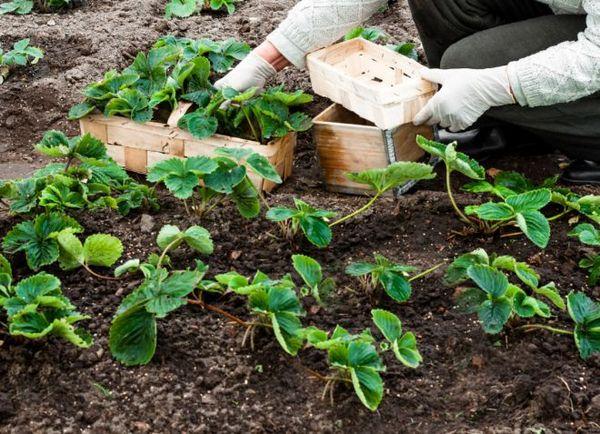
In the closed ground of a heated greenhouse, fruit crops are planted all year round.
- The beds for planting berry bushes are prepared 2-3 weeks before planting. Organic and mineral fertilizers are added to the soil.
- Before planting, strawberry roots are treated with antibacterial preparations.
- Dig holes in a thoroughly loosened bed. The depth and width of the holes are determined by the size of the plant's roots.
- The distance between holes is 20-30 cm, between rows 40 cm.
- A mound of soil is poured into the hole, on which the seedling is placed.
- The rhizomes are evenly distributed in the hole and covered with soil.
- After planting, the bushes are watered thoroughly.
Important! As the bushes grow, cover the side shoots and tendrils with soil, then trim them back at the end of summer and plant them as individual plants.
Specifics of care
To obtain a large and high-quality harvest of ripe berries, the Marmelada strawberry variety requires timely and careful care.
Fertilizing and watering
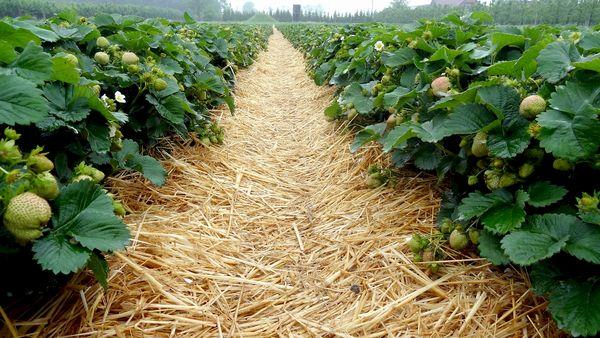
Most watering occurs at the beginning of the growing season. Before flowering, the bushes are watered thoroughly, washing away dust and dirt from the leaf blades. Once the plants bloom, watering is limited to the rhizomes. Watering is carried out no more than once or twice a week, and during the ripening period, it is reduced to once every two weeks. Irrigation is carried out with warm, settled water.
The Marmalade garden strawberry doesn't tolerate excessive soil moisture. The bushes become diseased, and the yield drops.
For better development and fruiting, strawberries need additional nutrition with organic and mineral substances.
- In early spring, the bushes are fed with organic matter and a mineral complex.
- Before the flowering phase begins, a urea solution is added to the soil.
- During flowering, bushes require nitrogen and calcium.
- Before winter dormancy, berry bushes are fertilized with mineral fertilizers.
Also, in spring and autumn, strawberry beds are fertilized with humus.
Trimming
Garden strawberry bushes grow quickly. Therefore, excess shoots are trimmed as the beds become overgrown.
Also, pruning of unnecessary leaf blades and tendrils is carried out before the onset of winter dormancy.
Fighting diseases
Although Marmalade strawberries have a natural immunity to some fungal and viral diseases, gardeners and farmers should always be prepared to combat unexpected diseases.
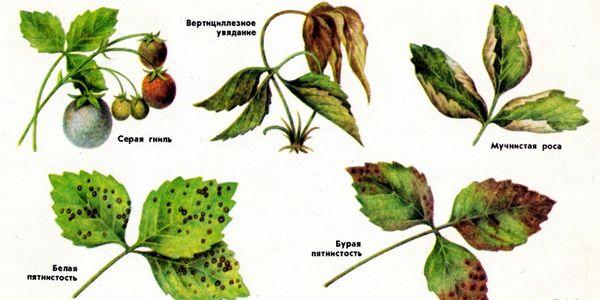
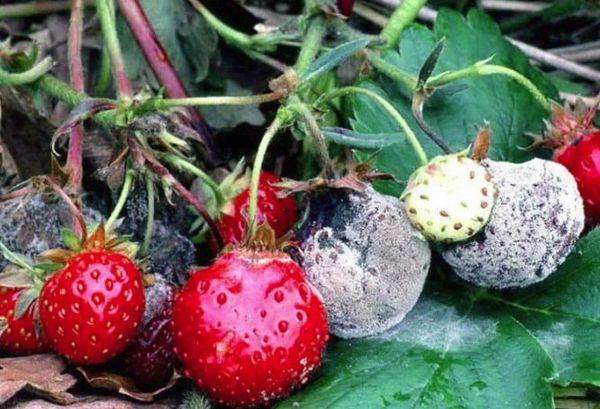
- Gray mold on berry bushes is often carried by weeds. At the first sign of fungal infection, affected plants are removed from the garden bed, and the remaining ones are treated with fungicides.
- If dark spots appear on the leaves of the bush, the plants are treated with Bordeaux mixture.
To avoid fungal and viral infections, it is sufficient to strictly and promptly follow the rules for caring for fruit crops.
Pest prevention
It's difficult to protect fruit crops from pests, but you can prevent attacks by preventatively spraying the bushes in the spring.
Nematode
Nematodes are resistant to all insecticides. To prevent infestation of fruit crops, weed and cultivate the plant beds regularly. Nematodes also avoid marigolds, so these easy-to-grow flowers can be planted between strawberry plants.

Ticks
Mites damage not only fruit bushes but also berry crops. Insecticides or tobacco dust are used to control the pest.
Weevil
If strawberry bushes do not bloom, they are most likely attacked by a weevil, which feeds on unopened buds.
Insecticides or folk methods are used for control and prevention.
How to loosen and weed
The presence of weeds and loose soil affects not only the health of the fruit crop, but also its yield.
Weeding and loosening of beds is usually carried out together with watering.
Loose soil enriches strawberry roots with oxygen, and removing weeds promotes active growth and development of the garden crop.
Transfer
Strawberry transplantation is carried out using runners or dividing the bush.
Several shoots, or tendrils, emerge from the mother plant. As they grow, they are covered with soil and rooted. At the end of summer, the shoot, along with its new roots, is cut from the mature bush and planted separately.
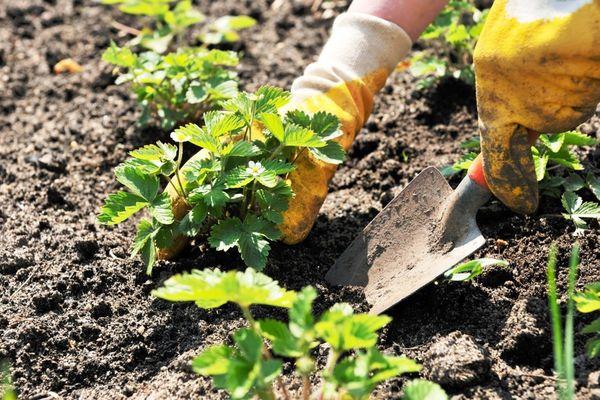
Mature, 3-4-year-old strawberry bushes are dug up and divided into equal parts. It's important to leave the central bud on each root. Each bush produces 3 to 4 new plants. The new strawberry bushes are planted in separate beds.
Shelter for the winter
Although Marmalade is declared as a frost-resistant fruit crop, without sufficient snow, the bushes will freeze.
Before winter dormancy, berry beds are mulched with a thick layer of humus, sawdust, and peat. A second layer is laid with dry leaves or spruce branches. The beds are then covered with burlap or a special material.
Reviews of the variety
Svetlana Sergeevna 44 years old. Novorossiysk.
My little daughter recommended planting Marmelada strawberries because of their name. We decided to give it a try. In the first year, the whole family enjoyed the fragrant, sweet, and, most importantly, large berries. My daughter said the strawberry truly lives up to its name.
Ilya Petrovich is 53 years old. Omsk.
My wife and I have been growing Marmelada for 10 years now. The berries are delicious, juicy, and large, making delicious jams and compotes. The care is fairly basic, but our climate requires careful preparation for winter. Not a single bush has frozen over in all this time.
Irina Konstantinovna 62 years old. Tula.
Strawberry Marmalade is my favorite berry. I've been growing it for seven years now, and I have no plans to change the variety. My grandchildren simply adore fresh, large strawberries, and my son and husband look forward to their favorite jam every year.
Related posts:
 How to grow strawberries at home
 Description and characteristics of the Festivalnaya strawberry variety, planting and care
 Description of the Florence strawberry variety, planting and care features
 Description of the Holiday strawberry variety, cultivation and propagation methods
 Description and characteristics of the Vima Zanta strawberry variety, planting and care scheme
 Description and characteristics of the Asia strawberry variety, planting technology and care
 Description and characteristics of the Zenga Zengana strawberry variety, planting and care
 Description of the everbearing strawberry variety Selva and cultivation technology