
- History of the Asia variety
- Description and characteristics of strawberries
- Bush and shoots
- Flowering and fruiting
- Taste qualities of berries
- Resistance to low temperatures and diseases
- Benefits of Growing
- Landing
- Optimal time for planting seedlings
- Selecting a location and preparing beds
- What to plant nearby
- Technological process of planting bushes
- Specifics of crop care
- How to water
- Weed control
- Loosening and hilling the soil
- Fertilization
- Diseases and pests
- Strawberry wintering
- Reproduction methods
- With antennae
- Seeds
- Dividing the bush
- Reviews of the variety
Thanks to the tireless work of breeders, the first berries of outdoor strawberries appear as early as mid-May. Every gardener strives to grow a tasty and healthy crop in their garden. However, the main difficulty typically lies in choosing the right variety. Some require high yields, others prioritize cold and disease resistance, and still others simply want to grow sweet, large berries. When developing the hybrid strawberry variety Asia, the developers took into account the most important characteristics of the fruit crop.
History of the Asia variety
Garden strawberry Asia, a hybrid variety of fruit crop, bred in the Italian city of Cesena in the early 2000s.
The new variety was developed for industrial cultivation, but is also grown with great success in private gardens.
In Belarus and Ukraine, the new fruit crop has been included in state registries. In Russia, the Asia strawberry has not undergone varietal testing, but is grown in many regions of the country.
Description and characteristics of strawberries
The Asia garden strawberry is adapted for cultivation in continental, temperate, and even northern climates. This fruit crop has proven particularly successful in greenhouse and hothouse conditions.
Important! Growing the Asia strawberry variety outdoors requires timely care and adherence to proper agricultural practices.
Bush and shoots
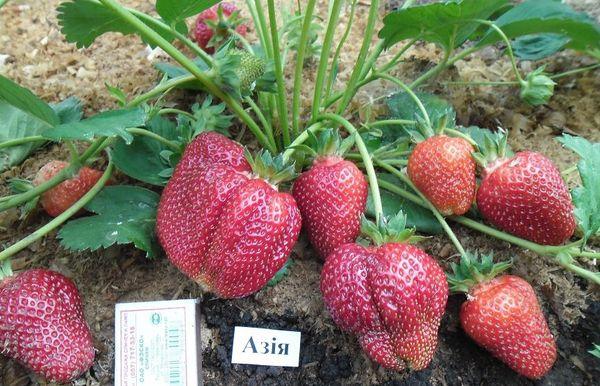
The berry bushes are tall and upright, with spreading, smooth leaf blades in vibrant green hues. The medium-sized leaves shimmer with a glossy sheen in the sun. During the growing season, young shoots and tendrils form on the bushes. Unlike other fruit varieties, Asia's shoots are few and short, making it easy to grow and propagate in small plots.
Flowering and fruiting
In Asia, the inflorescences are not long, located at the level of the leaf cover, and bloom with small white flowers.
The Asia garden strawberry is an early-ripening variety. The first berries ripen in early June, and even earlier in southern regions.
The fruit ripening process lasts from 3 to 4 weeks.
The variety has a high yield. Under favorable climate conditions, a single bush can yield up to 1.2 kg of ripe berries.
On an industrial scale, 24 to 32 tons of produce are harvested per hectare.
Important! To obtain a high-quality berry harvest in greenhouses, plant another garden variety with a similar flowering period next to the Asia strawberry.
Taste qualities of berries
Ripe berries acquire a bright red color with a glossy sheen. The flesh is firm, juicy, and lighter in color, with a strawberry aroma and a sweet-tart flavor. Experts rate the berries' flavor at 4.6 on a 5-point scale.
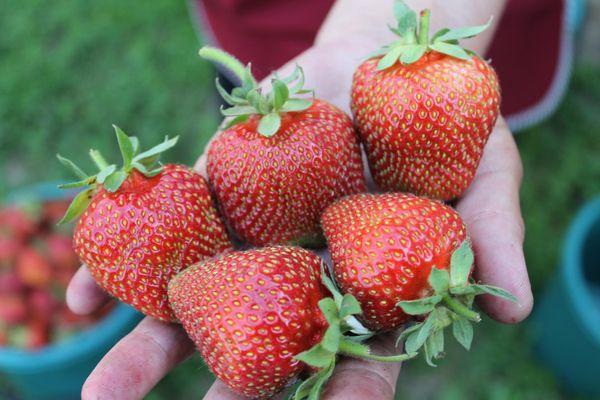
The Asia garden strawberry is recognized as a versatile variety. Ripe fruits are recommended for fresh and processed consumption.
Strawberries are used to make juices, nectars, compotes, jams, and preserves. The berries are dried, frozen, used in desserts and baked goods, and added to dairy products.
Garden strawberries contain a huge amount of nutrients and vitamins necessary for the proper functioning of the human body.
Resistance to low temperatures and diseases
The hybrid fruit variety "Asia" has increased immunity to leaf spot and verticillium wilt. However, the plant is weakly resistant to powdery mildew and chlorosis.
The plant tolerates moderate winters quite well. The plants don't freeze even in prolonged frosts down to -15 degrees Celsius, but only if the beds are covered with a thick layer of snow. Otherwise, the plant's root system freezes completely.
During dry periods, garden crops require additional watering.
Benefits of Growing
To grow healthy strawberries and get a high-quality harvest of berries, you need to know all the possible disadvantages and advantages of the variety.
Advantages:
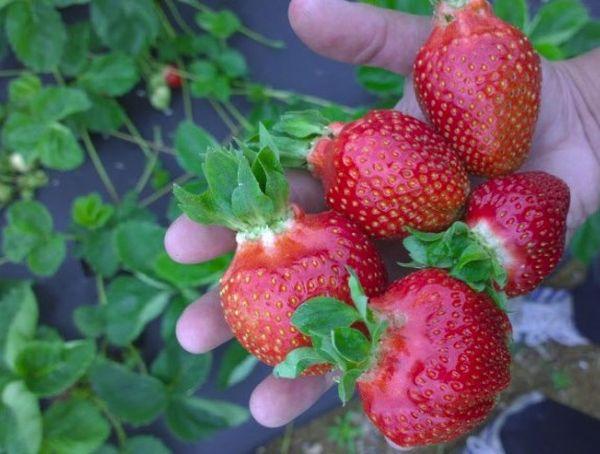
- Productivity of the variety.
- Taste qualities and universal use of fruits.
- Easy to care for.
- Possibility of cultivation in regions with cold winters.
- Natural immunity to some fungal and viral infections.
- The berries ripen in early summer.
Garden strawberries of the Asia variety, when technically ripe, have a long shelf life and tolerate long-distance transportation well.
Disadvantages of the variety:
- Asia strawberry is demanding regarding soil composition.
- In regions with low winter temperatures, fruit crops require additional insulation.
- If there is a lack of moisture and light, the berries lose their flavor and the yield decreases.
The large size of the fruit tree bushes requires a lot of space for planting in garden plots or gardens.
Landing
The growth and yield of the fruit crop depend on the correct timing of strawberry planting and the chosen location.
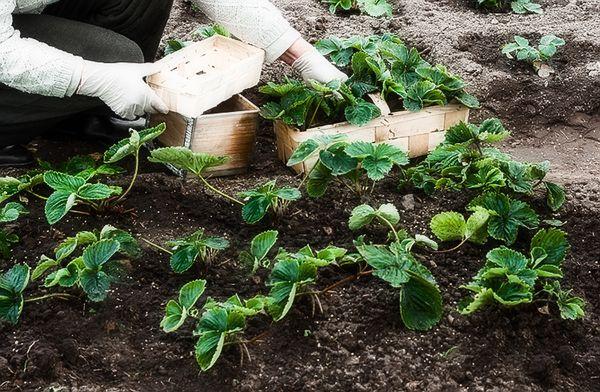
Optimal time for planting seedlings
The timing of planting garden berries in open ground directly depends on the climatic conditions of the growing region.
In southern and temperate latitudes with mild winters, strawberries are planted in late August or September. This will give the plants enough time to establish themselves and root before the first frost.
In regions with harsh climates, planting of fruit crops in open ground is carried out in the spring, as soon as daytime temperatures have firmly established themselves at a level of at least +15 degrees.
By planting berry bushes in the spring, the first harvest is obtained the following year, allowing the plants to develop and take root in the first year of growth.
After planting in the autumn, the berries are harvested in June.
Selecting a location and preparing beds
Choosing the right plot of land is the key to obtaining a high-quality harvest of tasty and healthy berries.
- Strawberries are not planted in areas with close groundwater levels. In these cases, additional mounds are created in the beds.
- The Asia strawberry variety is grown on flat, well-lit areas of land.
- The beds are protected from strong gusts of wind and drafts.
- The garden crop grows well only in fertile, loose, moist soil.
- The soil for planting seedlings is prepared 3-4 weeks before the expected work.
- Humus and sand are added to heavy, clayey soil, sandy soil is mixed with peat, and soil with high acidity is limed.
- The area is carefully dug over, cleared of weeds, and organic and mineral fertilizers are added to the soil.
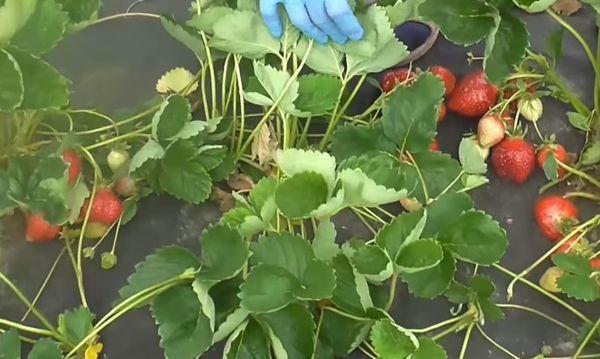
Tip! 8-10 days before planting strawberry seedlings, treat the soil with professional copper-containing fertilizers.
What to plant nearby
Neighbors and predecessors are important for garden strawberries.
Sunflowers, any tomato varieties, and nightshade crops should not be planted near berry bushes. Fungi, viruses, and pests that attack these crops also negatively affect strawberries.
Greens, beets, lettuce, carrots, onions, and garlic are excellent companions for strawberry plants. Planting calendula flowers near strawberries is also recommended for pest prevention. Most pests are intolerant of garlic and calendula, so strawberry plants will benefit from additional protection.
Take a look Also

Technological process of planting bushes
When planting seedlings, take into account the large size of the berry bushes.
- Before planting, the roots of the seedlings are treated with antibacterial preparations and a growth stimulant.
- In the prepared area, dig holes 15 to 20 cm deep.
- The distance between holes is left at least 40 cm, between rows from 60 to 70 cm.
- A mound of fertile soil is poured into the bottom of the hole.
- The seedling is placed on top of the mound, the roots are carefully straightened and covered with soil.
- The soil is lightly compacted and thoroughly watered.
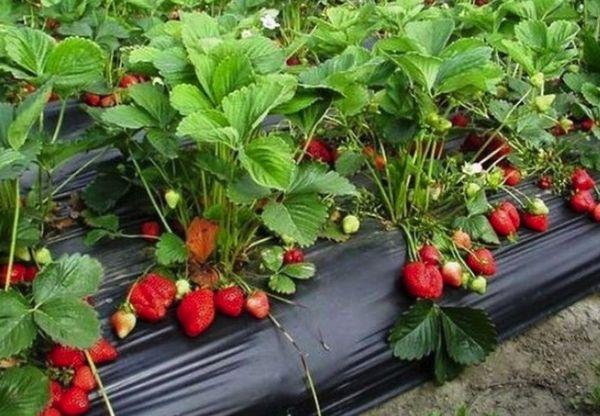
If planting is carried out in the autumn, the beds with seedlings are mulched with dry leaves or sawdust.
Specifics of crop care
The quality and quantity of the harvest depends on proper and timely care of the garden crop.
How to water
Before flowering, berry bushes are watered thoroughly, washing away dust from the green leaves using a fine spray on a watering can. Once the plant blooms, water at the roots with warm, settled water. Each plant requires 3 to 5 liters of water.
During prolonged periods of dry weather and high temperatures, watering should be done once every 2-3 days. Normally, strawberries are watered once every 6-8 days.
Weed control
Weeds pose a real threat to strawberries. Not only do they shade the ripening berries from sunlight, but they also spread fungi and viruses.
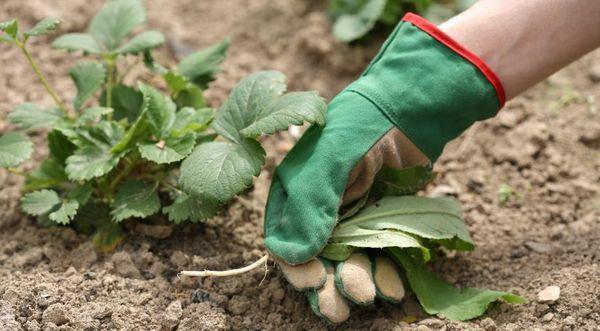 Important! Weeding berry beds is essential for growing healthy plants and producing a high-quality berry harvest.
Loosening and hilling the soil
Loosening the soil helps provide plant roots with oxygen and nutrients. This procedure is performed after watering, when the soil is saturated with moisture and beneficial compounds.
Hilling up bushes helps strengthen and accelerate rooting. This process is carried out in early spring and before winter dormancy.
Fertilization
The Asia garden strawberry has gained popularity due to its high yield. This means that the fruit-bearing crop requires additional fertilizers and supplements.
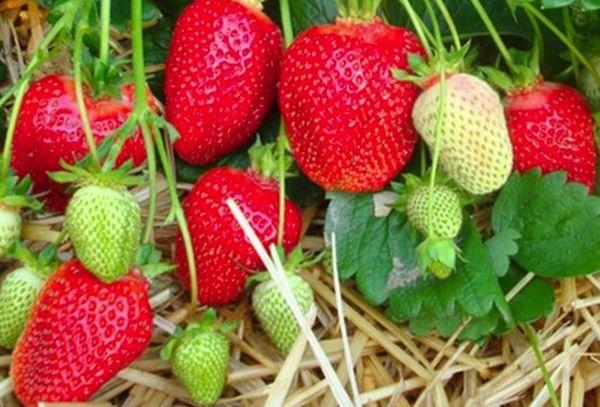
- At the beginning of the growing season, the bushes are fertilized with a solution of cow manure or poultry manure. This fertilizer adds nitrogen to the soil, which is essential for the growth and development of strawberries.
- Before flowering and after harvesting, plants are fed with a mineral complex.
- In the autumn, the soil in the beds is mixed with humus and mineral fertilizers.
When feeding and fertilizing berry bushes, it's important to find a balance. Overfeeding, as well as underfeeding, can cause fungal infections and plant death.
Diseases and pests
At the beginning of spring, strawberries are treated preventively against pests and diseases.
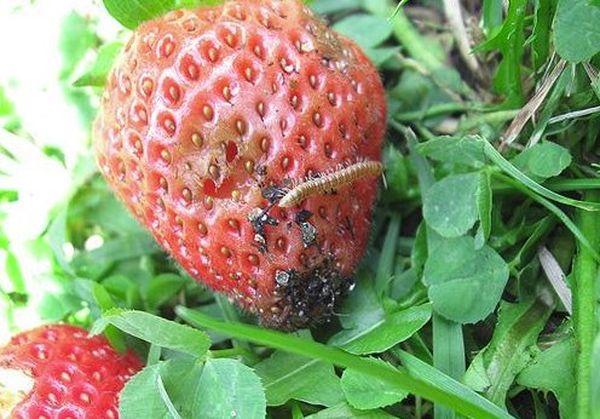
The most common pests that attack berry crops are nematodes, weevils, spider mites, and aphids. Before flowering, the garden crop is sprayed with insecticides.
To prevent damage from fungal infections and viruses, plants are treated with solutions based on copper-containing fungicides.
Timely and proper care of garden crops reduces the risk of diseases and pest damage to plants.
Strawberry wintering
In the fall, berry beds are mulched with a thick layer of humus or compost. A layer of dry straw or leaves is placed on top of the mulch, and then covered with spruce branches.
As soon as the first snow falls, large snowdrifts are made in the garden beds.
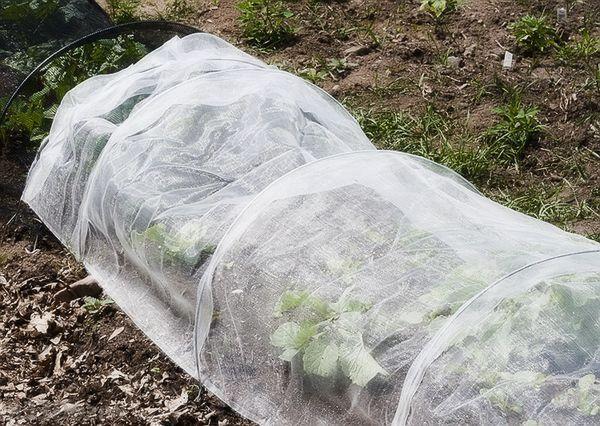
In regions with low temperatures, it is recommended to cover the beds with a special fiber.
Reproduction methods
Gardeners, farmers, and vegetable growers are always striving to increase the berry crops on their plots. This can be accomplished through both vegetative propagation and seed.
With antennae
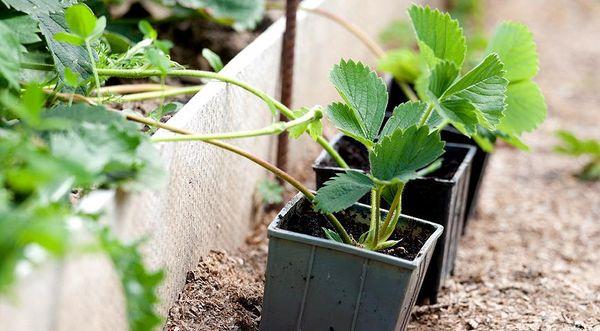
The easiest way to propagate Asia strawberries is by using shoots, or tendrils.
- Each mature bush produces lateral shoots with large rosettes of leaves at the ends.
- From the mother bush, 1-2 of the strongest shoots are selected, the rest are cut off.
- The tendrils are fixed in the soil, and after 25-30 days, small roots appear under the rosettes (stepchildren).
- As soon as the stepsons take hold in the soil, they are dug up and transplanted into separate beds.
Further care for seedlings is the same as for adult plants.
Seeds
Propagating strawberries by seed will require a lot of time and labor.
- In the fall, strawberry seeds are placed in a well-moistened cloth or container with soil and placed in a vegetable storage drawer in the refrigerator.
- For 2 months, the seeds are moistened in the refrigerator.
- After the period has elapsed, the seeds are planted in containers with fertile soil.
- The pots with the plantings are covered with film and placed in a warm, dark place.
- As soon as the first shoots appear, the containers with seedlings are moved to a bright, warm room.
- In spring, the grown seedlings are planted in open ground.
If many seeds were planted in one pot, the emerging shoots are replanted.
Dividing the bush
Dividing a strawberry bush not only propagates strawberries but also rejuvenates the garden crop. For division, select a mature, vigorous berry bush. The mother plant is dug up, the rhizomes are cleared of soil, and the plants are divided into equal-sized bushes. Each bush should have developed roots and several green leaves. The young plants are then transplanted into a separate bed.
Reviews of the variety
Karina, 52 years old, Volgograd.
A friend recommended I plant the Asia strawberry variety at my dacha. I grow several varieties of this berry, and I really like them all, so I was skeptical. But after the first harvest, my feelings about the new variety changed dramatically. The bushes are strong, the berries ripened large and sweet, and most importantly, I was able to taste the first fruits by the end of May. This variety requires minimal care, only timely watering. The tendrils are short, but the rosettes root immediately and by autumn they grow into large bushes.
Sergey Nikolaevich, 39 years old. Kaliningrad.
I've been planting Asia strawberries at my dacha for several years now. My whole family loves this variety so much that we decided to ditch other varieties in favor of Asia. My wife makes amazing compotes and jams from them, and we eat the frozen fruit all winter long, with sugar or kefir.
Vitaly Petrovich 51 years old. Ryazan.
I've been familiar with the Asia strawberry variety for a long time, but I only planted it last year. The bushes overwintered well, quickly emerging from dormancy and starting to grow. My wife and I are waiting for summer to try the first harvest of what I've been told is a premium berry.
Related posts:
 How to grow strawberries at home
 Description of the Florence strawberry variety, planting and care features
 Description of the Holiday strawberry variety, cultivation and propagation methods
 Description and characteristics of the Korona strawberry variety, planting and care scheme
 Description and characteristics of the Vima Zanta strawberry variety, planting and care scheme
 Description of the everbearing strawberry variety Selva and cultivation technology
 The best varieties and cultivation of everbearing strawberries, fertilizing and propagation
 Timing of strawberry planting in the middle zone in autumn, description of 25 best varieties