
- History of breeding large-fruited varieties
- Benefits of strawberries
- Characteristics and description of Gigantella
- Bush size
- Flowering and fruiting
- Tasting evaluation of berries and their scope of application
- Agrotechnical recommendations for planting
- Site selection and preparation
- Timing and technology of planting
- Specifics of care
- Watering
- Loosening
- Pest and disease control
- Mulching
- Fertilizers
- How to propagate strawberries
- Seeds
- With a mustache
- By dividing the bush
- Reviews of the variety
Not all hybrid varieties bred abroad are granted residency status in the CIS countries. However, this doesn't mean elite fruit crops are overlooked by gardeners, vegetable growers, and farmers in these countries. The unique Gigantella garden strawberry, distinguished from its peers by its enormous fruits and the excellent taste of its ripe berries, is just such a variety.
History of breeding large-fruited varieties
Dutch breeders continue to amaze the world with their unique developments in the field of hybrid fruit crop breeding.
This time, amateur breeders distinguished themselves by creating a garden fruit of gigantic proportions without sacrificing the berries' flavor. Thanks to the extensive work of naturalists, a new fruit variety, Gigantella Maxim, was born at the end of the last century.
The Gigantella strawberry is not officially registered in government registries, but this nuance does not prevent this unique berry from being grown on private farms and in garden plots.
Important! This new variety was developed naturally, without the use of complex genetic modifications, and is therefore completely safe for human health.
Benefits of strawberries
Like any hybrid variety, the Gigantella garden strawberry has both advantages and disadvantages, which are important to be aware of before planting this fruit crop in your garden.
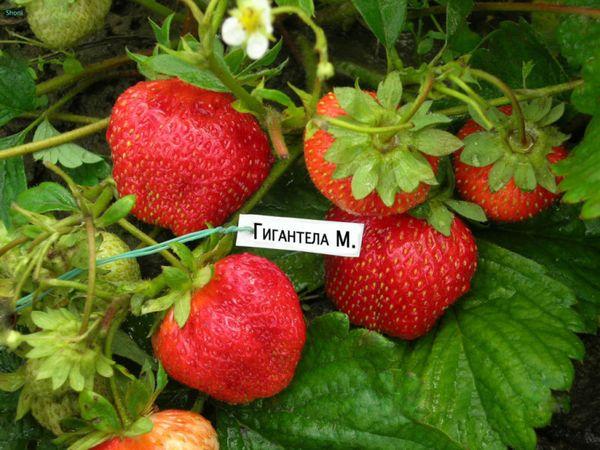
Advantages of the variety:
- The berry crop is unpretentious in care and cultivation.
- Large size of berries.
- Increased frost resistance.
- High taste qualities of ripe berries with a pineapple flavor and aroma.
- Excellent storage and long-distance transportation properties.
- Gigantella is considered a universal early ripening variety.
Another advantage is the dense pulp of the berries with a moderate juice content.
Flaws:
- The variety has weak natural immunity to fungal and viral infections.
- Garden strawberry bushes and berries are often attacked by pests.
- As plants age, a decrease in fruit size is observed.
- Not recommended for growing in regions with harsh, long winters.
- The variety is demanding in terms of watering and climatic conditions.
Garden strawberry Gigantella is not a remontant variety and is capable of bearing fruit only once during the entire growing season.
Characteristics and description of Gigantella
The perennial strawberry Gigantella grows and develops quickly, allowing gardeners to obtain high-quality and large harvests of ripe berries.
Bush size
The bushes grow tall, 50 to 60 cm in height, spreading, with large, light green leaves with serrated edges. The root system is shallow but powerful, extending 30-40 cm deep.
During the growing season, multiple shoots and tendrils grow on the bushes, which are subsequently used for propagating the fruit crop.
Flowering and fruiting
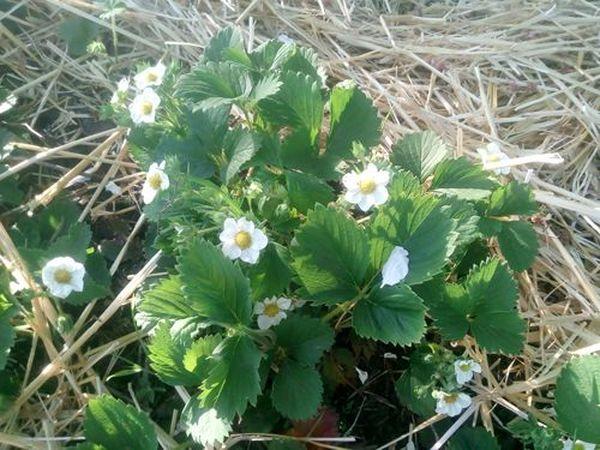
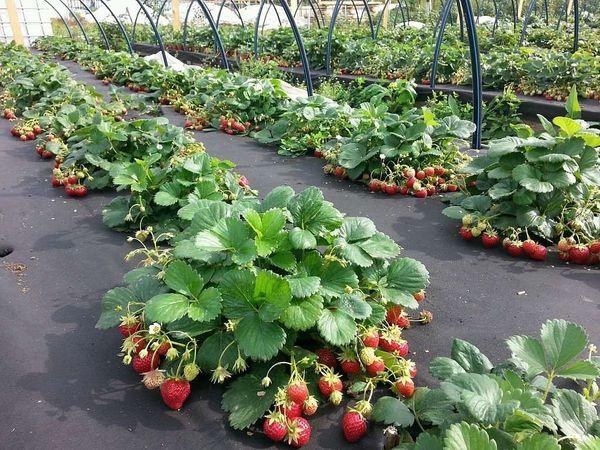
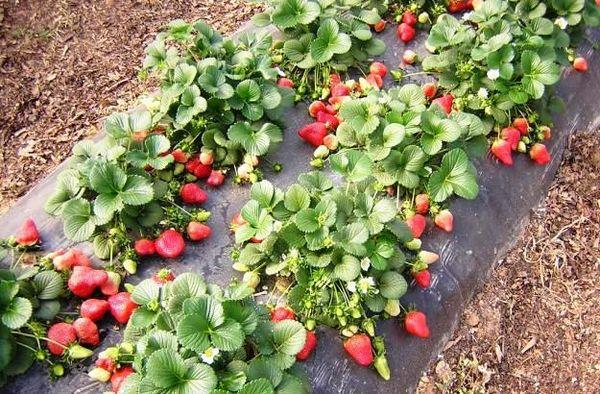
During flowering, the plant produces tall, sturdy stems that open into numerous large white flowers, gathered in clusters of 5-8, which then develop ovaries. A single plant can produce up to 30 stems.
Due to the tall growth and powerful branches of the peduncles, the berries ripen high above ground level and do not touch the soil.
Since this strawberry variety is perennial, replanting the bushes is necessary to increase yield. In one location, the variety bears fruit for no more than six years, after which the yield declines.
Although the variety is considered early-ripening, in temperate climates the first berries appear by mid-July. In southern regions, the harvest ripens 10-14 days earlier.
With proper care and comfortable climatic conditions for the variety, one bush can yield up to 3 kg of ripe berries in temperate latitudes, and up to 6 kg in southern regions.
Tasting evaluation of berries and their scope of application
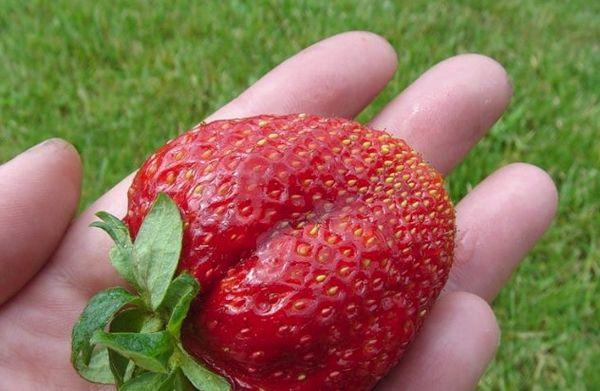
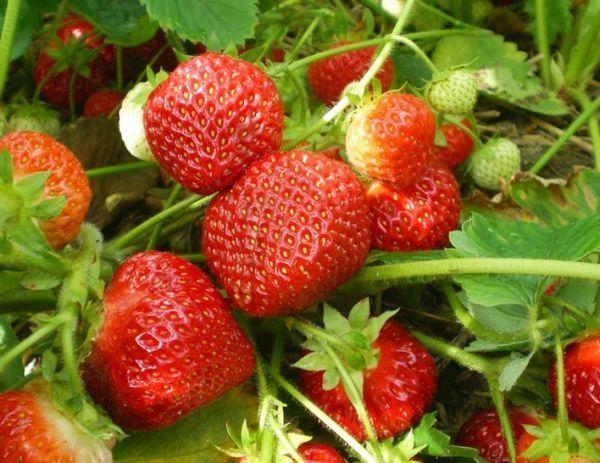
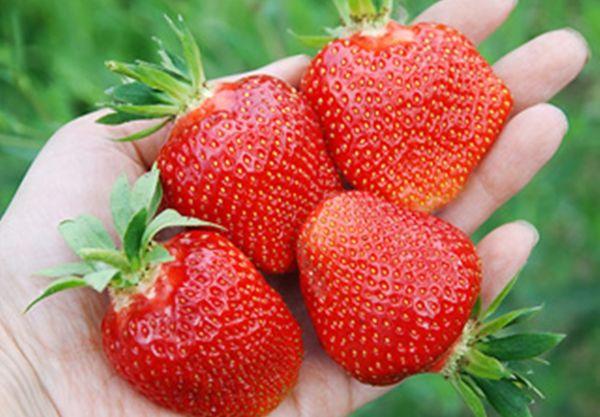
As they ripen, the berries acquire a bright scarlet hue with tiny white seeds. The fruits are large, weighing between 40 and 60 grams each. The very first berries of the harvest reach 100 grams or more.
The pulp of the berries is dense, moderately juicy, with a sweet strawberry flavor and a pineapple aftertaste.
Due to the dense pulp, the harvest is well stored and can be transported over long distances.
Garden strawberry Gigantella is recognized as a universal variety, recommended for consumption both fresh and processed.
The berries are used to make jams, preserves, and compotes, added to confectionery and dairy products, dried, and frozen. This variety of strawberry is also excellent for canning.
Important! Garden strawberries contain large amounts of vitamins C, B, and E, as well as beneficial sugars and amino acids.
Agrotechnical recommendations for planting
The Gigantella strawberry variety is easy to care for, so even a novice amateur gardener can grow it.
Site selection and preparation
Fruit crops are planted in open ground, taking into account the following requirements:
- Strawberries of this variety grow in well-lit, level areas of land.
- Berry beds should be protected from drafts and strong winds.
- Areas on steep slopes or in lowlands are also not suitable for planting seedlings.
- If there is close groundwater, the beds are artificially raised.
- The soil for planting seedlings is prepared 2-3 weeks before planting.
- The land is dug up, weeds are removed, and the soil is mixed with humus and mineral fertilizers.
Important! Crop rotation is essential for growing healthy and productive fruit crops. The best predecessors and neighbors for strawberries are any greens, onions, carrots, and garlic.
Timing and technology of planting
The hybrid variety of berry crop is planted in open ground in mid-spring or early autumn.
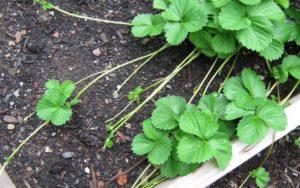
Gigantella is a frost-hardy plant, so in temperate climates, the bushes can easily survive temperatures down to -20°C. Autumn planting occurs in mid-September to allow the seedlings time to establish roots and prepare for winter. In this case, the ripe berries are harvested the following summer.
Spring planting takes place towards the end of spring, when the average daily temperature approaches 15 degrees Celsius. The first harvest is harvested the following year.
- Before planting in open ground, the rhizomes of seedlings are treated with growth stimulants and antifungal agents.
- On the prepared area, dig holes 20-30 cm deep.
- The distance between the holes is 50 cm, between the beds 70-80 cm.
- A mound of fertile soil is poured into the bottom of the hole.
- The seedling is placed on the top of the mound, the roots are evenly distributed and covered with soil.
- The soil under the bush is lightly compacted and watered.
Important! This variety produces large bushes and heavy ripening fruits. Hilling is necessary to support the plants.
Specifics of care
Proper and timely care of fruit crops will ensure stable growth and a high-quality harvest.
Watering
Water the berry bushes in the morning or after sunset with warm, settled water.
During dry weather, water once every 3-5 days or as the soil dries out. The Gigantella garden strawberry variety reacts equally negatively to both overwatering and underwatering.
At the beginning of the growing season, the bushes are watered thoroughly; after flowering begins, only the soil beneath the plant is irrigated. Between 3 and 5 liters of water are poured under each bush.
Loosening
To enrich the rhizomes with oxygen and nutrients, periodically loosen the soil in strawberry beds. It's best to combine this work with watering the fruit crop.
Pest and disease control
With the onset of spring, garden strawberries are given preventative protection against fungal infections and pests.
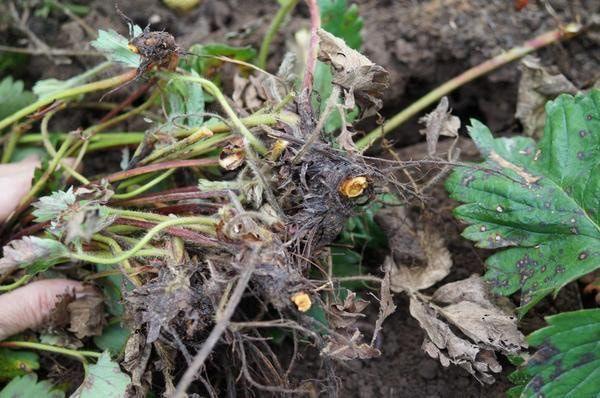
To prevent the spread of powdery mildew and gray mold, I treat the bushes with copper-based fungicides. The plant is also often affected by chlorosis. In this case, iron-based products are used.
To prevent pests, beds and bushes are treated with insecticides, and garlic or calendula are planted between the berry rows. Most pests dislike the smell of these plants, so strawberries grown in this manner will be well protected.
Mulching
Mulching the soil in garden beds prevents weeds from spreading and the soil from drying out too quickly. Mulching is done immediately after watering, using sawdust, straw, or dry leaves.
Before the onset of cold weather, the beds are mulched with humus and spruce branches.
Fertilizers
A productive variety requires additional nutrition and fertilizing. Gigantella strawberries are fertilized with organic and mineral fertilizers several times throughout the growing season.
- At the beginning of spring, the bushes are fed with urea.
- Before entering the flowering phase, strawberries benefit from mineral substances.
- After harvesting, plants are fed with organic and mineral fertilizers.
Take a look Also

During the fertilizing process, soil loosening and mulching are carried out so that the roots of the garden crop receive nutrients more quickly.
How to propagate strawberries
Typically, this tasty and healthy berry is propagated both by seed and vegetatively.
Seeds
When propagated by seed, the hybrid strawberry Gigantella loses all the varietal characteristics of the parent plant. Therefore, seed propagation of this fruit variety is not suitable.
With a mustache
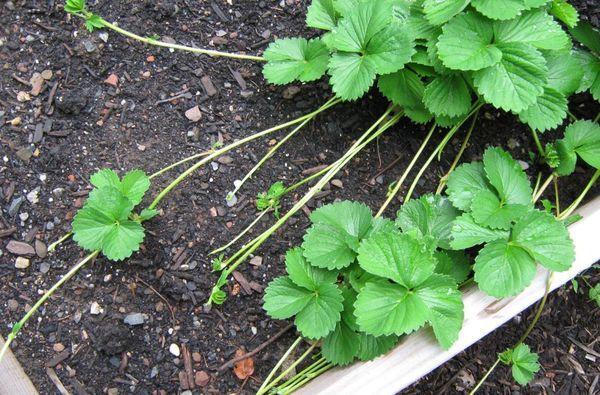
During the vegetative growth period, berry bushes produce multiple lateral shoots, tendrils, with rosettes (stepchildren) at the ends.
Side shoots can quickly root and grow. Therefore, as soon as the rosette takes root in the soil, it is cut from the mother plant and planted in a separate bed.
By dividing the bush
Dividing the bush helps not only to propagate the fruit crop, but also to rejuvenate the plant.
- The strongest and most spreading strawberry bush is selected from the garden bed.
- Carefully dig the plant out of the ground.
- The rhizomes are cleared of soil and divided into several bushes.
- Each seedling should have roots and several leaf blades remaining.
- Young plants are planted in separate beds.
Three- to four-year-old plants are best suited for division. Older plants tend to develop woody rhizomes, which leads to a cessation of fruiting.
Reviews of the variety
Ekaterina Viktorovna, Stavropol
Two years ago, we planted the Gigantella strawberry variety at our dacha. The bushes grow quickly, producing numerous shoots that must be pruned, otherwise the yield drops sharply. The berries ripen large and have a pineapple flavor and aroma. They are moderately juicy, making them excellent for jams and compotes.
Gennady Mikhailovich, St. Petersburg
My grandchildren gave me a packet of Gigantella strawberry seeds. I planted them the year before last, thinking they wouldn't sprout, but I was wrong. The seedlings grew quickly and were moved to their permanent location in the garden in early spring. A year later, I had my first harvest of huge, delicious berries. I harvested almost 3 kg of strawberries from one bush; I'll be propagating this variety.
Victoria Petrovna, Pyatigorsk
I've been growing Gigantella strawberries for a long time. I really like it; it's easy to care for, produces a high yield, and the berries are large and delicious. The only thing I need to watch out for is diseases and pests. The plants have no resistance and are prone to disease. Otherwise, it's an excellent variety.
Related posts:
 Descriptions of the 20 best cherry varieties for the Moscow region, their planting and care
 The best grape varieties for growing in the Urals, planting and care rules in summer
 Description and characteristics of 45 of the best varieties of garden blueberries
 Description of 30 varieties and types of Muscat grapes, planting, cultivation and care
 Description of the Nizina grape variety, planting and care in open ground
 Description and characteristics of the 60 best sea buckthorn varieties, how to choose depending on the region
 Description and characteristics of the Tyutchevka cherry variety, planting and care
 80 Best Eggplant Varieties for Different Regions with Descriptions and Characteristics