
- Benefits of Growing Strawberries in Bags
- Are there any downsides?
- We select the best varieties
- Step-by-step instructions for planting berry crops
- Selecting a container
- Preparing a nutritious soil mixture
- Methods of placing bushes
- Vertical landing
- Horizontal landing
- Dutch method
- How to care for strawberries in bags
- Lighting
- Temperature and humidity
- Watering rules
- Fertilization and pruning
- Protection from diseases and pests
- How to harvest properly
- Common mistakes and how to solve them
- Gardeners' reviews
- Conclusion
Some people have small plots, making it more difficult to grow strawberry plants. In these cases, they resort to growing strawberries in bags, as this planting method helps save space in the garden. Before planting strawberries in bags, it's important to familiarize yourself with the key features of this planting and growing method.
Benefits of Growing Strawberries in Bags
This technology has a number of advantages that distinguish it from other methods of growing seedlings. Those who don't want to grow seedlings outdoors or in a greenhouse should familiarize themselves with the benefits of using bags in advance.
These include the following:
- using this technology allows you to pick ripe strawberries 5-7 times per season;
- Plants planted in bags are less likely to get sick and are practically not subject to pest attacks;
- weeds do not grow inside the bags, as they do not have enough space for normal development;
- Growing seedlings in bags saves space in the garden, allowing you to grow other vegetable and garden crops on the plot.
Are there any downsides?
Any technology for growing garden crops has not only advantages, but also disadvantages, which must be familiarized with before planting.
The main disadvantages of using bags when growing strawberry bushes include:
- the need to plant strawberry varieties that can be cultivated throughout the year;
- carrying out manual pollination so that the strawberries begin to bear fruit;
- considerable financial costs for preparing planting material, soil and manufacturing structures for growing;
- careful care of planted plants, without which they will not be able to grow well and bear fruit.
We select the best varieties
Before you begin planting strawberry seedlings, you should familiarize yourself with the varieties that will grow well in bags:
- Marshal. This is a popular strawberry variety, often grown in bags. Ripe Marshal berries are large and sweet with a slight tartness. Among the advantages of these seedlings is their resistance to temperature fluctuations, drought, and common diseases.
- Rina. Characteristic features of this variety include its juicy, large fruits, which are not damaged during transportation. The seedlings are resistant to high temperatures and fungal diseases.
- Gigantella. This variety produces large fruits, weighing up to 100 grams. A single bush can yield 1-2 kilograms.

Step-by-step instructions for planting berry crops
Before planting and growing a garden crop, you need to familiarize yourself with the step-by-step planting instructions.
Selecting a container
First, you need to choose a bag for growing strawberries. Experts recommend choosing bags made of durable polyethylene with a thickness of at least 0.30 millimeters.
You shouldn't use the regular bags that flour and sugar come in, as they are opaque and don't provide the necessary light.
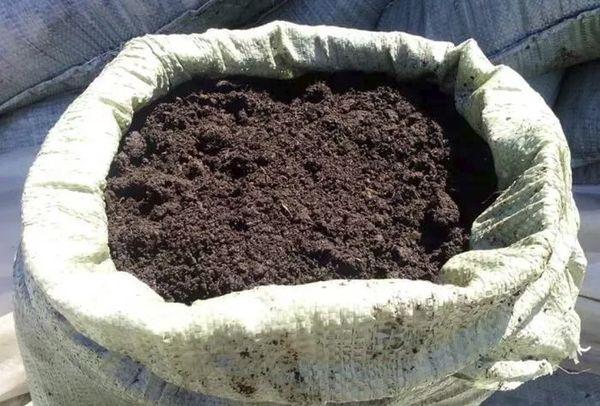
Garden stores offer specially designed bags for planting strawberry plants. They should be about fifteen millimeters in diameter and one and a half meters long. These containers are filled with soil, sealed, and sold.
Preparing a nutritious soil mixture
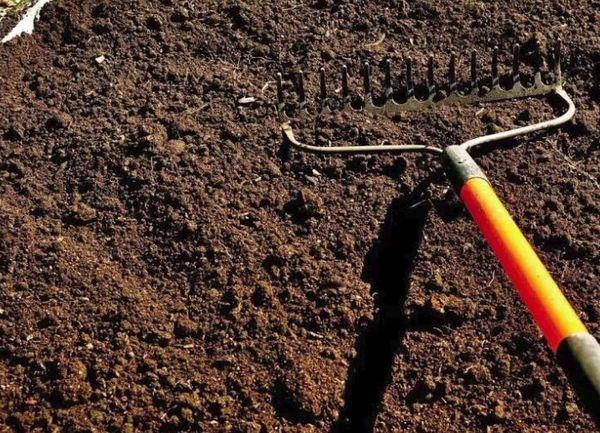
Before planting, it's necessary to prepare the soil mixture in which the strawberry seedlings will grow. This garden crop grows best in light, neutral soils with low acidity. To prepare this soil mixture, add sand, sawdust, and turf to the soil. The listed components must be mixed in equal quantities.
The soil mixture is thoroughly mixed until smooth. To ensure good drainage, expanded clay is added to the bottom of the bag to loosen the soil. Organic and mineral fertilizers can also be added to promote plant growth.
Methods of placing bushes
There are three ways to place bushes that you should familiarize yourself with in advance.
Vertical landing
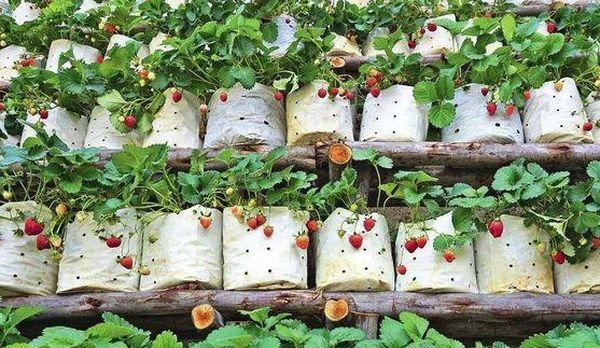
Some gardeners use vertical planting of seedlings in their gardens. This planting method is necessary if the garden is very small.
Instructions for using this placement method include the following steps:
- Preparing a container, which is filled in advance with fertilizers and soil.
- Tie the bag with a rope. Tie it securely, then turn it upright and hang it on the rope. It's recommended to stack the bags in tiers of 2-3.
- Holes 9-10 centimeters wide are made in each bag. These are where the strawberry seedlings will be planted.
- Attaching the lamps. To ensure the seedlings receive sufficient light, light bulbs are installed near them.
Horizontal landing
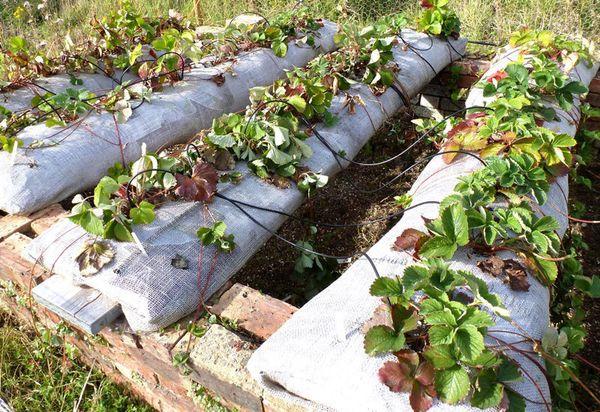
If seedlings will be grown in open ground or in large greenhouse structures, the bags containing the plants are placed horizontally. Horizontal placement of plants is virtually no different from vertical placement.
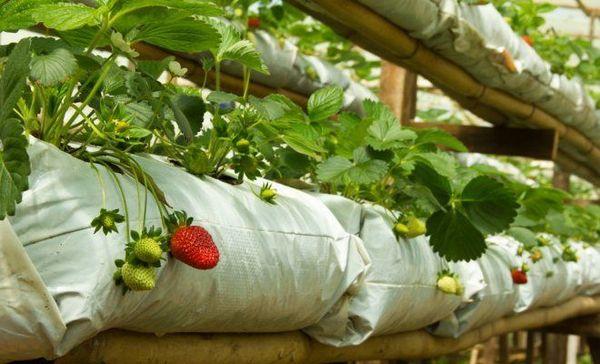
As before, you first need to prepare the bags and fill them with soil and fertilizer. Then, make holes in them and plant the strawberries. After that, lay the bags out in a row on the plot.
Bags of berries can be placed directly on the soil surface or placed on wooden racks.
Dutch method
The Dutch method of growing strawberries involves planting them indoors rather than outdoors. Most often, bags are used for this purpose, which are placed on trays, racks, or other supports. When choosing a location for growing berries, the desired harvest volume is taken into account.
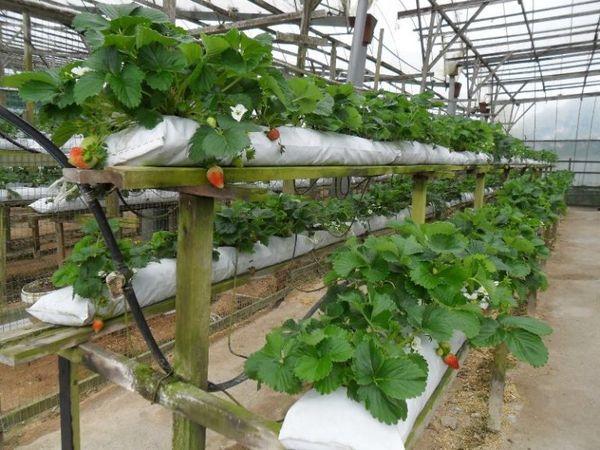
When using this method, it's essential to ensure the seedlings receive a constant supply of fertilizer. Therefore, experts recommend administering fertilizer solutions via drip irrigation.
How to care for strawberries in bags
In order for strawberries planted in bags to bear fruit well, they will need to be properly cared for.
Lighting
To ensure proper ripening of the berries, it's essential to ensure adequate lighting. Therefore, it's essential to set up a lighting system in advance. High-power high-pressure sodium (HPS) bulbs are installed near each bag. Halogen lamps, which can reliably illuminate the planted seedlings, are also suitable. The installed lamps must shine for twelve hours, after which they are turned off.
Temperature and humidity
Optimal humidity and temperature will help ensure consistent berry ripening. Experts recommend maintaining temperatures between 20-25°C (68-77°F). Temperature fluctuations of more than five degrees should be avoided, as this will negatively impact yield.
Humidity should be around 70 percent. To maintain this level, the bags will need to be periodically sprayed with water.
Watering rules
Strawberry plants need to be properly watered to ensure optimal fruit production. Experienced gardeners recommend installing a drip irrigation system. This system delivers water to the plants through a special pipe, with small tubes running from the pipe to the bags.
Fertilization and pruning
To improve the ripening of strawberries, fertilize the seedlings periodically. Fertilizer mixtures should be added during flowering. Potassium fertilizers are recommended for strawberry seedlings, which promote ripening. Chicken manure fertilizers can also be used.
When pruning, dried leaves and stems are removed from the seedlings. Branches that do not produce strawberries are also removed.

Protection from diseases and pests
Strawberries, like many other plants, are susceptible to pests and diseases. Therefore, to preserve the harvest, it is recommended to protect the seedlings. Planted bushes should be periodically sprayed with Bordeaux mixture and a solution made from colloidal sulfur.
How to harvest properly
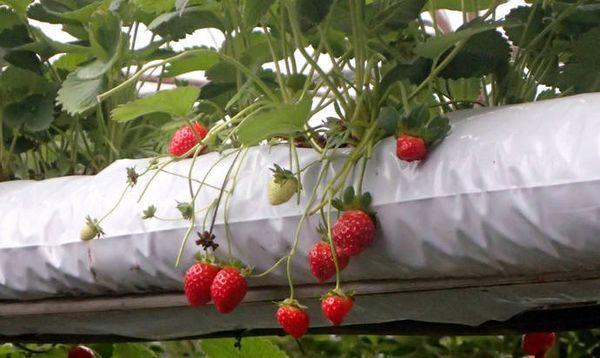
Strawberries are considered ripe when their surface turns completely red and the greenish tips disappear. Harvesting should be done regularly, at least every few days. If the temperature remains high, you'll need to harvest strawberries daily. If you start picking later, the berries will begin to overripe and spoil.
Common mistakes and how to solve them
There are several common mistakes people make when growing strawberries:
- Incorrect variety selection. People often choose varieties that are not suitable for planting in bags, resulting in seedlings that fail to thrive.
- Deep planting. If seedlings are planted too deeply, they will grow poorly. Planting depth should not exceed 5-7 centimeters.
- Insufficient fertilizer. Plants bear fruit poorly due to insufficient fertilizer. Therefore, seedlings are fertilized 3-4 times per season.
Gardeners' reviews
Andrey, 33: "I've tried growing strawberries the traditional way many times, but it never worked. Last year, I planted them in bags and was pleasantly surprised. The new plants produced much better fruit, which allowed me to harvest a large number of berries."
Tatyana, 41: "I've been growing strawberries exclusively in bags for several years now because my garden space is limited. I've never been disappointed with this planting method because I'm able to pick ripe strawberries almost every day.
Conclusion
Some gardeners choose to plant strawberry seedlings in special bags. However, before doing so, it's important to understand the advantages of this growing method, as well as the specifics of its use.
Related posts:
 How to plant grapes step by step, with a description of the process and care
 How to prune grapes step by step for beginners
 How to propagate and grow peas, cultivation technology, and care in open ground
 When and how to prune gooseberries to ensure a good harvest
 How to properly plant peas in a greenhouse and open ground
 Growing and caring for almonds, planting and pruning rules at home
 How to grow a watermelon in a greenhouse in the Moscow region: planting and care guidelines
 Timing and recommendations for the best way to graft grapes at home