
- Peculiarities of growing watermelons in the Moscow region
- The best varieties for a given region
- For open ground
- Sugar Baby
- Maristo F1
- Baraka F1
- Ogonyok
- Erken F1
- Anniversary
- For the greenhouse
- Honey
- Skorik
- Crimson Sweet
- Krimstar F1
- How to grow a plant
- When to plant seedlings
- How to sow seeds
- Soil preparation
- Preparing containers
- Seed preparation
- Planting seeds
- Caring for seedlings
- Transplanting seedlings into the ground
- The intricacies of caring for outdoor crops in the Moscow region
- Loosening and fertilizing
- Watering and shaping
- Specifics of greenhouse care
- Watering and temperature
- Formation
- Pollination and fertilizing
- Diseases and pests
- Diseases
- Anthracnose
- Fusarium
- Root rot
- Powdery mildew
- Pests
- Melon aphid
- Wireworm
- Spider mite
- Sprout fly
- Determining the ripeness of a watermelon
- Harvesting
Gardeners often wonder how to properly grow watermelons in a greenhouse in the Moscow region. To ensure a successful harvest, it's important to select the right variety and plant the seedlings in the soil at the right time. Care and timely fertilization are also crucial.
Peculiarities of growing watermelons in the Moscow region
The Moscow region requires certain specifics when growing watermelons. To ensure a productive harvest, the following guidelines must be met:
- for planting it is necessary to use early and mid-ripening varieties;
- for growing in open areas it is necessary to use seedlings;
- the plant is planted in a greenhouse or under temporary cover;
- To obtain a harvest, it is necessary to apply organic fertilizers;
- The temperature must be maintained at one level.
It is also important to choose the right variety of watermelon.
The best varieties for a given region
In the Moscow region, it is necessary to choose suitable varieties that do not require maintenance.
For open ground
Greenhouse varieties are resistant to temperature fluctuations, but require insulation at night after planting.
Sugar Baby
Watermelon has a sweet flavor and a thin rind. The flesh is juicy and red. The berry is small and has dark stripes. The seeds are small and light in color.
Maristo F1
The berries are oblong, with green stripes on the rind. Watermelons reach a weight of up to 10 kg and ripen 60 days after germination. The flesh is sweet and juicy, and once ripe, the berries have a long shelf life.

Baraka F1
Considered an early variety, it boasts high yields. Its distinctive features include large berries and excellent flavor. The plant is disease-resistant and has dark green skin.
Ogonyok
This variety is very commonly used. It is small in size and has a dark skin. The flesh is sweet and bright red. The seeds are small and black. The berries can weigh up to 3 kg.
Erken F1
An early-ripening berry variety, it ripens 30 days after planting. It's suitable for growing in poor soils and is disease-resistant. Berries weigh up to 7 kg, with thin skin featuring black stripes.

Anniversary
It has an elongated shape and thin skin with green stripes. After planting, a harvest can be obtained in 90 days. The flesh is sweet and sugary, and the seeds are dark.
For the greenhouse
Varieties that do not tolerate low temperatures well are recommended to be grown in greenhouse conditions.
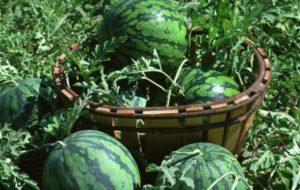
Honey
Watermelon bushes are tall, so they require support. Watermelons are versatile varieties and can be grown both outdoors and indoors. The average fruit weight is 3 to 6 kg. The rind is light green with dark green spots.

Skorik
This is an early-ripening berry. The berries are large, weighing up to 5 kg. The skin is dark green with stripes. The flesh is juicy and sweet.
Crimson Sweet
The crop is disease-resistant, and the harvest can be completed within 75 days of planting. Berries weigh up to 12 kg, depending on growing conditions. The fruit is round, with black stripes on the skin. The flesh is sweet and tolerates low temperatures well.
Krimstar F1
This hybrid is early ripening; the harvest can be picked 50 days after planting. The berries are round, dark green with black stripes. The flesh is scarlet. The seeds are small and black.
How to grow a plant
To get a good harvest, you need to know how to properly grow the crop and the right time to plant seeds. Modern agricultural technology allows you to grow the crop not only in open ground at your dacha, but also in greenhouses.

When to plant seedlings
It's important to remember that seedlings should be planted in the soil 25 days after sowing. Therefore, seeds should be sown in late April to allow the sprouts time to establish. If the variety is early-ripening, seeds should be sown in seedling containers 20 days before planting outdoors.
How to sow seeds
In order to obtain healthy seedlings, it is necessary to sow the planting material correctly.
Soil preparation
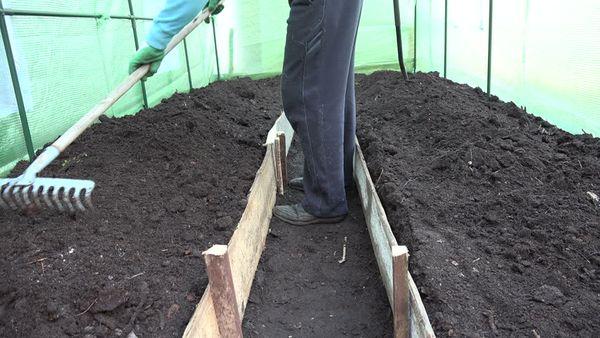
The plant prefers loose, nutrient-rich soil. Prepare a nutrient mixture by mixing the following ingredients:
- 1 part soil;
- 1 part humus or peat;
- 1 part sand.
The nutrient mixture is fertilized with wood ash, 100 grams of ash are added per 1 kg.
Preparing containers
Special peat cups are used that do not require removal during planting; milk cartons or cut-off bottles can also be used, which are cut open during planting.
Seed preparation
Before planting, seeds must be properly treated by following these steps:
- warm up on a radiator for 24 hours;
- place the seeds in a manganese solution for 30 minutes;
- place in the refrigerator for 24 hours;
- Using a flat plate, lay out the planting material and cover it with gauze on top, regularly moisten the gauze until sprouts appear.
After the sprouts appear, the seeds are placed in the soil.
Planting seeds
Watermelon sprouts don't tolerate damage well. Therefore, the growing container should be small. Once the container is prepared, fill it with soil, place the seeds, and water with warm water. Plant 3-4 seeds per container.

Caring for seedlings
Once the first sprouts appear, identify the strongest ones and remove the rest to allow root development. Water the seedlings every 3-4 days. The sprouts should receive sufficient sunlight to prevent yellow spots from forming.
Transplanting seedlings into the ground
After the plant has produced its third leaf, it's time to transplant the seedlings into open ground. Planting should begin after May 15th, when the soil has warmed sufficiently. Seedlings are transplanted into the greenhouse a week earlier.
The intricacies of caring for outdoor crops in the Moscow region
In the Moscow region, watermelons must be cared for properly; otherwise, the seedlings may die.
Loosening and fertilizing
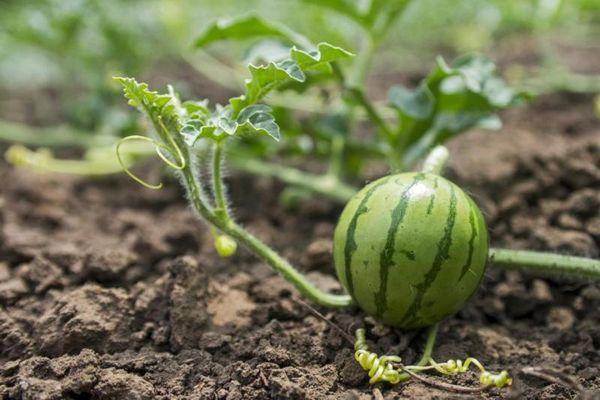
After planting, the soil should be loosened regularly. Weeding should be done as needed to prevent root damage, and weeds should be removed by hand. Fertilizing should be done regularly according to the following schedule:
- After planting in the ground, it is necessary to fertilize with a urea solution;
- after the shoots reach a length of 10-15 cm, a solution of chicken manure is used;
- Before bud formation, nitrogen fertilizer is applied;
- After the ovary has formed, chicken manure and mineral fertilizers are added.
Top dressing is done in the evening so as not to harm the crop.
Watering and shaping
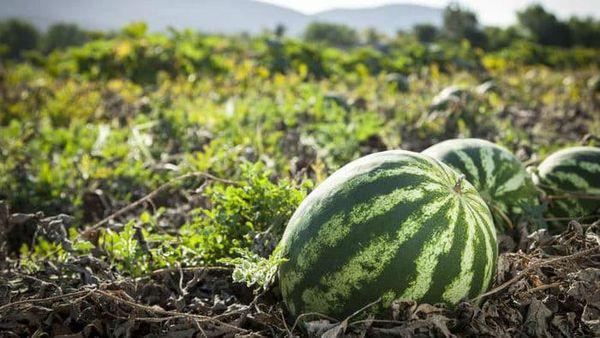
After planting, water the seedlings every three days with warm water. Once buds form, reduce watering to twice a week. After the first shoots appear, pinch the plants. Remove any remaining shoots.
Specifics of greenhouse care
Greenhouse conditions are slightly different from open ground, so it is necessary to carefully monitor the condition of the seedlings and water them regularly.
Watering and temperature
Plants require regular watering; seedlings should be watered every 3-5 days. However, excessive moisture can lead to disease, so the greenhouse should be ventilated regularly. During the daytime, the temperature in the greenhouse should be at least 20 degrees at night and 25 degrees during the day.
Formation
After the main shoot emerges, pinch and shape the bush. Hilling can be used to strengthen the roots. Once small fruits form, tie them up and use netting to place the berries in the netting to reduce the risk of rot.

Important: When planting seedlings, maintain a distance of at least 60 cm between plants. Otherwise, the watermelons will be small.
Pollination and fertilizing
To ensure pollination, bees must have free access to the greenhouse. This is accomplished by opening the greenhouse for several hours during the day. If this is not possible, the inflorescences are pollinated manually.
In greenhouse conditions, the plant requires regular fertilization. Before planting, add humus and peat. After planting, apply mineral fertilizers during watering.
Diseases and pests
Watermelons are disease-resistant, but improper care often causes problems.
Diseases
The following diseases most often appear on melon crops.
Anthracnose
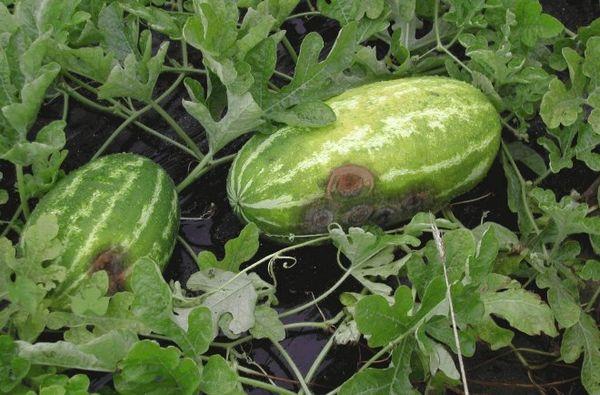
The disease manifests itself as yellow spots that form on leaves and fruits. Leaves and shoots begin to dry out and rot. The disease occurs due to improper seed treatment. To treat the affected bushes, treat them with "Kuproksat."
Fusarium
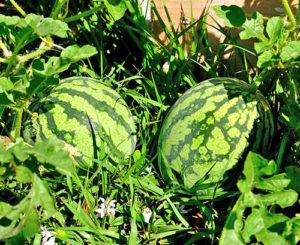
The disease manifests itself as a reddish coating on the roots and shoots. The bush gradually rots and dies completely. Treatment involves boric acid and spraying with wood ash.
Root rot
The disease manifests itself as yellowing leaves, and the roots contain rotten spots. Most often, the plant is weak and fails to form inflorescences. To eliminate the problem, treat the bush and soil with copper sulfate, and reduce watering.
Powdery mildew
A gray coating appears on the leaves, and the shoots become wilted. The fruits rot and fail to develop. Treatment requires spraying with soda ash. In cases of widespread infestation, the bush is removed.
Pests
During the development period, watermelons can be damaged by pests, the untimely elimination of which leads to crop loss.

Melon aphid
These small, black insects typically congregate on the lower leaves, but can infest entire crops, leading to their death. Weeds are the source of infestation. Treatment involves dusting the bushes with wood ash or spraying with Inta-Vir.
Wireworm
A pest in the form of small bugs that attacks the roots, causing the plant to dry out and quickly die. To eliminate the pest, insecticides or special traps are used, such as shallow jars with film and chopped carrots or beets placed in the bottom.
Spider mite
The pest attacks leaves and shoots. A cluster of webs and small black dots can be seen on the undersides of leaves. The plant begins to wilt and quickly dies. Treatment includes Apollo and Actofit.
Important: The mite spreads very quickly to healthy bushes, so if a large infestation is observed, the bush should be removed.
Sprout fly
The insect lays eggs that damage the stems and roots, leading to rot. Affected areas of the bush should be removed and treated with Komandor and Mospilan.

Determining the ripeness of a watermelon
To ensure a watermelon is ripe, carefully inspect the fruit's size. A ripe watermelon should weigh more than 3-4 kg, depending on the variety. The rind should be smooth and uniformly colored. Also, pay attention to the stem; it should be partially or completely dry.
Harvesting
When all growing rules are followed, watermelons ripen evenly. Harvesting should be done carefully, avoiding impacts that can cause rot. Watermelons can be stored for a long time in a ventilated area.
Watermelons are rich in beneficial ingredients and are a favorite summertime food. Properly grown, they will last a long time.
Related posts:
 How to properly plant peas in a greenhouse and open ground
 How to propagate and grow peas, cultivation technology, and care in open ground
 Is it possible to soak treated cucumber seeds before planting and how to do it correctly?
 How to plant grapes step by step, with a description of the process and care
 Description of varieties of sowing peas and cultivation, to which family they belong
 Carrot care guidelines for outdoor cultivation to ensure a good harvest
 How to control onion flies using natural and chemical methods
 Description and characteristics of 45 of the best frost-resistant grape varieties