
Watermelon is a universally beloved sweet, adored by adults and children alike for its ability to quench thirst and flush waste, toxins, and harmful substances from the body. Many beginning gardeners wonder how to determine the ripeness of a watermelon growing in the garden, as unripe fruits picked before they're ready to eat are unfit for consumption.
The main signs of ripening
There are ways to easily determine the ripeness of a watermelon. To do this, you need to follow basic visual indicators:
- crust type;
- color of the spot on the side;
- tail condition;
- the presence of a characteristic sound.
Important! It is recommended to consider all aspects together to most accurately determine the ripeness and sweetness of the berry.
Color and size of the soil spot
A watermelon lying in the garden bed can't turn over on its own, so it remains in contact with the ground at the same spot. This is where a spot appears, which should be yellow or warm orange in a ripe berry. If the spot is larger than 10 cm and unevenly colored, the fruit is not yet ready to eat.
Sound test
Many people rely on sound alone, but not everyone can accurately determine this; it requires a certain amount of skill. If a watermelon makes a ringing sound when tapped, it's ready to eat. A dull sound, however, should be a warning sign, as it indicates that the fruit is unripe.
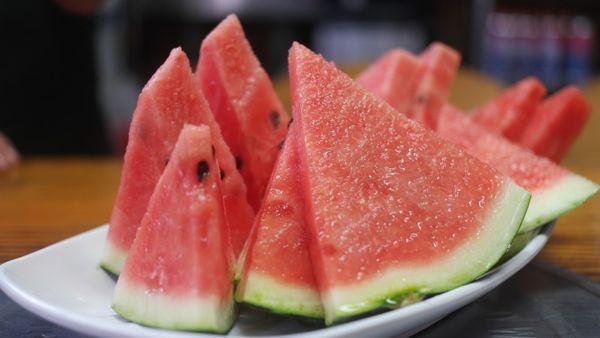
You can determine ripeness by squeezing a watermelon; if it crackles slightly, then this is a signal to harvest a tasty, juicy crop.

Type of crust
Before picking a juicy watermelon from the garden, carefully examine its rind. It's worth noting that once ripe, the sweet berry no longer receives moisture from the plant. This fruit has a firm rind with no visible dents or cracks. The rind should be so firm and hard that it's difficult to scratch with a fingernail. Many people avoid this method, as they don't want to damage the rind and compromise the integrity of the watermelon.
A sign of ripeness is the absence of a waxy coating on the surface of the bark, which shines beautifully in the sun.
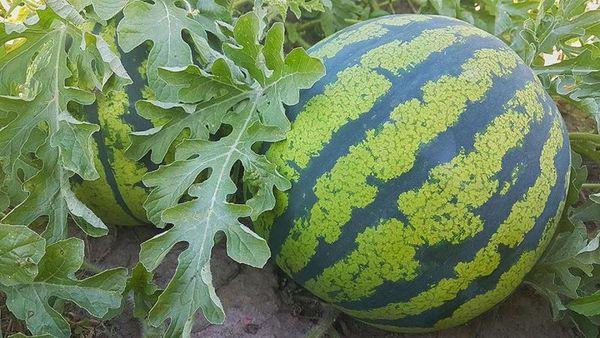
As the watermelon ripens, its skin takes on a glossy sheen and the stripes on it become clearly visible.
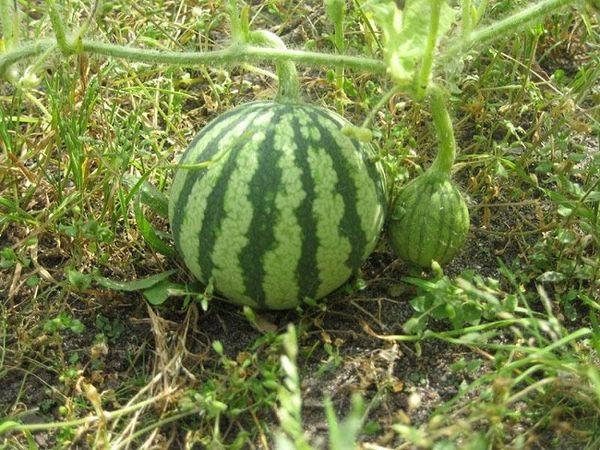
Dryness of the nearest tendril
Before harvesting the fruit, check the condition of its stem. If it's still green, the fruit is not ripe and should be stored in the garden for at least two more weeks. A dry stem is considered a sign to harvest, but it can also be severely dry, in which case the berry is no longer fit for consumption due to overripeness.
The method guarantees full ripeness of the fruit, the dry tendril being the main guideline.
What is the optimal weight?
Thanks to the rapid development of the breeding industry, there are watermelon varieties suited for growing in specific regions and for various purposes. The weight of a given fruit directly depends on its variety, which grows and develops individually. Therefore, the weight of the berries in a garden bed should correspond to the characteristics of the planted variety.
 Important! Fully ripened fruits of popular varieties are elongated, spherical in shape, weighing between 8 and 12 kg.
Requirements for color and pulp structure
The flesh of a ripe fruit should be uniformly bright in color, and the seeds should be uniform in color. Cracks or yellow fibers on the cut are unacceptable. You can determine the nitrate level by examining the flesh. Place a small piece of watermelon in water; if the water becomes cloudy, avoid consumption to avoid potential health risks.
How not to check
Over time, many different methods for recognizing a ripe and sweet watermelon have evolved. Some are effective, but many are flawed, so it's worth studying them carefully and avoiding using them in practice.
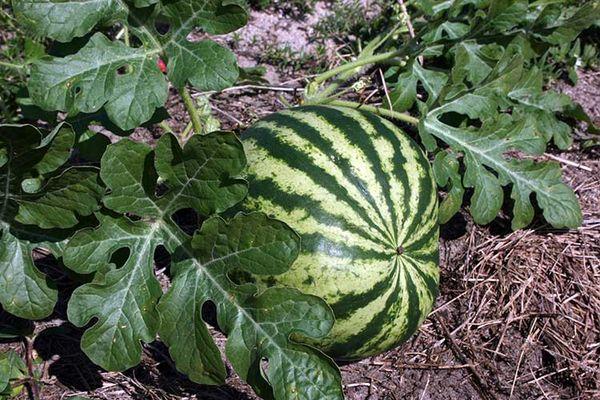
On average
The average weight is a flexible concept and may not be appropriate for every variety. For some varieties, a certain weight is considered the maximum, while for other groups, it's the minimum weight of an unripe fruit.
By the condition of the tail
A dried tendril always indicates ripeness. The stem, which connects the watermelon to the bush, always remains green. It becomes dry when the fruit has long been picked and stored.
The reference point is a completely dry antennae, not a tail.
By size
It's a common misconception that if you check the watermelons daily, you'll notice they're no longer growing or are even slowing down significantly. Then, you can wait 2-3 weeks before harvesting. However, not every gardener will remember the size of each berry, so if you have a small number of watermelons, you can measure them, but if you have a large number, this won't be possible.
By diameter to weight ratio
You can find a special chart for determining ripeness, which lists the ratio of diameter to weight. In most cases, using such a chart is inappropriate, especially for varieties with oblong fruit shapes.
What not to do
When checking the ripeness of a watermelon, it's best not to cut into it. If it turns out to be unripe after this inspection, it shouldn't be left in the garden, otherwise it will rot within 2-3 days. It's also not recommended to pick unripe fruits in the hopes that they will ripen over time. The flesh will certainly turn redder, but it won't be as sweet.
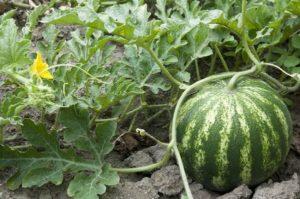
When planting a watermelon in your own garden, it's best to make sure in advance that the weather conditions, soil, and other growing conditions are suitable for the variety you've chosen.
Watermelon is a demanding crop, challenging to grow and care for, but also yields a delicious, high-quality harvest. Determining the ripeness of a sweet, juicy watermelon is easy; all you need to know are a few effective methods. If you carefully study these methods and put them into practice, you'll never have to throw away a green watermelon again.
Related posts:
 Description and characteristics of the Sugar Baby watermelon variety, cultivation
 The health benefits and harms of watermelon for the human body, how to consume it correctly
 Simple, step-by-step recipes for preparing salted watermelons for the winter in jars
 Is it possible to grow a square watermelon at home?
 Is it possible to freeze watermelon in the freezer for the winter and how to do it correctly?
 Description and characteristics of the Karistan F1 watermelon variety, planting and care
 TOP 5 recipes for watermelon and rind compote for the winter at home, storage
 Description and characteristics of the watermelon variety Kholodok, cultivation rules