
- Can you freeze watermelon for the winter?
- Freezing Features
- How to choose the right product for freezing
- Preparing the refrigerator
- Methods for freezing watermelon at home
- Whole in the freezer
- Frozen watermelon pulp in pieces
- With sugar
- Freezing watermelon juice
- Cubes in syrup
- Freezing pulp in fruit juice
- Storing and defrosting watermelon
In late August and September, very large watermelons are sold, and the question of how to freeze them for the winter arises if you can't eat them all in one sitting. It's better to prepare a delicious dessert than to store the leftovers in the refrigerator. There are several ideas, or rather methods, for processing them, all successfully used by thrifty homemakers.
Can you freeze watermelon for the winter?
Naturally, the appearance and taste of frozen watermelon will differ from fresh. The purpose of freezing is to create semi-finished products that can be included in cocktails, desserts, or smoothies. You can quickly make fruit ice cream from frozen watermelon.
Since the berry contains up to 92% liquid, there are no problems with freezing.
When stored in a freezer at -18°C, the product does not lose its beneficial properties for a year.
Sugar can be added to the preserves to enhance the flavor. It won't harm your health, as only a small amount is needed. Frozen watermelon is suitable for dieting; it's low in calories. Drinks made from frozen juice are refreshing and can improve your mood during illness.

Freezing Features
You'll need to stock up on containers for freezing the watermelon. The type you use depends on how you'll be preserving it. Regular bags and special ones designed for freezing any type of food are suitable. You can also use sour cream cups or disposable plastic containers.
Watermelon has a thick rind that will need to be peeled off, and the white layer is also unnecessary. Only the juicy, red flesh should be frozen. The seeds will need to be removed; they shouldn't be frozen.

It is customary to prepare the pulp in the form of:
- cubes;
- balls;
- juice;
- puree.
You might need a blender, knife, and spoon. Silicone baking molds are a good idea. They can be filled with juice or puree. Once frozen, the beautiful flowers, circles, berries, cubes, and animals can be easily removed from the soft molds. They can be stored in a plastic bag.

How to choose the right product for freezing
When buying a watermelon, use traditional methods to determine its ripeness. First, assess the quality of the rind. It should be free of any damage. A yellow spot is present on almost every watermelon; it doesn't indicate poor quality, but its size is worth paying attention to.
A large spot diameter indicates poor weather, a long ripening period, and low sugar content. You can tell if the fruit is ripe by the sound. It should be clear and ringing. A low, dull tone when struck may indicate that the fruit is overripe or not yet ripe. It's best to harvest in late summer or early fall. By this time, late-ripening varieties ripen, and they have higher sugar content.

Preparing the refrigerator
The refrigerator has a blast chiller compartment. The watermelon will freeze faster in it, so empty it before you begin. Set the temperature to the lowest setting. After a few hours, the compartment is ready to receive food. The optimal storage temperature for fruit is -18°C.
Methods for freezing watermelon at home
Recipes vary, but the initial preparation of the watermelon is always the same. First, wash it. Use detergent and a sponge. Be sure to dry the skin thoroughly. Cut the fruit first in half, then cut each half in half again. Remove some of the seeds immediately, while the rest are removed during slicing. Peel the rind completely. Then, choose a freezing method and begin the main work.

Whole in the freezer
Some experimenters have already tried freezing whole watermelons. However, positive reviews of this freezing method are unlikely. Freezing a whole watermelon is definitely not recommended. The reasons are quite clear:
- will take up a lot of space in the camera;
- it will take a long time to freeze;
- When defrosted, it will turn into mush, which will be difficult to find a use for.
Frozen watermelon pulp in pieces
A simple, time-saving freezing option. Wash, peel, and seed the watermelon, then cut it into large chunks, then into smaller pieces. If the watermelon isn't overripe, the flesh will be firm.
It's easy to form neat balls with a teaspoon or tablespoon. For a more original twist, cut some of the pulp into cubes and some into balls. To ensure the slices freeze quickly, place them in the top section of the freezer for several hours.
Before refrigerating, place the watermelon slices on a tray (cutting board) covered with plastic wrap. When arranging, ensure that the pieces do not touch each other. Once the watermelon slices are frozen, transfer them to a prepared container (bag). Package them airtight to prevent odors from penetrating and being absorbed into the flesh.

With sugar
To make watermelon delicious in winter, add a small amount of sugar to the prepared mixture. Bags are suitable for storage, but plastic containers and cups are more convenient for storing and later consumption. Ingredients for freezing:
- sugar - 1 glass;
- watermelon slices (balls) - 500 g.
Place a few tablespoons of granulated sugar in the bottom of the container, then add the watermelon cubes. Sprinkle with sugar. Continue stacking the watermelon in this manner, alternating sugar and cubes. Place the filled container in the freezer compartment.
Freezing watermelon juice
Juicing a watermelon is easy, as the pulp is completely liquid. To speed up the process, puree it with an immersion blender directly in the pan or pour it into the jug of the device. To extract the juice, take cheesecloth, fold it in several layers, and squeeze the juice from the watermelon pulp.
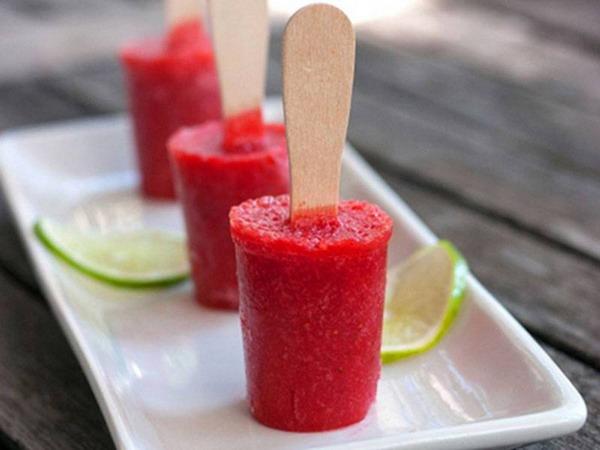
You can pour it into glasses of various sizes or containers. The latter can be plastic rather than disposable. If you line the inside with cling film, the ice cube can be easily removed after freezing and placed in a plastic bag for storage. You can add sugar to the juice to taste.
Cubes in syrup
Many housewives prefer to freeze watermelon in syrup. They believe it absorbs fewer odors and better preserves its natural flavor. To make the syrup, use 1 liter of filtered water and 2 cups of sugar.
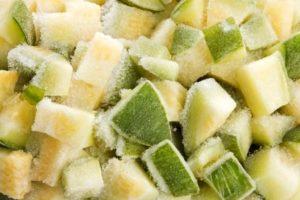
The syrup is boiled until the granulated sugar is completely dissolved. The saucepan is set aside to cool. The liquid should be cold. The watermelon flesh is seeded, cut into pieces, and placed in freezer containers.
Pour the cooled syrup into the containers, but don't fill them all the way to the top. The liquid expands when it freezes, so be sure to take this into account, otherwise the containers will burst. Once filled with watermelon and syrup, close the containers tightly and place them in the freezer.
Freezing pulp in fruit juice
Watermelon slices are typically frozen in apple, pineapple, or orange juice. These fruity flavors pair harmoniously, and will remind you of summer on a cold winter's day. You can store these treats in plastic cups or containers.
The watermelon is cut into pieces with a knife or the pulp is formed into balls with a spoon. The resulting wedges are placed in a prepared container, filled with juice, but not quite to the top, and then placed in the freezer for storage.

Storing and defrosting watermelon
Frozen watermelon slices and juice can be stored in the freezer for at least a year. The temperature should be set at -18°C. If an older refrigerator can't maintain this temperature, the frozen watermelon's shelf life will be reduced.
Before eating, move the frozen watermelon from the freezer to the refrigerator shelf, where it gradually thaws. If you're using ice for drinks, don't defrost the watermelon juice cubes.

Related posts:
 The health benefits and harms of watermelon for the human body, how to consume it correctly
 Description and characteristics of the Sugar Baby watermelon variety, cultivation
 Simple, step-by-step recipes for preparing salted watermelons for the winter in jars
 Is it possible to grow a square watermelon at home?
 Description and characteristics of the Karistan F1 watermelon variety, planting and care
 TOP 5 recipes for watermelon and rind compote for the winter at home, storage
 Description and characteristics of the watermelon variety Kholodok, cultivation rules
 How to determine the ripeness of a watermelon in the garden and the main signs of ripening