
Garlic has numerous beneficial properties. It's added to various dishes to enhance their flavor. This leaves many people wondering whether it's possible to freeze garlic and preserve its beneficial properties for the winter. There are several recipes for preserving it, each requiring specific guidelines. Specifically, it's important to know how to harvest garlic for freezing.
Freezing garlic for the winter
Garlic, when stored properly, retains its properties for several months. For this purpose, it is recommended to select whole bulbs without visible damage. Damage creates an environment conducive to the penetration of pathogenic microorganisms, which can cause the vegetable to spoil faster or lose its flavor.
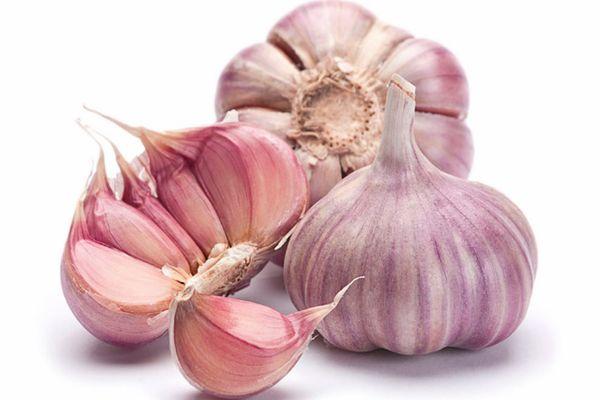
Before freezing a product, you should decide what you'll be storing. The following are used for freezing:
- heads, including crushed ones;
- arrows;
- green.
The stems should be cut off at the early stage of plant growth. At this stage, the stems are tender and succulent, and the seeds have not yet appeared in the bud.
Regardless of the type of product chosen, it is recommended to store it at a stable temperature of -18 degrees Celsius. If the head or stalks thaw, they should be consumed. If refrigerated again, the plant will become inedible.
How to choose and prepare garlic correctly?
There are two types of vegetables: winter and spring. The former is planted in the fall, the latter in the spring. Among the summer varieties, the following are suitable for freezing:
- Abrek;
- Sochi-56;
- Ershovsky;
- Porechye;
- Aleysky.
The following winter varieties are recommended for freezing:
- Gulliver;
- Lyubasha;
- Losevsky;
- Dobrynya;
- Moscow region.
Winter varieties have a more pungent flavor. However, spring garlic retains its flavor better when frozen.
Harvesting time depends on the variety. Spring varieties are ready for storage in mid-August. Yellowed stems and dry, thinned scales indicate they're ready to harvest.
Winter crops are ready for storage in mid-July. It is recommended to harvest this garlic in clear weather.
The degree of garlic preparation is determined by the following characteristics:
- hard heads;
- the presence of three or more layers of husk protecting the cloves;
- the heads are dry and easily separated from each other.
The vegetables are dried in the open sun for 5 days. After this, the roots are trimmed to 3-5 millimeters, and the stems to 10 centimeters.
The next step is to remove any damaged cloves and peel the remaining ones. After that, you need to decide on a freezing method and begin preparing garlic for storage.
Freezing methods
The following methods for freezing garlic are most commonly used:
- entirely;
- in the form of individual heads without husks;
- in the form of garlic paste.
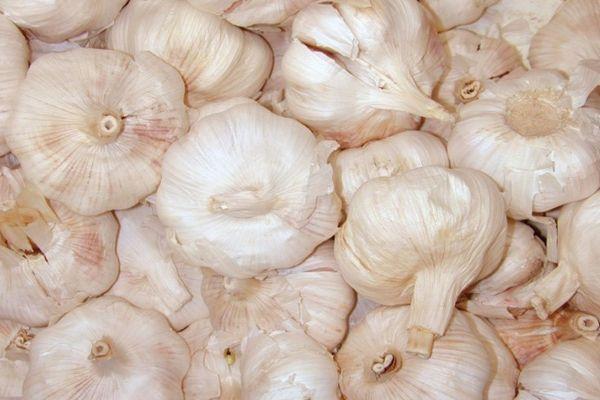
If you want to freeze garlic scapes and greens for home-made preserves, follow the instructions below. Each of the options listed requires different processing techniques.
In its entirety
Freezing garlic whole in the refrigerator is the easiest way to store the vegetable. This method requires a few steps to prepare.
First, remove any traces of dirt under running water. After this, place the peeled heads in a bag or wrap them in cling film. Place the vegetables in the refrigerator in this form.
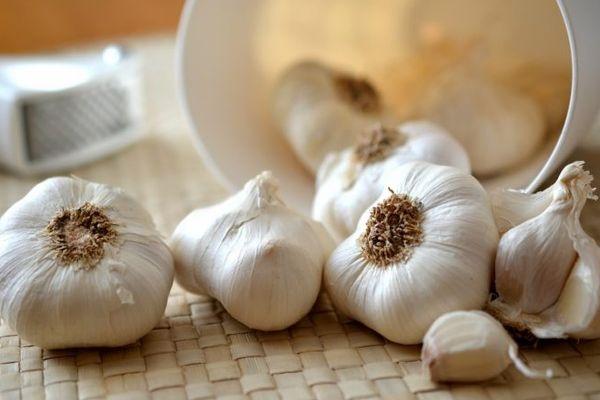
The main drawback of this method is that the heads become soft over time and lose their original shape. Furthermore, the husks are more difficult to remove after refrigeration.
Cleaned cloves
Only unsprouted garlic bulbs should be frozen in the refrigerator. It is also not recommended to use garlic with visible signs of rot.
Before placing the vegetable in the freezer, remove all the cloves. Afterward, peel and rinse under running water to remove any traces of dirt. This will ensure the product is always ready to eat.
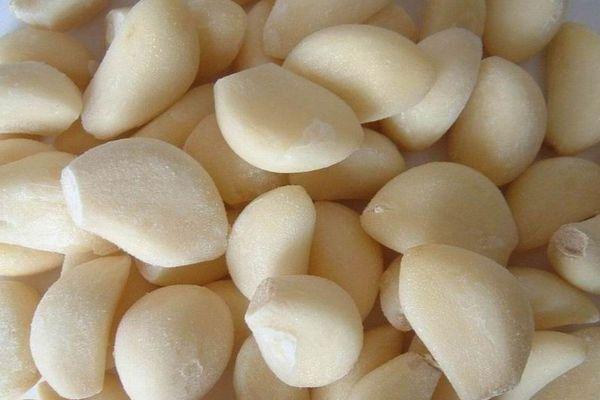
After peeling, the cloves need to be dried. To do this, place the garlic on cheesecloth and cover with a towel. Finally, place the dried cloves on a plate and place it in the freezer.
Provided that the described recommendations are followed, the slices will not stick together during storage.
Garlic, in any form, emits an aroma that is absorbed into both food and the refrigerator's walls. Therefore, after freezing, the cloves should be separated into bags or containers and placed in the freezer.
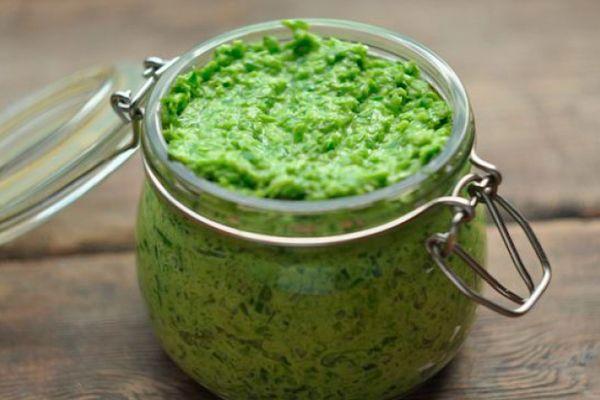
Garlic paste
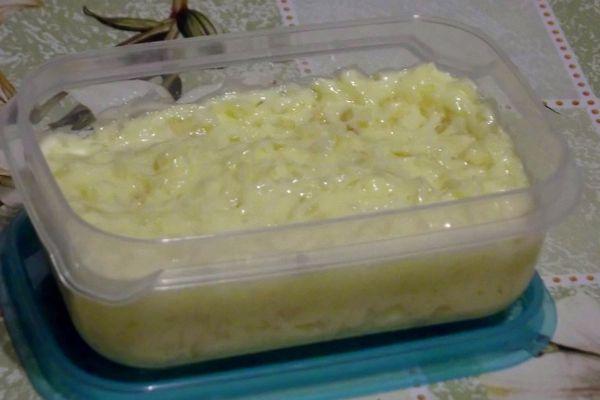
Freezing garlic paste is the ideal way to preserve the vegetable for several months. This method allows you to customize the flavor of the resulting product depending on the type of additives you add.

To make the paste, grind a few cloves in a blender, meat grinder, or grater and mix with parsley, dill, or other ingredients. Sometimes, chicken broth is used instead of the above ingredients.
After mixing the ingredients, pour the paste into ice cube trays or other containers and place in the freezer. Once the product is ready, store the cubes in containers.
Garlic greens
Greens for freezing are prepared according to the following algorithm:
- thoroughly washed and dried;
- cut into several pieces up to four centimeters long;
- blanched in boiling water for 5 minutes;
- placed in cold water for a few minutes.
After cooling to an acceptable temperature, the greens are packaged into bags and placed in the freezer.
Garlic arrows
Only fresh garlic scapes are suitable for freezing. They should also be thoroughly washed and finely chopped. After preparation, the scapes are packaged in bags. It's important to seal the containers securely, otherwise the garlic smell will permeate the refrigerator.


Garlic shoot paste
To make the paste, crush the garlic cloves and scapes, then combine the ingredients in a meat grinder or blender until smooth. Then add olive oil in a 1:2 ratio. Finally, pour the mixture into molds and place in the freezer.
These steps must be performed as quickly as possible. Otherwise, oxidation will begin inside the paste, rendering it unfit for consumption.
After hardening, the mass is placed into containers and put away for storage.
How long can you store frozen garlic?
The shelf life depends on how precisely the product's recipe is followed. Under normal conditions, frozen vegetables remain fit for consumption for 12 months. The shelf life is also affected by the vegetable variety and the presence or absence of defects on the cloves.
How to defrost a product?
It's recommended to defrost garlic gradually. To do this, place the cloves, paste, or scapes in the refrigerator until they thaw. Thawing garlic too quickly can cause it to absorb excess moisture.
Related posts:
 The best varieties and types of early and winter garlic with descriptions and names
 When can spring garlic be harvested in 2025? Harvesting from the garden and storage
 How to properly grow and care for spring garlic in open ground and when to tie it into knots
 How to properly dry winter garlic after digging and where to store it at home
 Garlic cultivation technology in open ground, planting times, and care guidelines for a good harvest
 Garlic harvesting dates in the Urals in 2025, cultivation and care
 When to dig up garlic in the Moscow region in 2025
 Features of planting and caring for family garlic, description of varieties, pest control