
- Spring garlic varieties for the Moscow region
- Moscow
- Degtyarsky
- Gulliver
- The best winter crop varieties for the Moscow region
- A winter garlic variety native to the Moscow region
- Gribovsky 60 and Jubilee varieties
- Winter Komsomolets
- Garlic planting and harvesting dates in the Moscow region
- Winter garlic
- Spring garlic
- Signs of ripening
- Harvesting and storage
- What can be planted after garlic?
- Lunar calendar
There are several criteria for determining the best time to harvest garlic in the Moscow region in 2025. Harvest timing is influenced by the variety chosen, weather conditions, and the lunar calendar. Avoid harvesting too early or too late. There are several signs that will help you know when your garlic bulbs are ripe.
Spring garlic varieties for the Moscow region
Gardeners often choose spring garlic for outdoor cultivation. This variety is distinguished by its small cloves, arranged in several rows within a single head. Another distinctive feature is the absence of a central stem. However, spring garlic has a much longer shelf life and contains more nutrients.
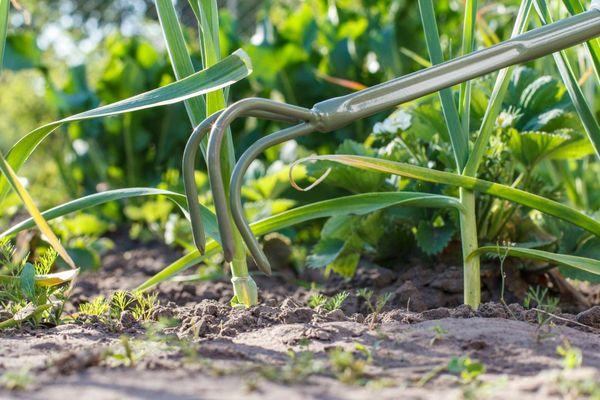
Spring garlic does not tolerate cold well, so it is planted in the spring (early April), when the soil warms up to +7 degrees.
There are three main varieties of spring garlic commonly found in gardens in the Moscow region. Each has its own distinctive characteristics, which, if studied, can help you grow a good harvest.
Moscow
The Moskovsky garlic variety, with a mid-season ripening period, is a spring crop that is not prone to bolting. Harvesting can be done in late August, weather permitting.
The advantages of the chosen variety are:
- consistently high yield;
- long-term storage of harvested crops;
- resistance to gray mold and other diseases.
The bulbs are flattened and rounded with numerous cloves. The cloves have a mildly pungent flavor and a firm texture. Each bulb weighs 15 grams.
To ensure a high-quality harvest, choose a planting site with fertile, soft soil, good aeration, and low acidity. The garlic beds should have unobstructed sunlight.
Degtyarsky
Degtyarsky garlic is a mid-season, spring variety. The head is flattened and round, weighing up to 40 grams. Inside, up to 20 small cloves can form, covered in reddish-white skin. The white, dense flesh has a semi-sharp flavor.
The advantages of this variety include:
- if storage conditions are met, the taste and density are preserved for 10 months;
- the plant does not tend to form shoots;
- exhibits drought resistance;
- provides resistance to many diseases.
In the Moscow region, planting of this variety begins in late April. The soil is thoroughly loosened and fertilized. Harvesting begins in August.
Gulliver
The Gulliver variety is a mid-late variety that produces stems. It is distinguished by the formation of dense, large foliage. The large, dark green leaves reach up to 43 millimeters in width and up to 55 millimeters in length.

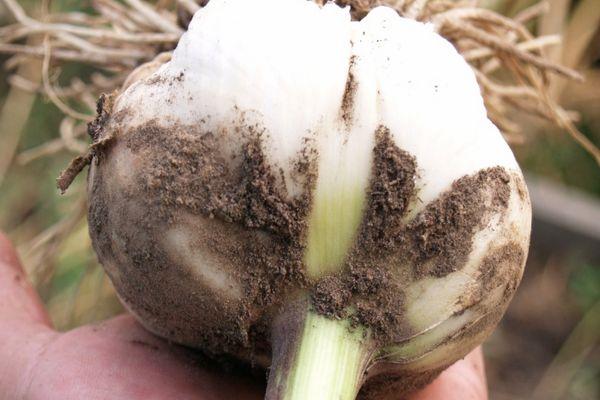
The flat-round heads weigh up to 125 grams. Inside, they contain up to 5 cloves, covered in grayish skin. The creamy-white, dense, and juicy flesh is characterized by a tangy flavor.
Advantages Garlic Gulliver:
- high and high-quality yield;
- large heads;
- long-term storage of crops;
- rarely infected with black rot, fusarium and powdery mildew;
- withstands adverse weather conditions;
- The green part of the plant is also used as food.
The vegetable planting site should have fertile soil and receive unobstructed sunlight. The harvest is harvested in late summer.
The best winter crop varieties for the Moscow region
Winter garlic tolerates cold and frost well, so all varieties are planted in the fall, in mid-October. The key is to plant three weeks before the onset of frost.
A large head of garlic contains many cloves (up to 8-10). The cloves are arranged in a single row around the central stem.
Popular varieties of winter spicy vegetables for the Moscow region are: Gribovsky, Alkor, Spas, Parus, Komsomolets, Lyubasha, Petrovsky, Podmoskovny.
A winter garlic variety native to the Moscow region
This variety belongs to the bolting, mid-season group. It should be planted on the soil surface, 3.5 weeks before the onset of frost. The bolting stalk grows to a height of 80 centimeters, from which an inflorescence with up to 140 bulblets matures.
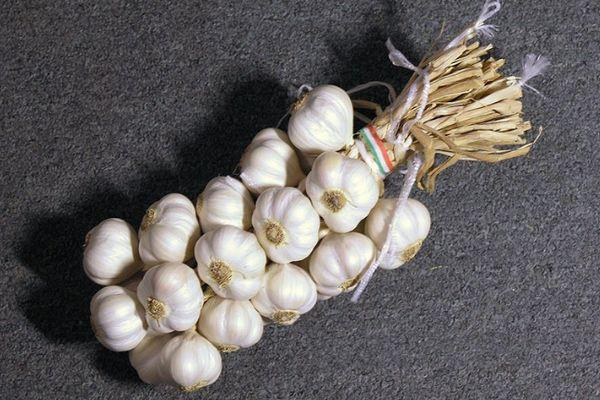
The bulbs are small, flat-round, and covered in white skin with purple speckles. Each bulb produces 6-8 cloves weighing 13 grams. The total weight of a bulb can reach 60 grams. The creamy-white flesh has a pungent flavor and a strong aroma.
Advantages of the Podmoskovny variety:
- high yield;
- cold resistance;
- good resistance to many diseases;
- The harvested crop retains its taste and nutritional qualities for 6-7 months.
This vegetable requires minimal care. The variety thrives on moisture, but avoid overwatering the beds. After moistening the soil, loosen it to increase oxygen access to the root system. Regular weeding and fertilization are essential.
Gribovsky 60 and Jubilee varieties
Gribovsky garlic combines several varieties at onceThe most popular are Gribovsky 60 and Yubileiny. These varieties have a mid-season ripening period and produce stems up to one meter long.
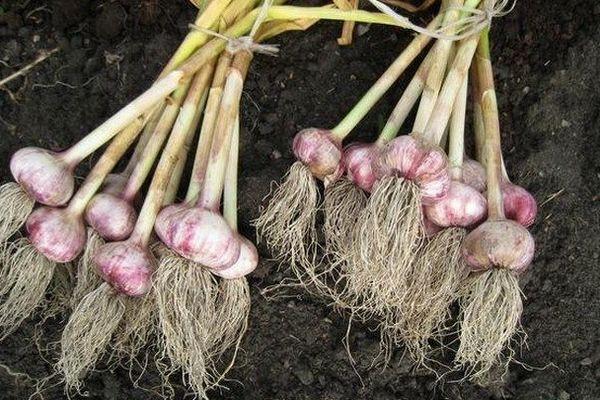
At the end of the growing season, a fairly large, flat-round head forms, weighing up to 62 grams. Inside, there are up to 9 cloves. The scales are reddish-white. The strong, juicy cloves have a pungent flavor.
The advantages of the varieties include the following qualities:
- good tolerance to cold and drought;
- resistance to many infections;
- the varieties are characterized by a long shelf life;
- The yield is high.
These vegetable varieties do not tolerate heavy soil well and require sufficient light and moisture.
Winter Komsomolets
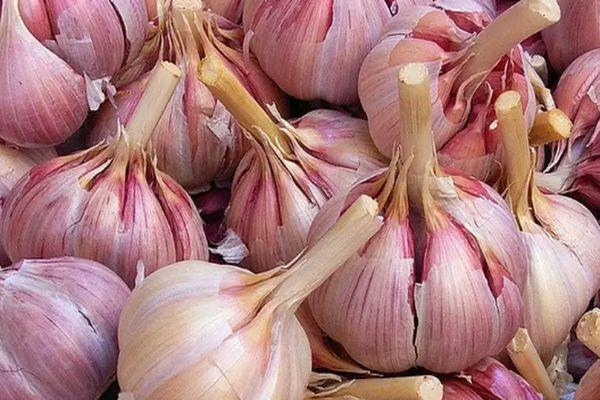
One of the fruitful varieties garlic is KomsomoletsCharacterized by medium ripening, the fruit is prone to bolting. The flat-round, purple-white bulb is large and dense, weighing up to 35 grams. It can contain up to 12 cloves with a tangy flavor.
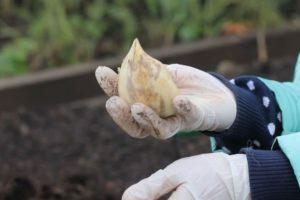
For planting, choose a site that is not shaded and receives ample sunlight. Tomatoes, cucumbers, and zucchini are considered good predecessors. A high-quality harvest is obtained in sandy loam and loamy soils.
Garlic planting and harvesting dates in the Moscow region
The timing of garlic planting in the Moscow region largely depends on weather conditions and the variety chosen.
- Spring garlic doesn't tolerate dry air and soil well, so it's best planted in early spring. Planting begins immediately after the snow melts, when the soil warms to 6°C (41°F). In the Moscow region, this coincides with late April. Even if frost returns unexpectedly, don't worry, as the vegetable is frost-resistant.
- Planting winter garlic begins in the fall.In the Moscow region, the best time to plant is early October. If you plant the vegetable earlier, the seedlings will have time to sprout before frost kills them.
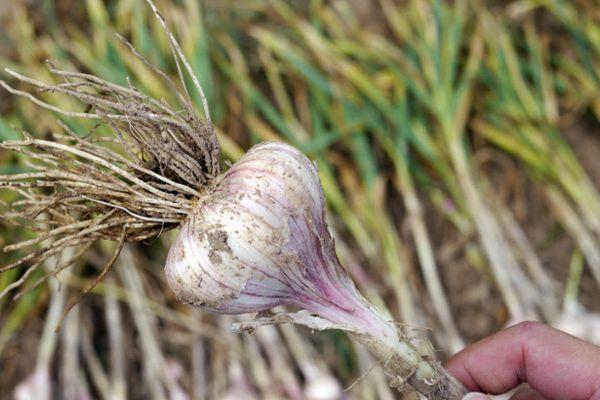
The exact harvest date depends on many factors. If an early variety is planted, ripening occurs three months after the first shoots appear. More precisely, the ripeness of the heads can be judged by their external characteristics.
Winter garlic
Winter garlic is planted in the first ten days of October. Sandy and loamy soils are suitable for planting. The area is dug and fertilized. After the onset of frost, mulching is recommended.
This winter crop tolerates cold well. In the spring, when the snow melts, remove the mulch layer. The shoots will appear in July. It's best to cut them off to ensure all the nutrients are absorbed into the bulb.
Once it's time to harvest the vegetables (around mid-August), it's recommended to loosen the soil for a couple of days. It's best to dig with a pitchfork in dry weather. Allow the harvested vegetables to dry for a few days right in the garden bed.
Spring garlic
Spring crop planting begins in late April. It's best to choose a site with fertile, light soil. Ideally, loamy or sandy loam soils with low acidity are suitable. Fertilizer is added during autumn tillage.
It is better to plant in a plot where a harvest of zucchini, cucumbers, squash, grains, legumes, and herbs was previously collected.
Caring for the crop involves constant loosening and weeding of the soil. At the beginning of growth, the vegetable crop requires abundant and frequent watering. Fertilizing is carried out three times.
The harvest date is influenced by soil composition, weather, and the characteristics of the variety. In most cases, harvesting begins in the second half of August.
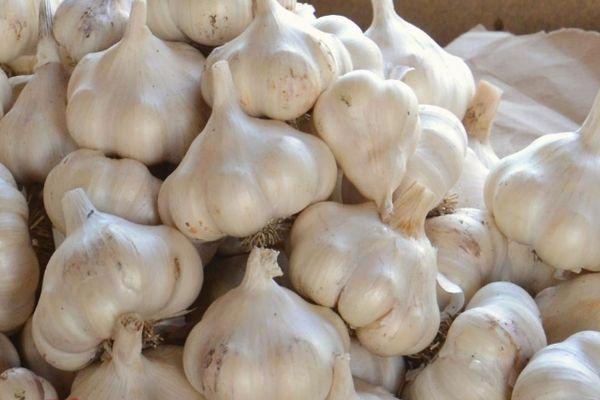
Stop watering and fertilizing 20 days before harvest. It's best to dig the crop with a pitchfork in dry weather. It's recommended to let the vegetables dry in the garden bed with their leaves for the first few days.
Signs of ripening
The main signs of ripening of a garlic head are:
- the lower leaves dry out, the upper ones begin to turn yellow;
- the leaves begin to fall over (you shouldn’t wait until they turn completely yellow);
- on the arrow the seed box begins to crack;
- the bulb should feel firm to the touch;
- the head is covered with a thin film and rustles.

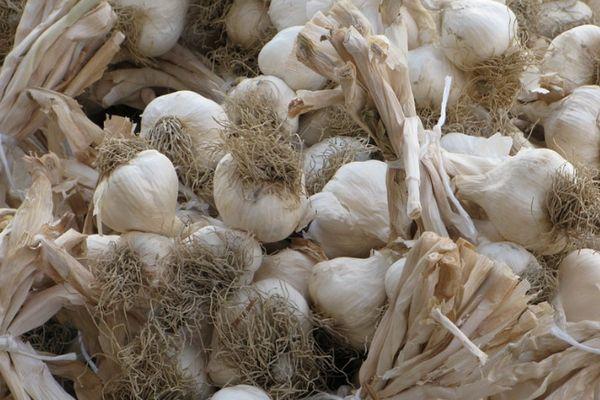
If you harvest the garlic too early, the cloves will remain soft, not juicy, and will lack their characteristic aroma. Avoid over-exposing the garlic in the garden. This will cause the bulbs to root further and become denser. Harvests that are not harvested on time do not store well and spoil quickly.
Harvesting and storage
Harvesting is best done in dry, sunny weather. Garlic should be harvested correctly:
- 20 days before harvesting, watering is stopped;
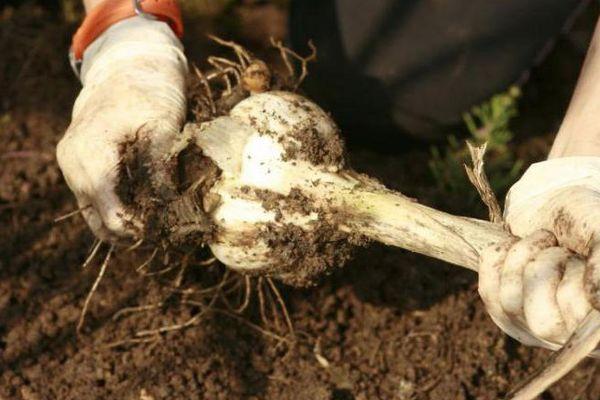
- You shouldn't drag the bush by hand, it's better to dig it up with a pitchfork;
- shake off any stuck soil from each bulb;
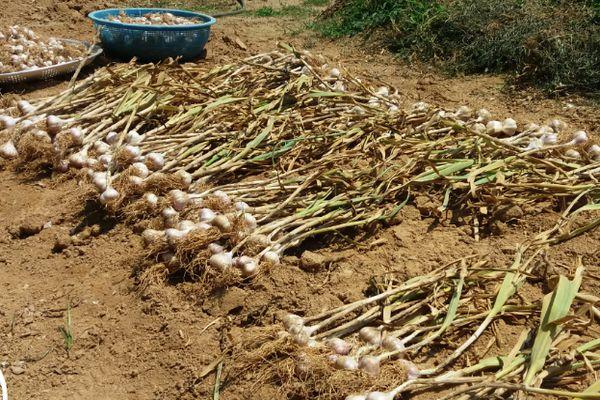
- If there is no rain, then the harvest is left to dry in the sun for several days along with the tops;
- As soon as the garlic dries, the tops are cut off, leaving a 2-3 mm stump.
Garlic should be stored in a dark, cool, well-ventilated area. Winter garlic should be stored at a temperature of 3 to 4 degrees Celsius, with a humidity of 85%. Spring garlic also stores well at a temperature of 16 degrees Celsius.
There are many options for storing garlic. You can braid the remaining tops or simply gather several heads into a bundle and hang them on a rope. Boxes and nets can be used as storage containers.
What can be planted after garlic?
After spring garlic, the following year you can plant cucumbers, tomatoes, strawberries, potatoes, beets, and legumes.
After winter garlic varieties, it is recommended to plant grain and legume crops, mustard, herbs, and spinach.
Lunar calendar
The phases of the moon are believed to influence the quality of harvests intended for storage. Many gardeners perform all gardening according to the dates recommended by the lunar calendar.
In 2025, the most favorable days for harvesting garlic are considered to be:
- in July, favorable days are the 6th-8th, 15th-16th, 19th-20th, 23rd-24th;
- In August, harvesting work can be carried out on the 1st-3rd, 11th-12th, 15th-16th, 29th-30th.
Twenty-five days before the expected harvest, it is recommended to remove the soil from the bulbs. This will allow light and heat to freely reach the underground portions, accelerating ripening. The stalks are removed to ensure the bulbs receive the maximum amount of nutrients.
Related posts:
 The best varieties and types of early and winter garlic with descriptions and names
 When can spring garlic be harvested in 2025? Harvesting from the garden and storage
 Garlic harvesting dates in the Urals in 2025, cultivation and care
 When to harvest winter garlic in Siberia, planting and storage times, varieties
 How to properly grow and care for spring garlic in open ground and when to tie it into knots
 How to properly dry winter garlic after digging and where to store it at home
 Description and cultivation of single-clove garlic, planting and care rules
 How to properly plant garlic outdoors and prepare the soil