
- Botanical characteristics and history of garlic breeding
- Description and characteristics of the Komsomolets variety
- Productivity
- Resistance to diseases and pests
- Advantages and disadvantages
- Necessary conditions for growing the crop
- What should the soil be like?
- Optimal temperature and humidity
- Planting and caring for bulbous plants
- Planting dates
- Selecting a site
- Preparation of planting material and site
- Garlic planting patterns and technology
- Watering and fertilizing
- Loosening and mulching the soil
- The nuances of harvesting
- Storage
- Prevention of decay and damage by pests and diseases
Gardeners and vegetable growers first became familiar with the Komsomolets garlic variety in the mid-1970s. Scientists and plant breeders at the Voronezh Institute developed and registered the new vegetable variety. The hybrid garlic variety was created for cultivation in regions with harsh climates, specifically as a frost-resistant vegetable crop. Today, Komsomolets garlic is grown in various latitudes, both on commercial farmland and by gardeners and vegetable growers.
Botanical characteristics and history of garlic breeding
The thick, herbaceous stem grows up to 40 cm. The leaves, bright green in shades, are succulent in young plants, with a distinctive, pungent flavor, and covered with a thin, waxy coating. During the growing season, the winter garlic plant produces a stalk with an inflorescence up to 12 cm tall. The inflorescence produces seeds in the form of small, airy bulbs, which are valuable seed material and are used for propagating the vegetable crop.
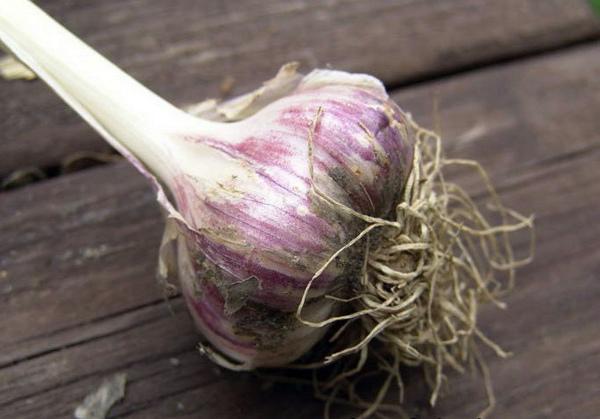
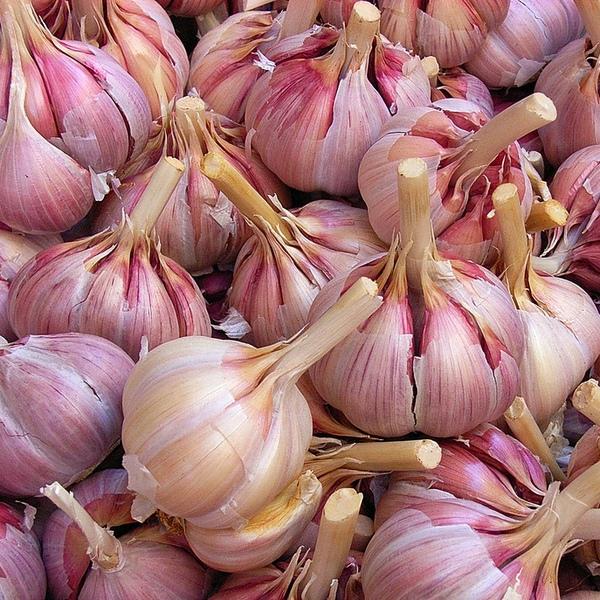
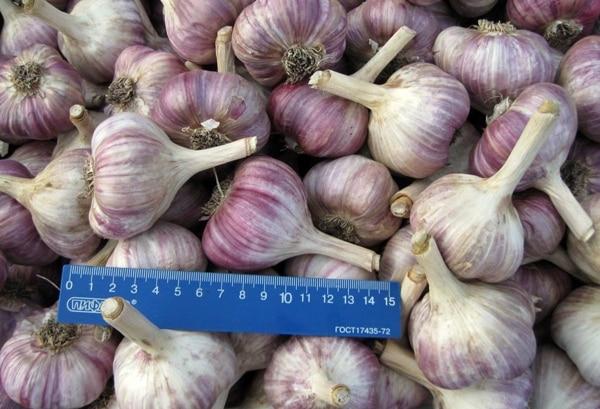
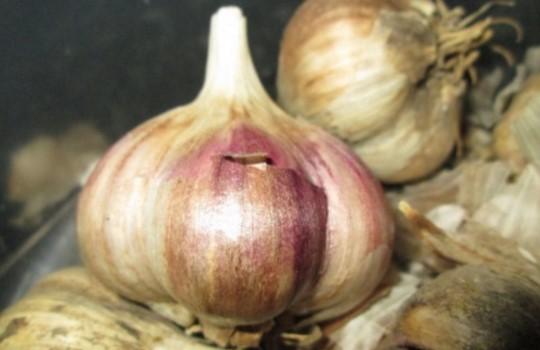
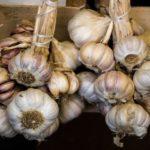
The most valuable part of the vegetable is the root. This is where the garlic bulbs with their numerous cloves form and mature. The Komsomolets variety produces large, round, white bulbs. The cloves have thin, purple skins. The cloves are elongated and sharp, with a sharp, garlicky flavor. Each bulb contains 7 to 11 cloves.
Important! The yield and bulb size of ripe vegetables depend on the planting pattern and soil fertility.
Description and characteristics of the Komsomolets variety
The main goal of farmers and gardeners is to produce a high-quality and abundant vegetable harvest. Although Komsomolets garlic is an easy-to-grow variety, following proper agricultural practices is essential for its growth and ripening.
Productivity
Since the vegetable crop is planted outdoors in the fall, ripening dates are calculated from the first shoots appearing in the spring. The plant is considered mid-season, with the heads ripening after 120-125 days of the growing season. In warmer southern climates, ripening occurs 2-3 weeks earlier. Up to 1.5 kg of the vegetable crop can be harvested from one square meter of garden bed.
Resistance to diseases and pests
Garlic has a natural immunity to various viral and fungal diseases, protecting nearby crops from infection. However, in rare cases, if care and planting guidelines are not followed, the vegetable crop is susceptible to pests and diseases.
- If the plant is affected by aphids, use a soap solution for spraying.
- Nematodes cause serious damage to plants in a short period of time. The root system begins to rot, and the foliage curls and dries up. The appearance of this pest is a consequence of improper planting and inadequate care.
When infected with rust or powdery mildew, plants are sprayed with professional preparations.
Important! When planting vegetables in open ground, it is necessary to disinfect the planting material.
Advantages and disadvantages
Hybrid vegetable varieties boast improved and more resilient characteristics. However, even they have their own varietal advantages and disadvantages.
Komsomolets advantages:
- The crop is grown in any climatic conditions, easily tolerates frost and
- spring frosts.
- Varietal protection against fungal and viral diseases.
- With proper care, Komsomolets garlic shows high yields.
Flaws:
- The variety is sensitive to soil composition. In soils lacking nutrients, the vegetable crop grows and bears fruit poorly.
- Rapid flower stalk formation. During flowering, the underground part of the plant ceases to develop.
 Note! If you leave a few inflorescences for seed production and remove the remaining stems, fruit development will not stop.
Necessary conditions for growing the crop
Vegetable crops will yield high-quality harvests only if planting conditions are met and care is provided in a timely manner.
What should the soil be like?
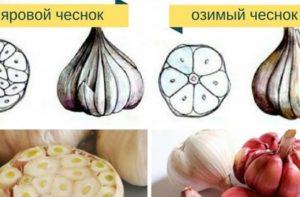
Komsomolets garlic is demanding of soil composition. This vegetable crop grows and produces fruit faster in loose, fertile soils. Heavy, clayey soils are amended with sand and peat.
Optimal temperature and humidity
The variety is resistant to temperature fluctuations. If groundwater is close to the site, the beds where the vegetables are to be planted should be raised 15-20 cm above the soil level. The plant does not tolerate high humidity and becomes susceptible to disease and death.
Planting and caring for bulbous plants
Komsomolets is a winter variety of the crop, so the main planting activities are carried out in the autumn.
Planting dates
Planting garlic outdoors depends on the climate of the area where the crop will be grown. Planting begins in the fall, 2-3 weeks before the first frost. In northern latitudes, planting begins in September, while in southern regions, it begins in mid- to late October.
Selecting a site
Choose a dry, level, well-lit area for the beds. Insufficient sunlight will result in a small harvest. Insufficient light also negatively impacts the development of the vegetable crop's flavor.
Preparation of planting material and site
The key to a good harvest is high-quality planting material. The prepared seeds are sorted and inspected for damage, mold, and fungal growth. If any unknown spots or growths are found on the cloves, the material is sifted out and discarded.
Before planting in open ground, the selected seeds are treated with a manganese solution or special antibacterial agents. The soil in the beds is thoroughly dug and mixed with humus and fertilizer.
Important! Follow crop rotation rules. Cucumbers, carrots, and greens can precede garlic. It is not recommended to plant vegetables after garlic and onions.
Garlic planting patterns and technology
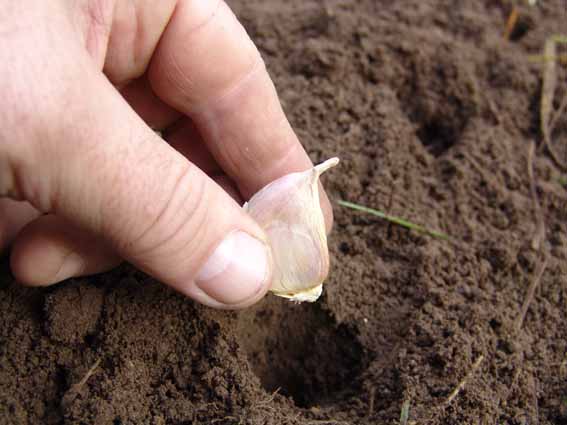
Dig holes or form rows with furrows in the beds. Leave a distance of 10-15 cm between planted cloves, and 30-35 cm between rows. The depth of planting depends on the size of the seeds. Small cloves are planted 2-3 cm deep, while larger seeds are planted 4-6 cm deep.
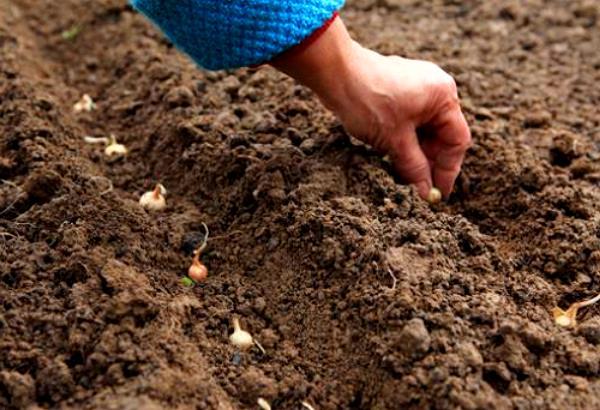
If using aerial bulblets as planting material, space the bulbs 6 to 9 cm apart. Plant the bulbs 2 to 3 cm below the soil surface. Seeds planted in open ground are covered with soil and compacted.
Watering and fertilizing
Irrigation is carried out as needed; garlic dislikes over-watered soil. During drought, the beds are watered once a week. Irrigation is stopped 2-3 weeks before harvest. Garlic thrives in fertile soil and receives fertilizer. Fertilize garlic several times during the growing season, combining plant feeding with irrigation. Organic and mineral fertilizers are suitable for this vegetable crop.
 Important! Excess nitrogen in the soil will encourage the development of the above-ground parts of plants, but will inhibit fruit formation.
Loosening and mulching the soil
Soil loosening is done in conjunction with watering the beds. Loosening helps control weeds, enriches the rhizomes with oxygen, and retains the soil moisture necessary for fruit development. Mulching the beds is timed to coincide with planting. The planted beds are covered with sawdust and peat. This procedure protects the seeds from freezing and preserves the necessary moisture and nutrients in the soil.
The nuances of harvesting
Vegetable harvesting begins based on the climatic characteristics of the region.
Garlic harvesting begins under the following conditions:
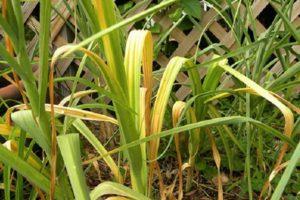
- The green leaves of the plant turn yellow and dry out.
- The base of the tops thinned out and they lay down on the bed.
- The skin of the fruit is transparent.
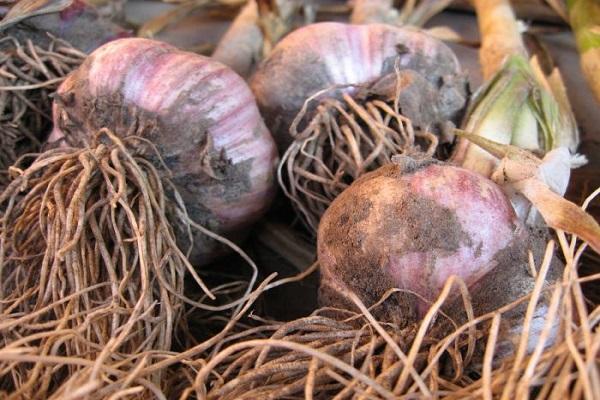 Important! Overripe vegetables will fall apart and dry out. Unripe garlic bulbs will rot during storage.
The harvest is done with a shovel. The carefully dug fruits are cleaned of soil and dried under a canopy or in a ventilated area. The dried vegetables are trimmed of their tops, then placed in prepared containers and stored.
Storage
Winter varieties of the crop are stored for no more than 3-4 months in cool, dark places. Dried and rotten heads are removed and discarded.
Prevention of decay and damage by pests and diseases
During storage, garlic is ventilated and sorted. The storage area is well-ventilated and dry. If storage conditions are not met, Komsomolets garlic will lose its marketable appearance and flavor.
Related posts:
 The best varieties and types of early and winter garlic with descriptions and names
 How to properly grow and care for spring garlic in open ground and when to tie it into knots
 Description and cultivation of single-clove garlic, planting and care rules
 Description and yield of the Lyubasha garlic variety, planting and care
 When can spring garlic be harvested in 2025? Harvesting from the garden and storage
 Garlic cultivation technology in open ground, planting times, and care guidelines for a good harvest
 Garlic harvesting dates in the Urals in 2025, cultivation and care
 How to properly dry winter garlic after digging and where to store it at home