
Gardeners often worry about why the green leaves of their garlic are turning yellow. Growing a crop is labor-intensive, requiring time and effort. It's frustrating when, after watering and tending to it, most of the harvest is lost. To protect your garlic crops from damage, it's important to know some helpful tips and always follow them.
Yellowing of garlic is caused by frost.
Before addressing the problem, you need to determine the cause. If the tips of garlic leaves are turning yellow, it could be due to early planting. Timing plays a crucial role in the growth and development of the crop. Farmers who have been growing garlic for several years use what's known as a gardener's calendar.
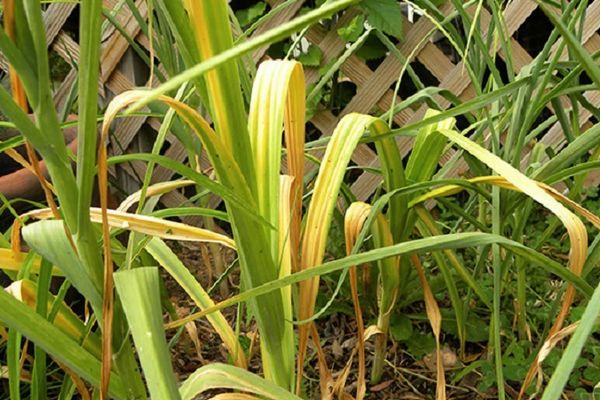
According to the information it contains, residents of cold climates should plant garlic after October 20th. Southerners should do so in mid-November. If the crop is planted too early, green shoots will appear in the garden beds in the fall. Young garlic leaves will be damaged by frost, and they will turn yellow in the spring.
This problem can be avoided by covering the crop with mulch after planting. The layer should be thick enough to provide adequate cover for the seedlings. If for any reason mulching is not possible, spray the plant with a biological product.
Too much or too little moisture
Overly wet soil is the second thing garlic fears after the threat of frost. The plant does not thrive during rainy seasons, especially if water stagnates in the garden bed. Oversaturated soil prevents air from reaching the roots. This leads to oxygen starvation, which affects the appearance of the leaves. The roots die first, followed by the green above-ground portion.
Waterlogging is a common occurrence in spring, when the growing season begins. It's not just the garlic leaves that turn yellow. If you press on the stem, it will easily separate from the bulb. The cloves, when exposed to moisture, also become soggy in the soil.
![When is the best time to plant garlic according to the lunar calendar in [year], favorable days](https://harvesthub.decorexpro.com/wp-content/uploads/2019/03/5939d6e1dececd25e2589bece08e0d33-300x199.jpg)
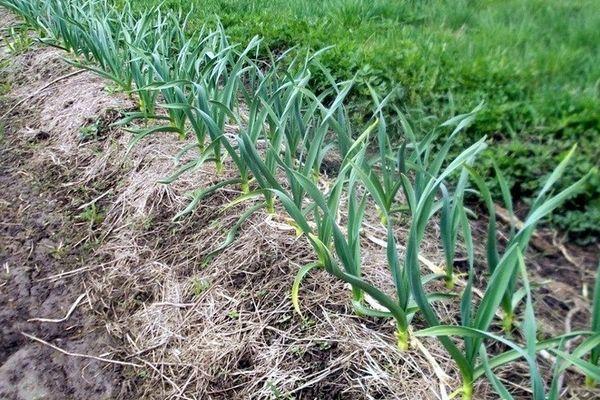
If a gardener knows their plot is constantly waterlogged, they should grow the crop in raised beds. During the rainy season, the plant should not be watered at all. When the soil becomes saturated with water, they should loosen the soil. Where the stem emerges from the soil, they should rake away the soil, creating a small depression. This ensures airflow to the roots.
Both experienced and novice gardeners should remember one important rule: Garlic plants tolerate drought better than wet conditions.
Garlic diseases and pests as a cause of yellowing of the feathers
To determine why garlic is turning yellow in your garden, you need to carefully examine it. But it's not always possible to determine the cause by its appearance. In some cases, it's worth looking inside the stems and even the bulbs. Onion flies or onion stem nematodes are often to blame for the deterioration in appearance.
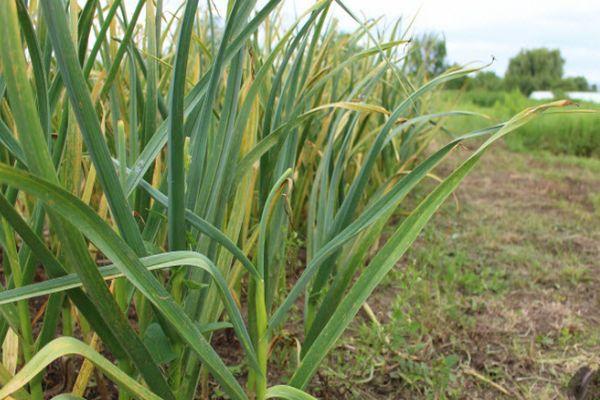
In addition to onion flies, damage can also be caused by rot, mold, and rust. When you dig up a head of garlic, you may notice a characteristic coating and the presence of larvae. A spoiled garlic emits an unpleasant odor. If pests are the cause of the yellowing of the leaves, you should treat the plant with fungicides. However, don't overdo it with spraying; it's better to focus on effective preventative measures.
How to prevent diseases
Gardeners often search for a universal solution to prevent yellowing onion leaves. Online searches offer questions about watering, feeding, and treating the crop. In most cases, achieving positive results is quite easy. It's important to pay close attention to preventative measures and proper planting and care practices.
First of all, it's important to practice crop rotation. The crop can be replanted in the same location only after three years. The pest larvae, spores, and bacteria present in the soil lose their ability to damage and parasitize garlic bulbs and foliage.
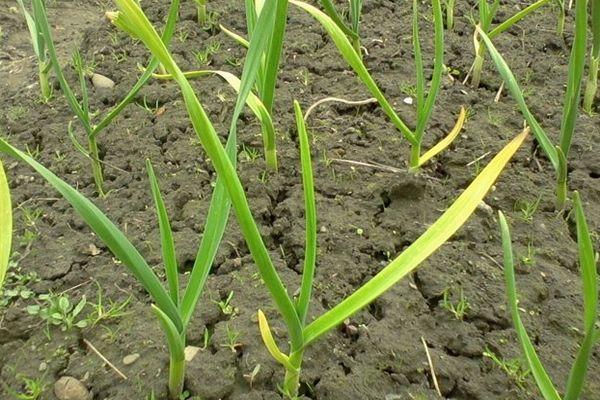
Proper agricultural practices will also help prevent yellowing of leaves:
- Insufficient conditions for the full development of garlic in the garden.
- Early planting of the crop. In this case, it is recommended to plant spring and winter garlic varieties during the specified period. It is important to prevent young shoots from appearing above ground prematurely.
- The soil is too acidic. Neutral soil is preferable. If you need to deacidify the soil, ash, lime, eggshells, dolomite, cement, or chalk will help.

Regardless of the planting location—a greenhouse, a hotbed, or the open ground—check for pests on the planting material. If the cloves are rotted or have suspicious dark spots, it's best to discard them. Sometimes the planting material is perfectly healthy, but the garlic still dies. Few people know this, but manure is the cause. Fresh manure provides the perfect breeding ground for spores.
Mint or calendula can help protect the plant from diseases. The plant's root system contains toxic substances that repel pests.
Lack of nitrogen and other microelements
Yellowing of the leaves may indicate a deficiency of nitrogen and other equally important components. This typically occurs when the air temperature is below acceptable levels or the water is oversaturated. Winter garlic is particularly sensitive to this. Nitrogen deficiency is uncommon in spring varieties.
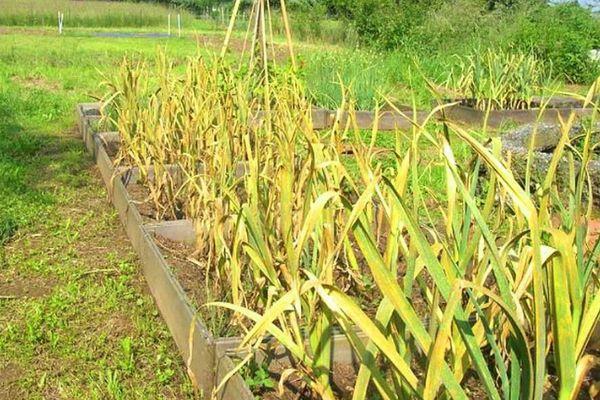
Garlic experiences a severe nitrogen deficiency in the spring when the tops begin to grow. The leaves turn pale green and lose their former appeal. The yellowing from the tips gradually spreads throughout the entire leaf. Both old and young crops turn yellow, which also affects growth. The same symptoms appear in other crops growing on the same plot of land.
If this is the cause of yellowing leaves, the garlic needs to be fertilized with nitrogen. This should only be done once per season. If the soil is poor and there's constant rain, repeat the nitrogen application two weeks after the first. It's also helpful to water the seedlings with a urea solution.
If the soil is moist, dry fertilizing is ideal. Make furrows in the soil to the right or left of the garlic bed and add urea. No more than 2 grams are needed per square meter of plot. If you prefer organic matter, use green manure. It's made from mown grass and wood ash.
Take a look Also

Recipe for spring feeding of garlic
How should garlic be treated in the spring, and how does this process work? Mineral fertilizers are a good way to combat yellowing leaves. Ready-made fertilizers can be purchased at a specialty store. Fertilize as soon as the garlic has had time to root.
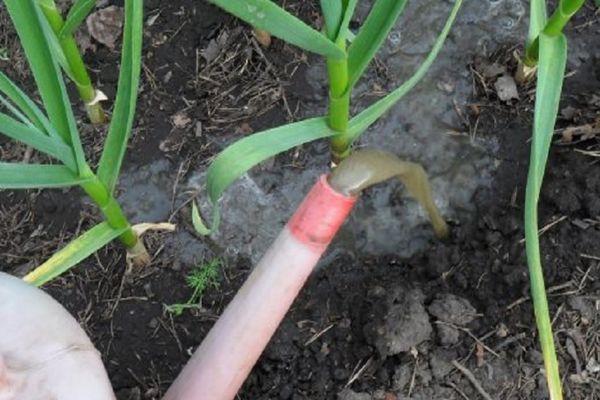
As with urea, the granules are sprinkled into the soil near the garlic bed. At this stage, the entire bed needs to be watered to ensure the nutrients are absorbed. The soil should remain moist for as long as possible. To achieve this, sprinkle compost or cover it with dry soil. This procedure is easy to perform even for beginners in gardening.
Yellowing of garlic leaves is caused by various factors. In any case, treatment should begin with identifying the cause. After that, steps can be taken to eliminate the problem.
Related posts:
 The best varieties and types of early and winter garlic with descriptions and names
 When can spring garlic be harvested in 2025? Harvesting from the garden and storage
 How to properly grow and care for spring garlic in open ground and when to tie it into knots
 Features of planting and caring for family garlic, description of varieties, pest control
 Why is the garlic in my garden growing small and not separating into cloves? What should I do?
 How to properly dry winter garlic after digging and where to store it at home
 Why does garlic turn blue and green when pickled, how to avoid this, and is it safe to eat?
 Description and cultivation of single-clove garlic, planting and care rules
Most likely, the onion is not getting all the necessary micronutrients. Try using the product "BioGrow"It will speed up the seedling recovery process. I've been using it for years now.