
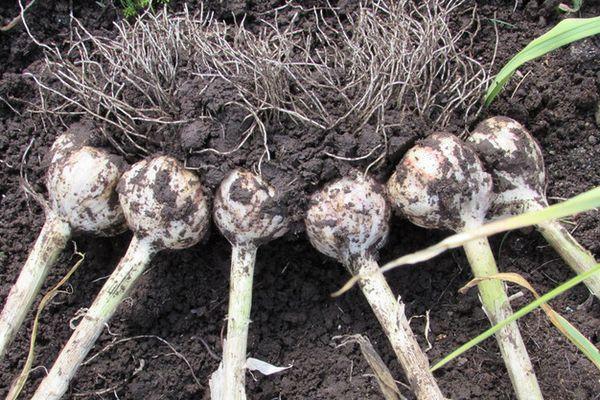
With heirloom garlic, the planting and care of which will be discussed below, one clove can produce a large harvest, averaging 5-6 full-sized heads.
This garlic has unrivaled flavor, is excellent for preserving dishes, and is used in various cuisines to create delicious and healthy meals. Furthermore, it has a long shelf life and is resistant to pests and diseases.
Planting family garlic
To get a good harvest, you need to know, How to plant heirloom garlicThere are two planting times: fall and spring. Gardeners' experience shows that spring planting is the best option.
The soil shouldn't be overly soggy. Moderate moisture is ideal. You can check the soil moisture level yourself: take a lump of soil and squeeze it. If the soil forms a tight lump and doesn't crumble, the moisture level is optimal and you can plant garlic.
Soil temperature should be at least 5°C. Spring planting dates range from April to early May. Folk wisdom recommends planting heirloom garlic between Annunciation Day (April 7) and St. George's Day (May 6). According to signs, garlic planted after May 6th produces a poor harvest; the yield can decrease by up to 50%.
Autumn planting is favorable for areas with mild, snowy winters. If in the area where you plan to growing garlicIf frosts and unstable snow cover are observed in winter, then spring planting is preferable.
Bedding
The cloves, commonly known as "cloves," are best for growing. Planting the planting material at a depth of 5 cm will protect the future plant from frost, help it anchor securely in the soil, and allow it to form a large bulb.
The furrow should be covered with soil, but not too tightly. Next, prepare the mulch. Mulching the garlic should prevent the soil from losing moisture and the plant from wilting. Straw is best for mulch. Sawdust is only used for spring planting. If you cover the winter garlic bed with sawdust in the fall, the garlic cloves will rot and rot in the soil in the spring.
Take a look Also
![When should you dig up garlic in the Moscow region in [year]?](https://harvesthub.decorexpro.com/wp-content/uploads/2018/07/kogda-vykapyvat-chesnok-v-moskovskoj-oblasti-9-300x200.jpg)
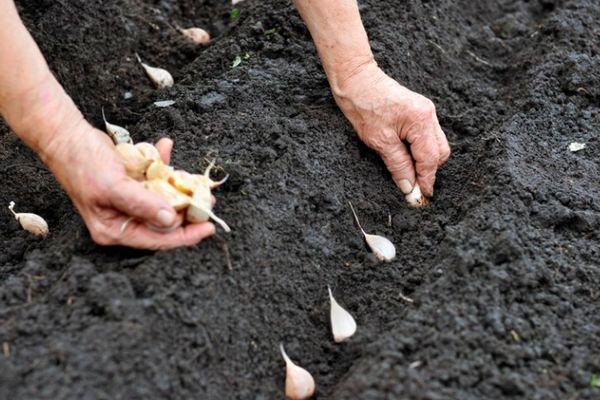
To grow large bulbs, the planting material should be placed in a checkerboard pattern in the garden bed with a distance of at least 20-25 cm.
Maintaining crop rotation in the garden is also crucial for a good harvest. Heirloom garlic should not be planted in beds previously occupied by potatoes or onions. These crops consume large amounts of potassium from the soil, which will negatively impact the shape of the garlic bulb. If there's no other option and the garlic must be planted in a spot previously occupied by potatoes or onions, then apply potassium fertilizer to the soil in the fall, choosing to plant heirloom garlic in the spring.
Before planting, it is necessary to treat the planting material with a solution of copper sulfate: dilute 1 tablespoon of the reagent in 10 liters of water and place garlic cloves in the mixture for 20-25 minutes.
Sometimes, the planting material becomes limp. This is easily remedied: the cloves can be soaked in hydrogel or vermicompost for 10-12 hours. This will rehydrate the garlic cloves and make them firm again.
A 1-2 cm layer of ash is poured into the planting furrows or holes. This will help repel insect pests. Ash also contains many substances that will help the plant produce a bountiful harvest.
Care
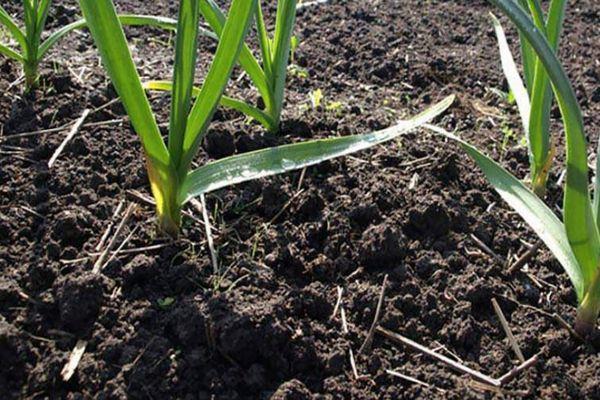
This plant is easy to care for. If you prepare and apply mulch at planting, it will require even less care. If mulch isn't used, monitor soil moisture and water regularly. It's also important to loosen the soil around the plant's heads to prevent compaction and oxygen deprivation.
If young leaves turn yellow in May, it's a sign of frost damage. In this case, nothing needs to be done; garlic is resistant to spring frosts.
Heirloom garlic tolerates summer heat well. It's best to water the plants in the evening to avoid sunburn on the leaves and increased transpiration (evaporation) from the leaf surface.

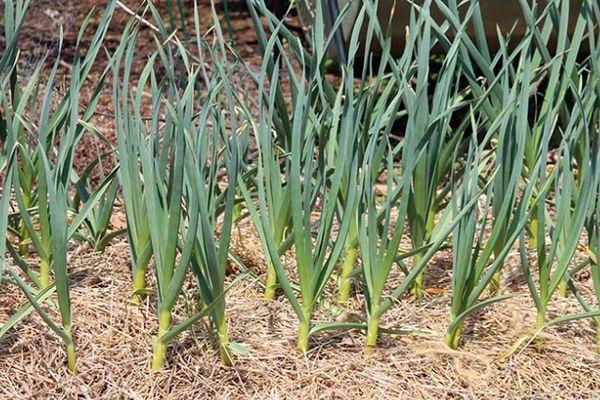
The crop requires weeding as it becomes overgrown with weeds, on average 1-3 times a month.
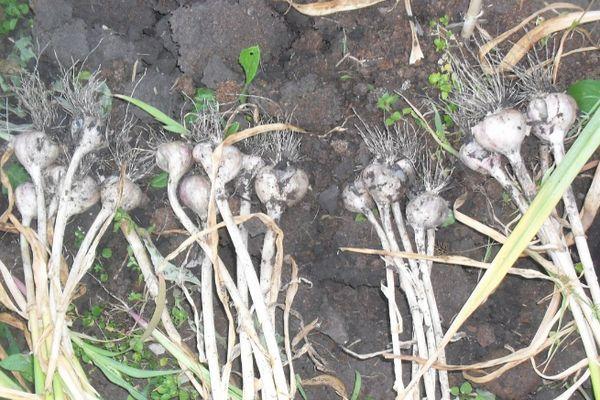
The bulbs finish forming by the end of June; growth ceases by mid- to late July. Afterward, monitor the garlic leaves. As soon as they turn yellow and begin to dry, it's time to harvest. If the garlic isn't harvested at this time, but rather left in the soil, the bulbs will begin to draw moisture from the soil. This will result in the bulbs becoming overly wet, which will make them difficult to store and may even rot.
It's best to harvest on a sunny day, but not in the morning, so the dew has time to dry. The harvest is left in the beds until evening to dry, and then stored under a ventilated shelter.
Related posts:
 The best varieties and types of early and winter garlic with descriptions and names
 How to properly grow and care for spring garlic in open ground and when to tie it into knots
 Description and cultivation of single-clove garlic, planting and care rules
 Description and yield of the Lyubasha garlic variety, planting and care
 Garlic harvesting dates in the Urals in 2025, cultivation and care
 Garlic cultivation technology in open ground, planting times, and care guidelines for a good harvest
 Features of planting and caring for family garlic, description of varieties, pest control
 Description and cultivation of Chinese garlic, cultivation and care
This garlic grows quite quickly, but it's essential to use a bioactivator. This will protect it from various diseases. I recommend buying "BioGrow", it works best.