
- Botanical characteristics of the Lyubasha variety
- Description of garlic: main advantages and disadvantages
- Winter crop yield
- Resistance to diseases and pests
- Scope of harvest application
- What is the difference from other varieties?
- Growing conditions requirements
- How to plant bulbous plants in a garden
- Landing time
- We calculate the seeding rate per 1 ha
- Choosing a landing site
- Preparing the beds
- Preparation of planting material
- The process of planting planting material
- We organize plant care
- Mulching
- Irrigation of bushes
- Fertilization
- Weeding and loosening the soil
- Harvesting and storage
- Methods of reproduction
- Reviews of the variety from experienced gardeners
The winter garlic variety Lyubasha, developed by Ukrainian breeders, has become a firm fixture in Russian gardens and agricultural fields. Its large bulbs, distinctive flavor, and low maintenance requirements have made it an indispensable and beloved crop among farmers and gardeners.
Botanical characteristics of the Lyubasha variety
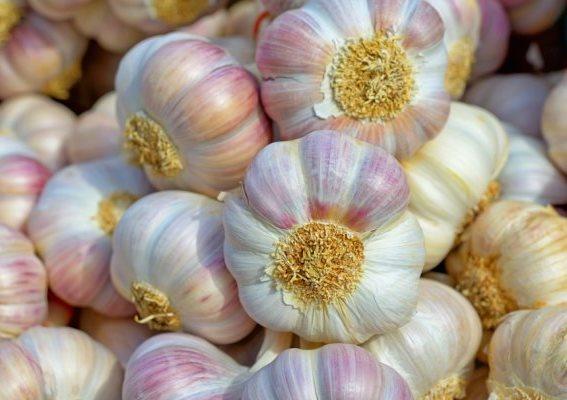
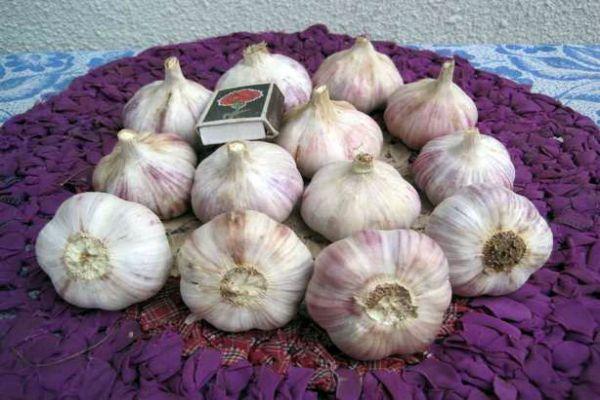
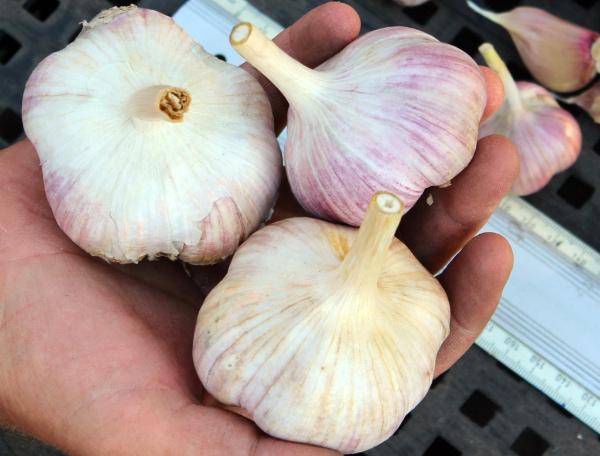
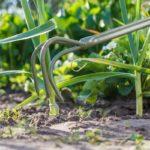
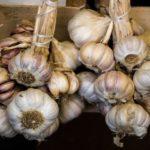
Lyubasha garlic stalks reach a maximum height of 1.5 m. The average size is 1–1.2 m. The green leaves are narrow (2–2.5 cm) and long (40 cm). The heads, which weigh between 60 and 350 g, are most often 100 g in size and are covered with white scales with purple stripes. One marketable head consists of 4–7 pale cream cloves.
Lyubasha is a mid-season garlic variety with a sharp flavor and a lingering aftertaste. It matures within three months of germination.
Description of garlic: main advantages and disadvantages
Positive characteristics of Lyubasha garlic:
- cultivation of crops in different climatic zones;
- high yield;
- large size of bulbs and cloves, marketable appearance, in demand during sales;
- keeping quality;
- general purpose;
- portability during transportation while maintaining the original shape and other characteristics;
- pronounced, rich taste;
- high content of essential oils;
- undemanding to irrigation;
- resistance to diseases and pests;
- resistance to winter frosts and spring recurrent frosts;
- Long-term storage in fresh form – up to 10 months.
Farmers and gardeners point out the following disadvantages:
- high labor costs when removing arrows;
- the need to mulch the soil before the onset of cold weather;
- intolerance to shady places.
Depending on tastes and preferences, large bulbs and cloves are both a plus and a minus for the crop.
Winter crop yield
The yield of Lyubasha garlic depends on care and favorable weather conditions. Even in a dry summer, the variety produces up to 35 centners of vegetables per 1 hectare..
Removing 10-centimeter stems and applying fertilizer increases yield. Harvesting the bulbs, depending on the region, lasts from the last ten days of June to the end of July. With all the necessary agronomic practices, gardeners can expect to yield 2–3 kg of bulbs per square meter.
Resistance to diseases and pests
Lyubasha garlic is immune to fusarium, but is susceptible to green mold, black rot, and neck rot. Disinfecting the soil, drying the harvest, and creating suitable storage conditions—up to 70% humidity, 0–2°C—helps combat fungal infections.
Bactericidal properties garlic repels many types of pestsThe main enemy of the crop is nematodes, for which there are no effective treatment methods.
To prevent infestation with microscopic roundworms, it is recommended to change the planting location every 2 years.
Scope of harvest application
Lyubasha garlic is used in cooking for canning, pickling, and as a seasoning for first and second courses and sauces. The leaves are also included in salads, stewed, and fried.

This vegetable is widely used in both traditional and folk medicine. Garlic is an ingredient in pharmaceutical preparations and folk remedies used to treat the following conditions:
- pulmonary tuberculosis;
- colitis, gastritis, cholecystitis;
- hypertension, atherosclerosis;
- diabetes mellitus;
- dysentery;
- staphylococcal infection;
- flu, sore throat, pneumonia.
 Garlic prevents excess weight gain and senile dementia.
Kills cancer cells developing in the oral cavity and bronchi, strengthens the body's immune defense.
What is the difference from other varieties?
Lyubasha garlic's high frost resistance makes it suitable for cultivation in Russia's northern regions. It also produces consistently high yields in areas with high temperatures and limited rainfall, as the plant is highly drought-resistant.
Lyubasha's high immunity allows garlic to survive the penetration and reproduction of pathogenic fungal spores without the use of chemicals, resulting in an environmentally friendly harvest.
Growing conditions requirements
Maintaining proper soil and climate conditions is essential for growing this crop. Lyubasha garlic thrives at temperatures of 17-25°C. It prefers cultivated, nutritious soil.
Bulbs grow small when grown in shaded areas, on low-humus and acidic soil. Lack of soil aeration through loosening and inadequate irrigation also slow down growth.
Part of the harvest is lost due to diseases when garlic is planted in the same beds for more than two years and when there is excessive watering.
The Lyubasha variety is grown in all regions of Russia due to its winter hardiness and drought tolerance. Only planting time and depth vary.
When the seedlings emerge, the vegetable requires 80% humidity. As it grows, this level decreases to 60%.
How to plant bulbous plants in a garden
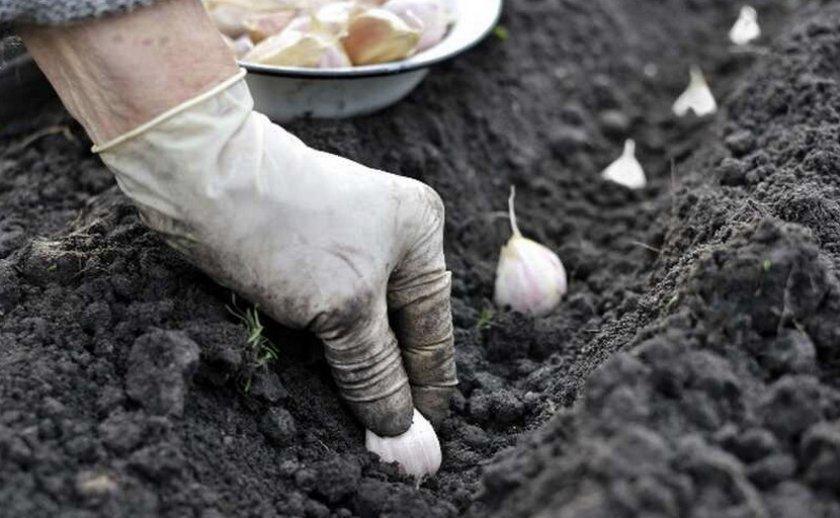
Planting is an important agricultural practice that determines the future harvest. Simply burying cloves or bulblets in the garden bed isn't enough. To ensure proper plant development, a site is selected, crop rotation is considered, the planting material and soil are prepared, and the sowing time is determined.
Landing time
The winter garlic variety Lyubasha is planted from early October to mid-November, depending on the climate zone and weather conditions. Three weeks before the onset of frost is required for the crop to establish roots. If planted too early, the plant will sprout and die.
 The optimal soil temperature for sowing garlic is 10-12°C.
We calculate the seeding rate per 1 ha
When planting cloves, 1,000–1,500 kg of planting material is required per hectare, depending on the size. Air bulbs are sown at a rate of 50–60 bulbs per linear meter or 100–200 kg per hectare, depending on their size.
Choosing a landing site
Lyubasha garlic requires a level, open, sunny location. High elevations are unsuitable due to snow blowing and freezing in winter, while low elevations are unsuitable due to spring flooding. The plant prefers fertile, slightly acidic, and loose soil.
When choosing a garden bed, consider the previous crops. If the previous year's garden bed contained melons, legumes, all types of cabbage, cucumbers, and greens, then it's a suitable spot for garlic.
It is not recommended to plant the crop after nightshades, onions, and carrots.
Take a look Also
![When to harvest garlic in the Urals in [year], growing and care](https://harvesthub.decorexpro.com/wp-content/uploads/2019/04/chesnok1-300x200.jpg)

Preparing the beds
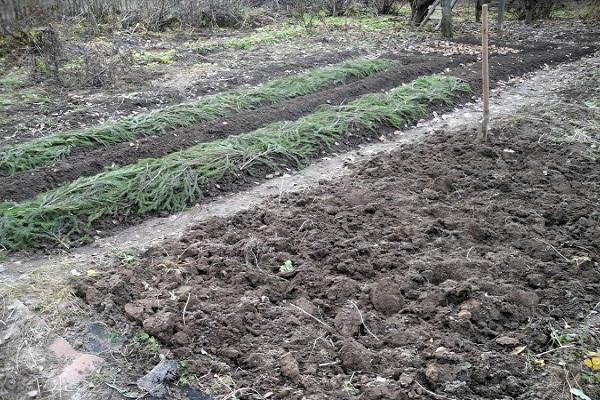
A month before planting winter garlic, remove weeds, level the beds, and dig the soil to a spade depth. Add humus at a rate of 10 kg per square meter and phosphorus-potassium fertilizers—1 tablespoon of superphosphate and 2 tablespoons of potassium sulfate.
Early digging is necessary to settle the soil and prevent the cloves from being pulled deeper. For the same purpose, the bed is watered 2-3 times a month. Nitroammophoska is added to the soil immediately before sowing.
Using cow manure before planting leads to an increase in green mass at the expense of head formation.
Preparation of planting material
When preparing the planting material for Lyubasha garlic, the following steps are taken:
- the bulbs are separated into individual cloves;
- sort the cloves - discard dried, deformed, disease-damaged specimens;
- separate the material into fractions depending on size;
- Disinfect the teeth for 2 hours in a weak solution of manganese (1 g of dry matter per 1 liter of water).
The planting material gradually degenerates, so it needs to be renewed every 5 years.
The process of planting planting material
Aerial bulbs and mature cloves are planted 6–7 cm deep, maintaining a distance of 10 cm within a row and 30–40 cm between rows, and covered with soil.
There is no need to water, the soil is moistened the day before.
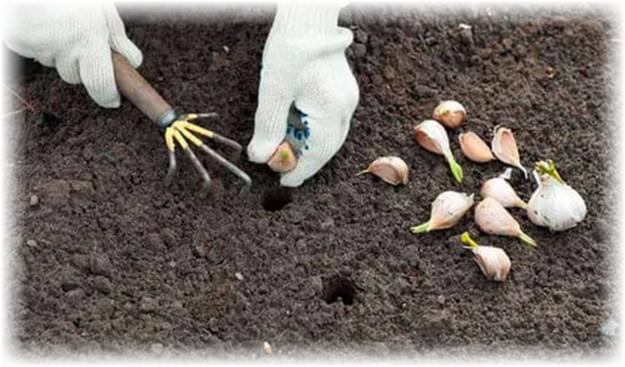
To ensure uniform illumination throughout the day, it is recommended to arrange the rows from north to south.
We organize plant care
Mulching, watering, soil aeration and fertilization increase yields by 25–30%.
Mulching
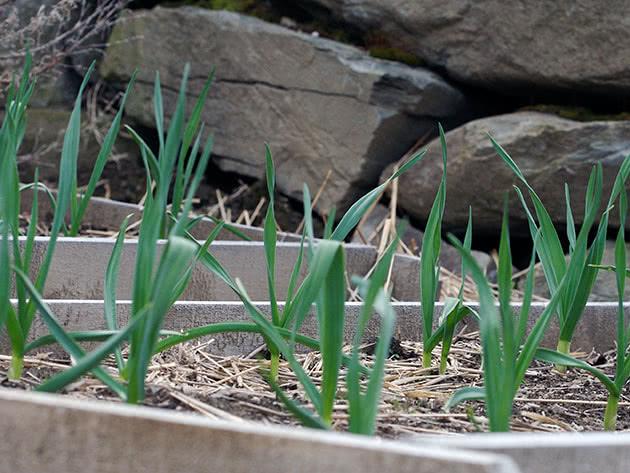
Lyubasha garlic is mulched immediately after planting with a thick 5-10 cm layer. The following can be used as mulch:
- spruce branches or needles of coniferous trees;
- peat;
- fallen leaves;
- mown grass;
- straw.
If the winter isn't too harsh, the plant can survive without mulch. However, this also serves other purposes: nutrition, weed suppression, and moisture retention.
Irrigation of bushes
Despite the plant's drought tolerance, Lyubasha garlic is recommended to be watered once a week, preventing stagnant water and preventing the topsoil from drying out. Watering is especially important during the bulb formation period. As the bulbs mature, reduce the frequency and amount of watering, eventually eliminating it by harvest time.
Irrigation is stopped three weeks before the garlic reaches technical maturity.
Fertilization
A fully fertilized bed before and during planting does not eliminate the need for additional feeding in the spring.
As soon as the first green leaves of garlic appear, the soil is watered with a solution of ammonium nitrate or urea (2 tablespoons per bucket of water).
After two weeks, the culture is fed with infusions:
- nettles (1 kg of grass per 5 liters of water);
- chicken manure (1:20);
- mullein (1:10).
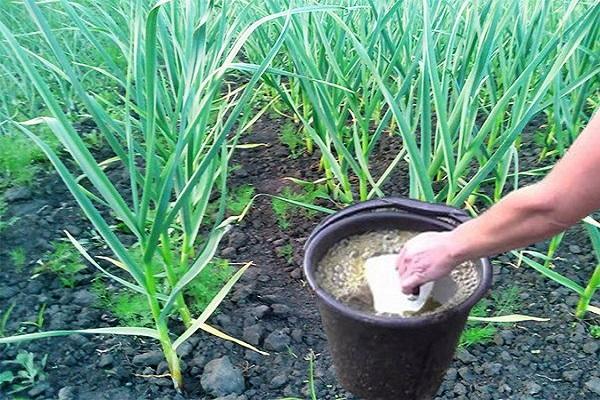
The third time, at the beginning of June, the plants are watered with dissolved ash. One bucket of water and one cup of ash are required per square meter. Alternatively, you can use ready-made fertilizers with an emphasis on phosphorus and potassium—double superphosphate, potassium sulfate, or monophosphate.
Weeding and loosening the soil
In the spring, after the mulch is removed from the garden bed, weeds are the first to push their way toward the sun, sucking nutrients from the soil. Regular weeding is used to control them.
Take a look Also

Loosening the soil after each rain or artificial watering ensures aeration and better moisture permeability.
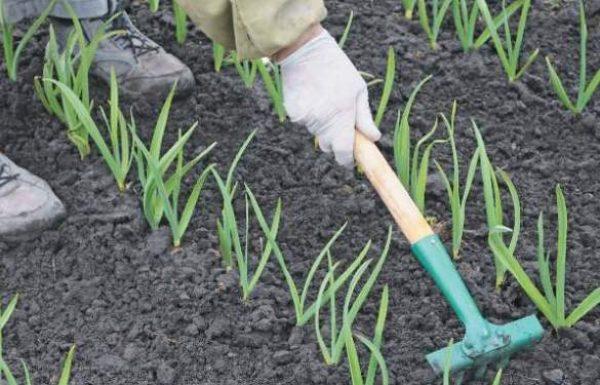
Experienced vegetable growers leave mulch on their beds throughout the growing season, making crop care easier. Mulching eliminates the need for weeding or loosening the soil, and reduces the need for irrigation by retaining moisture.
Harvesting and storage
Yellowing leaves indicate that the bulbs are ready for harvesting. In June and July, the formed bulbs of Lyubasha garlic are dug up, shaken free of soil, and hung in bunches under the roof of a shed to dry.
Storage methods:
- the plants are braided, placed in a nylon stocking, and taken out to a cool place;
- vegetables are placed in cardboard boxes, layered with onion skins or sprinkled with salt;
- dip the garlic into melted wax;
- the bulbs are placed in linen bags, previously soaked in a concentrated saline solution, and placed in the vegetable compartment of the refrigerator;
- Store the heads in pasteurized jars.
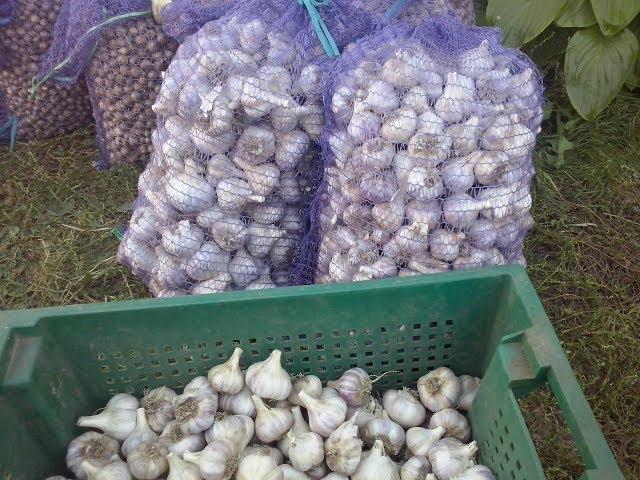
Before Lyubasha's garlic storage The stem is cut off, leaving a 5-centimeter stump, and the roots are shortened to 1 cm.
Methods of reproduction
Winter garlic Lyubasha is propagated in three ways:
- bulblets obtained from the inflorescence of the arrows;
- teeth that make up the head;
- single-toothed cloves growing from aerial bulbs.
Each of the three types of planting material is sown in the same way. The only difference is the planting depth. 6 cm is sufficient for bulblets, while cloves require a 7 cm deep hole.
Reviews of the variety from experienced gardeners
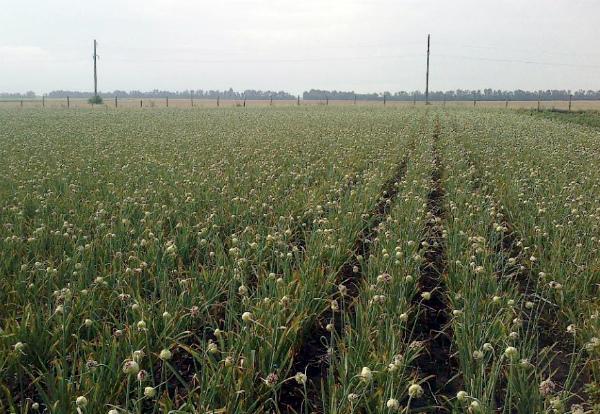
Reviews from gardeners and farmers confirm the advantages of the crop.
Stepan Mikhailovich, 65 years old:
I've been growing Lyubasha garlic for sale for five years now. The large, marketable bulbs with a vibrant flavor are consistently in high demand.
Raisa Maksimovna, 60 years old;
I grow Lyubasha garlic for my own consumption. It's easy to care for—moderate watering and fertilizing with nitrogen, potassium, and phosphorus fertilizers. I don't remove the mulch in the spring; the garlic plant is vigorous and grows through the cover, unlike weeds. I'm pleased with the garlic bulbs' shelf life. The harvest lasts until the following spring.
Nina Valerievna, 47 years old:
I plant garlic at my dacha every year, but the harvest hasn't been particularly impressive. Sometimes the bulbs are large and the flavor is weak, sometimes the opposite. Last year, I bought Lyubasha garlic from a neighbor. I was pleasantly surprised by the large bulbs with a sharp flavor.
Related posts:
 The best varieties and types of early and winter garlic with descriptions and names
 Characteristics and description of the tomato variety Lyubasha F1, yield and cultivation
 Garlic harvesting dates in the Urals in 2025, cultivation and care
 How to properly grow and care for spring garlic in open ground and when to tie it into knots
 When can spring garlic be harvested in 2025? Harvesting from the garden and storage
 Description and cultivation of single-clove garlic, planting and care rules
 When to dig up garlic in the Moscow region in 2025
 How to properly dry winter garlic after digging and where to store it at home