
- Description and characteristics of the hybrid
- Productivity
- Description of fruits
- Application of fruits
- Resistance to diseases and pests
- Advantages and disadvantages of the variety
- Peculiarities of growing tomatoes
- Timing of sowing seeds
- How to prepare seeds for planting
- Soil requirements
- Preparing seedlings
- Planting in open ground
- How to care for it in open ground?
- How to water correctly?
- How to fertilize?
- Bush formation
- Harvesting, storage and use of crops
- Reviews from gardeners
Tomato lovers should take a closer look at the ultra-early Lyubasha F1 tomato. Homegrown seedlings will speed up the ripening process. If planted in a greenhouse, you'll harvest even two weeks earlier. This variety's tomatoes are small and have a sweet flavor. They're suitable for everything from canning to pickling to salads.
Description and characteristics of the hybrid
Breeders at the Partner agrofirm have developed and are producing a new variety, Lyubasha F1. These tomatoes are a hybrid and are classified as determinate. When purchasing, pay attention to the letter F1—it means you're buying a hybrid, not a cultivar. "Determinate" indicates that the bush has a growth limit of 100 centimeters.
Productivity
Four to five clusters grow on a bush. Each side shoot produces two clusters. Ultimately, the Lyubasha tomato will produce eight to nine clusters when trained into three stems. Each cluster produces seven to eight fruits. Considering that a single tomato weighs an average of 125 grams, a single bush can yield between 56 and 72 tomatoes.
Description of fruits
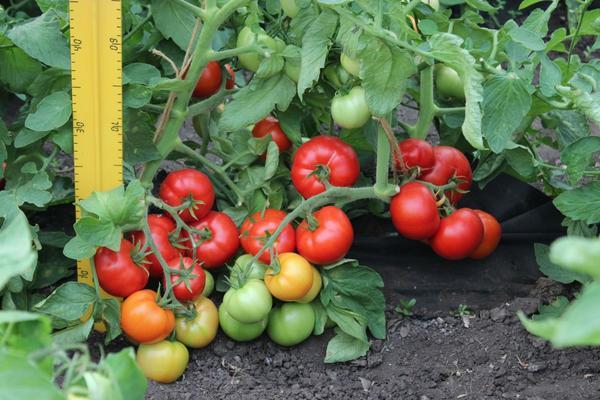
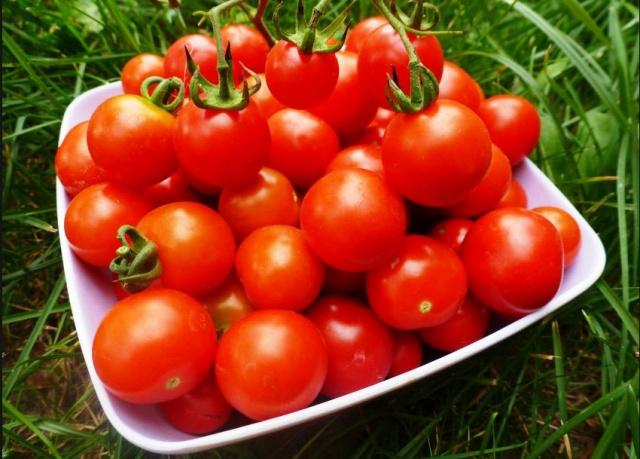
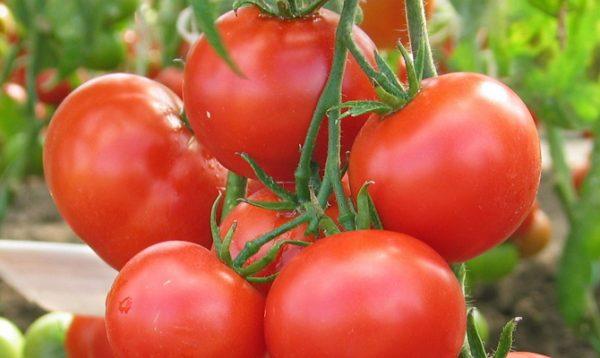
The tomato is round and slightly flattened. The skin is thin, red when ripe, and smooth. The flesh is firm. The weight of a single tomato ranges from 120 to 130 grams. The seeds are large.
Application of fruits
The fruits are eaten fresh and used in salads. Their light weight allows them to be preserved in liter-sized jars. They are also used in pickles and adjika.
Resistance to diseases and pests
Tomato Lyubasha is characterized by resistance to diseases – late blight, blossom-end rot and pests.

Advantages and disadvantages of the variety
Pros:
- Lyubasha F1 tomatoes bear fruit at the same time, the bush is resistant to diseases, and the flesh does not crack.
- Excellent for growing for sale.
- The dense pulp makes it possible to transport it over long distances.
- Ultra-early variety.
- The bushes are adapted to any growing conditions.
- Can grow in any region of Russia.
Cons:
- Simultaneous ripening does not allow the fruits to be stored for a long time.
- Requires constant care: watering and fertilizing. This variety is not recommended for those who rarely visit their garden.
- Requires protection from low temperatures.
Peculiarities of growing tomatoes
Since the Lyubasha hybrid is a standard, it can be grown in any container. The plant is undemanding in terms of humidity, light, and temperature, making it easy to nurture seedlings at home.
Timing of sowing seeds
Planting material is sown 45-55 days before planting in open ground.

How to prepare seeds for planting
Tomato seeds are dipped in a weak solution of potassium permanganate for 3 minutes. This procedure helps protect the plant from infectious diseases.
Drain the solution and rinse under running water. Leave for 24 hours to germinate.
Soil requirements
Choosing a soil for seedlings: well-rotted peat, humus-rich sod. Tomatoes prefer fertile soil. You can also use store-bought peat mixtures.
Preparing seedlings
The seeds are sown at a depth of 1 centimeter, at intervals of 4. The container is covered with a transparent material (glass, polyethylene), and placed in a room with a temperature of 23 degrees.
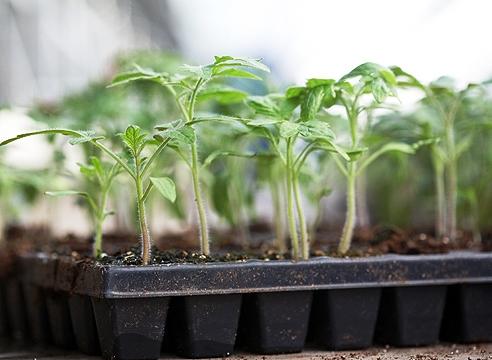
As soon as the seedlings emerge, the covering is removed. The seedlings are moved to a cool location (18 degrees Celsius). When three leaves appear, the tomatoes are fed with nitrogen and potassium fertilizers. Before planting outdoors, the seedlings are hardened off for two weeks.
Planting in open ground
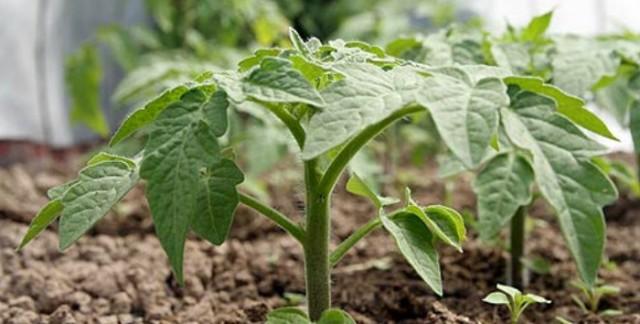
When four true leaves appear, the seedlings are transplanted into open ground. The seedlings are planted in prepared soil. In the fall, the soil is fertilized with compost. In the spring, the soil is loosened and nitrogen fertilizer is added before planting.
Plant 3-4 bushes per square meter. Tie the bushes to stakes as soon as they reach the first cluster to prevent the stems from breaking.
How to care for it in open ground?
Caring for these tomatoes is no different from caring for other varieties: watering, fertilizing, and shaping the bush.
How to water correctly?
Tomatoes need regular and generous watering. The next watering is needed when the top layer of soil dries out. This should be done in the evening, after sunset, or early in the morning.
How to fertilize?
Lyubasha tomatoes respond well to both organic and mineral fertilizers. The first feeding after planting is done three weeks later. To do this, dilute manure with water at a ratio of 1:10. Pour a cup of the nutrient mixture under each plant.
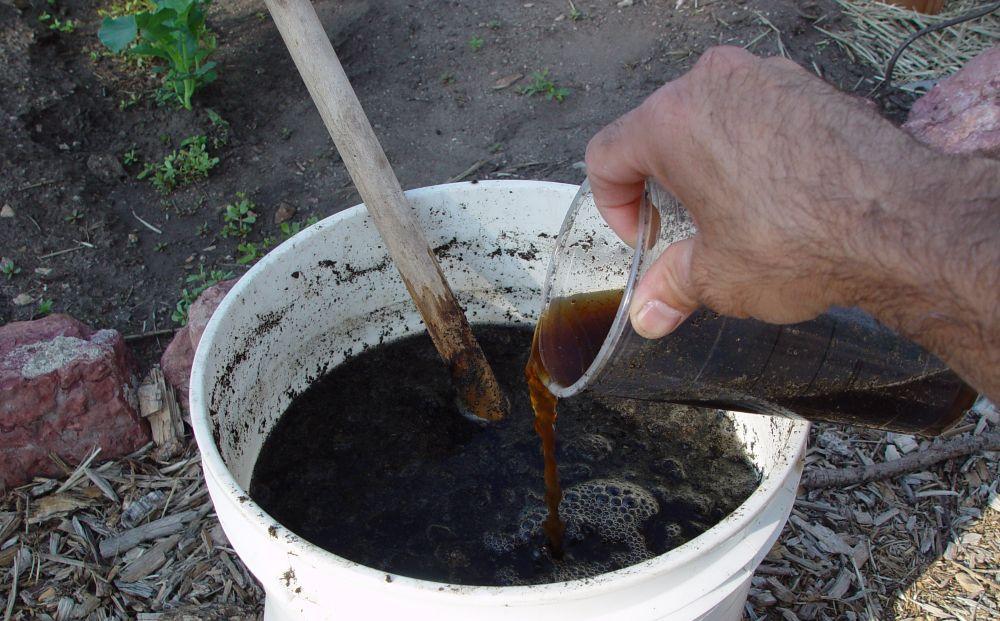
The second feeding is applied at the time of fruit set. During this period, the plants are fed with complex mineral fertilizers. The third feeding is applied two weeks later.
Bush formation
Some believe that determinate varieties should not be shaped or have side shoots removed. Removing side shoots will allow the inflorescences and fruits to receive more micro- and macronutrients.
The formation of the bush begins at the moment the first brush appears:
- All stepsons 5-7 centimeters in height below the first inflorescence are removed.
- A 2-3 mm stump is left at the site of the stepson. This is to prevent a new shoot from appearing in the same spot.
- Tomato plants are inspected twice a week. New shoots are removed.
- As soon as two inflorescences appear, there are no leaves between them - this is a signal that the bush will no longer stretch upward.
- If the goal is to grow a tomato with 2 stems, then one stepson is left under the inflorescence.
- It forms a secondary shoot.
- Leaves, side shoots, and inflorescences will appear on it. Side shoots are also removed.
- On the 2nd brush of the secondary stem, pinch off after the leaf that grows above the brush.
- When growing a tomato with three stems, two stepsons are left under the inflorescences.
- Choose the strongest ones. Also, when two clusters appear, pinch them off.
- The lower leaves up to the brush are gradually removed up to the inflorescence.
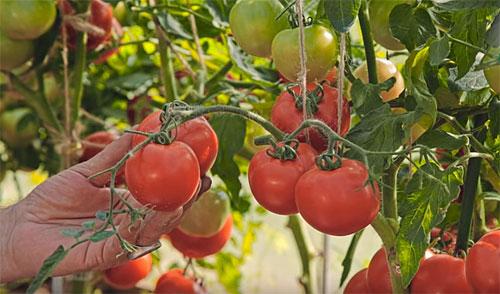
If a cluster has already set fruit, but the remaining shoots are just beginning to bloom, they should be removed. They will draw nutrients, reduce the fruit, and will not be able to catch up.

Harvesting, storage and use of crops
June is the harvest time for Lyubasha tomatoes. The fruits ripen simultaneously. They are harvested and sent for processing and sale on the same day. The fruits lose their appeal over time, so long-term storage is not recommended.
Reviews from gardeners
Alexandra, Cherepovets.
I decided to plant early varieties in my plot. One of them was the Lyubasha F1 tomato. I planted it in a greenhouse. By June, all the fruits were ripe. The skin was red and thin. The bush was covered with tomatoes. I noticed that they can stay ripe on the vine for a long time. They tasted great. sweet tomatoes, sugary. Each fruit weighed 120-130 grams. I was not disappointed with the purchase. I will continue planting the Lyubasha F1 variety.
Natalia, Samara
I read positive reviews from gardeners who had planted the Lyubasha tomato. I sowed the seeds and planted them in open ground. The tomatoes respond well to organic fertilizer.
I trained the bush into two stems. Standard care was used. The summer was hot, the plants were disease-free, and there were no pests.
They turned red at the same time, which is important to me. I canned the rest and sold the rest. I'm glad the tomatoes didn't crack in the jars. They were snapped up quickly because the tomatoes look good. I recommend this to beginners. It's not a picky variety.
Thanks to our breeders – they did a great job.
Related posts:
 Description and yield of the Lyubasha garlic variety, planting and care
 80 Best Eggplant Varieties for Different Regions with Descriptions and Characteristics
 The best grape varieties for growing in the Urals, planting and care rules in summer
 The best eggplant varieties for growing in a polycarbonate greenhouse: planting and care
 Descriptions of the 20 best cherry varieties for the Moscow region, their planting and care
 What varieties of tomatoes are best to plant in a polycarbonate greenhouse?
 Description and characteristics of the 40 best blackberry varieties, yield indicators
 Description of the 23 best pear varieties for the middle zone, planting and care rules