
The Beauty King tomato was developed by American breeders. It has an attractive appearance, has a long shelf life, and withstands long transportation. Catalogs often describe this tomato variety as Beauty King.
It's used in the production of tomato juice, paste, and puree. It's also used in salads, imparting unusual color tones and a distinctive flavor due to the distinctive coloring of this variety of tomatoes and the presence of a small amount of acid.
Characteristics of the variety
The characteristics and description of the plant are as follows:
- This tomato variety has a medium ripening period. It takes approximately 110-118 days from planting the seeds to fruit development.
- The King of Beauty bush grows to a height of 180–200 cm. Reviews from Russian farmers indicate that in the central part of the country, the bushes grow to 150–160 cm, while in the southern regions, the plant stretches to 170 cm.
- The leaves on the bushes are quite large and green in color.
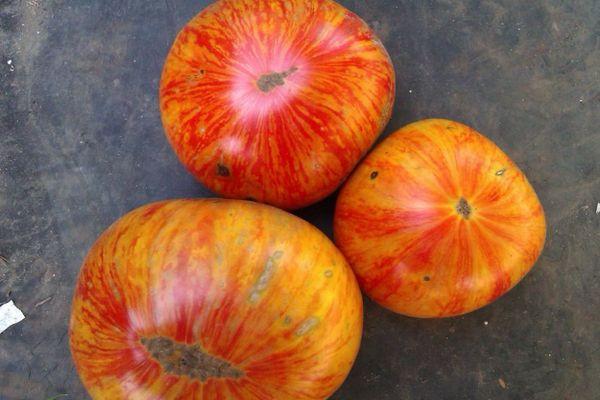
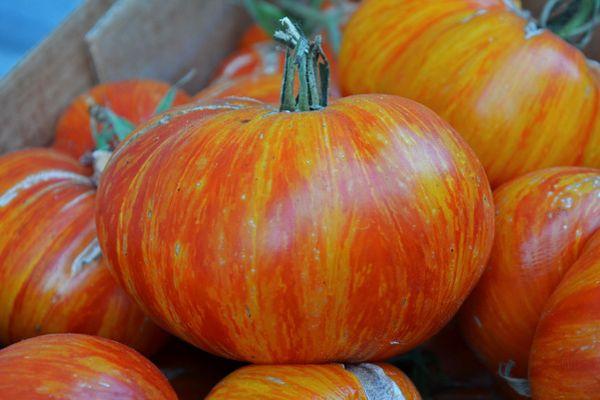
- Fruit Description: This tomato variety produces orange-colored fruits with a visible mesh of thin red stripes. Unripe fruits are light green, covered with a mesh of dark green stripes.
- Description of the fruit shape: they look like a slightly flattened sphere.
- The average weight of the fruit is about 0.28-0.3 kg.
- This tomato variety is resistant to late blight.
Tomatoes grow well in open ground in southern Russia, but in the central and northern regions of the country, the "King of Beauty" variety is recommended for greenhouse cultivation only. Yields range from 5.4 to 7.0 kg per plant.
There is a description of the technology for obtaining fruits of this plant weighing up to 550 g each, but this requires a combination of favorable climatic conditions and strict adherence to the schedule of agricultural activities.
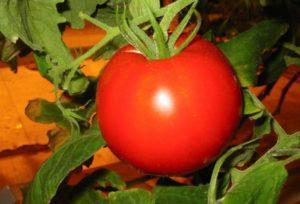
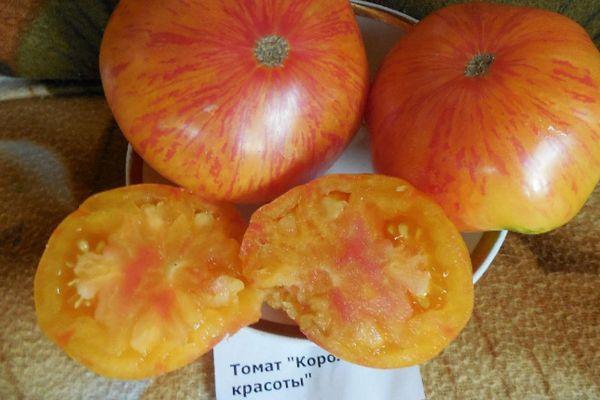
The "King of Beauty" tomato variety produces average yields in Russian gardens. This is due to climate conditions and soil quality, which differs from that of the American continent.
Growing tomatoes
To plant the seeds of this plant, you need to prepare the soil, which should be neutral. Planting should be done approximately two months before the planned planting of the seedlings in the garden or greenhouse.
After planting the seeds in the boxes, they are watered and transferred to a room with a suitable temperature. Once the sprouts emerge, wait until one or two leaves develop before transplanting. This process is combined with treating the seedlings with a growth stimulant. The best results were achieved with a growth stimulant such as "Vympel." It increases the seedlings' immunity by 40% and optimizes the seedlings' absorption of mineral nutrients.

When transplanting young plants into the greenhouse soil or garden bed, fertilize them with micronutrient fertilizers such as "Oracle." Because the plant grows tall, the bushes need to be tied to supports or trellises. If this is not done, the stems may break under the weight of the growing fruit. It is recommended to plant no more than 4 bushes per square meter.
Plants should be watered with warm water. It is necessary to loosen the soil under the stems to remove weeds and apply fertilizer to the soil in a timely manner. To achieve this, during the initial stage of plant growth, the bushes are fed with nitrogen fertilizers, and when the ovaries begin to set, they are switched to potassium and phosphorus fertilizers. If these are unavailable, organic natural fertilizers such as manure and peat can be used.
To protect tomato plants from fungal and microbial infections, spray tomato leaves with appropriate chemicals. If garden pests attack the plants, treat the stems and leaves with folk remedies (such as a soap solution) or use chemicals designed for insect control.
Related posts:
 The best grape varieties for growing in the Urals, planting and care rules in summer
 Description of the best varieties of black tomatoes for open ground and greenhouses
 80 Best Eggplant Varieties for Different Regions with Descriptions and Characteristics
 Methods for planting and propagating cherries at home
 Description and cultivation of the 15 best cherry plum varieties for the Moscow region, planting and care rules
 When and how to properly transplant tomato seedlings, the best days in 2025
 Characteristics and description of pepper-shaped tomato varieties, yield and cultivation
 Description of the 23 best pear varieties for the middle zone, planting and care rules