
- When to dig up garlic for storage
- Preparing the harvest
- Storage rules
- Choosing garlic
- Optimal conditions for long-term storage
- Traditional storage methods
- At the bank
- In the refrigerator
- At home
- In the cellar
- Garlic in oil
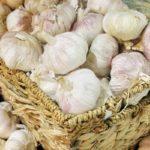
- In nets and baskets
- In boxes and cartons
- In braids or wreaths
- Freezing garlic for the winter
- Alternative head blank options
- Store in onion skins
- Storage with salt or iodine
- Pickle or ferment
- In the ashes
- In flour
- In paraffin
- In cling film
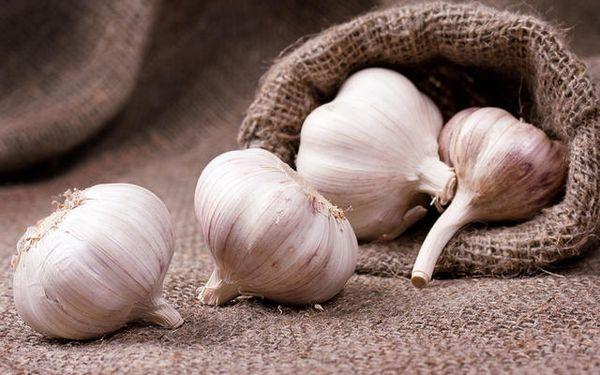
Garlic is a popular herb worldwide, adding a piquant flavor to dishes and boosting the immune system. It's easy to grow, and at the end of the season, it always yields a bountiful harvest. The only problem any homemaker faces with garlic is how to preserve it for the winter. Let's explore how to store garlic at home after harvesting it, and which methods are most productive.
When to dig up garlic for storage
An important factor affecting the shelf life of the crop is the correct harvesting time. According to recommendations from experienced agronomists, garlic harvested in the summer stores better than winter varieties.
Regarding the timing of garlic harvesting, it has been established that:
- summer varieties are harvested around the 20th of August;
- Winter varieties are grown until the second half of July.
Preparing the harvest
Equally important is the proper preparation of the harvested crop for storage. This is accomplished as follows:
- After digging, the garlic heads are sorted. Any spoiled or soft garlic is set aside.
- The rest of the crop left after harvesting is spread out on wooden boards to dry.
- It is better to dry the harvest after harvesting in the shade, without removing the tops.
- The drying process of the garlic collection continues for at least 4 days.
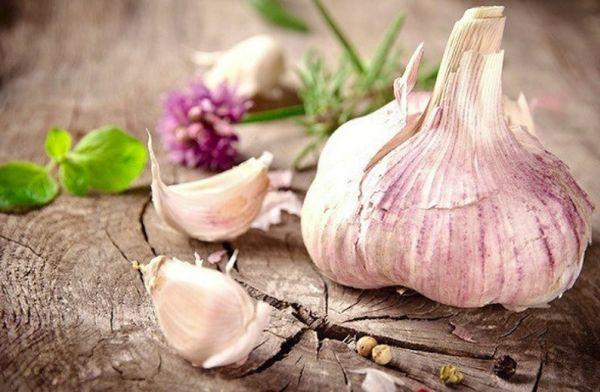 Please note! Garlic must be brought indoors at night, otherwise you will not achieve the desired effect.
Storage rules
To properly store garlic until the next harvest, you must adhere to the following conditions:
- The temperature in the pantry should be maintained within 3-6 .
- Avoid storing the crop in damp, high-humidity areas. Otherwise, it won't survive until the next harvest and will quickly rot.
- It is advisable to store garlic in ventilated baskets or string bags, hanging.
Choosing garlic
Many novice gardeners don't realize that harvest safety depends not only on proper preparation and storage, but also on the correct selection of planting material. When selecting young garlic for planting, pay attention to:
- Size of cloves. Small, fused cloves indicate poor quality planting material.
- It is advisable to select local, zoned varieties, as they adapt better to environmental conditions.
- Don't buy Chinese garlic. It's not suitable as a base for planting.

Optimal conditions for long-term storage
To ensure optimal conditions for lying down, it is necessary to maintain:
- The humidity in the room is at the level of 50-80%.
- Storage temperature for summer varieties is 18 O, for winter – 3 O.
- Ensure good ventilation in the room. If it's not ventilated for a long time, mold is highly likely to develop.
- Avoid storing crops in places exposed to direct sunlight.
Traditional storage methods
Among the traditional storage methods that have gained the greatest popularity among housewives are:
- storage in a bank;
- in the refrigerator;
- in the apartment;
- in the cellar;
- in oil;
- in boxes or nets.
At the bank
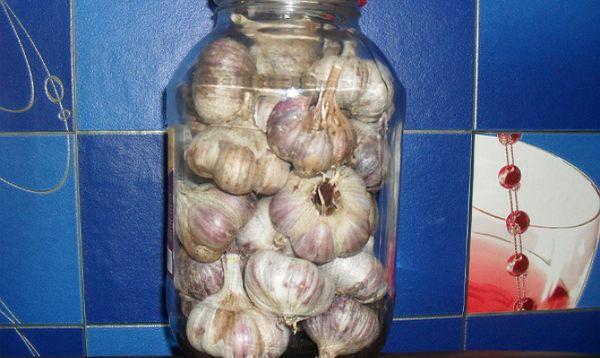
Simple and a reliable way to store garlic, a favorite of many housewives. To make it, you'll need:
- wash and dry the containers;
- prepared garlic is placed in a jar;
- Jars that are not sealed with lids are put away in a dark, dry place.
In the refrigerator
Without any additional processing, the product can be stored in the refrigerator for no longer than 2-3 months. This is due to the high humidity maintained inside. To extend the shelf life, it is recommended to place the dried bulbs on paper towels to absorb excess moisture, preventing rotting.
At home
Not all housewives have the opportunity to store vegetables in a cellar or basement. In this case, they have to look for alternative methods suitable for a standard apartment. Recommended:
- place the heads in a nylon stocking or braid them into a common pigtail;
- The prepared garlic, having undergone the drying process, is placed in boxes, which are then stored on a shelf in the kitchen cabinet.
Note: The garlic braid can be used as a decorative element, with the garlic heads cut off as needed.
The most important thing is not to keep it in the sun, otherwise the product will dry out quickly.
In the cellar
The easiest option is for those housewives who have access to a cellar or basement. The plant stores well in such conditions. Simply hang it from the ceiling and provide a good supply of fresh air.
Garlic in oil
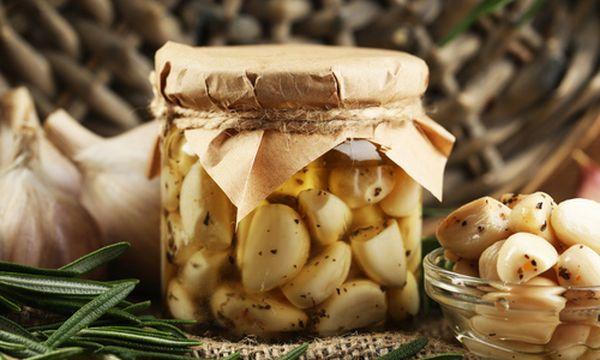
To extend the shelf life, place the product in sterile jars and cover with vegetable or sunflower oil. Here's how:
- sterilize storage containers;
- we divide the product into slices;
- we put them in prepared jars;
- pour in oil until all the cloves are in the liquid;
- cover the jars with lids.
Garlic prepared in this way retains all its beneficial properties and does not spoil for three months.
In nets and baskets
A great space-saving method. Simply place the produce in a net and hang it from the ceiling. The only drawback is that the nets need to be checked periodically. Some of the heads begin to rot, and if they aren't removed promptly, the entire net will have to be thrown out.
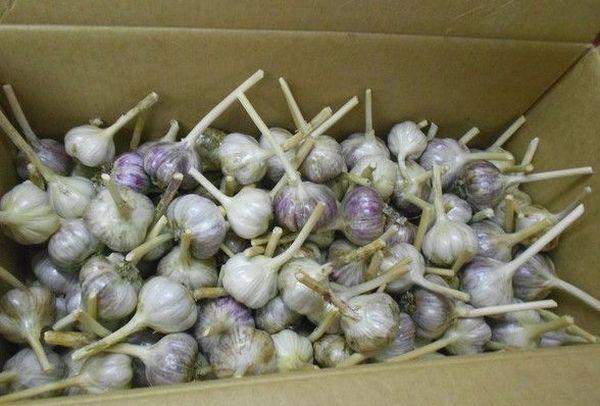
In boxes and cartons
To implement the method it is necessary:
- Prepare boxes with slots in the walls and bottom.
- If there are no boxes, take a box, having first made many holes in it.
- The filling is done layer by layer. First comes a layer of garlic, then a layer of sawdust.
In braids or wreaths
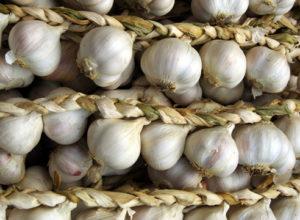
This is probably the oldest storage method, used since ancient times. The bulb stems are not removed, but rather intertwined, creating a braid-like structure. A single braid should contain no more than 15 bulbs, otherwise the structure will become unnecessarily bulky and difficult to store.
Freezing garlic for the winter
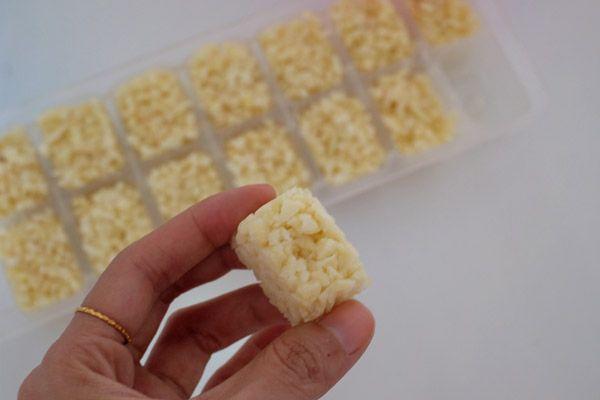
Freezing the culture for storage in the freezer is considered a controversial option, and not all housewives favor it. Some praise it for its convenience and reliability, while others note a deterioration in flavor. Freezing is done as follows:
- The cloves are crushed and then placed into ice cube trays. Once the mixture has set, it is transferred to plastic bags and placed in the freezer.
- Whole cloves are packed in bags or foil and then placed in the freezer.
Alternative head blank options
In addition to traditional harvesting methods, there are alternative options that are just as reliable for storing the harvest.
- storage with salt and iodine;
- in onion skins;
- ash;
- flour;
- pickled;
- in paraffin;
- in cling film.

Store in onion skins
The onion heads are placed in boxes or baskets in layers, sprinkled with onion skins. These absorb excess moisture, preventing the onion stock from rotting. This is a convenient and affordable method.
Storage with salt or iodine
Salt performs a similar function to onion peels, only more effectively. Food stored under a layer of salt can easily survive the winter without any loss of quality.
Pickle or ferment
Pickled or fermented garlic is virtually identical to fresh garlic in terms of nutritional value. This method is suitable for small harvests, as its preparation requires a lot of time and effort. Recipes for making marinades and fermentations are available in abundance on our website.
In the ashes
Regular wood ash can be used as a moisture-absorbing layer. A layer of 1-2 centimeters is sufficient to preserve the harvest all winter.
In flour
Flour is equally effective at absorbing moisture, preventing the stored food from rotting during storage. This method is more expensive than others, but it ensures 100% preservation.
In paraffin
Dipping the garlic heads in melted paraffin creates a protective film that prevents decomposition. You must:
- melt a few paraffin candles;
- dip garlic in there;
- let the excess drain back into the pan.
In cling film
To prevent your garlic from drying out while it's being stored, wrap it in plastic wrap. It's best to wrap each head individually, wrapping it in 2-3 layers for extra security.
Related posts:
 How to properly dry winter garlic after digging and where to store it at home
 When can spring garlic be harvested in 2025? Harvesting from the garden and storage
 The best varieties and types of early and winter garlic with descriptions and names
 How to properly and for how long to dry garlic at home after digging it up
 Why does garlic turn blue and green when pickled, how to avoid this, and is it safe to eat?
 When to dig up garlic in the Moscow region in 2025
 How to properly grow and care for spring garlic in open ground and when to tie it into knots
 Is it possible to freeze garlic at home in the freezer for the winter? TOP 10 ways