
- Can all varieties be dried?
- Basic rules
- How many days should the heads be dried?
- Temperature conditions
- Place
- What if the weather is rainy?
- How to prepare the harvest for drying
- Drying methods
- Dry the peeled garlic
- Dry whole heads
- Heads in a bundle
- Where to place the harvest
- On the street
- Indoors
- In the oven
- In an electric dryer
- Can I dry it in the sun?
- Dry in a greenhouse
- Main problems and errors
Even a beginner can grow garlic. They'll choose the right planting location and the right variety. They'll water and fertilize it throughout the growing process. It turns out that's only half the battle; the key is to properly dry the garlic after harvesting. Then the herbs can be used until the next harvest. The secret lies in pre-harvest preparation, including primary and secondary drying.
Can all varieties be dried?
Experts recommend drying hot varieties of garlic, for example:
- Rostov;
- Alka;
- Bronnitsky;
- Bashkir;
- Ukrainian white;
- Dubkovsky;
- Kirovograd;
- Gribovsky's Anniversary;
- Creole;
- Otradensky;
- Silvery white;
- Danilevsky;
- Kalininsky;
- Broadleaf;
- Southern Violet;
- Sail;
- Starobelsky;
Other varieties can also be dried, but in the process not only moisture but also flavor is lost.
Basic rules
Any beginner can grow garlic; the key is to harvest it properly, prepare for drying, and store it. To do this, follow these guidelines:
- To prevent the garlic from accumulating excess moisture, the beds are not watered before harvesting.
- Select a variety suitable for drying.
- Only mature, healthy crops are suitable.
- When harvesting, the weather should be warm, clear, and without precipitation.
- After harvesting, primary drying is carried out on a bed or in the shade under a canopy.
- The secondary drying method is determined.
- They are put away for further storage.
How many days should the heads be dried?
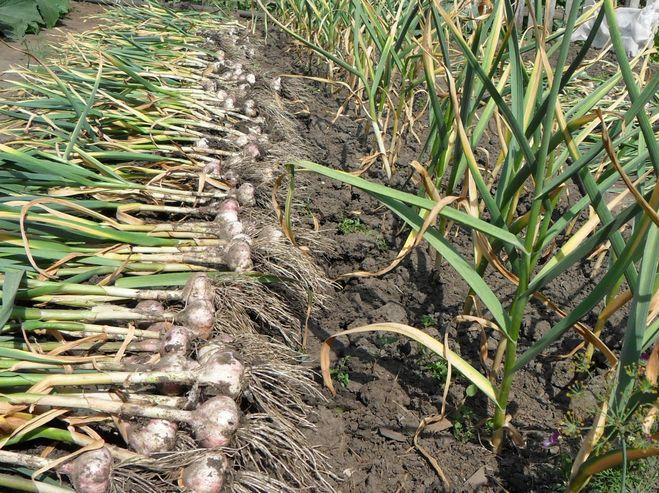
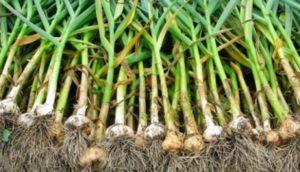
The vegetables are carefully dug up with a pitchfork. After harvesting, the plants are laid out on the surface of the beds. Allow the vegetables to dry for a short time. The plants are turned several times during drying. After a few hours, the harvest is moved under a canopy. Here, the garlic is left for ten days.
Temperature conditions
In rainy weather, the drying temperature is set at 25°C (77°F) at the beginning and gradually increased to 40°C (104°F). The garlic should dry until the skins are completely dry.
Spring garlic is then stored at a temperature of 16-18 degrees Celsius and low humidity. Winter varieties require high humidity and low temperatures of 2-4 degrees Celsius.
Place
After digging, dry the garlic bulbs in a garden bed, under a canopy, on a balcony, terrace, or attic. A well-ventilated area is essential. Gazebos and warm, non-humid rooms are suitable.
What if the weather is rainy?
Garlic must be ripe when harvested. It should not be allowed to become overripe, otherwise it will not have a long shelf life. Weather conditions aren't always favorable—the ripening phase can coincide with the rainy season.
In this case, the dug-up heads are cleaned of dirt and sent to dry. Once completely dry, the heads are calibrated, and any damaged or rotten specimens are removed.
How to prepare the harvest for drying
Prepare for garlic harvesting in advance. Avoid watering for a month beforehand. Two weeks before harvesting, remove half of the head from the soil.
To correctly determine the time of maturity, gardeners leave an arrow on one plant.
The signal to harvest will be the appearance of seeds. If there are no shoots, ripeness is determined by the dried foliage. In the central zone, winter varieties are harvested in late July, and spring varieties in mid-autumn.
Drying methods
After primary drying, they move on to secondary preparation. Before choosing a drying method, decide what the desired end result will be: whole cloves, sliced slivers, or powder.

Dry the peeled garlic
Before drying the cloves, split the head into pieces. Peel each clove, removing any damaged ones. Trim the root collar and crush the seeds. This will help the cloves dry faster. Another option: cut them into balls. Pour all the cloves onto a tray lined with parchment paper. The key is to separate each piece, not to lump them.
Place the vegetables in an oven or electric dehydrator. Set the temperature to 40 degrees Celsius. With the first option, periodically remove the tray, cool the seeds, turn them over, and return them to their original position.
The process takes several hours. Everything depends on the variety and the thickness of the slices. You can tell if the garlic is ready by breaking it easily in your hands. For the second test, swap the trays.
Dry whole heads
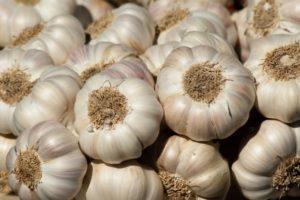
Garlic can be dried whole bulbs. Remove the outer skin so that the bulb remains intact.
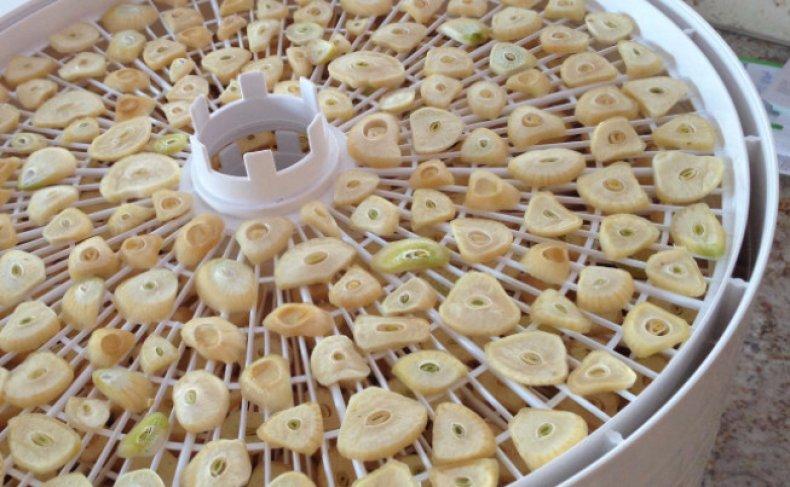
Using a sharp knife, cut the head into thin, 0.5-centimeter-wide slices. Place each slice separately on a tray. Dry the product in an oven at 50 degrees Celsius (122 degrees Fahrenheit) in the sun. Turn the slices periodically. Once the slices begin to break, the process is complete. Now all that remains is to peel the remaining skin off the dry slices.
Heads in a bundle
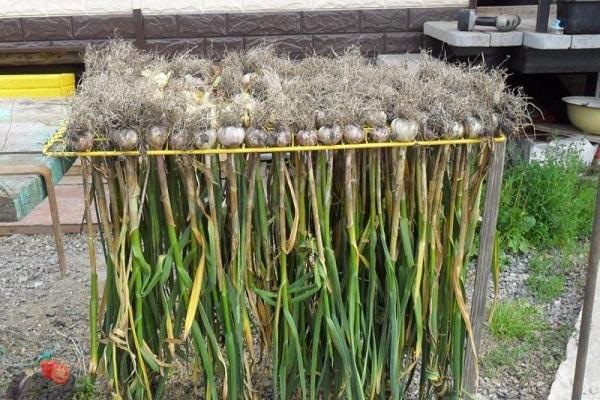
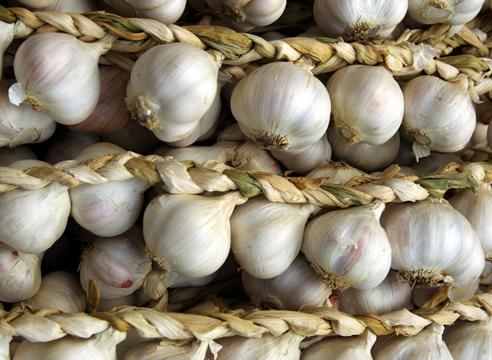
The stems are removed after the initial drying. The roots are trimmed to 3 centimeters, and the stems are cut to the required length, depending on the intended storage method. The bulbs are then dried for about a month in a dry, ventilated area.
For drying, leave 30 centimeters in the braid. Garlic is braided into the additional braid. A loop is left at the top for hanging in a closet or basement.
For storage in nylon stockings, bags, or baskets, cut the stems to 1 centimeter from the head. Dry the containers in a drafty area under a canopy for 2-3 weeks. Store garlic in a cool or warm location according to the variety.
Where to place the harvest
The drying method is chosen based on the volume of produce. Harvested from a large field can be conveniently dried outdoors. If the weather is unfavorable, a greenhouse or shed will do. At home, an oven or electric dryer is used.
After secondary drying, the vegetables are sent for storage.
On the street
Outdoor drying is used by large-scale farms and private individuals, as it requires no additional costs. The main thing is to avoid rainy weather.
Vegetables are left outside during the day. It's best to harvest them at night, as the air becomes more humid and rain may occur.
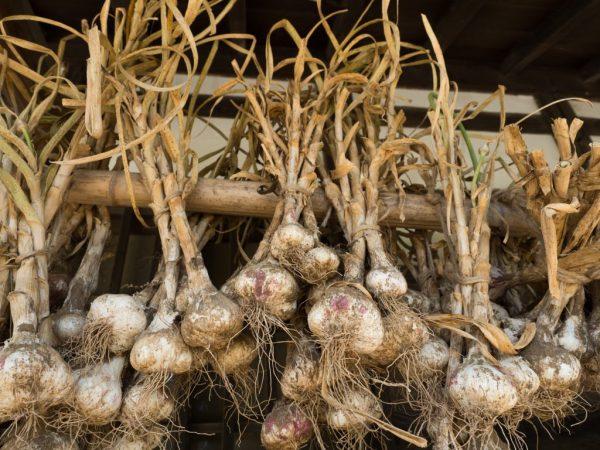
Outdoor drying preserves all the beneficial nutrients, which is why farmers often choose this method. Turn the garlic bulbs over in sunny weather. To prevent the garlic from drying out, dry it with the leaves still on. After 3-5 days, remove the tops and store.
Indoors
If weather conditions prevent drying vegetables outdoors, they are stored indoors. The key conditions for this type of drying are good air circulation, moderate humidity, and a darkened area.
At home, vegetables are stored on a balcony, attic, or terrace. The produce is laid out in a single layer. This method allows the vegetables to dry completely, which takes about 1-2 months. Once the garlic is dry, the roots are trimmed and the tops are removed.
In the oven
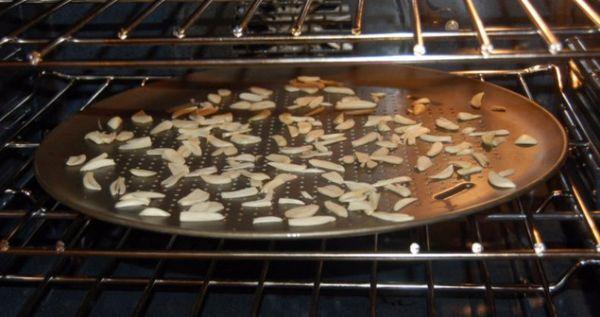
A small harvest can be conveniently dried in the oven. Set the temperature to 40 degrees Celsius (104 degrees Fahrenheit). Peel the garlic, rinse under water, and cut each clove in half. Place the garlic in a single layer, cut side up. Open the oven door during the drying process to prevent the garlic from becoming browned.
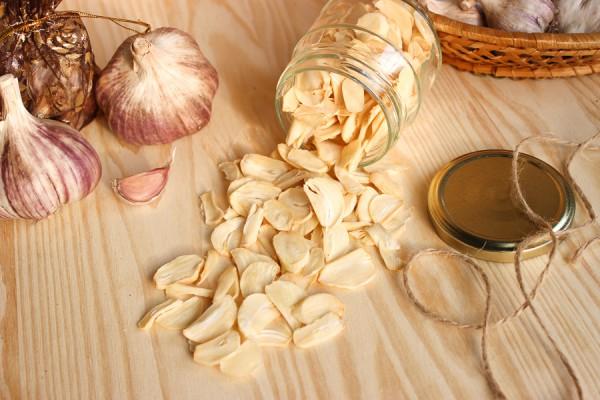
Once the moisture evaporates, the cloves will break easily. The vegetables are pulled out and cooled. They are stored whole or ground into powder. The latter option is used by commercial growers.
In an electric dryer
A more convenient way to dry vegetables is in an electric dehydrator. Its special program eliminates the risk of spoilage. Before loading the garlic into the dehydrator, peel it, wash it, and remove any damaged cloves. The cloves can be loaded in various ways: thinly sliced, halved, cut into thirds, or simply crushed with the flat side of a knife.
Take a look Also
The unit has five trays. The vegetables are placed in a single layer on each tray. The temperature is set to 40 degrees Celsius. A fan distributes hot air evenly across all trays. After approximately 10-12 hours, the vegetables are dry. The finished slices are similar to chips and easily breakable. Using a coffee grinder, the slices are ground into powder and stored.
Can I dry it in the sun?
Garlic is often dried in the sun. To prevent burning, the produce is turned periodically. In southern regions, this method is not recommended. The scorching sun can fry the produce, shortening its shelf life. Therefore, it is dried in the shade.
Dry in a greenhouse
If there's a spare greenhouse near the house, dry the garlic there. In hot weather, spray the roof with whitewash to create shade. Open the doors to allow air circulation. At night, close the greenhouse to keep out moist air. In this ideal location, dry the garlic until it's completely dry.
Main problems and errors
Novice gardeners grow garlic, but they can't keep it edible for long. The reasons are quite mundane:
- Water until fully ripe. Experts recommend stopping watering a month beforehand.
- Leaving garlic in the sun for too long will cause sunburn and shorten its shelf life.
- Wash the produce before drying. Storing in bundles does not require washing—this will only increase the crop's moisture content, making it susceptible to rotting.
If you follow simple requirements, the harvest will be stored for a long time.
Related posts:
 The 15 best ways to store garlic after digging it up at home
 How to dry dill at home for the winter
 When can spring garlic be harvested in 2025? Harvesting from the garden and storage
 How to properly dry winter garlic after digging and where to store it at home
 The best varieties and types of early and winter garlic with descriptions and names
 The best recipes for drying apples for the winter at home, and which fruits to choose
 How to properly grow and care for spring garlic in open ground and when to tie it into knots
 How to properly trim garlic after digging and storing it