
According to the variety description, Petrovsky garlic is a winter variety, typically planted in the fall. It also belongs to the multifaceted varieties, producing mid-season shoots and fruits.
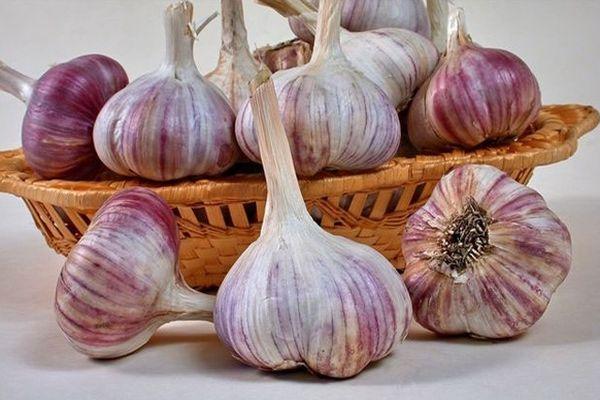
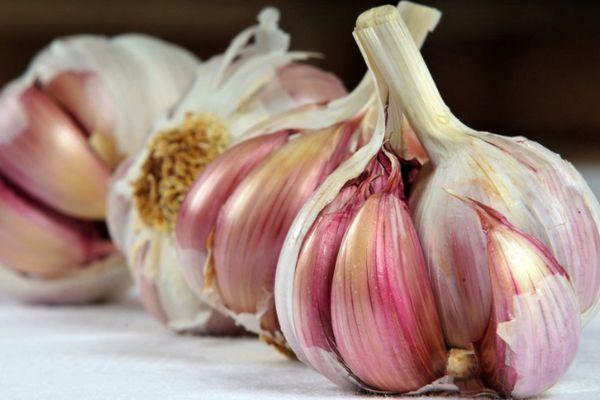
The heads of this variety of garlic are often flattened. A single medium-sized garlic typically weighs 70 to 80 grams and contains up to 8 cloves. The dry skins are off-white with dark purple stripes running along the sides. The cloves are light brown in color and have a dense structure.
How to prepare a planting site?
Garlic naturally thrives in fertile, fertilized soil. To achieve ideal conditions, choose soil with more or less normal acidity. It's also important to rotate the planting site annually, returning to previously used soil only after 3-4 years.
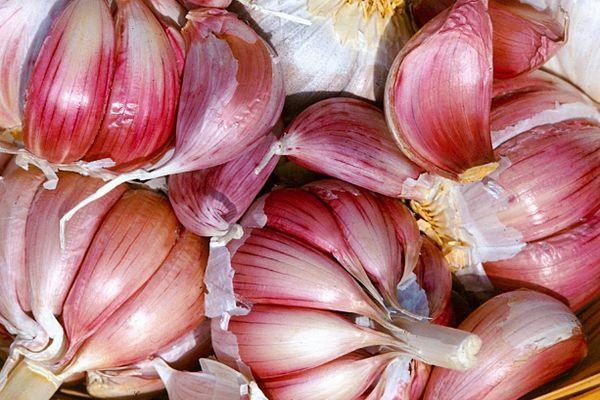
Before planting garlic, choose a dry, preferably sunny location. Soil should be selected 1.5 months before planting.
For high-quality soil fertilization, use nitrophoska, superphosphate, and dolomite. Clay soil is fertilized with peat. The bed is dug over with the fertilizer to a depth of about 20 cm.
Winter varieties are best planted before the cold weather sets in, around autumn. This allows the cloves to root in the soil.
Correct fit
Take garlic from a freshly harvested batch, selecting large, healthy heads. Then separate each clove to prevent damage and make sowing easier.
Next, the cloves need to be processed. To do this, soak them for a couple of minutes in a special salt solution (3 tablespoons of salt per 5 liters of water). For best results, place the garlic in a copper sulfate solution for about a minute and a half (1 tablespoon of copper sulfate per 1 medium bucket of water). After this simple procedure, the cloves are ready to sow:
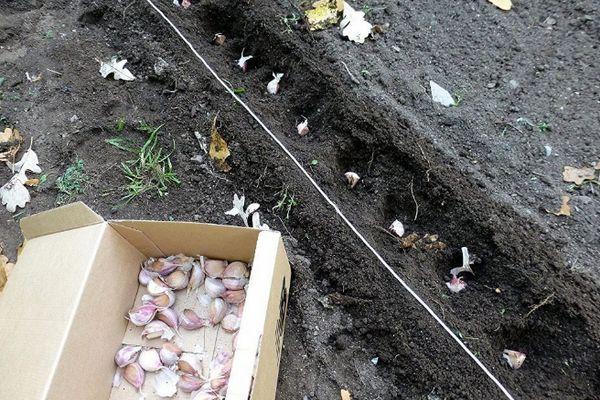
- On the prepared soil, furrows are made - transverse or longitudinal, usually no deeper than 8 cm and at a distance from each other of approximately 20-25 cm.
- The cloves are planted with a distance of 10 cm between them, and they can be placed at the bottom of the furrow or laid down.
- A couple of weeks after planting, this area is covered with mulch.
Care Features
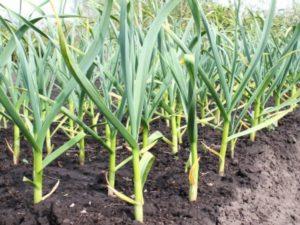
Once the seedlings have emerged, the area should be cleared of weeds. Watering should begin around early or mid-May and end in mid-July, or until July if necessary.
Watering should be stopped at least 2-3 weeks before harvest. Watering should only be done when rainfall is low. Fertilizing can begin when the third or fourth leaf begins to form.
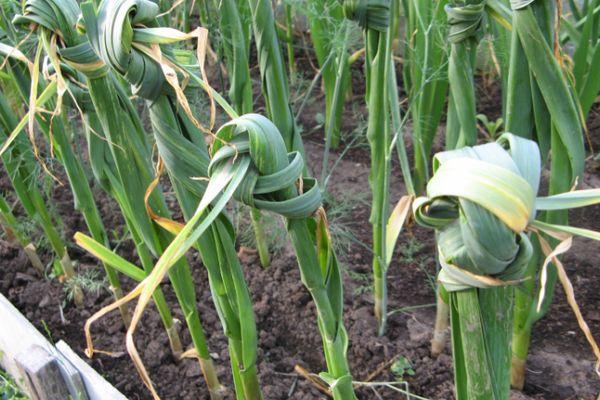
Fertilize with urea (add 1 tablespoon per average-sized bucket of water). If necessary, repeat the process after a couple of weeks, but this time use nitroammophoska (dissolve 2 tablespoons in a bucket of water).
The final feeding is recommended in early July; the head should form by then. Apply superphosphate (2 tablespoons per bucket of water).
Once a couple of leaves have acquired a yellowish tint, you can begin harvesting.
Using garlic for colds
Garlic is considered the most powerful folk remedy for fighting viruses. If you experience a metallic taste in your mouth, headaches, a sore throat, mucus discharge, or sneezing, you can use:
| Indications | Recipe | Application |
| High temperature (in other cases it will also be beneficial) |
|
Drink a glass three times a day. If desired, add a slice of lemon and a spoonful of honey. |
| At the first signs of a cold |
|
Drink the entire amount before bedtime. |
In general, any variety of garlic is recommended for preventative purposes. It is a natural antibiotic. There are positive reviews that it effectively fights viral infections.
Related posts:
 The best varieties and types of early and winter garlic with descriptions and names
 When can spring garlic be harvested in 2025? Harvesting from the garden and storage
 How to properly grow and care for spring garlic in open ground and when to tie it into knots
 Garlic cultivation technology in open ground, planting times, and care guidelines for a good harvest
 Why does garlic turn blue and green when pickled, how to avoid this, and is it safe to eat?
 The best recipes for pickled garlic heads at home for the winter, like those found at the market, and the shelf life
 Description and cultivation of Chinese garlic, cultivation and care
 What are the differences between spring and winter garlic, description of the crops, and which one is better for storage?
It's a great variety, large, I've been planting it for several years now. But I noticed that when I was fertilizing the plants last year BioGrow, then the harvest became significantly better, by 30 percent.