
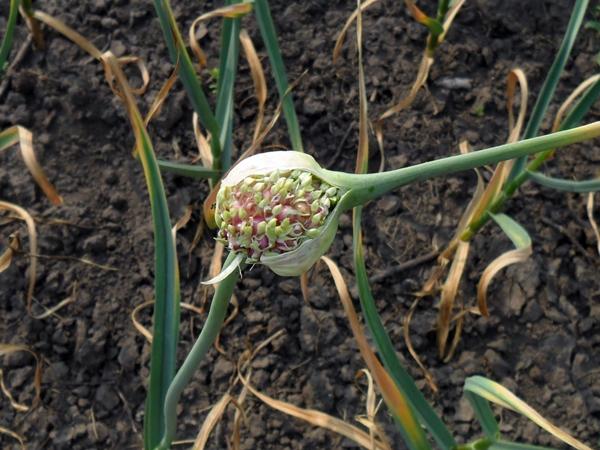
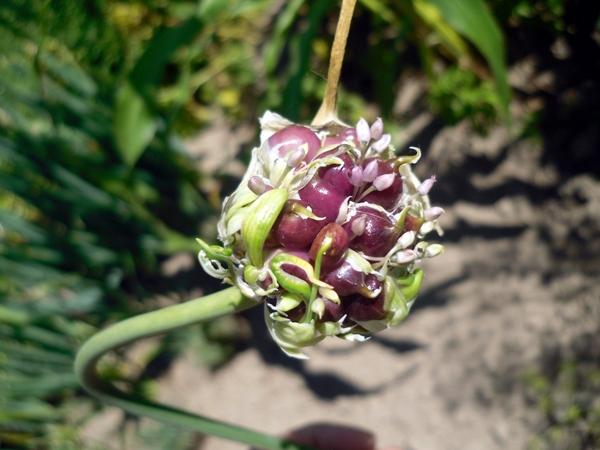
Both gardeners and summer residents resort to growing garlic from bulblets. This immune-boosting, blood-thinning, and germ-killing product is planted both in spring and fall. The heads of winter varieties contain no more than 10 cloves, which is clearly not enough to produce a new harvest. However, in summer, this vegetable produces stalks, where inflorescences form, which develop into baskets containing small bulblets.
Why grow garlic from bulbs?
Although the winter variety can be stored until the second half of February, many homemakers prefer it to the spring variety due to its large size and large cloves, which are easy to peel. This significantly saves time on cooking. However, to harvest the following year's fruit, which is rich in phytoncides, organic acids, and essential oils, a significant portion of the cloves will have to be buried.
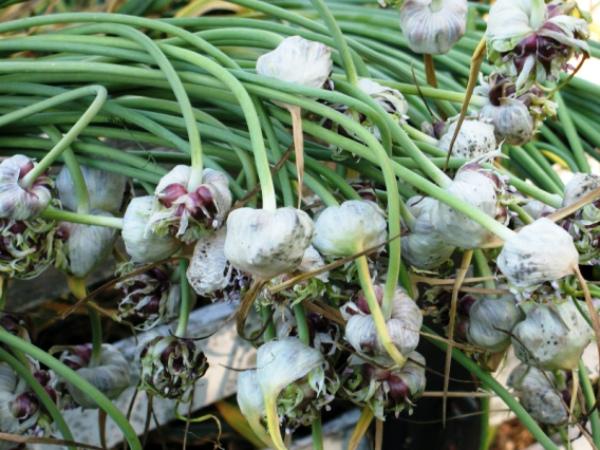
Planting garlic bulblets allows for a bountiful harvest, as each one will produce a sprout. Two shoots will produce at least a hundred heads. The aerial bulblets are covered with a film sheath, preventing them from disintegrating or being damaged. Using these bulblets rejuvenates the variety and improves the health of the planting material. This answers the question of what bulblets are used for, a question often asked by beginning gardeners.
The cloves have to be driven into the soil one by one, a process that requires a lot of time and patience. Along with the cloves, spores and microbes are introduced from the soil, exposing the new vegetable to disease. Aerial bulblets are sown in the soil like beets or peas, which prevents infection of the crop.
The benefits of growing bulblets
When the leaves on the plant begin to turn yellow, the stems with the capsules left on the bushes grown from large cloves are cut off. The membrane that protects the bulblets cracks as they mature. The maturation period for the bulblets from the bulblets is two years rather than one season, but there are clear advantages to this planting method:
- The seed material is saved significantly.
- The variety is being updated.
- The bushes are less susceptible to pests.
- Larger heads grow.
The collected bulblets are sorted and dried for a month. Before planting, they are soaked in an ash-water solution. Propagation from aerial bulblets is the easiest way to improve the variety's health.
Secrets of growing garlic
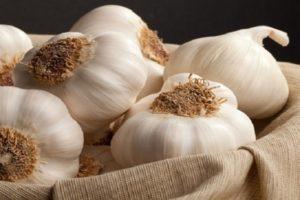
Winter garlic bulbs have a very simple structure. A central stem is surrounded by up to 10 cloves. The bulbs of this type of vegetable can be stored for up to 5 months, after which they dry out. Growing garlic from bulblets depends largely on the method chosen. With the first method, the bulblets are planted for the winter. In temperate climates, severe cold and frozen ground can cause many seeds to perish.
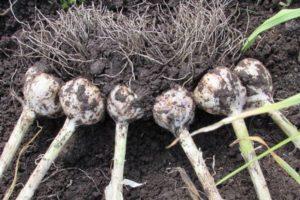
To renew the winter garlic variety, the bulblets are placed in the soil in the spring. Then, in February, they are sorted, soft and empty bulblets are discarded, and healthy ones are placed in the refrigerator or taken to the cellar, placed in boxes with straw.
How to grow bulbils
After selecting the largest cloves from the garlic harvest, they are planted in the ground in the fall. The following summer, stalks form, which need to be bent into a spiral; they will straighten out on their own as the garlic seeds form in the seed head. Not everyone knows how to grow garlic from these seeds.
The ripened fruits of the plant are dug up by the roots, rolled into a sheaf, tied, and hung from the ceiling. Good ventilation and warm temperatures are needed for the bulblets to ripen. After four months, the seed heads are cut off, wrapped in newspaper, placed in a container with straw, and stored at 20-22°C.
Garlic planted from unstratified bulbs will take a long time to develop, resulting in small heads. The seeds from these bulbs are unsuitable for growing a new crop and are not resistant to diseases and pests.
Some gardeners harden off the bulblets by burying them in a cloth bag in the snow. In the spring, when the temperature warms to 4°C (39°F), they will begin to sprout. If garlic seeds were planted outdoors in the fall, the beds are covered with spruce branches, twigs, and straw. To renew the variety, only large, healthy, and hardened bulblets are propagated.
When to collect the grown seed material
At the end of July or the beginning of August, the garlic leaves begin to turn yellow; before the above-ground part dries out, the heads must be carefully dug up and left in the shade.
When the husks begin to peel off, the stems are tied into bundles and hung in the attic or barn.
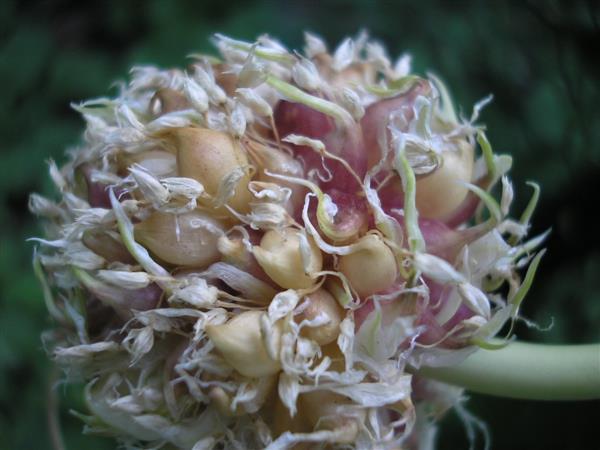
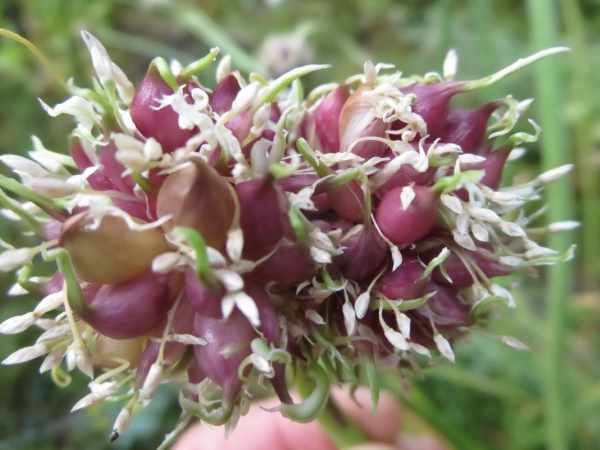
This single-clove garlic is planted in the garden in the fall. It will sprout in the summer, and in August, the full heads are dug up along with their bulblets, with only the healthy ones selected for planting. A single inflorescence contains up to a hundred aerial bulblets.
Preparing the garden bed
How to plant garlic Not every gardener who decides to grow this vegetable understands how to harvest it from small bulbs. The crop is very demanding of soil fertility. To expect a good harvest, it is necessary:
- Prepare the ground.
- Select and harden the seed material.
- Take good care of the beds.
The area needs to be dug over, removing weeds and root debris. Only then should furrows be made into which the seeds are planted. Large bulblets are spaced every 4 cm. Several dozen aerial bulblets should fit within one square meter.
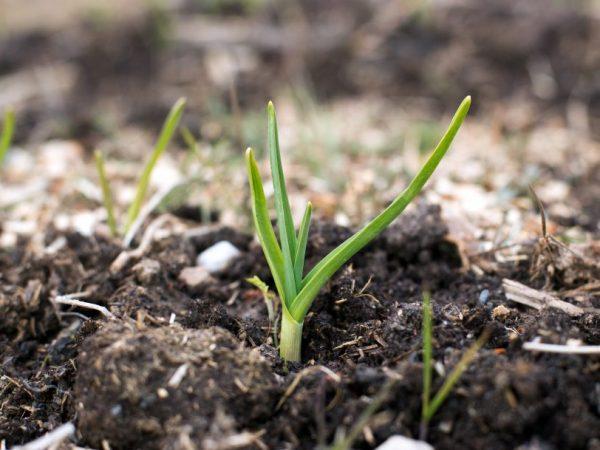
For the winter, the beds are covered with humus, dry leaves, and pine branches. Garlic needs to be insulated especially in regions with little snow, otherwise it won't survive temperatures around -20°C.
Avoid planting this vegetable crop after tomatoes and potatoes, as there is a risk of fusarium wilt. The best predecessors include:
- pumpkin and cabbage;
- beans and kidney beans;
- alfalfa and mustard.
In the fall, add 5 kg of humus, 30 g of superphosphate, and 20 g of potassium chloride per square meter of soil. Acidic soil requires liming.
Methods of planting with bulblets
Winter garlic is stronger and less susceptible to bacterial and fungal attack if grown from aerial bulbs rather than from cloves. The process consists of several stages. The first involves harvesting small sets weighing less than 5 g. These are planted, and the following season, they grow into single-clove garlic, which mature into a full-sized head within a year.
The bulbs and their bulblets are harvested in July or early August; the seeds remain viable for two years. More seed must be collected, as not all of them will sprout, and not every bulb is suitable for planting in the garden. Garlic can be propagated using three methods.
Fall sowing begins in late October. The bulblets are planted at a depth of 40 mm in a multi-row band and covered with dry leaves, sawdust, and humus. During the growing season, the soil is loosened and moistened, and fertilized. When the leaves turn yellow, the garlic is dug up, dried, and planted again in October. The following year, it yields a bountiful harvest of large bulbs.
When planting in spring, prepare the beds in the fall, as soggy soil is difficult to dig. The bulblets are removed from the refrigerator or cellar and placed in the garden bed. In August, these seeds produce single-clove bulblets. Harvest the garlic when the stems begin to bend to the ground.
When grown directly from the ground, the bulblets are cut in early summer, thoroughly dried, and planted in the ground. Single-clove bulblets are not dug up in the fall; the bed is insulated, and large bulbs develop by summer.
Video: Propagating garlic from bulblets
If you sow the aerial bulblets harvested in time for the winter, by the following summer they will yield the material for planting winter garlic—single-clove garlic—which will be less susceptible to diseases and pests. There are two methods for propagating this variety using bulblets.
One option is to plant aerial bulbs in the first year, from which single-clove bulbs grow, which are dug up in the summer and sent to the garden bed in the fall.
The second method differs in that the small garlic obtained from the seeds with one clove is left in the ground.
If you planted bulblets in the garden for the winter, caring for them doesn't require any special care. At the end of March, remove branches, sawdust, or other insulation material from the beds. When the soil dries out after the snow, loosen it, but do so carefully to avoid damaging the bulblets.
Garlic needs to be watered frequently, as the bulbs' roots don't penetrate deep into the soil. Weeds must be kept under control regularly, otherwise they will choke out the young plants and prevent them from developing.
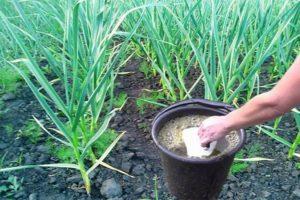
A month after the sprouts emerge, the bulblets are fertilized with ammonium nitrate and superphosphate. At the end of July, they are watered with a wood ash solution.
When the leaves and stems begin to yellow and dry, it's time to harvest the single-clove bulbs. On a sunny, dry day, dig up the young garlic with a shovel and pull it out of the ground. The bulbs are dried, and the tops and roots are removed. The single-clove bulbs are stored in boxes until it's time to plant again.
By propagating garlic from bulblets, you can reap an excellent harvest of large bulbs after two years. Using various seed planting methods, you can preserve a variety that quickly matures. This eliminates the need to spend money on seed. Propagating from bulblets allows you to rejuvenate and improve the health of your vegetable crop.
Although it seems, that the structure of spring garlic is no different from winter garlicBoth plants have leaves, stems, and the same head.
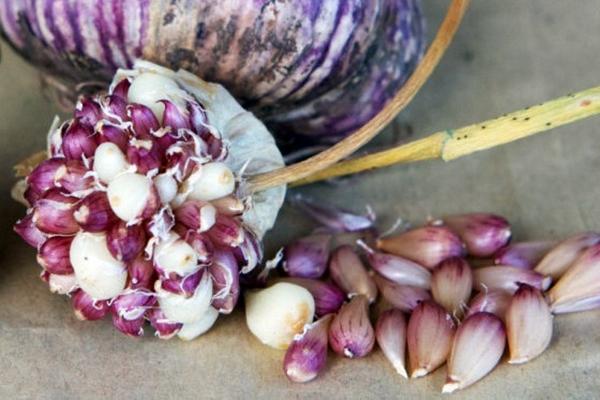
Summer varieties have a large number of teeth arranged in rows, which is quite sufficient for planting. Spring garlic does not produce shoots that turn into inflorescences, and therefore does not have bulblets.
Related posts:
 The best varieties and types of early and winter garlic with descriptions and names
 Garlic cultivation technology in open ground, planting times, and care guidelines for a good harvest
 Description and cultivation of single-clove garlic, planting and care rules
 How to properly grow and care for spring garlic in open ground and when to tie it into knots
 Description and yield of the Lyubasha garlic variety, planting and care
 When can spring garlic be harvested in 2025? Harvesting from the garden and storage
 When to harvest winter garlic in Siberia, planting and storage times, varieties
 Why do you need to rake the soil away from garlic heads before harvesting?