
Garlic is a world-famous vegetable with a distinctive flavor and beneficial health benefits when eaten as a food. Garlic is undemanding of climate conditions and, under certain conditions, can even be grown in Siberia. There are specialized winter varieties adapted to specific growing conditions. To reap a good harvest, you need to know when to plant the vegetable in this region and when to harvest winter garlic in Siberia. Let's explore these questions in more detail.
Why is it important to harvest your crops on time and correctly?
Growing winter garlic Gardening is a specific activity that requires adherence to specific timeframes. Simply planting in the fall and expecting good results isn't enough. Proper planting and harvesting of cultivated plants allows gardeners to increase their yields.
To do this you need to:
- select suitable planting material;
- prepare the ground;
- Planting should be done no later than 50 days before the onset of cold weather. This schedule is followed to ensure the garlic cloves have time to develop a root system at least 10 centimeters long. This will help the seedlings overwinter in comfortable conditions.
Important! The second half of September is considered the best time for planting.
Features of winter garlic
The characteristics of winter garlic are as follows:
- Good adaptation to harsh climatic conditions.
- It requires soil moisture, especially during planting, when it needs to grow intensively.
- The root system is poorly developed, and special attention should be paid to preparing the soil for planting.
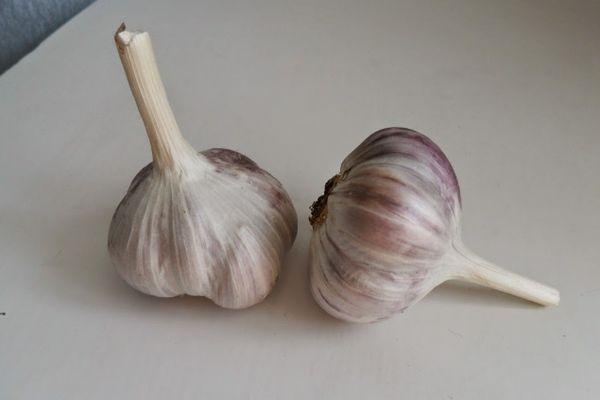
- It has a rod in the center of the bulb, around which cloves are formed.
- The teeth are arranged in a single row and are difficult to distinguish by appearance.
- The productivity of winter varieties is high.

Experts identify the following varieties of winter garlic, which they consider the best for Siberia:
- Dobrynya;
- Alcor;
- Lyubasha;
- Sineevsky;
- Dubkovsky.
These varieties are considered productive and are suitable for winter planting.
When is garlic harvested in Siberia?
When to harvest garlic in Siberia depends on many factors, including planting time and the variety. For example, there are two varieties of onion, each with its own maturity:
- bolting variety;
- non-bolting variety.
The bolting variety is harvested if:
- the leaves at the bottom of the plant have turned yellow by about two-thirds;
- the film covering the inflorescence capsules will begin to crack;
- And finally: take one onion and weigh it. If the result is 60 grams, harvest.
![When in [year] can spring garlic be harvested, collection from the garden and storage](https://harvesthub.decorexpro.com/wp-content/uploads/2019/04/kogda-ubirat-yarovoj-chesnok_12-300x200.jpg)
The non-bolting variety is harvested when:
- most of the leaves will fall to the ground;
- The non-shooting variety's bulbs will weigh up to 35 grams.
Harvesting winter garlic
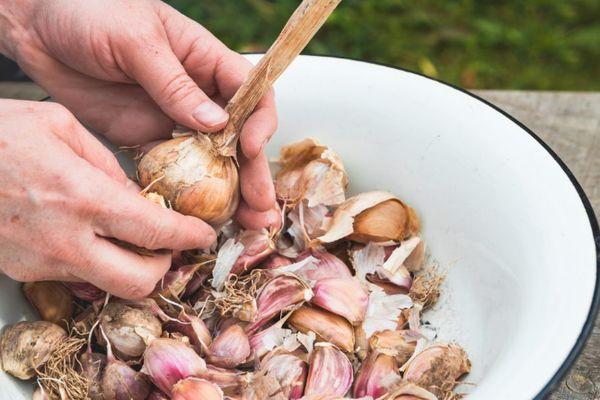
If you can't tell when to dig up garlic based on external signs, there's another way to find out. To do this, dig up several heads from different parts of the garden and pay attention to the following details:
- A bolting variety has 4 to 10 cloves per head. They will be arranged in a single row, and each clove will weigh 2-2.5 grams;
- Non-bolting garlic heads contain many more cloves, sometimes up to 30 individual cloves. The cloves are arranged in a spiral pattern within the head, consisting of 2-3 curls. The outer circle contains the largest parts, which are used for planting the next crop.
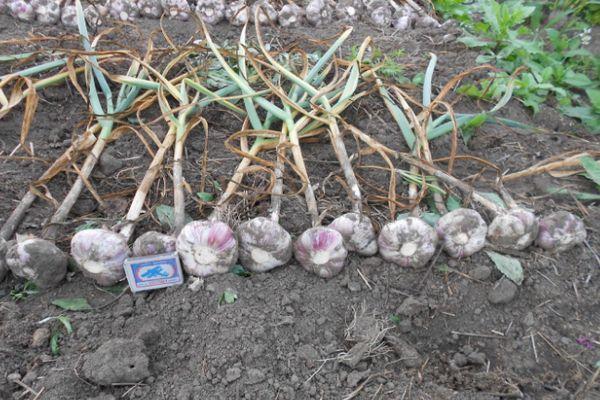
Winter varieties in Siberia are harvested around July 20th. Characteristic signs of harvest readiness at this time include cracked seed pods and fissures around the plant, which form due to the vigorous growth of the garlic bulb underground.
When to dig up spring garlic
Many gardeners are concerned about harvesting not only the winter but also the spring crop. The answer to the question of when to harvest spring garlic in Siberia is quite simple. Harvests planted in early May or late April are harvested from August 15th to September 15th.
There are varieties that take a little longer to ripen, and their harvesting is postponed until the end of September.
The algorithm for determining the maturity of spring varieties is similar to that for winter non-bolting varieties. Pay particular attention to the plant's leaves. As soon as they bend toward the ground, it's time to harvest. Experienced gardeners recommend harvesting spring crops a little earlier than expected. This is because the ripening time for crops usually coincides with the rainy season.

Please note: If you want to speed up the ripening process, you should lightly strip the garlic heads by removing the top layer of soil.
How to harvest and store garlic
Harvesting and storage conditions largely depend on the planned propagation method. There are two options:
- propagation by cloves;
- propagation by means of bulbils.
In the first case, harvesting occurs within the standard timeframe, and no special rules apply. In the second case, when the gardener needs high-quality bulblets, harvesting follows the following schedule:
- Most of the harvest is collected within the standard timeframe, and a few plants that look the healthiest and strongest are left in the garden bed;
- in September, when the heads located on the arrows open, the remaining plants are dug up;
- Next year, garlic bulbs will form from the bulbs.
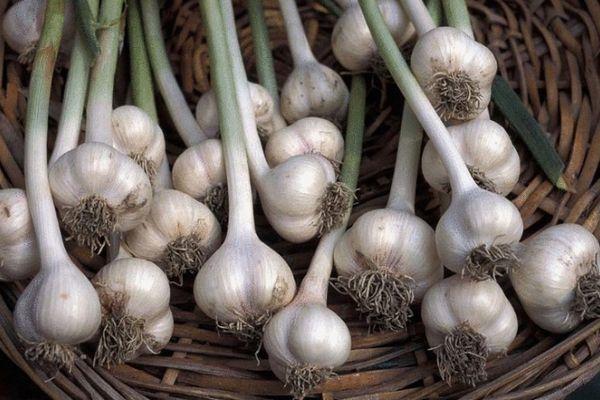
Some gardeners living in Altai sort the dug-up bulbs, using the healthiest-looking ones as planting material. This process restores the health of winter garlic crops. Spring varieties are also restored in the same way.
You can preserve winter garlic until spring by following these steps:
- The heads are sprinkled with salt and stored in a dark, dry place.
- Cold storage method. The product is stored at low temperatures in a refrigerator or cellar.
- Instead of salt, use flour – sprinkle the garlic heads with it.
- The same storage method is used for onions. Cardboard boxes or mesh bags are used as containers.
- The cloves are dipped in vegetable oil and stored in this form.
- If you don't have enough salt or flour, take the skins left over from onions and cover the crop with them.
Cleaning times
There are many factors that can influence the timing of garlic harvesting:
- quality of garden care;
- climatic conditions;
- sowing time;
- the duration of growth and maturation of an individual crop.

For example, to determine the harvest time for bolting varieties, gardeners pay attention to the position of the bolts. When they straighten up and point upward, the harvest is ready. Non-bolting winter and summer garlic varieties are ready when the leaves on their stems turn yellow. When harvesting, pay attention to the quality of the heads—they should be whole and firm to the touch.
Important! Harvest ripened fruits within a week of maturity, otherwise they may spoil.
Cleaning technology
Follow these guidelines for harvesting winter garlic:
- the weather during the harvest should be dry and warm;
- a couple of weeks before harvesting, the crop is no longer irrigated;
- To dig up the head, it is best to use a pitchfork rather than a shovel;
- First, dig up the plant slightly, then carefully pull it upwards, holding it by the stem;
- If you want to store the heads, try not to damage the husks and roots. Clean the soil off them carefully and gently;
The winter variety is a crop that doesn't require sun ripening. The fruits are stored under cover for several weeks, after which the stems and roots are trimmed.
Storage
As mentioned above, there are many post-harvest storage algorithms. Generally speaking, they fall into two main categories:
- garlic for warm storage;
- The heads are kept cold.
The cold method involves storing the product in a cellar or refrigerator. If you choose the first option, ensure the ambient temperature does not exceed 15°C. O, and the room is well ventilated. You can combine the two methods: first, store the product in a warm place for six months, and then move it to the refrigerator.
Seasonal tips
For gardeners planning to plant garlic in 2025, we would like to offer the following advice:
- Regardless of the season chosen for planting, try to prepare the site well. This rule works equally well for both warm and cold seasons;
- Make sure winter varieties are covered with snow during the winter. If the beds are bare, the ground will freeze solid and all the garlic will die.

Lunar calendar
Harvesting garlic according to the lunar calendar – a fairly common occurrence. The best time to harvest garlic is during the waning moon phase. Winter garlic is best harvested on the following dates in July: 5th–7th, 15th, 16th, 19th, 20th, 23rd, and 24th. Spring garlic is harvested in August, and the best dates are considered to be: 1st, 2nd, 3rd, 11th, 12th, 15th, 16th, 23rd, and 29th.
Country life hack
Siberia is a vast region, with climate conditions varying significantly from place to place. For example, in Novosibirsk, which is in Western Siberia, planting must be completed by October 5th. May and June are considered the most dangerous months for garlic.
In Eastern Siberia, for example in Irkutsk, garlic is best planted around September 15th, otherwise it won't have time to harden sufficiently before the first frost. In the same area, winter oats are sown for garlic. Because spring arrives later than usual in this region, harvesting is scheduled for August.
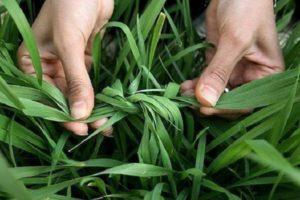
To increase the size of garlic bulbs, tie the leaves into knots. This should be done in early July, which will delay harvesting by three weeks and result in larger bulbs.
Related posts:
 The best varieties and types of early and winter garlic with descriptions and names
 When can spring garlic be harvested in 2025? Harvesting from the garden and storage
 Garlic harvesting dates in the Urals in 2025, cultivation and care
 Description of the best cabbage varieties for 2025 for different regions
 How to properly dry winter garlic after digging and where to store it at home
 When to dig up garlic in the Moscow region in 2025
 How to properly grow and care for spring garlic in open ground and when to tie it into knots
 The best recipes for pickled garlic heads at home for the winter, like those found at the market, and the shelf life