
- What micro- and macroelements does garlic need?
- Timing of fertilizer application
- In the spring
- In summer
- In the fall
- Methods for treating bushes in open ground
- Foliar
- Under the root
- What fertilizers does a plant planted in spring like?
- Nitroammophoska and nitrophoska
- Superphosphate
- Potassium sulfate
- Ammonium nitrate
- Urea
- Boric acid
- Organic fertilizers
- Ammonia
- Wood ash
- Table salt
- Yeast
- Chicken manure
- Mullein
- Complex mineral fertilizers
- What should not be used
Garlic is a spicy vegetable with a distinctive flavor and numerous beneficial properties. To ensure a bountiful harvest, you need to not only follow planting guidelines but also provide comprehensive care. One of the most important steps is proper fertilization, so it's important to know which fertilizers to use at different times of the year and how.
What micro- and macroelements does garlic need?
A properly selected composition of micro- and macroelements will ensure good growth and development of garlic, as well as protect it from common diseases and pests.
For a rich harvest the following substances are necessary:
- Oxygen, hydrogen, and carbon are essential building blocks for plants. Vegetables obtain hydrogen from the breakdown of water during photosynthesis, while oxygen and carbon are obtained from the air.
- Nitrogen ensures healthy growth. However, excessive amounts of this nutrient should be avoided, as this weakens the garlic and increases its susceptibility to disease.
- Phosphorus is needed for the head of garlic to fill out and have excellent taste, aroma, and beneficial properties.
- Potassium, which contributes to the overall improvement of the plant’s condition and increases its cold-resistant properties.
- Calcium, which ensures the correct formation of roots, stems and fruits.
- Magnesium, the main source of chlorophyll, is responsible for the rich green color of the above-ground portion of garlic and protects against premature yellowing and wilting.
- Sulfur in small doses gives garlic its characteristic pungent taste.
- Iron and copper stimulate the formation of chlorophyll.
- Boron prevents drying out and rotting.
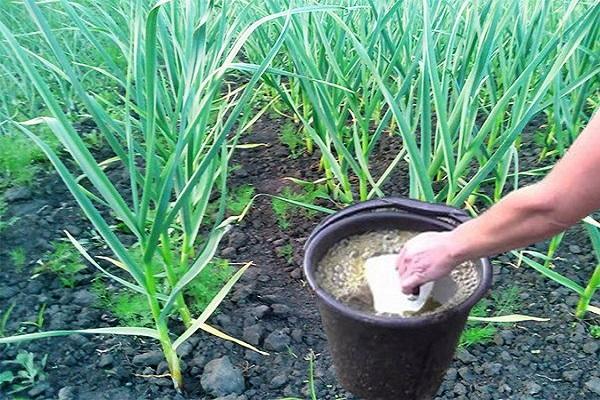
Timing of fertilizer application
To ensure that fertilizers are as effective as possible, optimal application times must be observed at different times of the year.
In the spring
In spring, garlic needs to be fertilized three times. The first application should be done after the snow melts—this is when the vegetable is most susceptible to the mineral deficiencies it needs for growth. The second application should be no earlier than two weeks after the first. The third application should be made at the end of May, which is necessary for fruit set.
In summer
Summer garlic fertilization consists of two stages. The first application is recommended in mid- to late July. Winter garlic, which ripens earlier than spring garlic, should be fertilized in June. The vegetable should be fertilized again in mid-August.
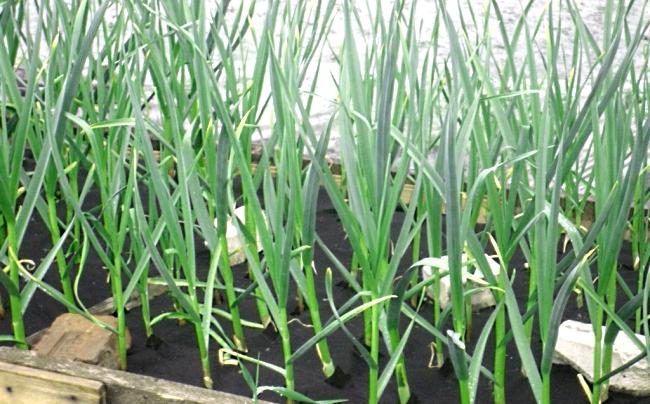
In the fall
In the fall, apply fertilizer 14 days before planting winter garlic. The final application is recommended before the onset of frost. This will enhance the vegetable's protective properties.
Methods for treating bushes in open ground
There are two methods for fertilizing garlic planted outdoors: foliar and root. First, it's important to understand the differences and differences between the two.
Foliar
When garlic needs an urgent supply of nutrients, foliar feeding is used. Spraying the fertilizer on the stems and leaves promotes faster and easier absorption of the nutrients.
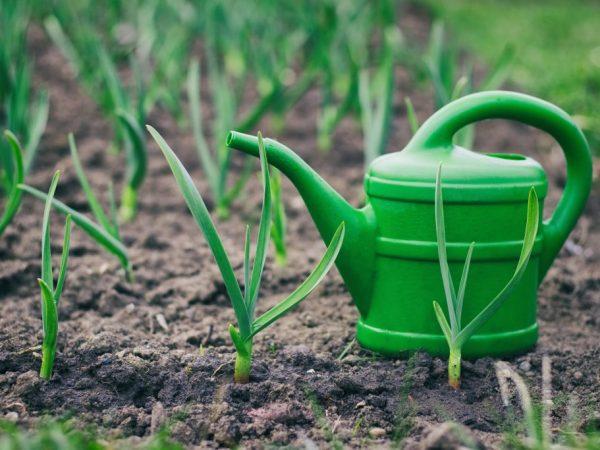
Compared to root feeding, a reduced concentration of fertilizer is used in this case.
It is recommended to carry out foliar feeding twice during the period of active growth of the vegetable crop.
This method is additional to root feeding and cannot serve as a complete replacement for it.
Under the root
This is the traditional method of fertilizing and involves applying fertilizer directly to the soil beneath growing garlic. Root and foliar feeding should not be done simultaneously.
What fertilizers does a plant planted in spring like?
To ensure garlic grows and develops properly after spring planting, it is necessary to choose effective and safe fertilizers.
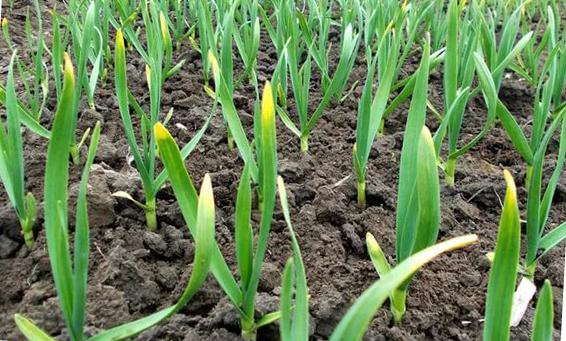
Ready-to-use, mineral-based commercial fertilizers are best used on depleted and poor soils. When using them, strictly adhere to the dosage to avoid toxic effects.
It is recommended to fertilize garlic with such means during the growing season.
Nitroammophoska and nitrophoska
Nitroammophoska is a universal mineral fertilizer for all types of crops, including bulbous plants. Available in granules, its balanced composition enriches developing garlic with potassium, nitrogen, sulfur, and phosphorus.
When using this type, you need to consider several recommendations:
- The optimal time to incorporate fertilizer into the soil is in the spring, three weeks before the planned vegetable planting.
- For root feeding in late spring or early summer, use 20-30 grams of fertilizer per linear meter of the garlic bed.
- Foliar feeding should be performed when the plant's leaves turn yellow. To do this, prepare a nutrient solution at a rate of 2-3 tablespoons of fertilizer per bucket of water.
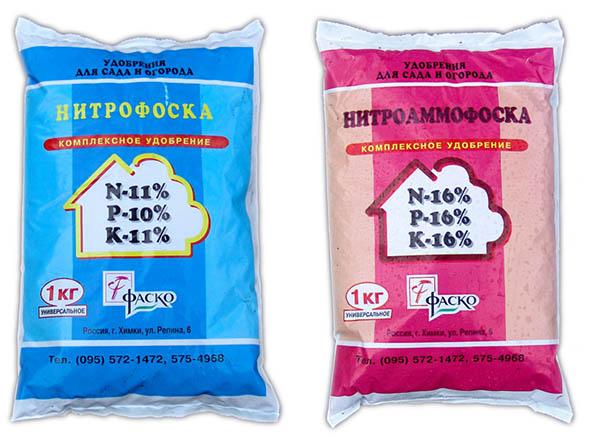
Nitrophoska is a complex fertilizer that accelerates vegetative growth. It contains nitrogen, phosphorus, and potassium salts. It is less concentrated than nitroammophoska, so twice the amount is required.
Superphosphate
Using superphosphate stimulates the formation of garlic bulbs and roots. A phosphorus deficiency leads to a number of shortcomings in this vegetable, including small size, susceptibility to pests and diseases, and a lack of distinctive flavor and nutritional properties. To fertilize a 2 x 2 meter plot, use 2 tablespoons of the dry product per 1 bucket of water.
Potassium sulfate
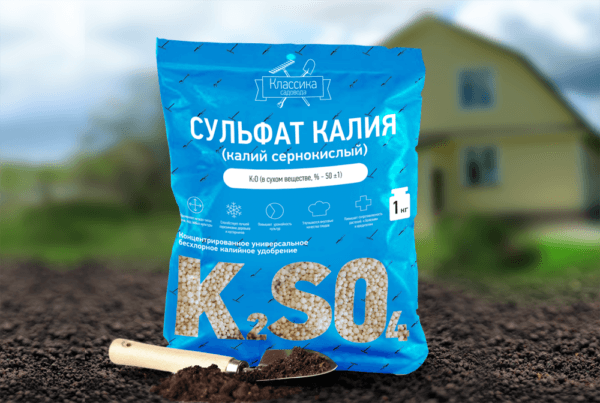
Potassium sulfate promotes better ripening and storage of fruits. It is used during the growing season. The recommended dosage is 3 tablespoons of fertilizer per 10 liters of water.
Ammonium nitrate
To ensure large garlic growth, fertilize it with ammonium nitrate. It contains nitrogen, sulfur, magnesium, calcium, and potassium. Fertilizing should be done 20 days after the sprouts emerge. Per 1 m2 5-7 grams of the product is required.
Urea
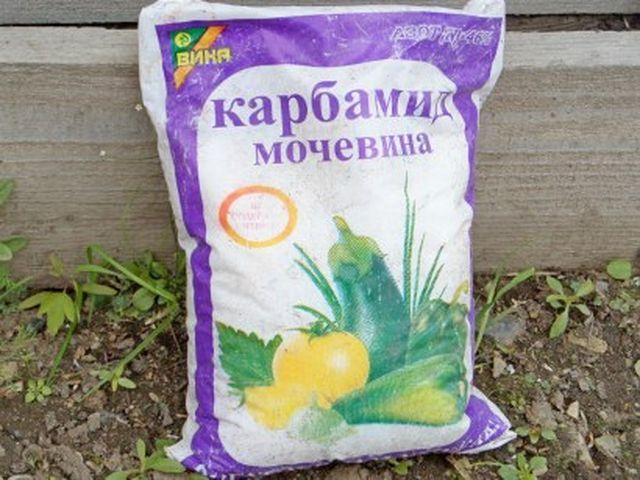
Urea, or carbamide, is a fertilizer high in nitrogen compounds that promotes the development of green mass. Spring feeding stimulates garlic growth. For a 3-meter bed.2 You need to dissolve a tablespoon of the product in one bucket.
Boric acid
Boric acid saturates growing garlic with boron. By participating in the synthesis and photosynthesis of micronutrients, this fertilizer effectively nourishes the plant and ensures healthy growth. Boron also boosts the immunity of crops.
The day before garlic seeds should be immersed in the plantings in a solution of boric acid (0.2 grams of substance per 1 liter of water).
Organic fertilizers
Organic fertilizers are preferred by many gardeners due to their safe effect on plant crops.
Ammonia
Fertilizing garlic with ammonia will help it grow large and densely cloved. The first application should be done at planting, using a solution of 50 ml of ammonia and 10 liters of water. After 2-3 leaves appear, foliar feeding will be necessary to provide pest protection. To do this, dilute 2 tablespoons of alcohol in 10 liters of water.
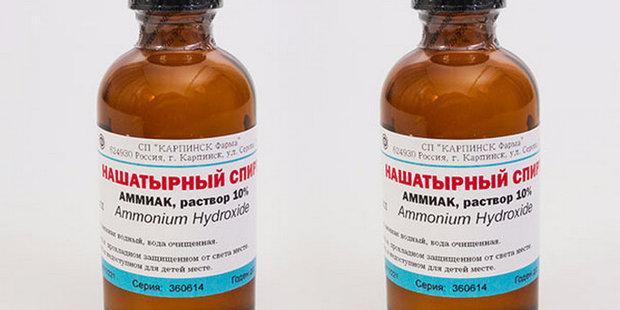
Subsequently, it is recommended to use a solution with a lower concentration every 10 days. Yellowing leaves and pale green foliage indicate that garlic needs ammonia. It is best to fertilize the plant with this solution in the evening, after moistening the soil.
Wood ash
Wood ash, rich in phosphorus and potassium, has a positive effect on garlic growth. It should be used for summer feeding.
There are several ways to use it:
- preparation of a solution for root feeding (500 g of ash per 10 l of water);
- solution for foliar feeding (250 g of ash per 10 l of water);
- scattering over beds to improve soil properties;
- scattering over the aboveground parts of the plant to protect against pests.
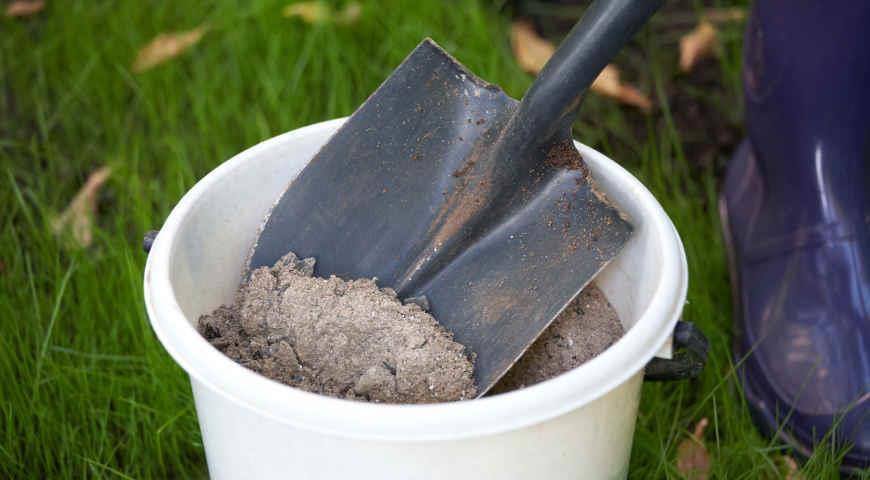
Table salt
The main effect of table salt is to stimulate seedling growth and prevent premature yellowing of garlic tops. To treat a bed, prepare a solution of 10 liters of water and 3 tablespoons of salt.
Yeast
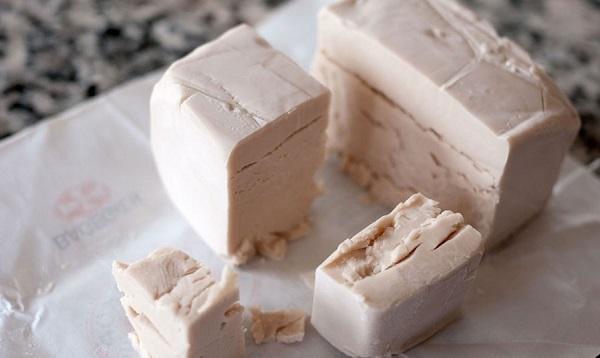
Yeast fertilizer is popular among gardeners and horticulturists as a stimulant for the active growth of all types of plants. It also boosts vitality and increases the resilience of crops. It is recommended for use in spring and summer.
The nutrient solution can be prepared from either fresh or dry product:
- Add 200 g of yeast to 1 liter of water.
- Stir thoroughly.
- Let stand for 24 hours.
- Dilute the resulting concentrate in a 10-liter bucket of water.
Chicken manure
This natural fertilizer consists of nitrogen, phosphates, and soluble potassium salts. The benefits of chicken manure as a garlic fertilizer include:
- environmentally friendly and free of toxins;
- long-lasting effect (it is enough to use it once every three years);
- increasing soil fertility, restoring favorable microflora and acidity;
- increasing plant resistance to adverse external factors and diseases.
However, it is prohibited to add it fresh to the soil, as this can lead to the death of the garlic.
Chicken manure is effective and safe when combined with the following components:
- wood sawdust;
- peat;
- straw.
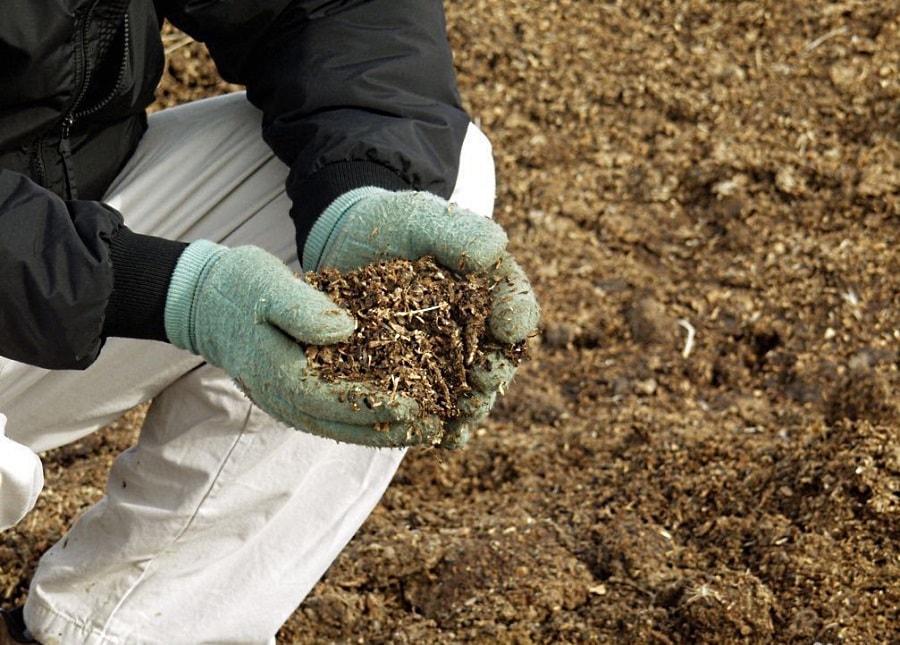
You can also add copper sulfate. A few grams of this substance will neutralize the unpleasant odor of this organic fertilizer.
Mullein
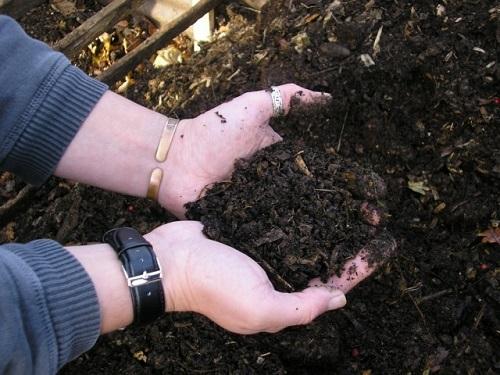
Well-rotted cow manure contains all the necessary elements for garlic development. This fertilizer is rich in potassium and nitrogen, and also contains some phosphorus.
The nutrient solution is prepared as follows:
- One bucket of cow manure is diluted in a barrel.
- Five 10-liter buckets of water are added.
- The mixture is stirred periodically to obtain a uniform consistency.
- Let stand for 15-20 days.
- After this period, dilute the concentrate at a rate of 1 part of the mixture to 10 parts of water.
Complex mineral fertilizers
Many agricultural companies produce complex mineral fertilizers that can be used to achieve a good garlic harvest.
"Agricola-2" is a magnesium-based product with added valuable microelements. It is recommended to use it as a solution at a dosage of 25 g of fertilizer per 15 liters of water. For foliar application, the concentration can be halved.
"Onion and Garlic" from Fasco contains magnesium and calcium. It is intended for application to the soil before planting. Per 1 m2 100 g of the product is used.
"Reflex" is a liquid fertilizer with a complex composition. It contains humic acids, sodium, and potassium. It is sold in dark bottles. For root and foliar application, use a solution of 10 liters of water and 50 ml of concentrate.
"Cinderella" is a complex fertilizer based on humic acids and herbal extracts—nettle, lemon balm, yarrow, and calendula. It increases crop yields and protects against pests. A 400g package is enough for planting 25 kg of garlic cloves. Apply the product to a depth of 10 cm in loosened soil.
What should not be used
Some fertilizers can be harmful to garlic if used improperly. Nitrogen-containing fertilizers are not recommended during the summer, when garlic cloves are forming. This leads to excessive growth of green tops, while the garlic cloves become small, loose, and tasteless.
Related posts:
 The best varieties and types of early and winter garlic with descriptions and names
 How to properly grow and care for spring garlic in open ground and when to tie it into knots
 Garlic cultivation technology in open ground, planting times, and care guidelines for a good harvest
 How to properly plant garlic outdoors and prepare the soil
 When can spring garlic be harvested in 2025? Harvesting from the garden and storage
 Description and yield of the Lyubasha garlic variety, planting and care
 Description and cultivation of single-clove garlic, planting and care rules
 Features of planting and caring for family garlic, description of varieties, pest control