
A productive hybrid of pungent garlic and aromatic onion with a mild garlic flavor and aroma, this variety is perfect for many dishes. During flowering, purple bulbs bloom in the garden. Knowing the basics of planting and growing Rocambole onions will help novice gardeners achieve a decent harvest of large garlic.
Rocambole onion
A crop that can be grown in the country's climate zones may be mistaken for giant heads of garlic. Small bulbs of garlic grow on the heads of onions and garlic; we'll learn more about the other characteristics in a separate chapter.
Description of the variety
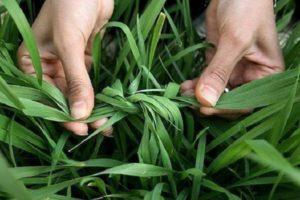
The plant's foliage is light green, easily distinguishable from onions or garlic by its rough surface. The leaves are broad at the base and taper significantly toward the tip. The surface is covered with a thin waxy coating and has a slightly concave shape. The flat leaves are up to 300 mm long and 30 mm wide at the base. When flowering, a stalk up to 1.5 m long emerges, bearing a spherical inflorescence.
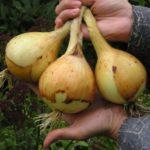
The "Spanish garlic" bulb grows easily in unfavorable soils. However, to achieve large bulb sizes, weighing up to 300 g and up to 100 mm in diameter, the plant requires adequate growing conditions. Average bulb sizes are 70 mm and weigh 100 g.

Two types of plants are grown:
- A variety of the crop bred from the garlic onion. The plants produce small heads, which develop into small inflorescences of tubercles.
- This variety was bred using the "grape onion" type. These plants produce large, heavy roots. Vegetative propagation is used, without planting seeds. Important! Hybrids begin flowering in July. During this period, the garden bed turns a delicate purple. The flowers resemble small bells, gathered into a large ball.

Advantages and disadvantages
Gardeners are successfully growing a hybrid of onions and garlic—it's beneficial and adds beauty to their plots:
- the plant is unpretentious, easily tolerates any soil and conditions, but this is reflected in the size of the heads;
- transportable and can be stored for a long time without special conditions;
- a productive plant capable of providing a family with large root vegetables for the entire winter with a delicate taste of garlic and onions;
- Due to their mild taste, root vegetables are used in the preparation of culinary dishes for people who are not recommended to eat spicy foods;
- The plant is rich in beneficial elements, and in terms of chemical composition it competes with wild garlic.
 The culture has no particular disadvantages. The only one is that it is contraindicated for use in cases of gastrointestinal diseases and allergic reactions.
Features of crop cultivation
Simple agricultural techniques will allow even a beginner to grow a good harvest. 60-70 percent of the yield is determined by the preparation and planting in open ground. Let's examine the key issues in more detail.
Landing time
There are 2 periods used for planting:
- Spring. Gardening begins immediately after the snow melts. The crop is winter-hardy and resistant to late frosts. Young shoots appear as early as 5 From warmth. The soil in the bed is prepared in the fall; in the spring, all that remains is to loosen the soil and plant the crop. This is one of the main periods for planting the hybrid, but the head will be without cloves.
- Experienced gardeners recommend planting the crop in the pre-winter period. The cloves are planted in early October; they will sprout roots before frost, undergo a natural cold treatment during the winter, and begin to grow vigorously with the arrival of the first warm weather. This planting will provide gardeners with large heads with individual cloves.

Preparation of planting material
For planting, cloves are selected in the fall, after harvesting and drying the roots. Select only large, healthy cloves from a strong, well-developed plant. For storage, use a dark place with a constant temperature and humidity no higher than room temperature.
Before planting, it is important to properly prepare the planting material:
- For a month, place the cloves in the refrigerator or in a place where the temperature is not higher than 0 WITH;
- Then they are dried and stimulated to begin root development by placing the cloves in a warm, sunny spot. Here, the bulb takes on a greenish tint;
- a day before planting, place the seedlings in a container with a solution of potassium permanganate, this way the planting material is disinfected;
- In the morning, after drying the seedlings, they are planted in a prepared bed.

Choosing a landing site
When preparing planting material, the gardener must properly prepare the bed for the crop:
- At least 30 days before planting, add the necessary mineral and organic fertilizers to the soil.
- The best predecessors are carrots, zucchini, cucumbers, and all types of cabbage. It is not recommended to plant in beds where potatoes or garlic previously grew.
- The hybrid grows well on level beds in places with good lighting and westerly winds that provide ventilation of the air and soil.
- Before planting, the soil must be dug over and deep furrows created. This will ensure the onions develop and grow better in the loose soil.
- Weeds and their seeds are removed from the area; such neighbors will take away nutrients from the crop.
- At the first sign of nutritional deficiency, the plant's foliage begins to turn light green. At this point, root or foliar feeding will be necessary.
- It is recommended to add mineral fertilizers, organic matter to the furrows, or simply evenly cover the surface with bone meal.
- The furrows are directed from north to south, so that the plants receive more sunlight throughout the day.

Landing
Let's take a closer look at planting seedlings in the pre-winter period:
- If disinfecting seeds with potassium permanganate isn't possible, you can substitute it with a wood ash decoction. To prepare, pour 1 liter of water into a saucepan and stir in 1 cup of ash. Bring to a boil for 7-19 minutes. Drain the decoction, let it cool, and place the seedlings in it for 2-3 hours.
- The tines can be as big as a chicken egg, so the furrows are made wide and up to 90 mm deep. The distance between rows and plants is 150-200 mm.
- Add humus, superphosphate - 200 g and wood ash - 1-2 cups per 1 m2 of soil, place the seedling root down at the minimum allowable distance.
- The rows are filled with loose soil, the spaces between the rows and furrows are sprinkled with a layer of mulch, and the soil is watered from a watering can with a net.

The onion is planted, in the first days it is watered every other day with a small amount of water.

How to care for the crop
Proper planting allows the plant to develop and grow, but to increase yields and create optimal and comfortable conditions for the seedlings, a full range of plant care tasks will be required.
Watering, weeding, loosening the soil
Plants require consistent and adequate watering during the first few weeks after planting and for 30-40 days after the first shoots appear. However, over-watering is not recommended. The soil in the bed should always be moist and loose. During the period of active development and growth, the hybrid onion will require watering every 3-4 days at a rate of 10 liters per 1 m.2Further watering is carried out when the soil in the garden bed dries out.
Important! Experienced gardeners recommend loosening the soil between rows and within rows more frequently. Two weedings equal one watering. To maintain a constant moisture level, add a layer of mulch after each watering and loosening.

Fertilizer
The hybrid onion variety will need to be fed at least 3 times:
- Early spring, before the first shoots emerge, is the time to apply nitrogen fertilizer, which promotes rapid foliar growth and tuber development. Ammonium nitrate granules are evenly distributed over the row surface at a rate of 20 g per 1 m.2 beds.
- Active root growth phase. Prepare a solution per 10 liters of water: add 200-300 g of fresh chicken manure and 20 g of urea. Mix the ingredients and water the plants at a rate of 3 liters per 1 m.2.
- After a few weeks, as the root crop develops, re-fertilize the plants to increase their size. Apply 5 liters of fertilizer per m2.2 with the prepared composition - 200-300 g of sifted wood ash is stirred into 10 liters of water.
Important! If the onion foliage begins to turn pale and the plant itself appears weakened, it means the bushes are not getting enough nitrogen fertilizer.

Diseases and pests
Diseases affecting Rocambole onions include:
- Root rot—this disease affects the base of the head. It occurs during rainy periods or with excessive and frequent watering;
- Rotting begins when the plant is affected by onion fly;
- Under poor storage conditions and air humidity, root vegetables can rot. To prevent this, onions are periodically sorted and dried.
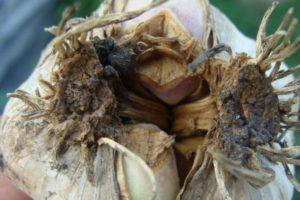
Important! If the onions are affected by rot, it is not recommended to plant root vegetables in this bed for 3-4 years.

Among the pests are:
- Root mite. This parasite destroys the crop after it's harvested. The mite, penetrating through the base, causes the onion flesh to dry out prematurely. Preventing losses can be achieved by sorting and removing affected, dried-out roots. These are eaten first.
- Onion fly. This insect burrows into the bulb and completely eats away the interior. As a preventative measure, it's recommended to alternate rows of onions and carrots; the carrot tops repel the flies.
Important! As a preventative measure, experienced gardeners sprinkle ground hot pepper between the rows. Insects leave the bed, and the harvest remains intact.
Harvesting and storage
Careful digging of Rocambole onions planted before winter begins in late June. Spring-planted onions are harvested starting September 10th, and winter roots begin harvesting in late July. The condition of the foliage will help determine whether the crop is ready for harvest. If the lower part of the foliage has dried out and the upper part has yellowed, it's time to grab a shovel and carefully dig up the roots.

It's not recommended to delay harvesting onions, as this will cause them to dry out, and the cloves and skins to separate. If there's a heavy rain during harvesting, there's a high risk of the entire crop becoming moldy. After harvesting, the roots are left to dry, carefully cleaned of soil, and hung in small piles from the ceiling in a shed or pantry. Once the onions are dry, trim off the tops and roots.
Then they are carefully sorted, leaving only healthy bulbs for the winter; the rest are used first. It's best to store the bulbs in a pantry or somewhere at room temperature. It's best to braid the bulbs or place them in small clothes bags and hang them from the ceiling or wall. It's recommended to sort the bulbs several times over the winter, removing any dried or rotten ones.
Conclusion
Growing the Rocambole onion-garlic hybrid This will yield an excellent harvest of root vegetables with the aroma and flavor of onions and garlic, but with a mild taste. Growing this easy-to-grow plant doesn't require much effort; the key is to follow all the necessary agricultural practices.
Related posts:
 Description of the best varieties of onions, planting and care in open ground
 50 types and varieties of perennial onions with descriptions, cultivation, and care
 Description of Welsh onion varieties, planting, growing, and care in open ground
 Control of onion pests using chemical and folk remedies
 Description of varieties and cultivars of wild onions, the subtleties of cultivation
 How and when to plant onions to get large bulbs
 The beneficial properties of white onions, description of varieties, cultivation and care
 Description of the Exhibition onion variety, growing from seedlings, planting and care