
- Varieties
- Onion fly
- Stem nematode
- Onion weevil
- Onion moth
- Onion hoverfly
- Root mite
- Thrips
- Effective methods of control
- Agrotechnical
- Crop rotation rules
- Autumn digging
- Spring digging
- Correct selection and preparation of seed material
- Planting dates
- Weeding and loosening
- Necessary neighbors
- Folk remedies
- Pollination of onions with tobacco dust
- Using a saline solution
- Treatment with birch tar
- Infusions with red pepper
- Decoctions of tansy and wormwood
- Chemicals
- The drug "Tabazol"
- Fly-eater
- Medvetoks
- Zemoin
- Actellic
- "Aktara" and VDG
- Helpful tips
- Reviews
There's no limit to the joy of having strong, bright-green onions in the garden. But when the leaves turn yellow or fall over, gardeners start to wonder: what's wrong? The problem isn't with the gardener or with improper farming practices. The problem lies deeper. Onion pests, which must be controlled throughout the growing season, are the main factor that can ruin the harvest. What to do about them, what are they, and how to combat them without harming the onions.
Varieties
Before you begin treating your onion plants, you need to identify the pest. Only then can you choose a treatment. Who can work in your garden beds?
Onion fly
The onion fly is the onion's worst enemy. The ripening of the crop depends on it. The fly emerges when the onion bulb is forming and sap-filled. When a mass flight of insects occurs, the onion fly begins laying eggs in the rows, after which, under favorable conditions, small whitish worms (larvae) hatch. They burrow into the soil, then into the bulb through its base, and consume the onion.
The larvae can settle in the root bulb, or they can rise higher, into the feather, where they are easier to spot by the characteristic white stripes on the green flesh of the feather.
Gardeners usually carry out preventative work against flies, while there is no point in fighting a severe infestation of worms.
The danger of insect damage is that during the growing season, the fly can appear several times, usually two or three times. And just a couple of worms can destroy the entire plant.
Stem nematode
This pest appears when onions are in the final stages of ripening, the leaves are ready to fall over, and the bulbs are swollen with juice. First, the nematode (white, translucent scale insects) burrows through the foliage, absorbing nutrients from the flesh, and then descends into the roots.
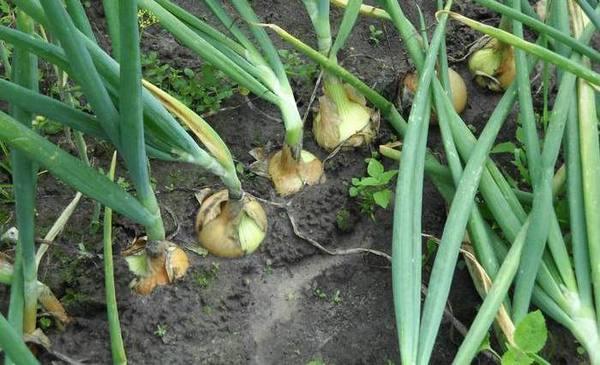
You can recognize the enemy by the curled leaves, which acquire a white coating. After some time, the leaves dry out. The problem is that by the time external signs appear, the bulb is almost completely damaged by the worms.
If you pull out the onion, you can see the worms with the naked eye; the scales become slimy, especially the upper ones, and a putrid smell comes from the onion. Such onions are not suitable for storage, even if the top layer is removed.
Onion weevil
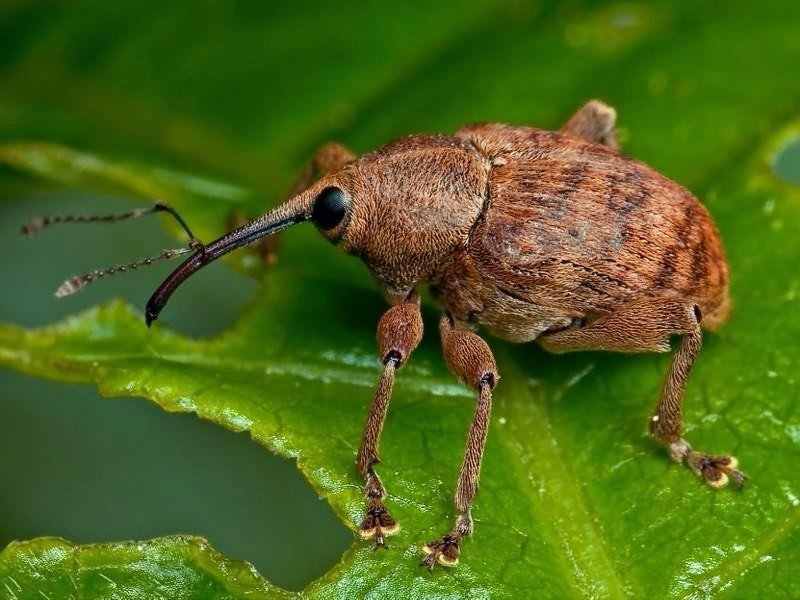
A distinctive feature of this insect is its elongated, slightly curved proboscis, which it uses to suck plant sap. Particularly dangerous are the beetle's larvae, which emerge in the spring and immediately penetrate the onion leaves, creating holes or light yellow or white spots.
Onion moth
The onion moth is a small butterfly with brown wings. The moth larvae are yellow-green caterpillars that are very voracious and feed on onion leaves, flowers, and the juicy flesh of the bulb. In June, the moth lays its eggs on the outer leaf surface of the bulb itself.
Gardeners usually don't inspect the onions, but rather store the eggs and onions, and in the spring, with the onset of warm weather, caterpillars and then adult insects appear.
Onion hoverfly
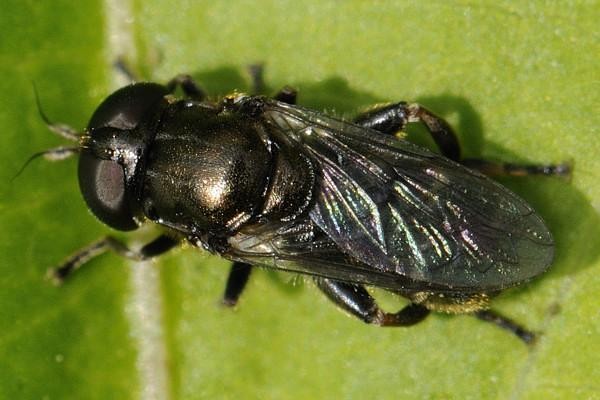
This is a fairly large green fly, whose eggs hatch into gray caterpillars or worms. The worms feed on the juice and pulp of the turnip. For gardeners, the hoverfly is a significant problem, as external signs appear quite late, when the onion is already beyond saving.
Take a look Also
![When to store onions in [year] according to the lunar calendar](https://harvesthub.decorexpro.com/wp-content/uploads/2018/07/kogda-ubirat-luk-1-300x200.jpg)
Root mite
A tiny soil-dwelling pest. A female can lay up to 350-400 eggs in a single clutch. During particularly wet periods, these eggs begin to transform into tiny parasites and feed on the onion roots, causing them to stop growing and developing. After the roots, the pest then attacks the bulb. After a few days, the bulb turns into a dry substance, and the stem curls up and dries out.
Thrips
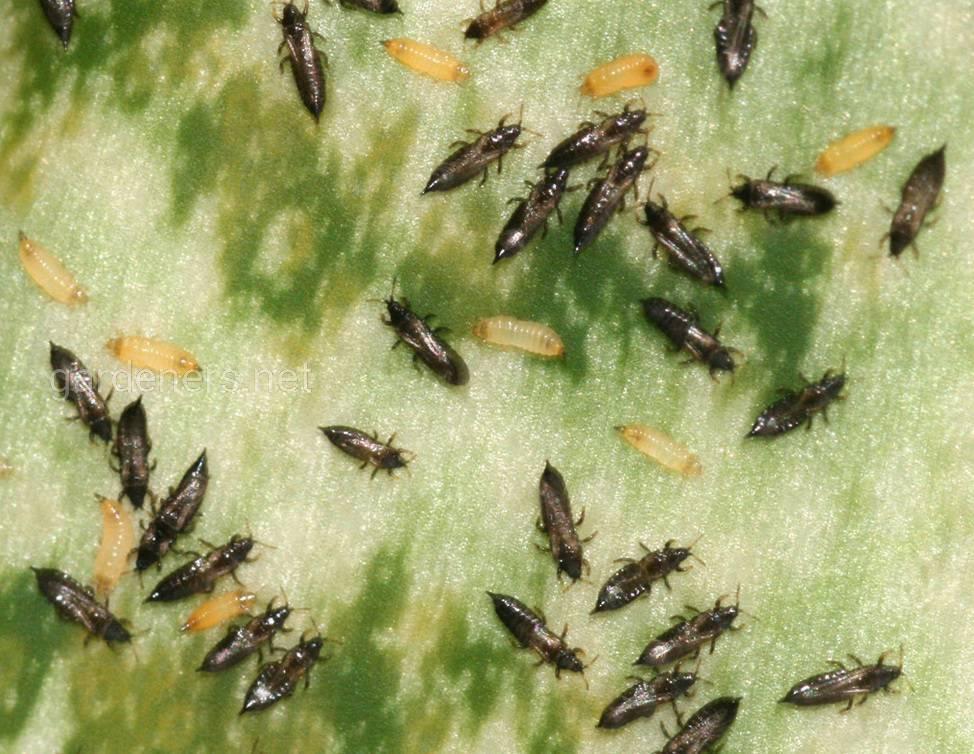
The larvae of these tiny insects are yellowish worms. Although microscopic, they cause enormous damage. Burrowing into the cavities of onion leaves, they feed on the sap and green pulp. Thrips can be identified by dark spots on the outer surface of the leaf blade or white longitudinal lines—the larval burrows. These burrows increase in number each day, the leaf blade turns yellow, and eventually dries out, resulting in the death of the turnip.
Effective methods of control
Many gardeners resort to all possible means to combat the pest, but it's not always possible to save the onions. Even if the adult insect is driven away or destroyed, there's likely already a clutch of eggs somewhere nearby: in the soil, on weeds, or on stored crops. In the spring, you'll have to face the enemy again. Then, agricultural measures that prevent the insects from returning can help.
Agrotechnical
Compliance with agricultural technology rules is designed to achieve high yields for a particular vegetable crop, taking into account the growing conditions.
Crop rotation rules
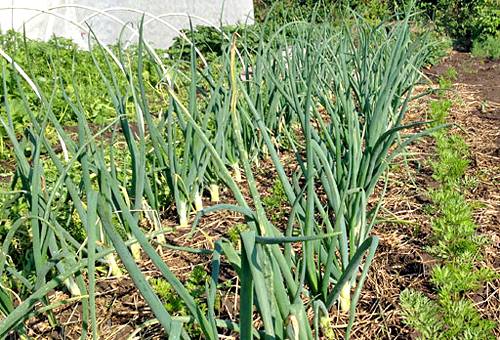
Crop rotation, in simple terms, is the alternation of planting locations, planting in the soil after the best preceding crop. Onion beds can be made in the same place only after 3-4 years.
Autumn digging
After the harvest, some onion leaves, scales, and weeds, which may harbor pest eggs, remain on the soil surface. All onion tops are burned, and the soil is dug over and fertilized in October or November, weather permitting.
Spring digging
Deep tillage in spring, like in autumn, helps destroy any remaining eggs or cocoons of onion-eating insects. Furthermore, digging loosens and incorporates moisture after the snowmelt.
Correct selection and preparation of seed material
First, it's best to select only onion varieties that are zoned for a specific region. These varieties are bred to suit local climate conditions and are resistant to certain pests and diseases.
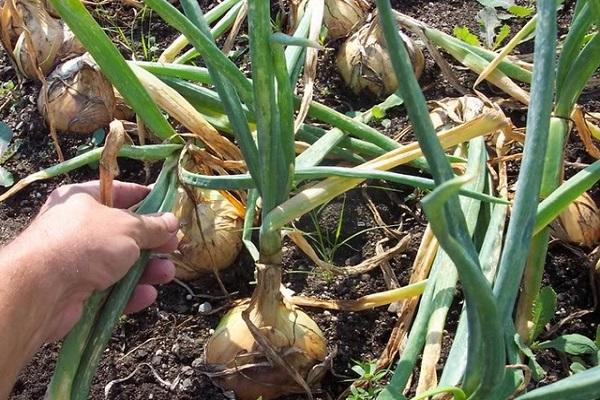
Secondly, when planting onion sets, disinfect them. Antiseptics include solutions of potassium permanganate, ammonia, table salt, and copper sulfate. Soak the small bulbs in these solutions, then thoroughly dry them and plant them in the soil.
Important! Some gardeners resort to using anthelmintic medications, such as Pirantel tablets. The onions are soaked in the solution (1 tablet per 1 liter of water) for 4 hours before planting.
Planting dates
This fact is also important when growing onions. It's important to know when pest larvae appear and, with this in mind, plant onions much earlier to allow the plant time to gain strength and become established. Typically, onion planting begins in late April or early May. The insects' flight season occurs in late May or early June.

Weeding and loosening
Weeding onions is important because pests will have nowhere to lay their eggs. Furthermore, if the beds are heavily infested, worms or caterpillars will be able to actively move through the weeds, crawling from the eaten plant to the healthy one.
Loosening the soil increases moisture evaporation, which can accumulate and become a breeding ground for many insects and pathogens that can damage vegetable crops. Regularly performing these agricultural practices helps control nematodes, thrips, and root mites that infest onions.
Necessary neighbors
Planting onions next to certain vegetable crops will help avoid encounters with parasites.

Carrot
In many gardens, you can see mixed beds of onions and carrots. This technique is crucial for both crops. Carrot leaves produce natural phytoncides that are repulsive to many insects, especially the onion fly. Onions, in turn, can repel the carrot fly.
Marigolds or Tagetes
These plants are rich in aromatic essential oils, which will also repel intruders from your onion garden. They can be placed along the border or nearby.
Calendula
Calendula or marigold can repel nematodes, so these unpretentious flowers can be planted near onion plantings, which can serve as medicinal potions in winter.

Folk remedies
Agricultural technology can help with onion pest infestations to some extent, but when combined with folk remedies, the problem can be completely solved. So, what folk remedies can be used?
Pollination of onions with tobacco dust
Tobacco dust is not only sprayed over garden beds, but also used to make decoctions, infusions, and smoke bombs for treating fruit crops. The pest is killed by nicotine. To pollinate onions, 20 grams of dust per square meter is required.2The product's drawback is its short-lived action. Dust can be washed away by rain or blown away by the wind.
It's best to use a tobacco infusion. Add 200 grams of tobacco dust to 1 liter of boiling water. Mix the ingredients and let it steep. Once the solution has cooled, strain it. Pour the mixture into a garden sprayer and spray the beds and onion greens. For 1 m2 you will need 1 liter of infusion.
Using a saline solution
A salt solution is used to repel onion flies. Dissolve 1 cup of table salt in 10 liters of water and stir thoroughly until the salt dissolves completely. Spray the soil around each onion plant with the resulting solution. The onion should be about 5 cm tall; the next treatment should be carried out in three weeks.
Treatment with birch tar
Birch tar is used to treat seedlings. Add 1 tablespoon of tar to 1 liter of water and soak the seedlings in the solution for 2 hours before planting.
During active growth, the beds are also treated with tar. For this purpose, the onions should be no more than 10 cm tall. The beds are watered with a mixture made from 10 liters of water, 20 grams of laundry soap, and 1 tablespoon of tar. The interval between waterings should be two weeks.
Infusions with red pepper
For the decoction, you'll need ½ kg of red hot pepper. Cut it into small pieces, place it in a saucepan, add 5 liters of water, and bring to a boil. Allow the hot liquid to cool, then strain. Next, prepare a solution for irrigating the onions: add 40 grams of grated laundry soap and 130 grams of hot whey to a 10-liter bucket of water. After treating the onions, keep children and animals away from the onions.
Decoctions of tansy and wormwood
Wormwood and tansy have a negative effect on thrips. These herbs have a strong aroma that many insects dislike:
- To make the decoction, you'll need all parts of the plant. They can be chopped, sliced, or minced.
- For every 5 kg of herb, use 5 liters of water. Place the ingredients in a large saucepan and simmer for half an hour.
- Next, the decoction is cooled and filtered, and the same amount of clean water is added to the “tea”.
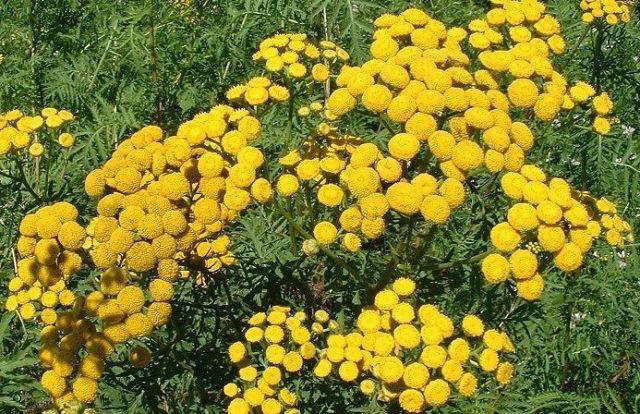
Onion beds are sprayed in the morning at seven-day intervals. These plants repel weevils, hoverflies, and flies. Gardeners have proven this. Garlic stems and celandine greens can be added to these aromatic herbs.
Chemicals
Chemicals are used as a last resort when folk remedies fail to control a pest infestation. The most popular insecticides are as follows.
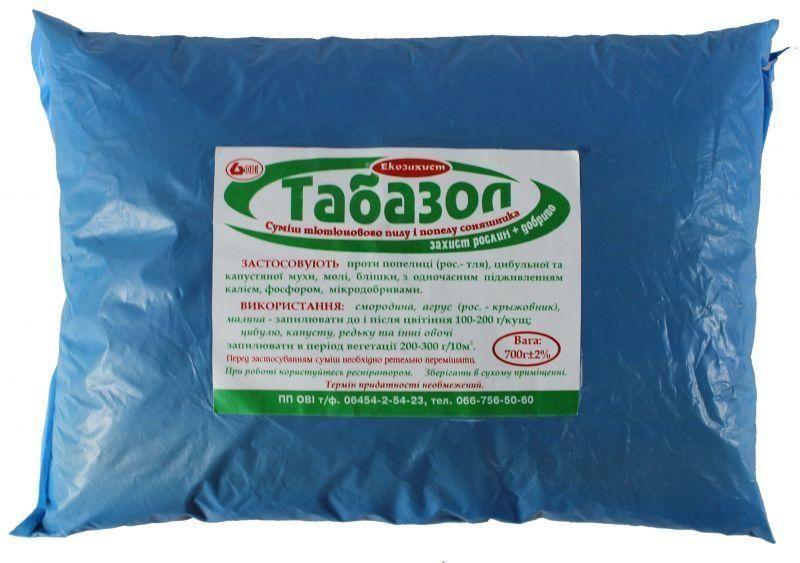
The drug "Tabazol"
This is a familiar combination of wood ash and tobacco dust for many gardeners. Its use is combined with dusting onion and other vegetable beds to combat harmful pests. Treatment with Tabazol occurs during the initial stage of onion growth. Some sprinkle a pinch of the loose powder under each bulb or incorporate it directly into the soil before planting. The application rate is 3 g per 1 m.2.
Fly-eater
This product is used to control all types of flies on onions. The active ingredient is diazonin. Apply to the soil surface after planting the vegetable crop at a rate of 50 g per 10 m.2.
Medvetoks
This powdered destroyer of subsurface pests (nematodes, weevil larvae, flies) is applied to the soil surface after planting onion sets, followed by incorporation by loosening. The proportions are 30 g per 10 m.2.
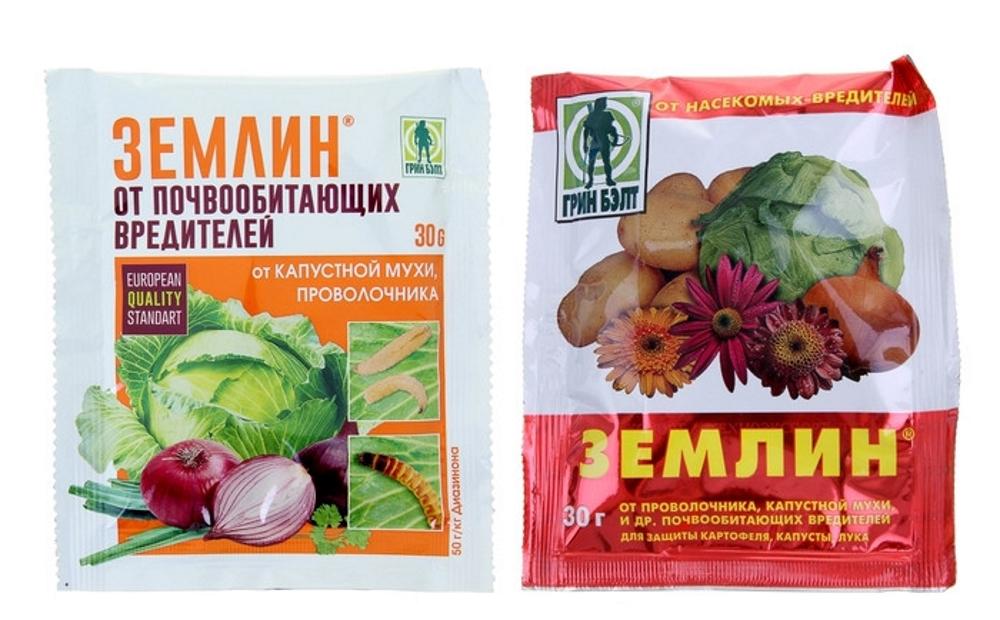
Zemoin
This powder is used on top of the soil with subsequent loosening at the rate of 30 g per 10 m2.
Actellic
The solution comes in ampoules containing a liquid concentrate that must be diluted for soil treatment. It is used to control onion flies and moths, as well as thrips and weevils. The solution is prepared using 2 ml per 2 liters of water. Spray directly onto the onions. Repeat the treatment after 2 weeks.
"Aktara" and VDG
These products are new developments in the chemical industry. They work by direct contact with the pest and are available in several forms: tablets, granules, and powder.
Can be used in any weather. Does not harm beneficial soil microorganisms. Can be used to control all onion pests. For dosage and application instructions, please refer to the instructions. All handling must be performed using personal protective equipment.

Helpful tips
All means are good in the fight. The methods listed above are best used in combination, but chemicals should be used only in extreme cases. What else can you do against flying and crawling insects in onion beds?
- The fight must be waged year-round. You can't just dig up the soil in the fall and think the problem won't return. All known methods must be applied as needed and in a timely manner.
- If the pest is already inside the onion, then after the treatment, the affected areas should be removed, since the scale insects, having penetrated the cavity of the feather, will not receive the required dose of poison and will continue to develop.
- When purchasing onion sets for planting, it's worth choosing the bulbs individually, and once you bring them home, inspect the goods again and treat them.
- Insect pupae are laid in the soil to a depth of 10 cm, so loosening to this depth should be carried out several times during the season.
Onions are a very porous and juicy vegetable, which makes them attractive to pests. This nutrient-rich plant is often lost due to gardener neglect. Failure to observe crop rotation, poor quality planting material, and unprepared soil can cause the loss of an onion crop.
Reviews
Tatyana Lipezina: "I plant a lot of onions because I have a large family, and buying onions in the village is not really appropriate. I have several ornamental varieties in my collection, and I really love shallots and shallots. I plant small shallot bulbs before winter so that the spring thaw allows the onions to strengthen and start growing before the flies emerge."
If the beds are attacked by pest larvae, I periodically treat them with wood ash and salt. I simply sprinkle it over the soil. After the bulbs begin to grow in size and 4-6 tips appear on top, I water them with a kerosene solution, but this is more of a preventative measure than a means of controlling the worms. I don't do anything else. The onions will produce a splendid harvest."
Related posts:
 50 types and varieties of perennial onions with descriptions, cultivation, and care
 When to harvest leeks from the garden for storage, ripening times
 Description of the best varieties of onions, planting and care in open ground
 How and when to plant onions to get large bulbs
 Description of the Exhibition onion variety, growing from seedlings, planting and care
 The beneficial properties of white onions, description of varieties, cultivation and care
 Description of varieties and cultivars of wild onions, the subtleties of cultivation
 Description of Welsh onion varieties, planting, growing, and care in open ground