
- Description of the plant
- Beneficial properties
- Basic requirements for growing
- Selecting a variety based on the region
- Proper storage of seed material
- Compliance with agricultural cultivation techniques
- Varieties
- Heroic strength
- Carmen
- Red Semko F1
- Centurion
- Stuttgarter Riesen
- Bessonovsky
- Hercules
- Sturon
- Chalcedony
- Bamberger
- Globo
- Red Baron
- Exhibition
- Radar
- Shakespeare
- Selection and storage of seed material
- Growing technology
- Predecessors
- Tomatoes
- Cucumbers
- Early and mid-season potatoes
- Zucchini
- Legumes
- Early cabbage
- Neighbours
- Carrot
- Beet
- Radish
- Greens
- Planting period for sets
- Preparing seed material correctly
- Soil requirements
- Fertilization
- Rules for planting arbage
- Care
- Watering
- Top dressing
- First
- Second
- Third
- Protection from diseases and pests
- Planriz
- Gaupsin
- Alirin-Legumes
- Trichodermin
- Gliocladin
- Aktofit
- Aversectin-S
- Bitoxibacillin
- Bicol
- Weeding and loosening
- Harvesting
- Other types of planting
- Seedling
- Vegetative
- Seeds
- Seed preparation
- Planting diagram
- Caring for onions in open ground
- Chinese
- Sowing black onions
- How to plant winter onion varieties
- Storage
- Helpful tips
- Answers to questions
Various varieties of onions are among the most common crops. Gardeners often prefer this type of onion due to its versatility and excellent flavor.
Description of the plant
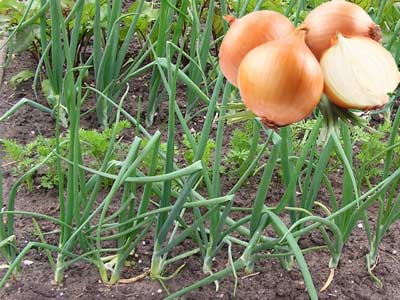
Onions are also known as arzhabeyka, tsybulya, and bulbyanka. The plant belongs to the onion family and has a filmy appearance. The largest bulbs reach 15-20 cm in diameter. Depending on the variety, the skin can be white, purple, or yellow. The inner scales have a fleshy texture.
Beneficial properties
The crop's popularity among gardeners is due to its numerous beneficial properties. These include the following:
- Onions contain volatile substances that can destroy fungi, pathogenic plants, and tuberculosis bacteria.
- Eating vegetables improves appetite and promotes the active secretion of digestive juices.
- Onions have an antiseptic and bactericidal effect on the human body.
- The beneficial components contained in the bulbs actively fight viruses.
- The vegetable is used as a cosmetic product and helps improve the condition of the skin and reduce the appearance of freckles.
Basic requirements for growing
A prerequisite for a large onion harvest and proper seedling development is following basic planting and subsequent cultivation guidelines. It's essential to select the optimal onion variety based on environmental conditions, properly prepare the seeds, and adhere to all the nuances of agricultural practices.
Selecting a variety based on the region
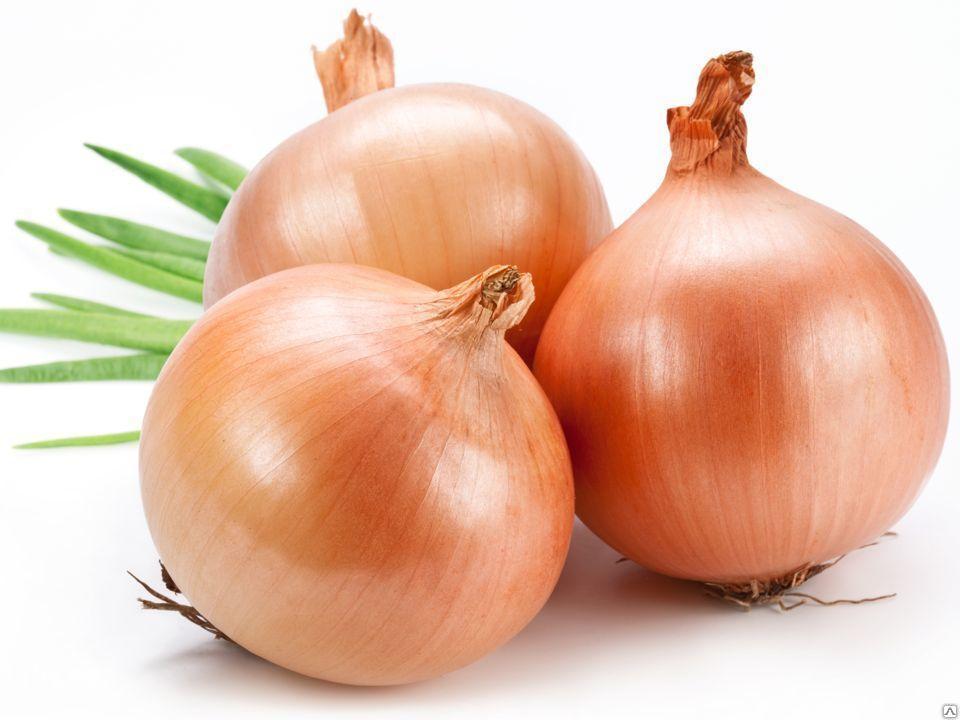
When choosing an onion variety, it is important to consider the climate and weather conditions in the growing region. Breeders are constantly developing new bulb varieties adapted to specific conditions in different regions. When grown in unfavorable climates, seedlings stop developing and fail to bear fruit.
Proper storage of seed material
To ensure a good harvest, seeds must be stored under specific conditions. Ideally, bulbs should be stored at temperatures between -1 and -3 degrees Celsius. Bulbs set aside for sowing tolerate slightly lower temperatures well over extended periods.
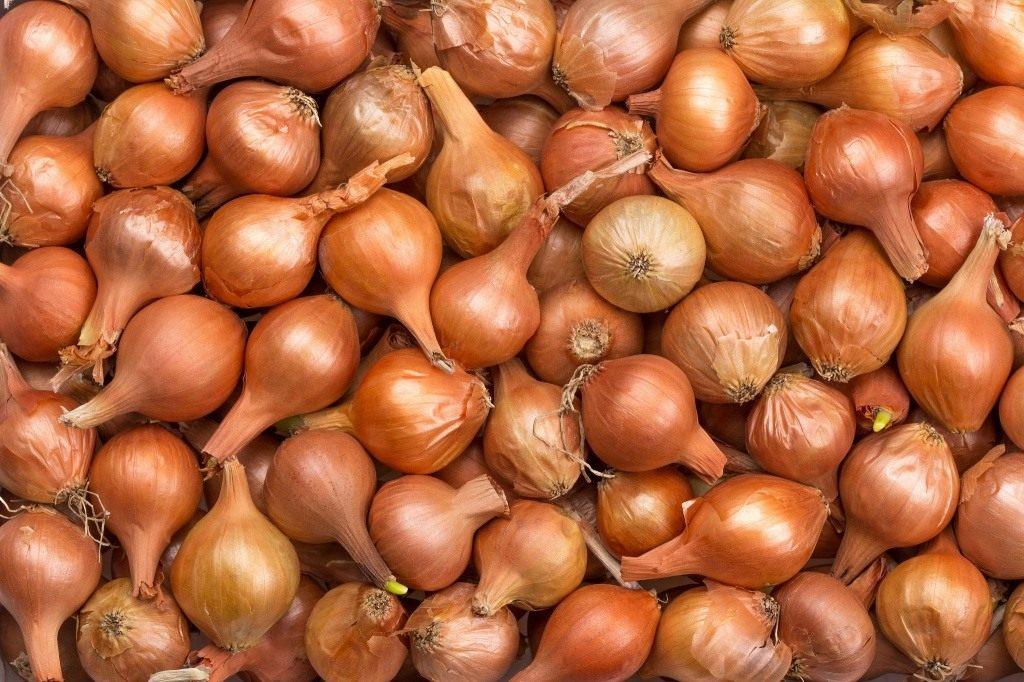
Storing seedlings using a combination of methods is also possible. In this case, onions are stored at 18-20°C during the warmer months, and when winter sets in, the bulbs are moved to a cooler room. In the spring, before sowing, the bulbs are warmed for a couple of days and then kept warm until planting.
Compliance with agricultural cultivation techniques
Onions grow vigorously and produce a harvest only if all standard agricultural practices are followed. Cultivation requires comprehensive care, selecting a suitable site, and preparing the seed and beds.
Varieties
When choosing onion varieties, it's recommended to pay attention to popular varieties preferred by experienced gardeners. These varieties have individual characteristics, so it's important to familiarize yourself with detailed descriptions and characteristics before planting.
Heroic strength
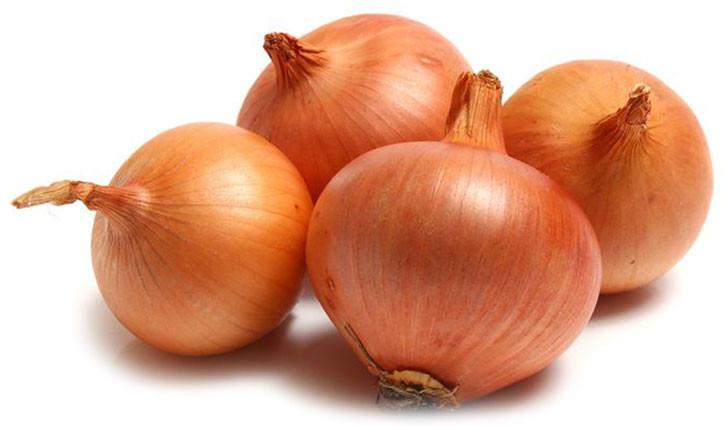
The Bogatyrskaya Sila variety produces large, yellow bulbs. The bulbs are round, have a bittersweet flavor, and weigh up to 300 g. The variety belongs to the early ripening category and begins to bear fruit 2 months after planting. permanent place.
Carmen
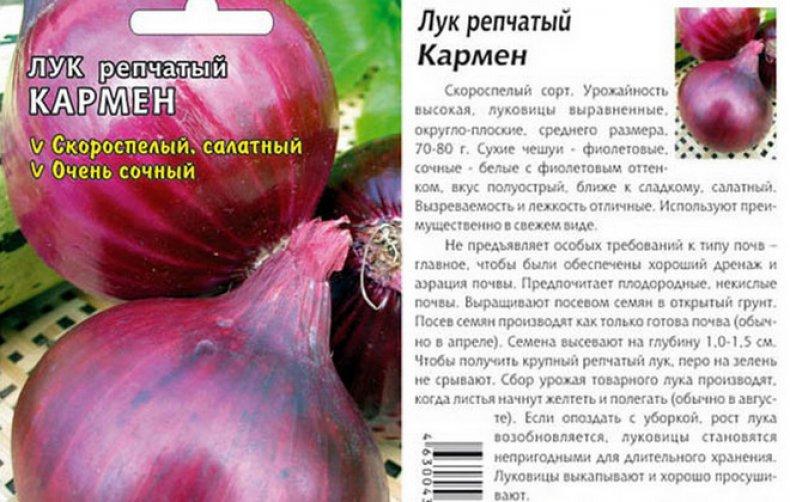
Developed by Dutch breeders, the Carmen variety quickly gained popularity due to its early ripening and excellent flavor. The fruits have a firm texture and dark red skin with a brownish tint. The flesh is white, weighing between 50 and 70 grams. The bulbs of this variety are round and slightly flattened.
Red Semko F1
The early-ripening hybrid Red Semko F1 is a versatile variety. It ripens in 70-75 days. The bulbs are round, weighing up to 100 g, with dark purple skins. The fruit has a juicy, semi-sharp flavor. This variety is suitable for long-term storage and transportation, as it retains its marketable appearance and flavor.
Centurion
The Centurion variety produces compact, elongated fruits. Each bulb weighs up to 110 g. The husk is dense and straw-colored. This variety is prized for its abundant yield and ability to thrive in a wide range of climates.
Stuttgarter Riesen
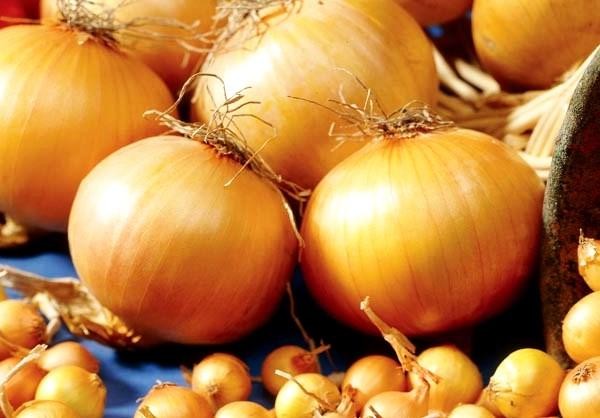
This variety was developed in Germany and is considered a mid-season variety. A characteristic feature of the Stuttgarter Riesen variety is its large, flat-round fruits. Each bulb can weigh up to 200 g with proper care. The yield is 5-8 kg per square meter.
Bessonovsky
The Bessonovsky onion variety is small in size and weighs up to 60 g. The fruit is covered with a golden-colored peel. The flesh is not particularly juicy, but the flavor is distinctly sharp and piquant. The variety is ideal for growing in the temperate climate zone.
Hercules
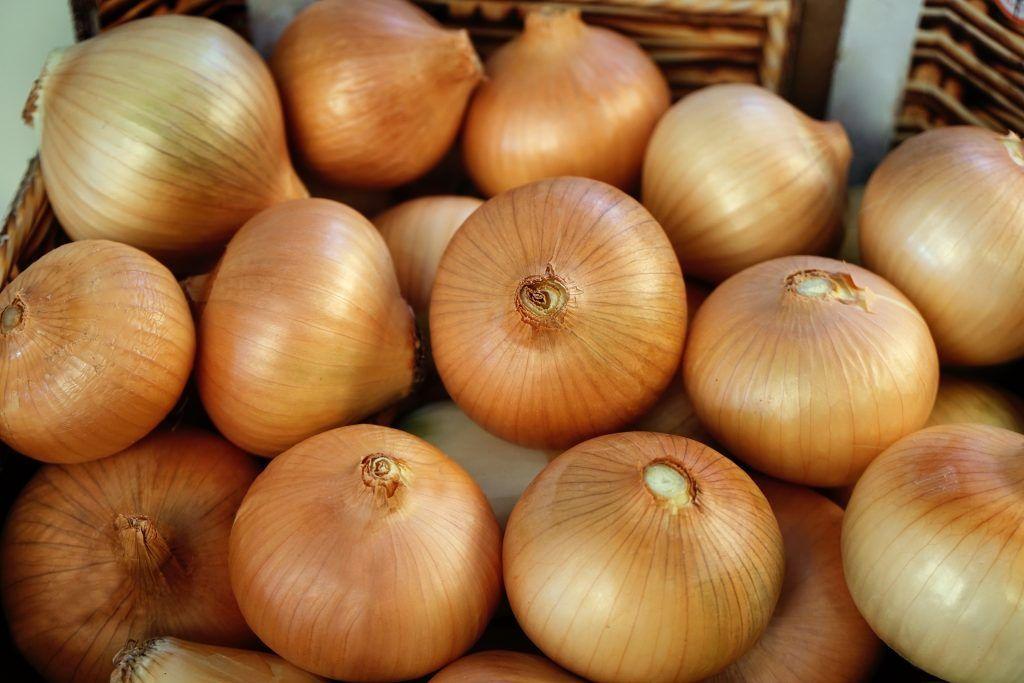
The Hercules variety is considered a mid-early hybrid with a ripening period of 70-80 days. The average bulb weight is 150 g, and the plant height is no more than 35 cm. The fruits are large, oval-shaped, and have a dense husk. The flesh is juicy and sweet, with a slight tang and a piquant aftertaste.
Sturon
Onion Sturon It ripens 100-110 days after planting and is suitable for growing in the central and northern parts of the country. The variety has increased tolerance to low temperatures, regularly producing large fruits weighing over 200 g.
Chalcedony
The Chalcedon variety produces large onions, up to 15 cm in diameter and weighing approximately 150 g. The fruit is round, with firm flesh and a tangy flavor. The onion greens grow up to 16 cm and are suitable for fresh consumption and for adding to various dishes. The yield per square meter reaches 7-8 kg.
Bamberger
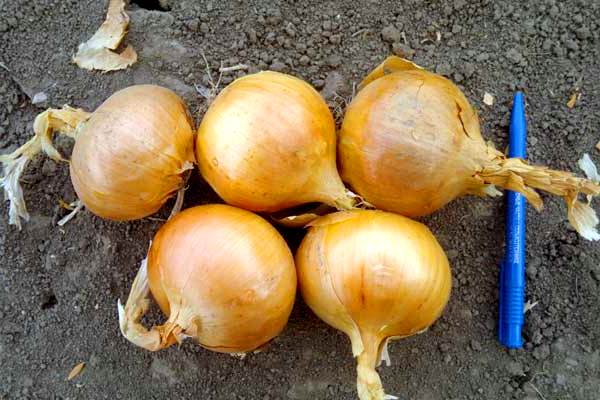
The mid-early Bamberger variety produces few stems and produces rounded fruits. The bulbs weigh 70-80 g. This variety is prized for its excellent flavor and long shelf life. It is resistant to common diseases, but if care is not provided correctly, it can be attacked by onion flies.
Globo
The Globo variety is mid-season, with approximately 140 days from germination to harvest. Due to the long growing season, it is recommended to grow from seedlings. The vegetables are sweet, with white flesh and pale yellow skins. The Globo variety has a shelf life of 2-3 months.
Red Baron
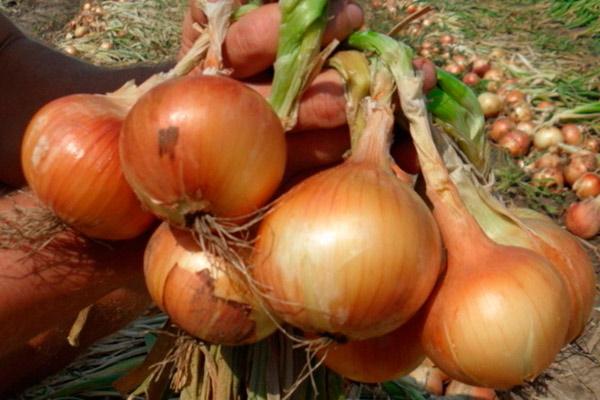
The Red Baron onion variety is ideal for salads. It is adapted to growing in a variety of climates and is suitable for long-term storage. This long-storing onion boasts a deep red color, fleshy texture, and sweet flavor. Red Baron onions weigh between 30 and 120 grams.
Exhibition
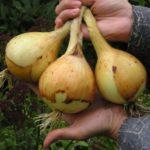
Onion Exhibition onion It has a pleasantly sweet flavor and leaves a soft aftertaste. The flesh is juicy and firm. Key advantages include early ripening, the possibility of autumn and spring planting, fruit weight up to 300 g, and frequent fruiting.
Radar
The Radar hybrid variety was developed by Dutch breeders. The bulbs are lightly waxy, flattened, and weigh approximately 250-300 g. The peel is dry and firm, which facilitates long-term storage. Radar onions can withstand temperatures as low as -23 degrees Celsius.
Shakespeare
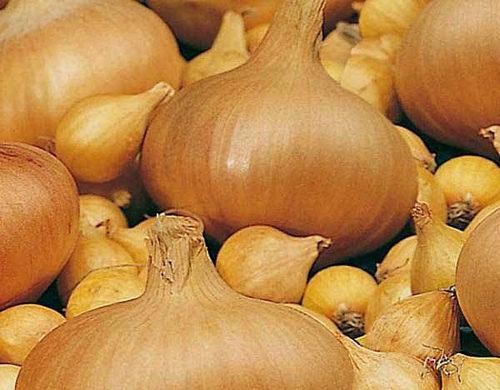
Shakespeare bulbs are rounded and have a skin that ranges from yellow to brown. The flesh is firm, semi-sharp, and has a distinct aroma. Thanks to its dense skin, this variety can withstand temperatures as low as -18°C. It takes about 2.5 months from planting the onion seedlings to harvest.
Selection and storage of seed material
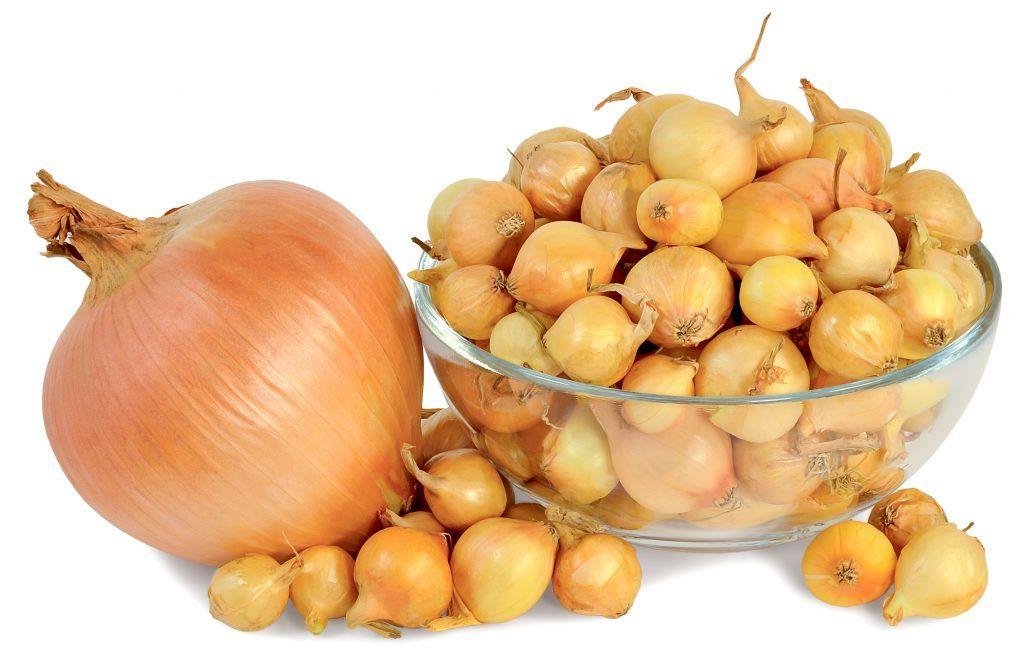
To ensure a high yield, it's important to carefully select seedlings. Select plants with a natural color, free from signs of damage or rot. Store selected seedlings at slightly below-freezing temperatures in a dry, dark place. Failure to comply with recommended storage conditions will negatively impact future yields.
Growing technology
Growing onions requires a specific technology, including a set of steps and rules. Regardless of the variety planted, a meticulous approach to plant cultivation is required.
Predecessors
The choice of predecessor crops for onions largely determines soil fertility and the development of seedlings. Vegetable crops enrich the soil with various components, so it's important to check the compatibility of vegetables beforehand.
Tomatoes
When growing tomatoes, a large amount of organic matter is added to the soil. Fertilizers make the soil more fertile, which positively affects the development of the onions the next time they are planted.

Cucumbers
Cucumbers are grown in light, well-drained soils with good light. Onions thrive in similar conditions, making them a good choice as a precursor crop.
Early and mid-season potatoes
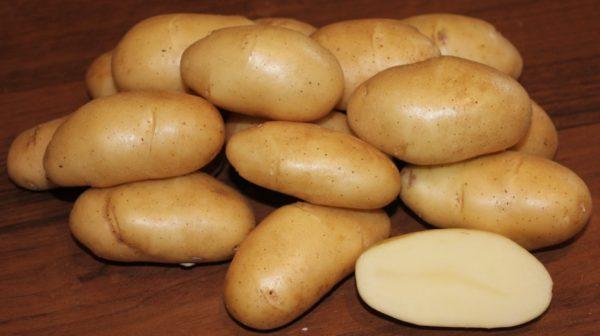
Various varieties of early and mid-season potatoes leave abundant amounts of beneficial components in the soil. Further cultivation of onions promotes vigorous growth and fruiting.
Zucchini
Zucchini and onions are susceptible to different pests and diseases, making the former a viable choice for the preceding crop. Planting onions after zucchini significantly reduces the risk of crop damage.
Legumes
Green manure crops from the legume family are among the most beneficial crops for restoring soil health and increasing fertility. Legumes enrich the soil with nitrogen, improve its structure, and remove hard-to-digest components from the lower soil layers.
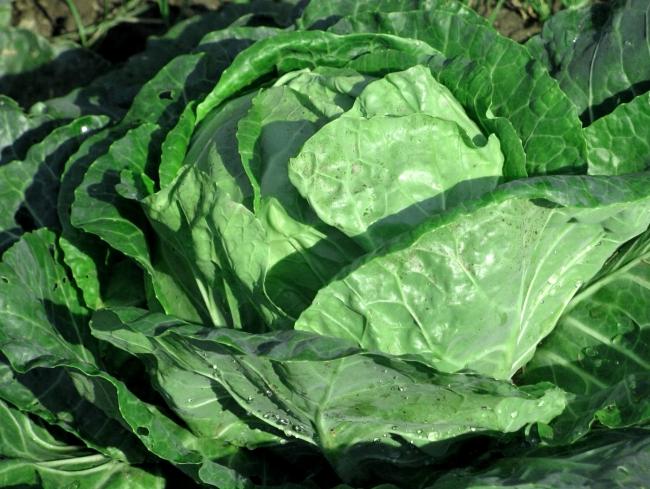
Early cabbage
Planting early cabbage helps structure the soil to a depth of about 2 meters, reduce soil acidity, and inhibit weed growth. Using cabbage as a precursor has a positive effect on bulb development.
Neighbours
In addition to choosing suitable predecessors, it's important to consider neighboring crops. Planting certain crops near onions can simplify care and increase yields.
Carrot
Carrot beds protect onions from attacks by onion moths and onion flies, as these pests dislike the carrot aroma. The proximity is also beneficial, as onions protect carrots from root mites.
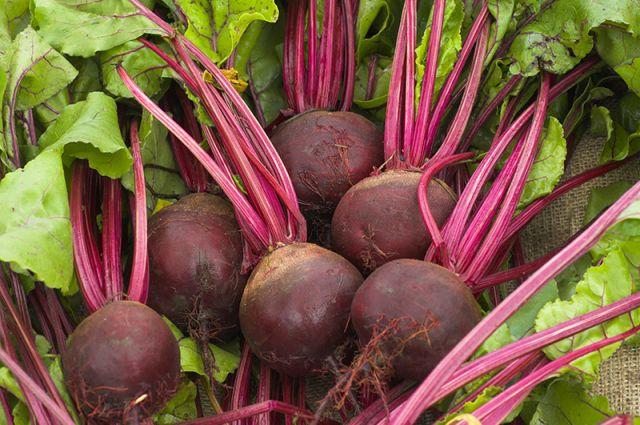
Beet
Mixing beets and onions in a garden bed allows you to save space and reduce weeds. Beets also repel harmful pests and prevent infections.
Radish
The combination of radishes and onions is one of the most common. Since the onions' roots are located in the upper layers, the plants do not compete with each other for moisture and nutrients.
Greens
Most green plants can be grown alongside onions. Greens promote active growth by improving the soil and repelling harmful insects.
Planting period for sets
Onion sets are planted in the second half of spring, when the soil has warmed sufficiently and the average outdoor temperature is above 10 degrees Celsius. Before planting, check the weather forecast and ensure there is no risk of late frost.

Preparing seed material correctly
A few days before planting, dry the prepared bulbs at a low temperature in an oven, on a radiator, or outdoors in the sun. Warming the seed will reduce the risk of bolting and allow the sap to accumulate for bulb formation.
Immediately before sowing, onions are soaked in a low concentration manganese solution for disinfection purposes.
Soil requirements
Onions should be planted in a consistently sunny and well-ventilated area. The soil should be fertile and rich in nutrients. Black soil is ideal. Loam and peat soils are also suitable, but they require consistent, proper care.

Fertilization
To stimulate growth and improve the soil, onion fertilizers are required when planting. Growing a good harvest in poor soil is virtually impossible. At planting time, the soil mixture is fertilized with organic matter, which makes the soil more fertile and positively impacts subsequent fruiting.
Rules for planting arbage
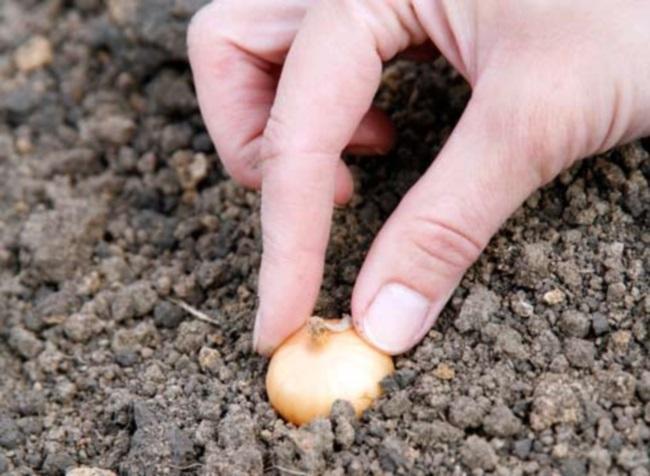
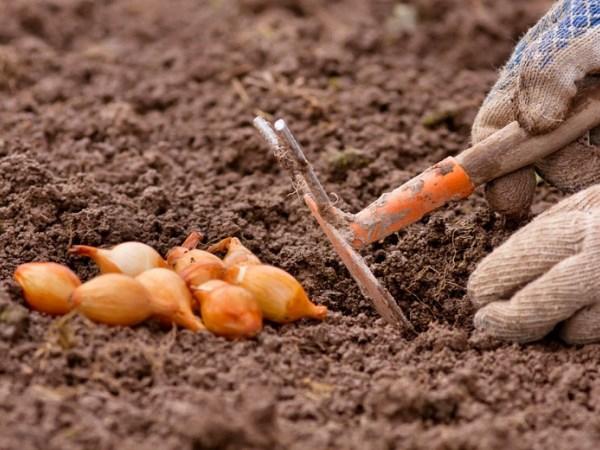
Prepared bulbs for planting are positioned bottom-down and gently pressed into moistened soil, ensuring the top remains level with the soil. Planting too deeply will inhibit the bulb's growth, while planting too high will deprive the roots of nutrients.
Leave a distance of 8-10 cm between bulbs. The optimal distance between rows is 20 cm. Immediately after planting, it is recommended to mulch the bed with sawdust or peat to retain moisture in the soil and protect the seedlings from UV rays.

Care
Growing onions requires comprehensive care throughout the growing season. To ensure a good harvest, all standard agricultural practices must be followed.
Watering
Onions are moisture-loving crops, and inadequate watering will reduce the quality of the harvest. The greatest need for moisture occurs immediately after planting. During the first two weeks, seedlings require generous watering every 4-5 days. Good watering is also necessary during bulb formation.
During the growing season, it's important to monitor rainfall and check the soil before watering. A layer of soil approximately 30 cm deep should be kept consistently moist.

Top dressing
When cultivating the crop, fertilizers are applied several times to improve bulb growth. Fertilizing after sowing stimulates growth, in July it helps speed up ripening, and after harvesting it has a positive effect on soil composition.
First
Ten to twelve days after planting, conditions for rapid growth must be ensured, so the first application of fertilizer should be high in nitrogen. Before applying fertilizer, pay attention to the condition and color of the above-ground portions of the plants. If the seedlings are vigorous and naturally green, there is sufficient nitrogen in the soil, and organic or mineral fertilizers can be used as an alternative.

Second
Three weeks after applying the first fertilizer, apply the next fertilizer, reducing the nitrogen content and increasing the phosphorus and potassium content. For the second fertilizer application, the following options can be used:
- in 10 liters of water dilute 30 g of ammonium nitrate, 60 g of superphosphate, 30 g of potassium chloride;
- Mix 2 tablespoons of nitrophoska with 10 liters of water;
- Take ready-made complex fertilizers and dissolve them with water according to the attached instructions.
Third
The final feeding of onions is optional and is only necessary when grown in poor soil and underdeveloped. The need for a third feeding can be determined by the plants' appearance. If the tops have yellowed and the bulb has not formed, a fertilizer high in potassium and phosphorus should be used. A mixture of 10 liters of water, 20 g of superphosphate, and 10 g of potassium salt is optimal.
Protection from diseases and pests
Despite the resistance of many varieties onions to diseases Pest attacks, poor care, or unfavorable climate can lead to crop failure. Specialized treatments should be used to combat these diseases.
Planriz
Planriz is a biological product that helps combat powdery mildew, rot, spotting, rust, and other infections. It has a biostimulating effect and is suitable for use at any stage of crop growth.
Periodic use of Planriz increases the yield and makes plants more resistant to damping off.
Gaupsin
Gaupsin is a protective agent designed to combat late blight, powdery mildew, and fruit rot, as well as repel caterpillars and codling moths. It is used for spraying plants, treating seed, and soaking onion roots.

Alirin-Legumes
Alirin, often used to treat legumes, serves as a therapeutic and preventative treatment. Its active ingredients destroy pathogens that cause fungal infections. "Alirin" reduces the degree of soil toxicity after treatment with chemicals.
Trichodermin
The biological product "Trichodermin" contains substances naturally released during spore germination and mycelium formation. This protective agent has a comprehensive effect: it stimulates seedling growth, acts as a fertilizer, and improves soil structure.
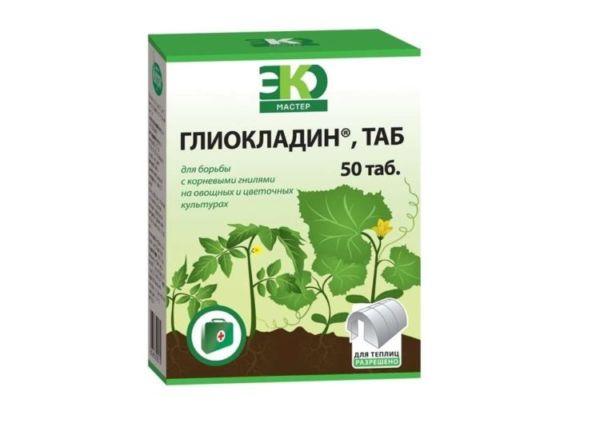
Gliocladin
The microbiological substance "Gliocladin" is used against fungal and bacterial diseases of onions. The product begins to work 3-7 days after application. "Gliocladin" is suitable for soil treatment before sowing and planting seedlings.
Aktofit
The insecticide "Actofit" is used to repel harmful insects that chew through the above-ground parts of plants and fruits. "Actofit" can be applied during the harvest period. The substance does not accumulate in soil, water, or plant products.
Aversectin-S
When applied to garden beds, the powerful product "Aversectin-S" penetrates insects' outer coverings and kills them. Effects are achieved within 3-6 days after spraying. Pests do not develop tolerance to the product, allowing it to be used for several years in a row.
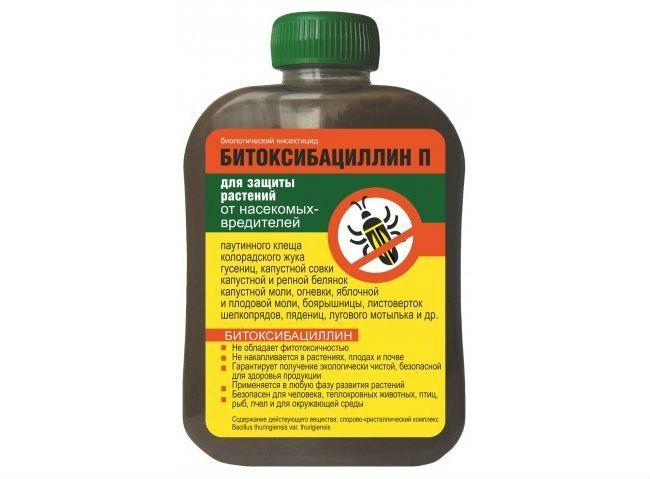
Bitoxibacillin
Bitoxibacillin is an insecticide and is effective against spider mites, Colorado potato beetles, and lepidopteran insects. It does not accumulate in plants, is completely safe to use, and can be applied at any stage of growth.
Bicol
Bicol powder is an insecticidal product that provides reliable protection for onions against pests. Spraying plants can kill over 80 species of harmful insects.
Weeding and loosening
Loosen the soil after each watering of onions, unless the area around the plants is covered with a layer of mulch. Loosening the soil helps oxygenate it and allow water to reach the lower layers. Weed the beds as soon as weeds are discovered. To ensure a good onion harvest, it's important to prevent excessive weed growth.
Harvesting
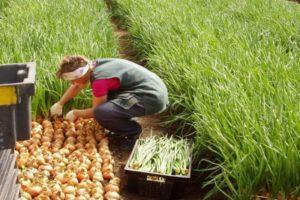
Onions are ready for harvesting after the leaves have fallen en masse. The fruits are best picked during dry, windless weather. The bulbs are carefully dug up and removed from the soil. Any remaining soil is removed by hand, and the crop is spread out to dry outdoors.
Other types of planting
In addition to the standard method for growing onions, gardeners often resort to alternative methods. Each method has its own unique characteristics, which are worth familiarizing yourself with in advance.
Seedling
To grow onions from seedlings, prepare a seeding container and soil mixture. Onion seeds are laid out on a level surface and carefully covered with soil. The seedlings can be transplanted into the open ground after the spring weather warms up and the soil has warmed sufficiently.
Vegetative
Northern onion varieties are most often propagated vegetatively. For cultivation, it's best to use small bulbs, planted in several rows, leaving about 25 cm between them. The crop is planted in May, and most onions ripen by early August.
Seeds
Growing onions from seed requires a comprehensive approach. To sow, you need to prepare the seeds, determine a suitable planting pattern, and ensure proper plant care.
Seed preparation
Treating the seed accelerates the growth and formation of the bulbs. Before planting, it is recommended to warm the seeds in an oven or on a radiator, then disinfect them by soaking them in a weak solution of potassium permanganate.
Planting diagram
Prepared onion seeds are planted to a depth of no more than 2 cm, using a 13 x 1.5 cm pattern. This technique will allow the roots to develop freely and not interfere with the growth of neighboring crops.

Caring for onions in open ground
After planting onions in open soil, the beds need to be watered, loosened, fertilized, and given preventative treatments. During the growing season, the plants should be regularly inspected to monitor their condition and development.
Chinese
A Chinese method increases crop yields by strengthening the bulbs. The method's key feature is planting on raised beds. The bulb tops receive ample light and warmth due to their elevated position, which improves their protective capacity and prevents rot.
Sowing black onions
Nigella seeds are planted in the first half of autumn next to carrot beds. Before sowing, the seeds are soaked in a solution of wood ash and water, then kept in a damp cloth for germination.

How to plant winter onion varieties
Winter onions are planted 4-5 weeks before the onset of persistent frosts. Furrows are cut at a distance of 10-15 cm and the sets are placed at intervals of 3-10 cm to a depth of no more than 4 cm. The larger the bulbs used, the greater the gap between them.
Storage
Before storing onions, they need to be dried. If you don't plan to braid them, trim the onions on both ends, removing the roots and stems. Then, sort them to remove damaged and rotten onions. The selected onions are placed in plastic bags, wooden crates, or boxes and stored in a dark, dry place.

Helpful tips
When growing onions in your garden, it's important to consider the advice of experienced gardeners. The main recommendations include choosing the right precursors, preparing the seeds, and following proper agricultural practices. It's also important to select an onion variety suitable for your specific region, taking into account the climate and weather conditions.
Answers to questions
Beginning gardeners often have similar questions when growing crops. To avoid common mistakes, we recommend familiarizing yourself with the following information.
If onions have a thick neck, this indicates insufficient ripening due to improper care. In properly ripened specimens, the neck becomes thinner.
If onions have bolted, the flower stalks need to be trimmed. To prevent bolting, it's important to store the onion sets properly, carefully select them before planting, and adhere to the planting schedule.
When onions fall into quarters during harvest, the center may be infested with harmful insects. It's important to inspect and sort the entire harvested crop before eating.
Related posts:
 50 types and varieties of perennial onions with descriptions, cultivation, and care
 Description of shallot varieties, cultivation and care, when to harvest
 How and when to plant onions to get large bulbs
 When to harvest onions planted in autumn and spring from the garden for storage, how to determine the timing
 When to harvest leeks from the garden for storage, ripening times
 Description of the Exhibition onion variety, growing from seedlings, planting and care
 The beneficial properties of white onions, description of varieties, cultivation and care
 Types of onion varieties with names and descriptions, their differences and cultivation