
- Biological characteristics of onions
- Varietal diversity of onions
- Based on taste, onions are divided into 3 groups.
- General approaches to onion cultivation techniques
- Predecessors and compatibility
- Soil requirements
- Environmental requirements
- The specifics of growing onions from sets
- Preparing the soil for onion sets
- Preparing the onion sets
- Planting onion sets
- Top dressing
- Watering
- Loosening, thinning
- Protection from diseases and pests
- Harvesting
Almost every gardener grows onions at their dacha. The crop is widely used in cooking, making it highly sought after. Growing onions is a simple process, but to achieve a large harvest, you need to follow proper planting guidelines, choose a suitable location for the bed, ensure regular care, and employ modern agricultural techniques.
Biological characteristics of onions
All types of onions are valued for their high content of vitamins, essential oils and phytoncides. The ripe bulbs and green leaves are edible. The above-ground portion is usually eaten fresh as a salad ingredient or seasoning. Experienced gardeners know many of the onion's secrets, including its ability to increase appetite and improve digestion. Eating the fruit also has a beneficial effect on kidney function, has a diuretic effect, and cleanses the intestinal flora of bacteria.
Onions are considered a biennial plant. When first planted, they form bulbs, and the following season, they produce seeds. The seedlings remain viable for 2-3 years. With proper cultivation and care, onions germinate when the ambient temperature reaches 2 degrees Celsius (37 degrees Fahrenheit). The first seedlings emerge within 10-12 days at optimal temperatures and adequate soil moisture.
Varietal diversity of onions
The crop boasts a wide variety of cultivars, each with its own individual characteristics and flavor profile. The most common is the onion set, which is grown outdoors. This variety matures in 90-110 days, with an average fruit weight of 85-100 g. Well-known varieties include Stuttgarter Riesen, Chalcedony, and Sowball. Their popularity stems from the potential for a good harvest with minimal care.
Mid-season varieties Zolotnichok and Oporto are also suitable for sowing in open ground. They are used for harvesting greens and growing turnips for planting the following season. The advantages of these varieties include increased resistance to infections and harmful insects, large yields, and long-term storage.

Based on taste, onions are divided into 3 groups.
The flavor of cultivated onions is one of the plant's most important characteristics. Three varieties have been developed, which can be categorized by flavor as sweet (salad-like), hot, and semi-hot. The pronounced bitterness or pungency of the fruit is determined by the ratio of essential oils to sugar. A lower sugar content results in a more bitter flavor.
Thanks to new agricultural techniques, breeders have been able to develop bitterness-free varieties that can be planted very early in the spring or as seedlings indoors. Salad varieties are comparable to classic ones in terms of their beneficial components and are used in a wide range of culinary recipes.
General approaches to onion cultivation techniques
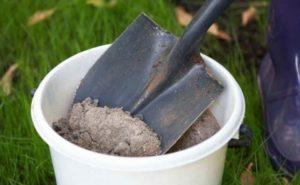
The key to a large onion harvest is following basic agricultural practices. This includes preliminary soil preparation, seed treatment, watering, and care of the soil and seedlings.
It is necessary to follow agricultural practices even when growing onions in a basement.

Predecessors and compatibility
To ensure the plant's root system develops well and on time, and the onions grow to the desired size in the garden, consider the onion's predecessor crops. Suitable predecessor crops include herbs and vegetables such as tomatoes, cucumbers, early cabbage varieties, potatoes, and legumes.
Everyone has it varieties of onions The roots have a fibrous structure, which requires additional feeding to produce a large harvest. For this reason, the crop is planted after plants that receive manure during autumn cultivation. Onions are compatible with carrots, radishes, beets, and other crops with similar characteristics, making it possible to combine these plants in the same garden bed.
Soil requirements
Onions thrive in neutral soil. If the soil is acidified by mineral fertilizers, it should be treated with slaked lime several years before planting. To ensure giant bulbs grow, phosphorus-potassium fertilizers should be applied in the fall.
Environmental requirements
The onion family is frost-hardy. This allows for sowing in early spring, when the soil temperature at a depth of 10 cm has warmed to 11-12 degrees Celsius, and the thermometer does not drop below 3 degrees Celsius. Short spring frosts will not harm the seedlings. A drop in temperature to below freezing will not hinder the development of seedlings, but mature onion seedlings do not grow due to the effects of frost.
The specifics of growing onions from sets
At growing onions from sets When caring for seedlings and subsequent care, it's important to follow a certain set of rules. Taking into account the specifics of cultivation, you'll be able to obtain large fruits and prevent losses due to diseases or pests. Experienced gardeners practice growing onions using the Chinese method from sets, which allows for larger fruits. This method involves planting the onions in raised beds rather than in a bed.

Preparing the soil for onion sets
The initial soil preparation stage begins in the fall after the previous plants have been harvested. The soil is cleared of emerging weeds, then dug to a shovel's depth and fertilized with phosphorus and potassium fertilizers. In spring, before planting, the soil is treated with nitroammophoska. Beginning gardeners often ask how many days to wait after fertilizing.
Modern fertilizers allow planting on the same day.
Preparing the onion sets
After harvesting the autumn crop, it's necessary to sort the onion sets into 1.5-3 cm in size. A couple of weeks before planting, separate all the bulbs into several similar-sized categories so they can be planted close together. The selected onion sets should be inspected to remove any dried-out or damaged ones.
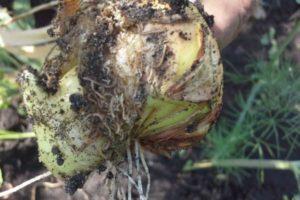
Before planting, onion seeds are dried at a temperature above 40 degrees Celsius for 6-7 hours. The seedlings are then treated with a weak solution of potassium permanganate. Onion sets of any variety are soaked in warm liquid for a couple of hours. These procedures are necessary to kill bacteria and ensure rapid development.
Planting onion sets
When growing onions from sets, it's important to choose a planting location. The beds should be located away from tall shrubs and trees that could create shade. Planting in low-lying areas or areas subject to frequent crosswinds is not recommended. Standard single-row planting is acceptable, with a 40 cm spacing between rows. A 4-5 cm spacing is acceptable between seedlings.
When planting, you can use multi-row tape sowing, leaving about 20 cm between rows. In this case, the middle row is used for growing the bulblets. The freed-up space allows for larger bulbs to grow.
The planting depth of onions is adjusted based on the size of the sets. The bulbs are planted deep enough to keep the stems above the soil. After planting, water during dry weather. The first shoots begin to emerge in the second week of growth.

Top dressing
The first feeding, not counting pre-planting fertilizers, is applied to the soil at the leaf growth stage. Typically, this occurs 2-3 weeks after planting, if the onions have formed a thin, light-colored feather. The first fertilizing onions Using urea at a ratio of 20-25 g per 10 liters of liquid. The fertilizer is applied under the roots, avoiding contact with the surface.
The following fertilizing when caring for onions in open ground is performed phosphorus-potassium fertilizers At the end of June. To prepare the solution, mix 20-25 g of superphosphate and 10-12 g of potassium salt. Nitroammophoska can also be used, dissolving 40 g of the substance in 10 liters of water.
Final fertilization of plants is performed on depleted soils or when ripening is poor. Nitrogen components are not used, so it is recommended to use a mullein solution, which has a beneficial effect on maturing plants.
Watering
Regular watering ensures proper and stable growth, free root development, and the maturation of large bulbs. However, onions prefer a small amount of moisture during cultivation. During the first month, the soil around the onion seedlings should be kept moist at all times, but excess water often leads to rot.
In the first month after planting, 1 watering every 2 weeks is required, and in dry weather and high ambient temperatures - weekly, followed by loosening the soil.
The soil in the beds and between the rows is moistened to a depth of 10 cm during the first month, gradually increasing the depth to 20-25 cm as the fruit ripens. Two to three weeks before harvest, watering is stopped completely, and only light loosening is carried out to break up the drying surface of the soil.
Take a look Also

Loosening, thinning
At all stages of plant growth, soil loosening is required. To ensure free root development and prevent roots from becoming entangled, loosen the soil and break up any clumps. This is especially important during the bulb maturation period.
If weeds are discovered during an inspection of the seedlings, they should be removed to ensure proper crop growth. If the plantings become too dense due to intensive growth, thinning is required. The first thinning may be necessary a couple of weeks after planting, and a second thinning is usually carried out closer to harvest time.

Protection from diseases and pests
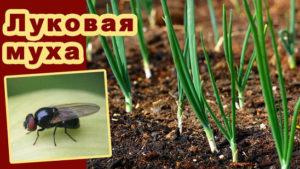
Onion crops can be affected by fungal diseases including downy mildew and root rot. The consequences of diseases can destroy more than half of the plants. Pests often found in onion beds include flies, thrips, beetles, and nematodes, which arise due to non-compliance with agricultural practices.
Pest and disease control involves a number of steps, including:
- If signs of plant damage are detected, treatment with fungicides or insecticides should be started immediately;
- It is necessary to water and loosen the onions in a timely manner;
- It is not permitted to use chemicals that may spoil the taste characteristics.
Harvesting
The ripening time of the crop directly depends on weather conditions, air temperature, variety characteristics, and external factors. Onion ripening is indicated by the cessation of new green leaves, wilting of the above-ground portion, and softening and thinning of the neck. If you notice these signs, do not delay harvesting, as this may trigger root regrowth, which will reduce the shelf life of the onion.
It's recommended to harvest before temperatures drop below freezing and morning dew sets in. Harvesting the bulbs is best done early in the morning, carefully pulling the plants up along with their tops and laying them out in a well-ventilated area to dry and ripen.
Storing onions doesn't require any special conditions. Harvested onions can be placed in boxes or crates with ventilation holes, or they can be placed in bags. It's recommended to check the condition of the onions several times throughout the storage period and discard any spoiled ones. Some of the harvested onions can be refrigerated if they will be consumed within a few days of harvest.

Related posts:
 Description of the best varieties of onions, planting and care in open ground
 How and when to plant onions to get large bulbs
 50 types and varieties of perennial onions with descriptions, cultivation, and care
 Description of Welsh onion varieties, planting, growing, and care in open ground
 Control of onion pests using chemical and folk remedies
 The beneficial properties of white onions, description of varieties, cultivation and care
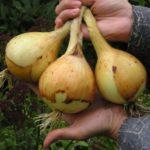 Description of the Exhibition onion variety, growing from seedlings, planting and care
 How to control onion flies using natural and chemical methods
I've never really bothered with onions; all I've done is just plant them. In my opinion, the most important things are ample watering and sunshine, and then you'll get a rewarding harvest.