
Any vegetable crop is susceptible to disease due to improper care or adverse climatic conditions. To reap a good harvest, you need to understand the main onion diseases and their treatment methods. Controlling plant pathogens requires a comprehensive approach, including spraying seedlings and adhering to agricultural practices.
The most common onion diseases
When growing onions, most gardeners face similar problems. Knowing the symptoms of common diseases will help you treat the plants at the first sign of symptoms and preserve your harvest. Seedling diseases have different symptoms and consequences, but they are treated using similar methods.
Downy mildew of onions
The disease is caused by a fungus and affects the above-ground parts of plants. The main symptoms include poor leaf growth, yellowing, wilting, drying, and broken flower stalks. Downy mildew exhibits these symptoms when the fungus enters the garden from plant debris left in the garden after harvesting. Powdery mildew most often develops early in the growing season in rainy climates.
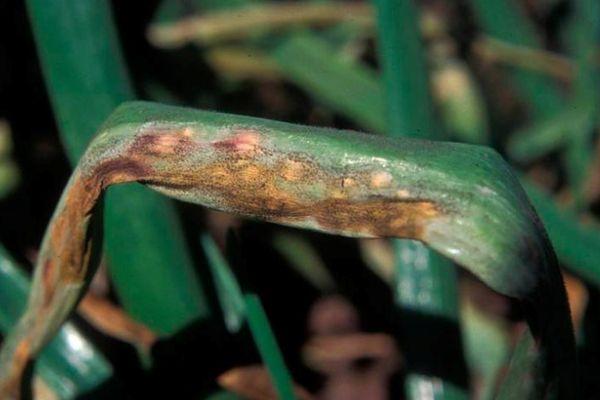
To prevent infection from developing on bulbs, it's important to follow certain rules. These include:
- Disinfect planting material before sowing.
- Remove plant debris from the beds and do not leave them for the winter.
- Do not plant onions in the same place for several years in a row.
- After removing weeds, treat the soil with a 1% solution of Bordeaux mixture.
- When fertilizing, avoid using large amounts of nitrogen fertilizer. Mineral fertilizers are a suitable alternative.
- During prolonged rains, cover the beds with polyethylene.
- Immediately remove affected bulbs from the beds and destroy them.
Onion rust
When rust develops onion feathers turn yellow Seedlings, which results in stunted growth. The fungus that causes the disease is caused by rotting weeds remaining in the beds. To prevent the disease, it is necessary to promptly remove tops and other plant debris from the soil after harvesting.
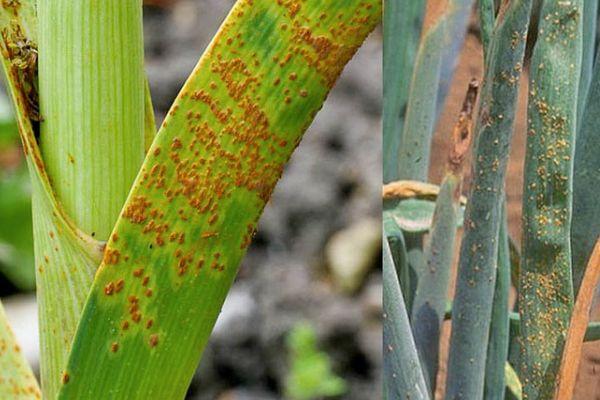
The crop is also susceptible to rust if planted too densely. Space should be left between rows to allow the root system to grow freely. Throughout the growth period, seedlings require regular and careful care in compliance with basic agricultural practices. Plants should be watered at the roots to avoid damaging the leaves and creating conditions for fungal growth.
Fusarium rot of the bottom
Fusarium rot in seedlings occurs due to an infection that develops in the soil. As a result of the disease, the bases of the bulbs begin to rot during growth, followed by leaf fall and destruction of the root system.
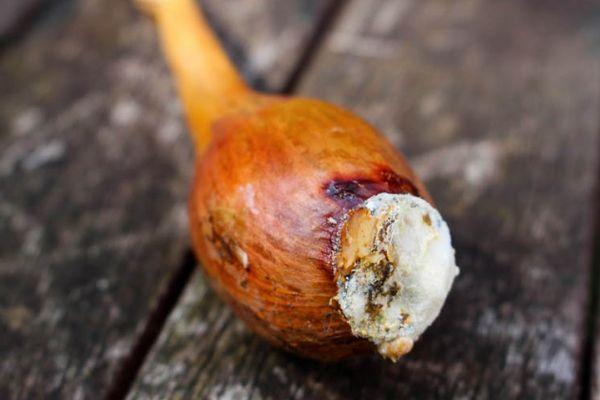
The causes of the disease include:
- excessive soil moisture during the ripening period;
- late harvest;
- dry weather and overheating of the soil.
Damaged bulbs should be removed from the beds to prevent the infection from spreading to other plants. To preserve the harvest, the above-ground portion of the seedlings should also be treated with a disinfectant solution. If signs of disease appear, a range of measures should be taken, including fertilizing onions, control of watering frequency, removal of weeds.
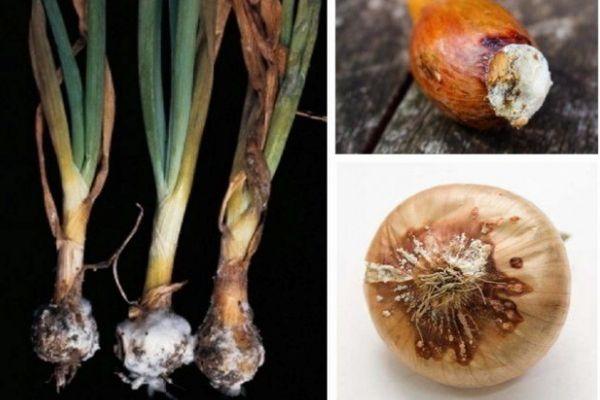
Neck rot of onions
Neck rot appears on seedlings when the leaves lie flat on the soil surface and there are prolonged rains. It's virtually impossible to detect the disease in the garden, as symptoms appear during storage. One to one and a half months after harvest, the neck of the onion is attacked by a fungus, causing the fruit to become waterlogged. If the affected onions are not destroyed, their skins will become completely covered with mold.
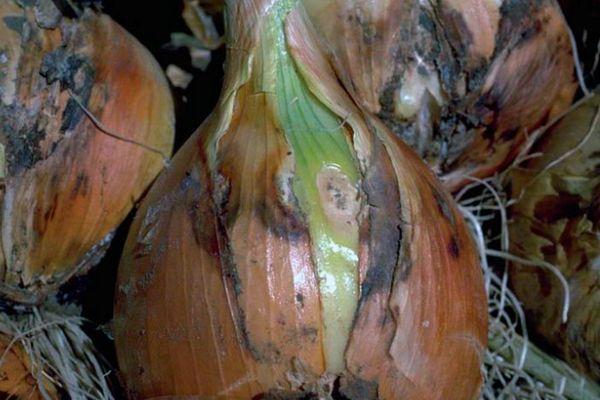
After harvesting, it is recommended to warm the heads during the day at a temperature of 30-40 degrees Celsius. Chalk treatment provides additional protection. These measures combat infection and help combat negative consequences.
Soft bacterial rot and black rot
As the growing season nears its end, the risk of bacterial rot increases. Small cracks appear on the bulb tips, allowing the disease to penetrate the fruit. If you cut an affected fruit lengthwise, you'll find translucent scales with a slimy surface. Over time, the virus-infected crop will completely rot and develop an unpleasant odor, so such bulbs should be removed from the garden.

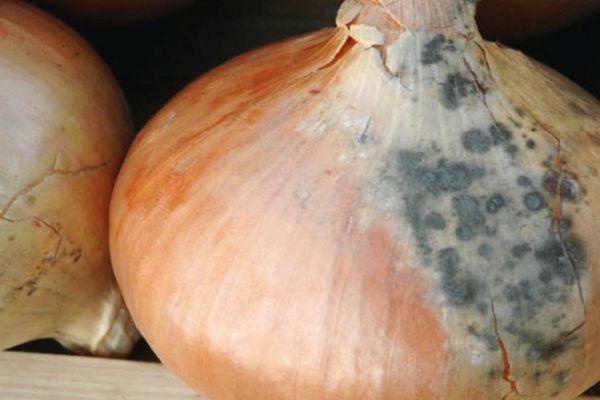
Bacterial rot is caused by damage to seedlings during loosening or hilling. The disease can also be triggered by factors such as constant direct exposure to ultraviolet rays, sudden changes in weather conditions, and the presence of mites and thrips in the soil.
To prevent the development of the disease, it is necessary to use disinfected seeds when planting, be careful during care and promptly destroy pests.
Onion mosaic
A sign of onion mosaic disease is the appearance of yellow stripes on the leaf surface. Due to the infection, the leaves of the seedlings develop a wavy or corrugated surface, and the foliage eventually turns completely yellow and dries out. As a result, the plants gradually wither, fall to the ground, and die.
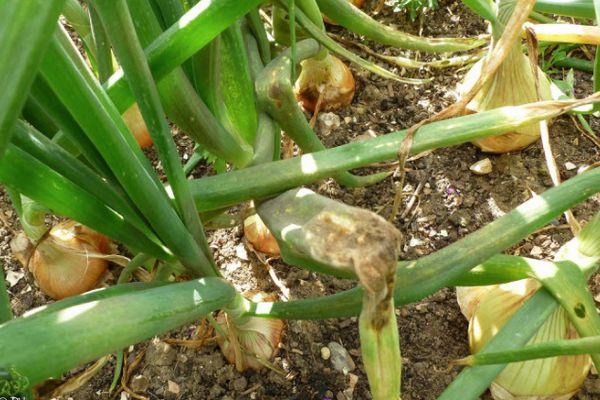
The disease can occur if poor-quality sets were used, or if mites and aphids were transferred from other plants. The main distinguishing feature of the disease is that it is incurable, so affected vegetables must be removed from the beds and destroyed. To prevent infection, it is recommended to use mineral supplements and parasite control agents during treatment.
Green mold
Green mold damages the above-ground portion and root system of seedlings. The disease can be detected by visual inspection—the plant's leaves become covered with dark spots that enlarge over time. By regularly inspecting the garden, you can monitor the progression of the disease and treat the green parts of the onions with a disinfectant solution.
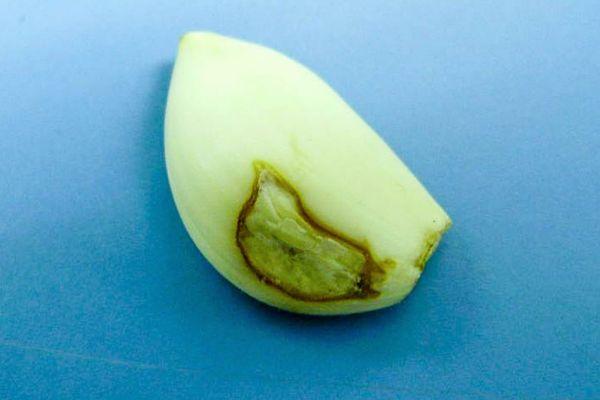
Treatment methods
To treat onion diseases, you can use common folk remedies or proven methods using specialized preparations. The main folk method involves artificially accelerating the ripening process by increasing potassium and phosphorus fertilizers. This fertilizing will lead to rapid development and closure of the bulb neck before infection sets in.
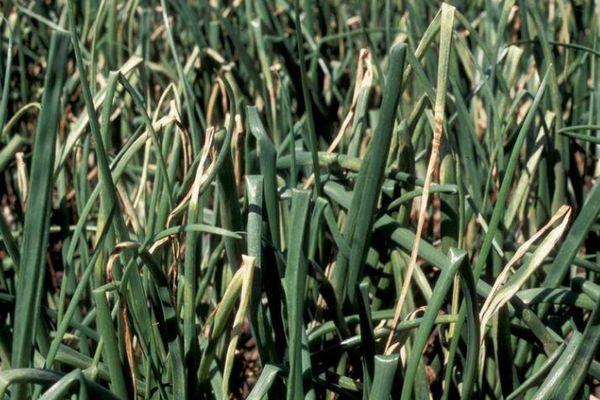
You can also combat the symptoms of seedling disease in the following ways:
- when watering, add table salt to the water every 2-3 weeks in a ratio of 300 g per 10 liters of liquid;
- sprinkle the surface of the beds with wood ash or a mixture of slaked lime and tobacco dust;
- Throughout the entire crop growth period, loosen the soil and conduct a visual inspection to detect and remove weeds;
- use fungicide preparations to combat the causative fungus and infections.
Preventive measures
To reduce the risk of developing bulb diseases, preventative measures should be taken.
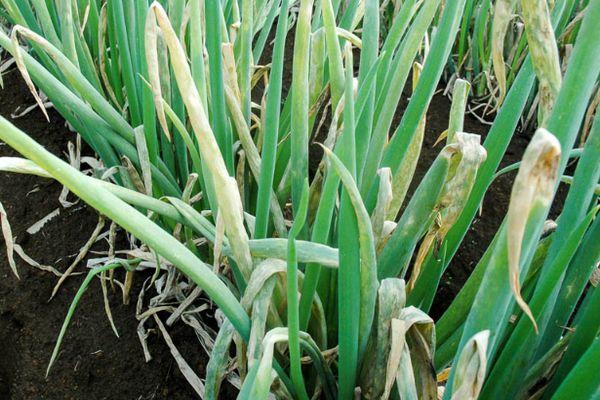
The most effective measures include the following:
- The seed material must be warmed up and disinfected before planting, since most diseases and parasites are transmitted through infected seedlings.
- Cabbage, tomatoes, or cucumbers should be chosen as predecessors for onions. Proper crop rotation will help enrich the soil with beneficial nutrients. To protect the crops, it is also recommended not to plant onions in the same spot for several years in a row.
- Since infections and pests can remain in the soil and on plant debris, in the fall, thoroughly till the beds and treat them with a disinfectant solution. Do not use the remains of previously planted plants for composting.
Timely prevention and control of plant diseases helps to achieve good yields and maintain high soil quality.
Related posts:
 Description of the best varieties of onions, planting and care in open ground
 Control of onion pests using chemical and folk remedies
 Description of Welsh onion varieties, planting, growing, and care in open ground
 50 types and varieties of perennial onions with descriptions, cultivation, and care
 How and when to plant onions to get large bulbs
 The beneficial properties of white onions, description of varieties, cultivation and care
 Description of the Exhibition onion variety, growing from seedlings, planting and care
 Description of varieties and cultivars of wild onions, the subtleties of cultivation
Proper care and timely planting are very important, but you also need to choose the right fertilizer. For the last two years, I've been using BioGrow – a plant growth bioactivator. It grows well and is disease-resistant.