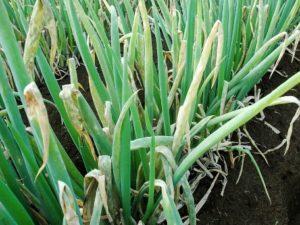
The Red Baron red onion is a mid-early annual variety. It easily adapts to a variety of climates and produces a good harvest even in the driest summers.
Characteristics and description
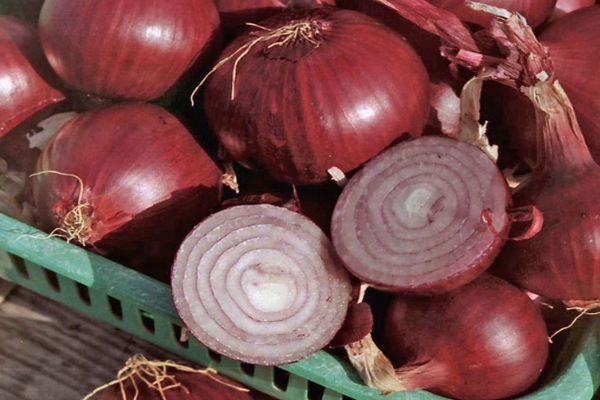
The Red Baron onion, a variety whose description should begin with its distinctive features, has a rich burgundy color. The bulb shape is slightly flattened and round. Each fruit weighs between 50 and 120 grams. Red Baron has a robust root system, ensuring high yields in all climates.
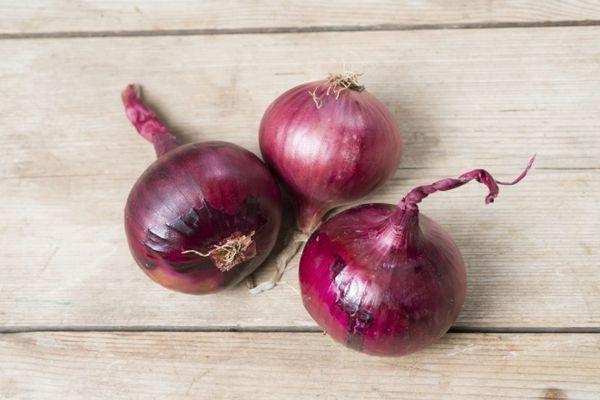
The average ripening period is 93 days. Onions are primarily used for salads and processing. They store well throughout the winter, resisting rot and cracking thanks to their durable skins. Positive characteristics of onions include their color stability. They don't transfer to other vegetables or stain your hands.
Preparing soil, sets and seeds for planting
To ensure a good harvest of Red Baron onions, it's essential to prepare the soil. The vegetable prefers light, well-drained soil. Choose open, sunny locations. Carrots can be planted next to the onions; the two crops will protect each other from pests.
Preparing the soil for onions consists of fertilizing, namely:
- Starting in the fall, add 3 kg of compost per 1 m² to the soil. At the same time, add 1 tablespoon of superphosphate, ash, and nitrophoska per 1 m².
- The soil is not fertilized in winter.
- In the spring, before planting, fertilize the area with a copper sulfate solution at a rate of 1 tablespoon per bucket. Afterward, cover the soil with a covering material and leave it for 2-3 days.
Take a look Also
![When to store onions in [year] according to the lunar calendar](https://harvesthub.decorexpro.com/wp-content/uploads/2018/07/kogda-ubirat-luk-1-300x200.jpg)
After all manipulations have been carried out, the soil is ready for planting onions.
Preparing sets and seeds
To check which seeds will germinate, place them in warm water. Those that sink to the bottom will germinate. To disinfect, soak the seeds in a potassium permanganate solution for 15-20 minutes. Next, soak the nigella seeds in hot water for 30 minutes and then immediately in cold water for 30 minutes. After these steps, the seeds are ready to be planted.
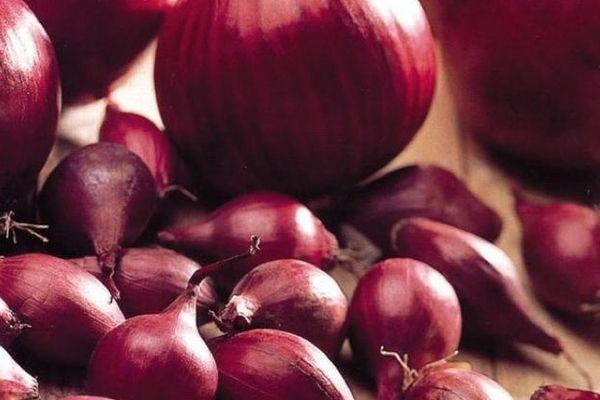
If you've decided to grow onions from sets rather than seeds, they also need to be prepared. First, sort the sets. In the spring, it's customary to plant large sets, as small ones can dry out. For a better harvest, it's recommended to warm the sets: keep them at 40°C for 3 days. Before planting, soak the sets in a copper sulfate solution for 10 minutes.
Planting and care
The best time to plant onions is early May. In prepared soil, plant seeds 1.5 cm apart, and set onions 10 cm apart. The distance between rows when sowing seeds should be at least 15 cm, and for set onions, 30 cm. Plant the seeds 2 cm deep, and the set onions 4 cm deep.
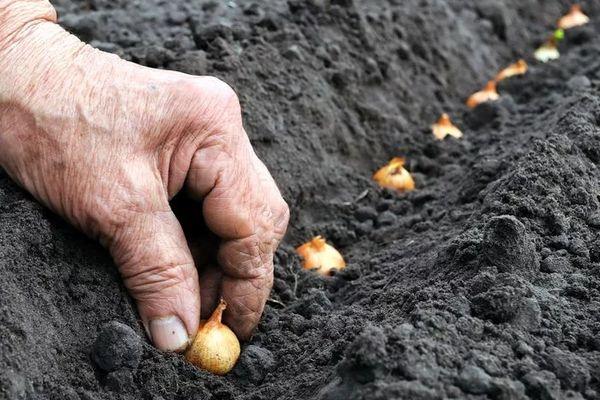
The Red Baron onion doesn't require much care. However, there are a few things to consider:
- Loosen the soil every two weeks, digging to a depth of 3 cm, and remove weeds. The beds are also loosened every time it rains.
- Onions should be watered as the soil dries out. They require ample watering during the first half of the growing season. Two weeks before harvest, watering should be stopped completely.
- Fertilize onions in the spring if they're not growing well. Use mullein as fertilizer. Dissolve 1 cup of the concentrate in a bucket of water. You can also add 1 tablespoon of urea. Fertilize again when the bulbs reach the size of a walnut. The ingredients are the same.
Take a look Also
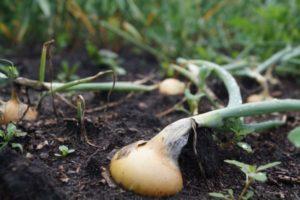
Planting and caring for onions is not particularly difficult. Red Baron is rarely susceptible to disease and pest attacks. If insects appear, the vegetable should be treated immediately with specialized chemicals.
Excessive moisture can cause onion heads to crack, so experts recommend reducing watering from mid-summer.
Harvesting and storage
Onions typically ripen by mid-August. The following signs will help you accurately determine when to harvest onions:
- the feather spreads along the ground;
- the bulbs acquired a rich red color.
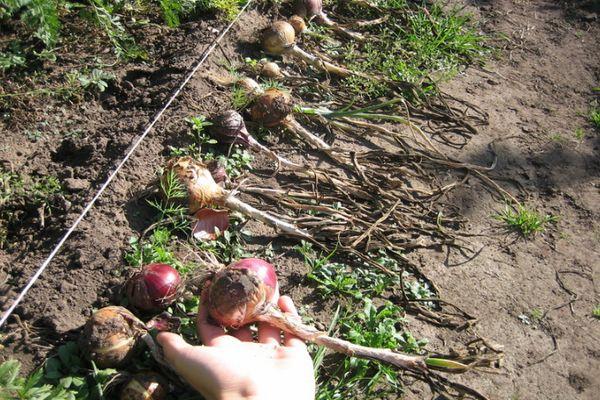
If the vegetable is left in the ground for too long, it will not be stored for long. Harvesting should be done on a warm, dry day. Carefully dig up the bulbs, remove the soil, and trim the roots. It's recommended to leave a 10-cm-long tail on the green stems. This will make tying the bunches much easier.
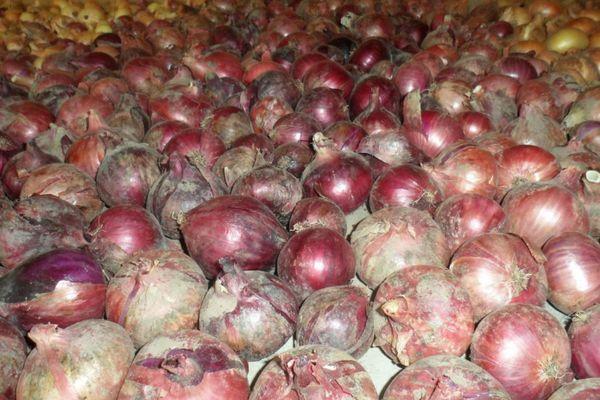
The harvest is laid out on a dry surface or mat and left to dry in the sun. Avoid exposing the Red Baron onions to excessive heat, as this can cause them to rot. At night, it's recommended to store the onions under a canopy or in a well-ventilated area. Typically, the onions are dried for 7-10 days, turning them periodically.
Preparation for storage
Before this process, the onions should be dried again. They are kept outdoors or in a well-ventilated area at a temperature of 30–40°C for 10 days. Once the leaves are completely dry, they are ready for storage.
If space permits, several bulbs are tied into bundles and stored hanging. Red Baron can also be stored in bags. To do this, trim the tops completely and thoroughly clean the bulbs of soil and excess husk. It is recommended to store the bags in a cool, dry place.
Related posts:
 50 types and varieties of perennial onions with descriptions, cultivation, and care
 When to harvest leeks from the garden for storage, ripening times
 Description of the best varieties of onions, planting and care in open ground
 Description of the Exhibition onion variety, growing from seedlings, planting and care
 How and when to plant onions to get large bulbs
 The beneficial properties of white onions, description of varieties, cultivation and care
 Description of varieties and cultivars of wild onions, the subtleties of cultivation
 Description of Welsh onion varieties, planting, growing, and care in open ground