
Unfavorable weather conditions can impact the harvesting process of agricultural crops. If the summer is rainy, harvesting onions in such conditions will certainly not be a pleasant experience for gardeners. Excess moisture can negatively impact onions. Fortunately, there are a number of rules that can be followed to help preserve the harvest.
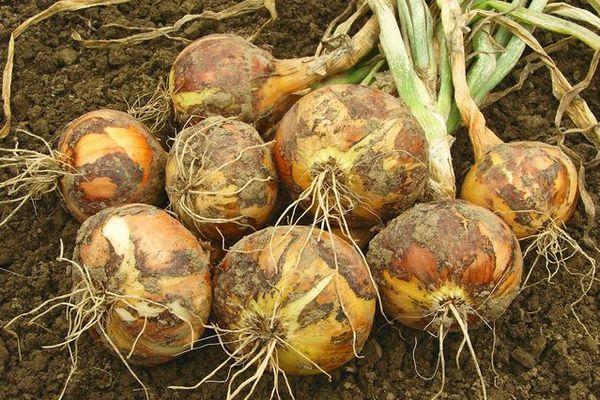
Harvesting onions from the garden is a small task that begins in late July and continues until early August. The crop's maturity is determined by external factors. The stems dry out completely and turn yellow. The bulb, still in the ground, becomes covered in brown scabs.
Why is a rainy summer dangerous?
For any agricultural crop to grow and develop normally, favorable conditions must be provided. Hot weather should periodically alternate with cloudy days with rain. But what to do when torrential rains continue throughout the summer?
For onions, this can lead to the following consequences:
- In wet soil, the roots die off over time.
- During rainy weather, the bulb remains underdeveloped as it continues to grow green mass. This often results in the plant not having a distinct transition from the underground part to the stems. However, the neck remains juicy and thick.
- The crop is susceptible to various diseases. The most common is the spread of grayish spots across the leaves. These are signs of downy mildew. Ignoring the problem can lead to crop failure.
Onions grown in damp soil don't store well over winter. Typically, the bulbs are rotted, and the roots and stems are still alive. In this condition, the vegetable will last for 3-4 weeks. After that, it's completely spoiled.
Harvesting Onions in a Rainy Summer: Tips for Gardeners
Humans have no control over the weather. Therefore, we must adapt to the prevailing conditions. Growing a crop like onions during the rainy season is entirely possible. Moreover, if the gardener follows certain guidelines, this will not affect the plant in any way.
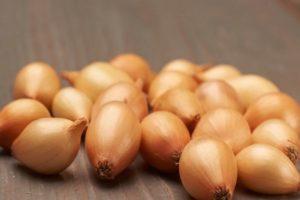
The right choice of varieties
Onions are one of those crops whose harvesting season often coincides with the rainy season. To avoid heavy rains and damp weather, it's recommended to choose early varieties. Early-ripening onions have a short growing season, which helps prevent many diseases and fend off pests. The agricultural market offers many hybrids suitable for growing indoors. Among the wide selection, you can choose from both white and red onions.
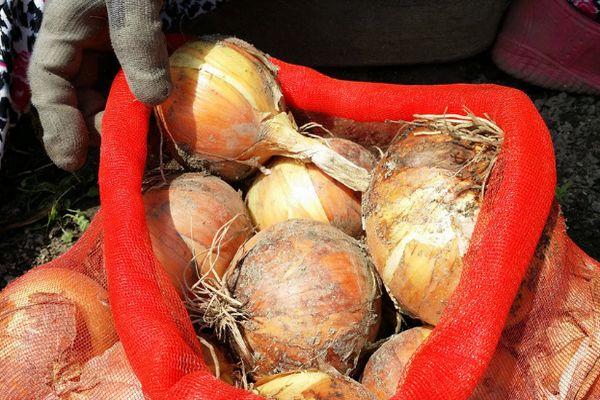
Caring for bulbous plants is simple and doesn't require any special techniques. After choosing a crop, you're faced with a new challenge: how to plant it. The process is the same. The differences are minor and lie in a few nuances.
Preparing the beds
The location for planting onions should be chosen in advance. It's best to do this in the fall. Proper and timely planting will make subsequent care easier during rainy weather:
- The bed allocated for onions should be located in a sunny place.
- Never plant onions in low-lying areas. During rainy seasons, such areas are prone to waterlogging.
- The beds should be raised, in well-ventilated areas, but there should be no drafts.
- To grow vegetables in the garden, give preference to loose and light soil.
- Onions shouldn't be planted in the shade. It's best to plant them away from bushes and trees.
If the soil on a plot of land is acidic, it needs to be deacidified. This is done by adding lime or ash.
Compliance with landing rules
To harvest onions and enjoy them until spring, you need to know how to plant them properly. The first and most important rule is that the bed shouldn't be flat. The beds should be elevated. This approach ensures dryness for the bulbs and moisture for the roots.

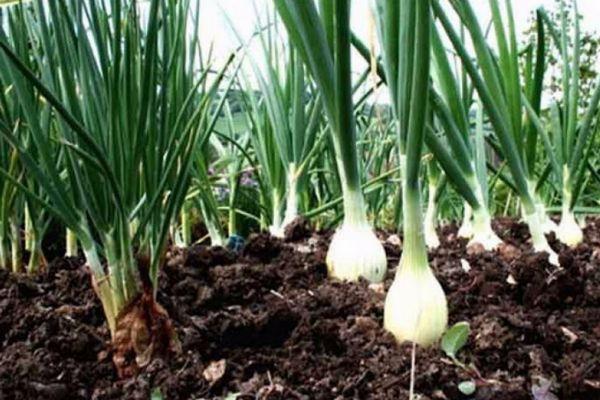
When planting, try not to plant the onion sets too deeply. The top should protrude above the ground. As the bulb grows, half of it will be in the ground, ensuring good ventilation.
This approach reduces the risk of rot. It's important to leave enough space between the beds.
A lot of useful information about caring for onions can be found in the gardener's lunar calendar. Digging up onions promotes rapid drying of the green above-ground portion of the plant. For ease of use and to prevent damage to the bulbs, use a pitchfork. Push it deep into the soil and try to dig up the onions, but not all the way. Although the onions remain in the soil, the root system is disturbed, and the tops dry out much faster.
Disease prevention
The taste, color, size, and much more of a vegetable depend on the weather. To protect the crop from fungal diseases, it is necessary to spray with special preparations. This treatment is carried out on a healthy plant. It is better to spray preventatively than to deal with pests later.
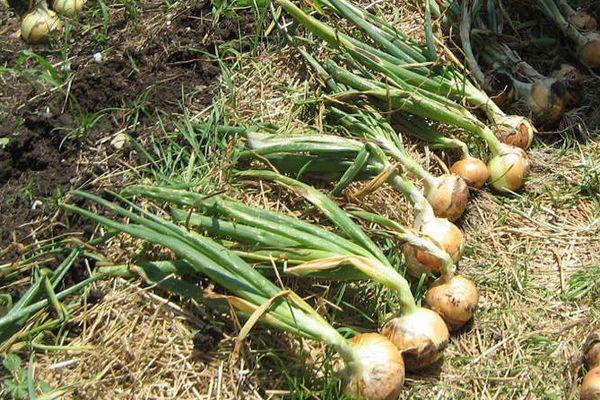
If harvesting is not planned for the near future, use Bordeaux mixture or copper sulfate solution. These preparations are strong and can be harmful to humans. However, the onions can still be eaten, just much later. After treatment, green leaves and bulbs are eaten after three weeks.
Fertilizing onions During rainy seasons, spraying is not necessary. The vegetable receives nutrients from moist soil. It's better to focus all your efforts on treating the plant for diseases. Antifungal products are also suitable for this purpose. Preventative spraying is sufficient for two times per season. The first is carried out when green feathers appear, and the second – during bulb formation.
If a fungal disease has spread throughout a bulb bed, periodic treatments are carried out until the disease is eliminated. No more than one treatment per week.
When to harvest onions
Digging up onions, like harvesting other vegetables, is done on sunny days. When should you harvest onions if it rains every day? In this case, follow these steps:
- choose a day when there is no precipitation or part of the day;
- a week before harvesting, dig up the soil to help the tops dry out faster;
- dig up vegetables from the beds;
- shake off any remaining soil to avoid damaging the bulbs;
- leave it under a canopy to dry (this could be an attic or a veranda).
Take a look Also
The harvested bulbs should be left outdoors for at least two weeks. During this time, the bulbs are regularly inspected for signs of spoilage. Rotten or damaged bulbs are removed. Failure to do so may result in the remaining bulbs also spoiling.
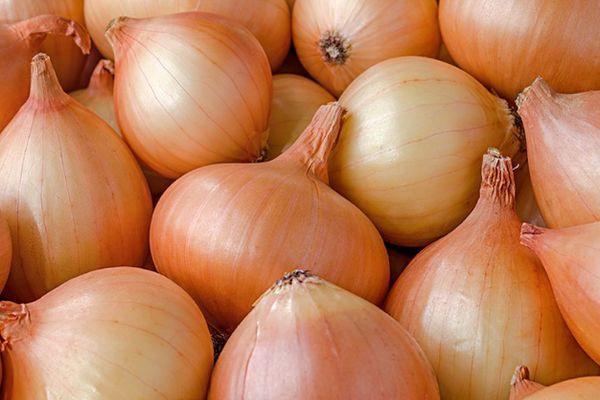
At least once a day, when there's no heavy rain, take the onions out into the sun to dry them further. If the weather prevents this, leave the harvest on the veranda or another suitable location. This will increase the drying time by 1-2 weeks. Once the onions are sufficiently dry, trim off all the tops.
To obtain a good, high-quality harvest that will last a long time, it's important to select the right variety. This selection is made taking into account climate conditions, as this affects the ripening time of the vegetable. Often, onion spoilage is caused not by weather conditions, but by the gardener's carelessness. Therefore, before planting, it's important to consider the vegetable's characteristics and follow proper agricultural practices.
Related posts:
 50 types and varieties of perennial onions with descriptions, cultivation, and care
 When to harvest leeks from the garden for storage, ripening times
 How and when to plant onions to get large bulbs
 Description of the best varieties of onions, planting and care in open ground
 The beneficial properties of white onions, description of varieties, cultivation and care
 Description of the Exhibition onion variety, growing from seedlings, planting and care
 Description of varieties and cultivars of wild onions, the subtleties of cultivation
 Description of Welsh onion varieties, planting, growing, and care in open ground
During this period I always use the bioactivator "BioGrow"It serves as a good nourishment, helping the onions recover quickly. I haven't found a better remedy yet, and it's inexpensive.