
- Reasons for occurrence
- Poor quality planting material
- Violation of crop rotation
- Improper care
- Watering
- Fertilizers
- Pests
- Weather conditions
- First signs
- Peronosporosis
- Real
- Effective methods of control
- Chemical treatment
- Bordeaux mixture
- Polycarbacin
- Quadris
- "Arcerid"
- Copper oxychloride
- Fitosporin
- Potassium permanganate
- Ridomil Gold MC
- "Bravo"
- Colloidal sulfur
- Folk remedies
- Wood ash
- Garlic
- Onion peel
- Manganese solution
- Infusion of weeds
- Lactic acid bacteria
- Soda ash
- Copper sulfate
- Boiling water
- Mullein
- Preventive measures
- Choosing a location
- Soil preparation
- Resistant varieties
- Processing
- Thinning
- Agrotechnical methods
- Weeding
- Drainage
- Top dressing
- Removal of affected areas
- Proper care
- Disadvantages of popular products
Powdery mildew on onions is a common problem. To know how to combat it, it's important to identify the cause. Often, improper care of the crop is the trigger. Timely treatment helps eliminate symptoms without harming the crop.
Reasons for occurrence
Fungal infections of crops are very common, not only on onions but also on other vegetable varieties. Factors that trigger the formation and spread of fungal spores are identified.
Poor quality planting material
This type of problem arises when purchasing planting material. Spores remain on the bulbs, which, upon contact with water, begin to rapidly divide and infect healthy plants. This problem most often occurs when the planting material is not treated before planting.
Violation of crop rotation
Planting the same types of crops in the same plot. Failure to properly space vegetables can also contribute to the development of the disease. Gardeners often make the mistake of planting crops that share the same pests and diseases next to each other.
Improper care
Incorrect planting of seedlings. Onions are often planted too densely, which also leads to disease. Failure to remove weeds in a timely manner can also contribute to the development of fungus.
Watering
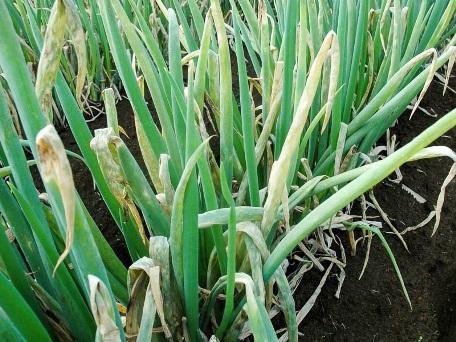
Frequent watering can cause powdery mildew in onions, as spores develop quickly in a moist environment. Water droplets also splash during irrigation, infecting healthy onions. To properly water onions, carefully treat damaged plants only when the soil is dry.
Fertilizers
The disease can be provoked by excessive amounts of fertilizers; onions react to the accumulation of nitrogen in the soil, and the application of organic fertilizers, which can act as a source of spore accumulation.
Pests
Pests that attack onions can transmit the infection to healthy plants. These pests include:
- onion fly;
- aphids;
- nematodes.
Weather conditions
Rain can trigger the development of infection; in such conditions, the fungus develops quickly and can be carried with liquid throughout the garden plot.
First signs
In order to detect the disease in a timely manner, it is necessary to carefully examine the onions for the first symptoms.
Peronosporosis
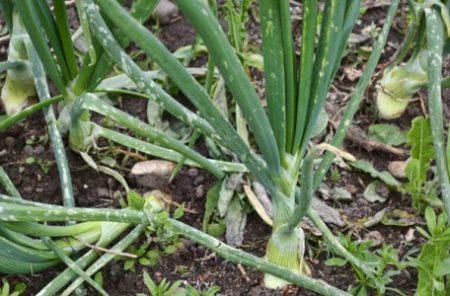
This type of disease often appears on onions. Affected onions typically exhibit the following symptoms:
- formation of blurred light green spots on onion leaves;
- the appearance of a dirty coating on the onion;
- drying of vegetable shoots;
- the plant slows down its growth.
These symptoms lead to the complete death of the above-ground portion of the onion. The root portion is also damaged and may become water-soaked over time.
Real
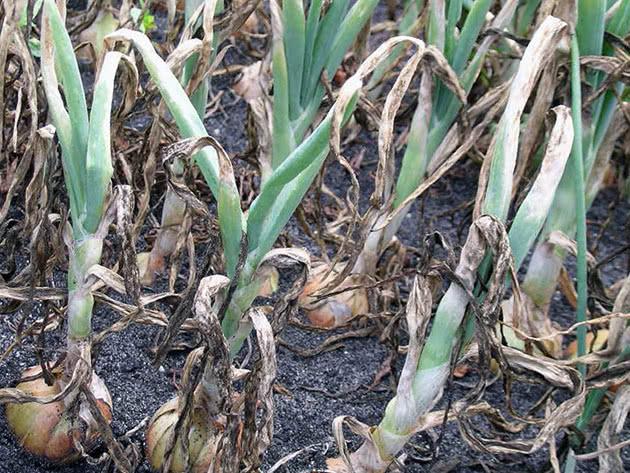
Vegetables affected by powdery mildew have the following symptoms:
- the presence of white plaque on the leaves;
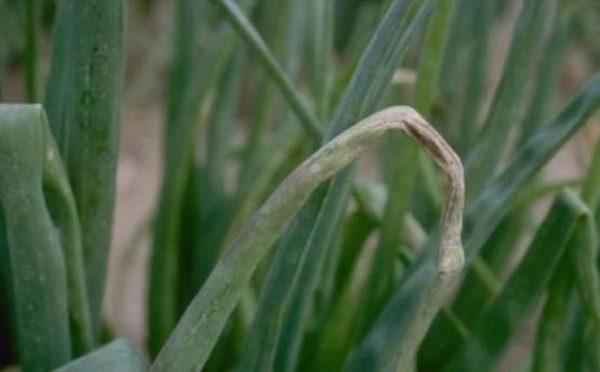
- the plant begins to turn yellow and curl up;
- small dark balls that look like drops form on the onion feathers;
- the plant dies.
In the early stages, false and true dew can have the same symptoms.
Take a look Also

Effective methods of control
When the first signs of disease appear, every gardener should know what to do to prevent further development of the disease.
Chemical treatment
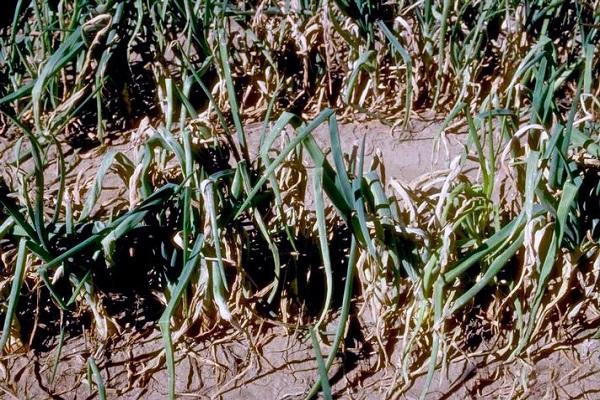
Chemical treatment can eliminate the problem. Chemicals eliminate fungal spores and prevent recurrence.
Bordeaux mixture
Bordeaux mixture can be used to combat the first signs of disease on onions. A 1% solution is used, diluting 20 grams of the mixture with 5 liters of water. Spray the affected areas with the resulting solution.
Polycarbacin
The product gently removes infections without harming the plant. To use, dilute 40 grams of the product in a bucket of water and stir the mixture to spray the plant.
Quadris
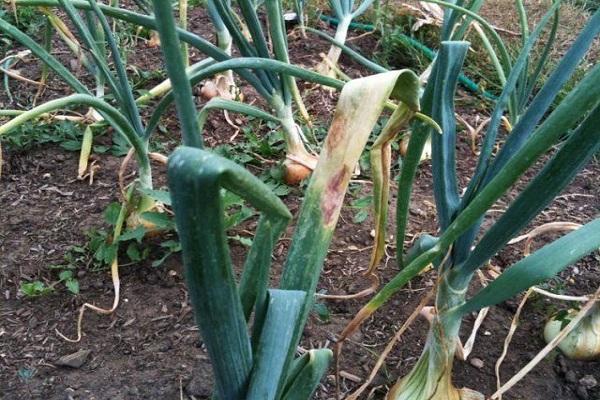
To combat powdery mildew, onions can be sprayed with the fungicide "Quadris." The product is detrimental to the disease. A 0.1% solution should be used for treatment. Spraying should be repeated every 10 days until the disease is completely eliminated.
"Arcerid"
The product can be used up to three times per season, with at least 20 days between treatments. To prepare the solution, mix 25 grams in a bucket of water and spray the plants.
Copper oxychloride
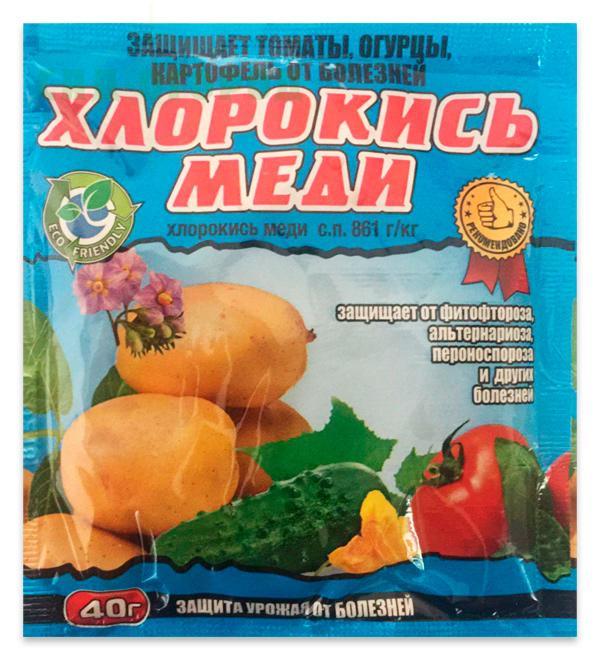
To prepare the solution, mix 40 grams of fungicide in a bucket of water (10 liters). Apply the resulting solution every 15-20 days at a rate of 1 liter per square meter.
Fitosporin
This product is used against most vegetable diseases and helps preserve the flavor of produce. At the first signs of symptoms, mix 10 drops in 200 grams of water and spray the affected plant. If the disease progresses on onions, mix the product in a 1:2 ratio and apply the spray. Repeat spraying every 10 days until the problem disappears.
Potassium permanganate
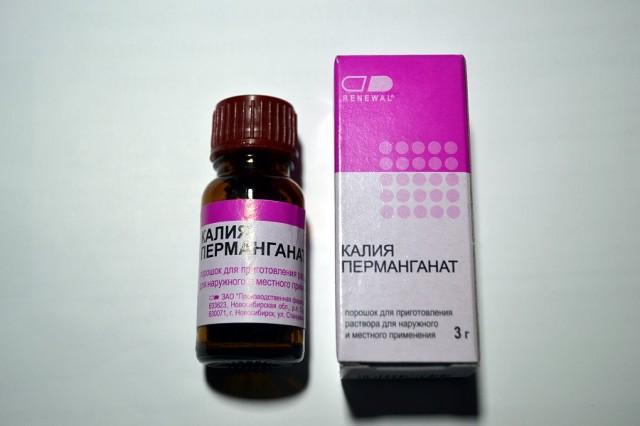
The substance is classified as an antiseptic, so it can be used to eliminate fungus on vegetables. To treat onions, prepare a solution by mixing 5 grams of powder in a liter of warm water. Mix the resulting solution thoroughly and spray it on the onion area using a spray bottle.
Ridomil Gold MC
This product is designed to eliminate fungal diseases on vegetables and can be used prophylactically and in severe cases. Treatment with the fungicide is carried out according to the following recipe: 10 grams per 100 grams of warm water. Once prepared, the solution must be used within 24 hours.
Important: To achieve visible results, thoroughly spray the above-ground portion of the onion and ensure the solution does not run off the shoots.
"Bravo"
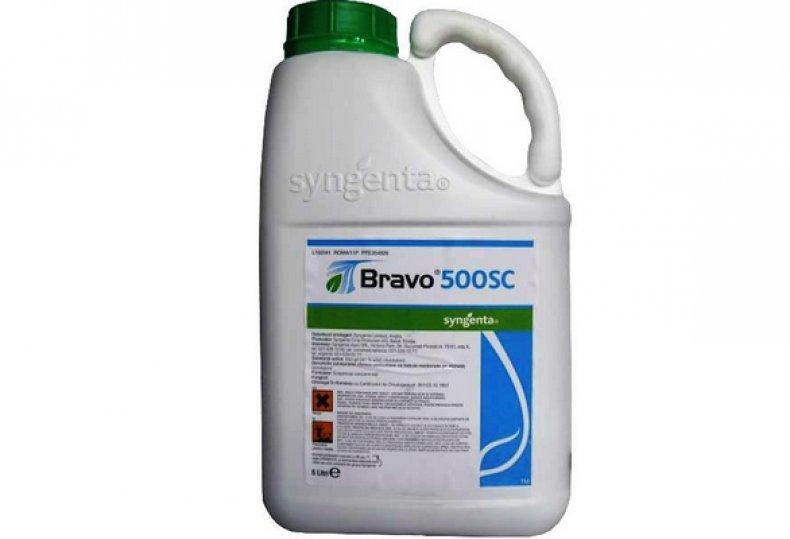
To prepare, add 3 grams to three liters of water. Mix and spray after sunset. Apply once every 10 days, but no more than three times per season.
Colloidal sulfur
To prepare the solution, mix 40 grams of the substance with 5 liters of water. Stir the solution until the particles are completely dissolved. Spray with a spray bottle, treating the onion leaves on both sides.
Treatment is carried out every 5 days until the problem disappears completely.
Important: Do not use colloidal sulfur in hot weather. It may cause burns to the above-ground parts of the crop.
Folk remedies
The use of traditional methods eliminates the symptoms of downy mildew without damaging the crop. These treatments also act as fertilizers and enrich the soil with additional beneficial components.

Wood ash
Used for spraying plants. To prepare a solution, mix one kilogram of the dry component in 10 liters. Leave it there. Spray every 7 days.
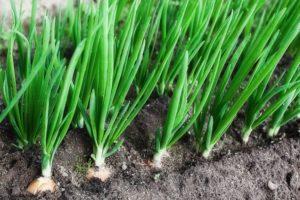
Garlic
To treat onions, prepare a garlic infusion. Press three heads of garlic through a press and add a liter of water. Leave for two days, then spray the above-ground portions of the crop every 20 days.
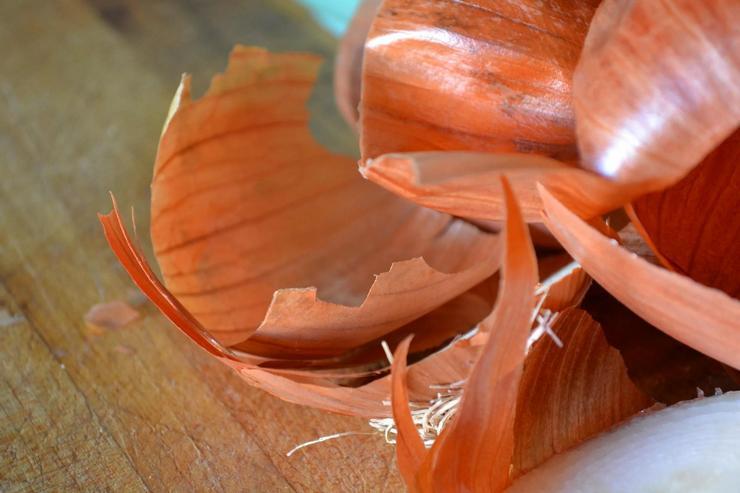
Onion peel
To prepare the working solution, add half a kilogram of husks to a liter of water and boil for 5 minutes. After removing from the heat, cover the container with the husks and let it steep for three days. Then strain the solution, mix it with 10 liters of water, and spray the crop every 7 days.
Manganese solution
A weak solution of potassium permanganate is used to treat onions. Add 5 grams of powder to a liter of water and spray every 7 days.
Infusion of weeds
A proven method for treating fungal diseases is a weed infusion. To prepare the solution, finely chop half a bucket of weeds and add a bucket of water. Let it ferment, then strain and spray the crop every 5 days.
Lactic acid bacteria
You can protect your onions from powdery mildew by using fermented milk products, which also act as fertilizer and promote plant growth. Products such as kefir and whey can be used. Mix the milk product with water in a 1:10 ratio and apply the treatment to the onion beds every 7 days.
Soda ash
The product can be used against fungal diseases. To prepare a working solution, dissolve 40 grams of powder in a bucket of warm water and add a spoonful of liquid soap. Apply the resulting solution to the above-ground portion of onion beds every 7-10 days.
Copper sulfate
Dissolve one teaspoon of copper sulfate in warm water (10 liters). Apply the solution in the evening every 5-6 days. Stop treatment once symptoms disappear.
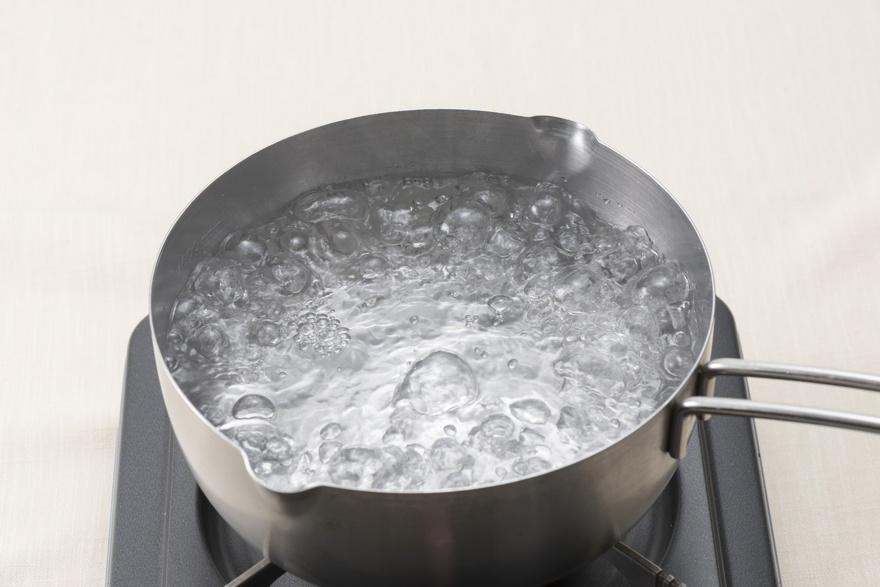
Boiling water
To treat onion beds this way, pour boiling water into a watering can. Raise the can 1 meter above the bushes and water the plants. The hot water will remove the infection without harming the onions. This procedure should be repeated no more than once every 10 days.
Mullein
One kilogram of cow manure should be poured into three liters of water and left to steep for three days. Dilute the resulting mixture with water in a 1:2 ratio and spray the plant.
Preventive measures
To prevent powdery mildew from appearing on onions, it is necessary to take preventative measures in a timely manner.
Choosing a location
Onions should be planted in different locations; it's unacceptable to grow the crop in the same spot for several years. The bed should not be located in areas where water accumulates. Excessive humidity will encourage disease.
Soil preparation
The soil should be prepared in the fall. Organic fertilizers are added and the area is dug up; the fungal spores are killed by frost. In the spring, the area can be sprayed with a light solution of potassium permanganate.
Resistant varieties
The development of diseases can be prevented by using onion varieties that are immune to infection.
Stuttgarter Riesen
Onions are known for their high yield. They have a semi-sharp flavor and are easy to store. They can be propagated by seeds or sets. They are resistant to all diseases and pests and are suitable for planting in all regions.
Bamberger
This plant is easy to care for and has a sweet flavor. The bulbs are small and elongated. They are suitable for storage without deteriorating their flavor. This variety is rarely susceptible to disease, but requires regular watering.
Take a look Also
Centurion
This is an early-ripening variety. Small bulbs retain their flavor throughout the winter. The bulbs are round with an elongated neck. This variety is distinguished by its resistance to diseases and the absence of stems.
Processing
To prevent the plant from becoming susceptible to disease, it is necessary to treat the beds with special preparations in a timely manner.
When planting seedlings in the ground, it's also necessary to treat the seeds with a manganese solution, soaking the seeds for 15-20 minutes. This protection will not only eliminate fungal spores but also provide the plant with essential nutrients.
Thinning
Timely thinning of beds promotes air circulation and reduces soil moisture. Thinning also reduces the risk of infection of healthy plants during watering.
Agrotechnical methods
Proper care is the best method against downy mildew in onion beds.
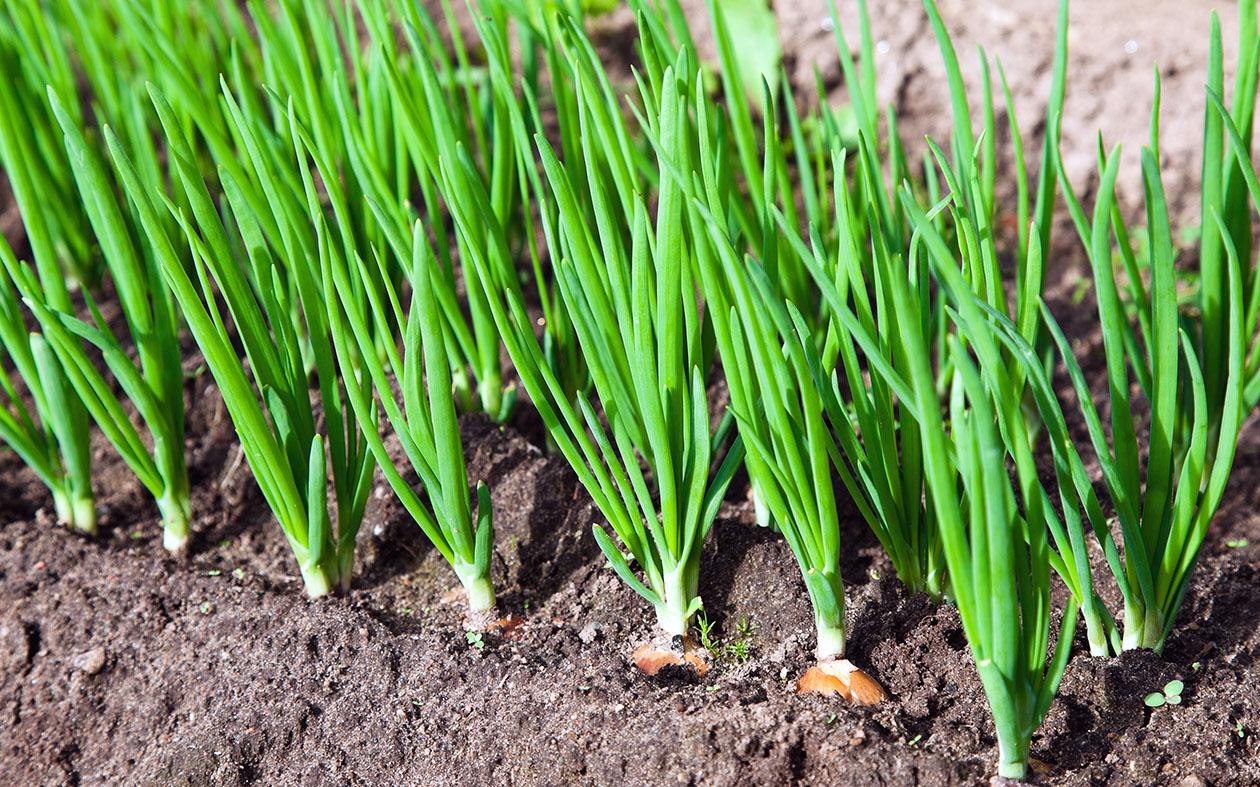
Weeding
Weeds can carry infections and also consume nutrients, leading to weakened onions. These plants are most susceptible to infection; weeding loosens the soil and oxygenates it.
Drainage
When planting onions in areas where water accumulates, drainage must be provided; this will reduce the risk of excessive moisture accumulation and prevent the development of fungus and mold.
Top dressing
Fertilization is recommended only when necessary. For onions, fertilizers are applied in the fall, during site preparation, and in the spring before green shoots emerge. Potassium and mineral fertilizers can be applied via the root system if necessary.
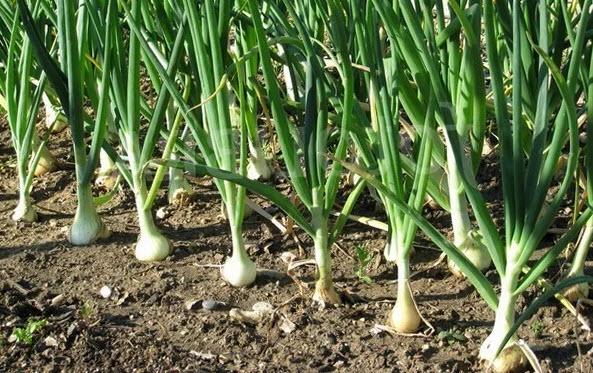
Removal of affected areas
When the first symptoms of the disease appear, affected shoots should be removed. Removed shoots and bulbs should be discarded, and the growing area should be treated with an antiseptic.
Proper care
Proper care reduces the risk of powdery mildew. Watering should be done after the top layer of soil has dried out. Proper storage of planting material is also important. Bulbs should be placed in a dry, ventilated area. Before storing, thoroughly dry the bulbs and remove any remaining soil.
Disadvantages of popular products
The use of drugs to combat the disease has the following types of disadvantages:
- use in sunny weather may cause burns;
- It is necessary to re-treat after rain or wind;
- onions are not used for food after processing;
- An increased dosage may have a negative impact on plant development.
The means and methods used to treat onion beds against fungal infections can negatively affect the taste of the product.
Powdery mildew can quickly damage vegetable crops. Failure to promptly treat the infection and improper care can lead to complete destruction of onions within a short period of time. Folk remedies or specialized chemicals can be used to eliminate the infection.
Related posts:
 50 types and varieties of perennial onions with descriptions, cultivation, and care
 Description of the best varieties of onions, planting and care in open ground
 When to harvest leeks from the garden for storage, ripening times
 How to control onion flies using natural and chemical methods
 How and when to plant onions to get large bulbs
 Description of the Exhibition onion variety, growing from seedlings, planting and care
 The beneficial properties of white onions, description of varieties, cultivation and care
 Description of varieties and cultivars of wild onions, the subtleties of cultivation